Yokogawa Gorge, Miyagi Prefecture | Complete Guide to Enjoying Yamabiko Suspension Bridge and Autumn Foliage Scenery
Located in Shichikashuku Town, Katta District, Miyagi Prefecture, Yokogawa Gorge is a nature-rich gorge spreading at the foot of the Zao Mountain Range, attracting many tourists especially during the autumn foliage season. The gorge beauty viewed from the Tohoku region’s largest “Yamabiko Suspension Bridge” and the vivid autumn leaves coloring the walking trails continue to captivate visitors.
This article provides detailed explanations of everything you should know when visiting Yokogawa Gorge, from its attractions to specific access methods, recommended walking routes, and surrounding tourist spots.
What is Yokogawa Gorge? A Natural Treasure of Miyagi Prefecture
Yokogawa Gorge is a beautiful gorge spreading along the Yokogawa River, a tributary of the Shiraishi River. The natural beauty of forms created by clear water originating from Zao over long years of time presents different appearances in each season.
The gorge vicinity is developed as a park with completed walking trails, allowing people of all ages from children to elderly to enjoy nature walks. Especially during the autumn foliage season, broad-leaved trees such as beech, oak, and maple turn red and yellow, enveloping the entire gorge in brocade-like beauty.
Geographic Characteristics of Yokogawa Gorge
Yokogawa Gorge is located in the mountainous area of Shichikashuku Town in southern Miyagi Prefecture. Shichikashuku Town is a town on the prefectural border adjacent to Fukushima and Yamagata prefectures, blessed with abundant nature and clear water resources. Positioned at an altitude of approximately 400-600 meters, the cool climate is a factor nurturing beautiful autumn foliage.
The Yokogawa River flowing through the gorge has high transparency, with stones on the river bottom visible. The landscape created by this clear water and surrounding forests is truly a natural treasure Miyagi Prefecture can be proud of.
Yamabiko Suspension Bridge | Tohoku Region’s Largest Scenic Spot
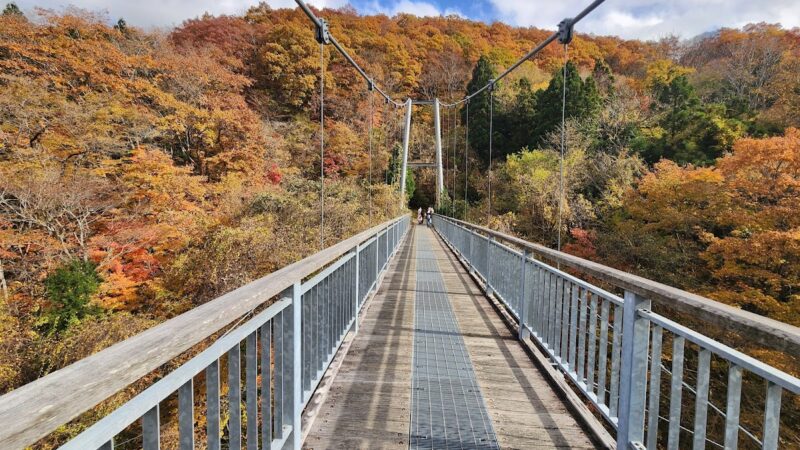
The biggest attraction of Yokogawa Gorge is undoubtedly the “Yamabiko Suspension Bridge.” This suspension bridge boasts a length of 120 meters and is known as one of the largest pedestrian-only suspension bridges in the Tohoku region.
Views from the Suspension Bridge
From atop the bridge, you can overlook the clear Yokogawa River flowing below and the grand mountain scenery surrounding it. Particularly, the view of Fubou Mountain is magnificent, and on clear days you can see all the way to its summit.
The depth of the gorge viewed from the bridge is awe-inspiring, with the sound of the clear stream flowing at your feet resonating pleasantly. The experience of crossing while feeling the unique sway of the suspension bridge offers the precious opportunity to simultaneously taste both the thrill and beauty of nature.
Structure and Safety of the Suspension Bridge
Yamabiko Suspension Bridge has a solid structure with safety considerations. The bridge width is approximately 1.5 meters, allowing people to pass each other. Handrails are securely installed on both sides, making it relatively safe even for those uncomfortable with heights.
However, on windy days the bridge may sway significantly, so caution is necessary on days with bad weather. Additionally, during crowded times, it is recommended to keep moving while yielding to others rather than stopping on the bridge.
Autumn Foliage of Yokogawa Gorge | Peak Season and Best Times
Yokogawa Gorge is known as one of Miyagi Prefecture’s premier autumn foliage viewing spots. Due to its high altitude and early temperature decline, you can enjoy autumn foliage at a relatively early time compared to other areas in the prefecture.
Best Season for Autumn Foliage
The peak season for autumn foliage at Yokogawa Gorge is typically from mid-October to mid-November. Particularly, from late October to early November marks the peak, when you can see the most beautiful autumn foliage.
The progression of foliage varies slightly year to year, but generally follows this pattern:
- Early October: Beginning to color
- Mid to late October: Beginning of peak season
- Late October to early November: Full peak season
- Mid-November: Leaf fall progresses
Types of Trees Turning to Autumn Colors
Various broad-leaved trees such as beech, oak, maple, and Japanese maple grow naturally around Yokogawa Gorge. The sight of these trees turning color simultaneously is spectacular, with gradations of red, yellow, orange, and green coloring the entire gorge.
The contrast between the yellow of beech and the red of maple is particularly beautiful, and autumn foliage against a clear blue sky is ideal for photography. Do not miss the foliage reflected in the gorge’s clear stream.
Charm Beyond the Autumn Foliage Season
Yokogawa Gorge has attractions beyond the autumn foliage season. From spring through early summer, fresh green is beautiful and ideal for forest bathing. Summer is cool and popular as a place of refuge from heat. In winter, snow accumulation may make the walking trails difficult to pass, but the snowy gorge scenery possesses an enchanting beauty.
How to Walk Yokogawa Gorge Walking Trail | Hiking Course Guide
Yokogawa Gorge has maintained walking trails where you can enjoy nature while hiking. The trail is relatively flat and easy to walk, providing a course beginners can comfortably walk.
Basic Hiking Course
The typical course is Parking Area ~ Yamabiko Suspension Bridge ~ Choroi Lake, approximately 15-20 minutes one way. For a round trip of about 30-40 minutes, allowing time for photography and enjoying scenery, plan for about one hour.
The walking trail continues on well-maintained boardwalks and wood-chip paths. Along the way, there are several viewpoints where you can view the gorge, where you can stop and enjoy the scenery.
Path to Choroi Lake
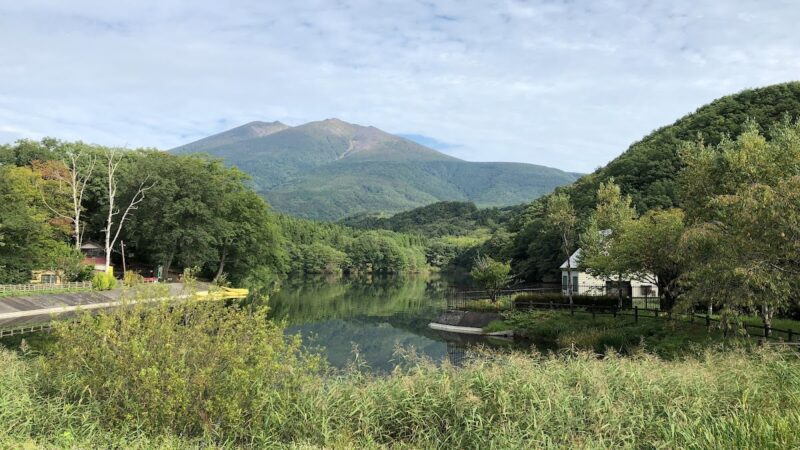
After crossing Yamabiko Suspension Bridge and proceeding along the walking trail, you will reach Choroi Lake in about 15 minutes. Choroi Lake is a quiet mountain lake surrounded by forest, with a mysterious atmosphere.
There is also a rest area at the lakeside where you can relax and enjoy the scenery. During the autumn foliage season, the foliage reflected on the lake surface is beautiful, and many photography enthusiasts visit.
Recommended Clothing and Items for Hiking
While the trail is maintained, it remains a mountain path. We recommend the following preparations:
- Footwear: Comfortable shoes such as sneakers or trekking shoes
- Clothing: Easy-moving attire with layering options for temperature adjustment
- Items: Drinks, towels, camera, insect repellent (summer)
- Rain gear: Since weather can change easily, bring a compact umbrella or rainwear
Especially during autumn foliage season when temperature differences between morning and evening are large, do not forget cold-weather preparations.
Access Methods | How to Get to Yokogawa Gorge
Since Yokogawa Gorge is located in a mountainous area, car access is convenient, but public transportation can also be used.
Access by Car
Approximately 45 minutes from Shiraishi IC on the Tohoku Expressway is the most common route.
- Exit at Shiraishi IC and head south on National Route 4
- Turn onto National Route 113 toward Shichikashuku
- Follow directional signs toward Yokogawa from within Shichikashuku Town
A free parking lot is maintained near the entrance of Yokogawa Gorge, accommodating approximately 30 vehicles. However, parking can become crowded on autumn foliage season weekends, so early arrival is recommended.
Access by Public Transportation
Use Shichikashuku Town bus from JR Tohoku Main Line “Shiraishi Station.”
- Board the town bus “Shichikashuku Town Office” bound bus from Shiraishi Station (approximately 50 minutes)
- At the terminal, transfer to the “Yokogawa/Choroi” bound town bus (approximately 12 minutes)
- Get off at “Seishounen Ryoko Village” bus stop, then walk approximately 5 minutes
Since bus frequency is limited, it is recommended to check the timetable in advance. Temporary bus services may operate especially during the autumn foliage season.
GPS Information and Navigation Settings
When searching on navigation systems or smartphone map apps, search for “Yokogawa Gorge” or “Yamabiko Suspension Bridge.” The address is “Yokogawa, Shichikashuku Town, Katta District, Miyagi Prefecture.”
However, as radio waves are weak in mountainous areas, it is reassuring to check maps in advance.
Tourist Spots Around Yokogawa Gorge
Visiting nearby tourist spots along with Yokogawa Gorge allows you to enjoy a more fulfilling trip.
Choroi Lake
As mentioned previously, a quiet mountain lake approximately 15 minutes by walking trail from Yokogawa Gorge. Camping grounds and accommodations are located on the lakeside, allowing you to spend leisurely time in nature. Boating and fishing can be enjoyed, and the spot is popular with families.
Shichikashuku Dam
A large-scale dam and symbol of Shichikashuku Town, located approximately 20 minutes by car from Yokogawa Gorge. The dam lake (Shichikashuku Lake) vicinity is developed as a park where you can enjoy lakeside walks and views from an observation platform. Cherry blossoms in spring and autumn foliage in fall make it a beautiful spot.
Nametutsutaohtaki Falls
A waterfall also called “Two-Tiered Falls,” located approximately 15 minutes by car from Yokogawa Gorge. The sight of a waterfall approximately 30 meters wide and 10 meters high cascading in two stages is spectacular. You can get close to the waterfall basin and bathe fully in negative ions.
Zaikiishi Park
A park where columnar jointed rock walls designated as national natural monuments can be seen, approximately 30 minutes by car from Yokogawa Gorge. Columnar rocks standing regularly across approximately 65 meters height and 100 meters width appear like an artwork created by nature. The surrounding autumn foliage in fall is also beautiful, making it a popular scenic spot.
Shichikashuku Town Water and History Hall
A museum where you can learn about Shichikashuku Town’s history, culture, and water resources, approximately 25 minutes by car from Yokogawa Gorge. It displays the history of Shichikashuku as a post town and the circumstances of dam construction. It is also recommended as a rainy-day tourist spot.
Gourmet Information Around Yokogawa Gorge
The Shichikashuku Town area has delicious gourmet spots using local ingredients.
Michi-no-Eki Shichikashuku
In addition to purchasing fresh local vegetables and specialty products, the restaurant serves dishes made with Shichikashuku ingredients. “Shichikashuku soba,” made with locally-produced buckwheat flour, is particularly popular with tourists for its fragrant aroma.
Local Soba Shops
Shichikashuku Town is also known as a soba production area, with several soba restaurants in town. Soba grown in a cool climate is flavorful, and many shops serve hand-made soba.
Wild Vegetable Dishes
From spring through early summer, some restaurants offer dishes made with wild vegetables harvested locally. You can taste seasonal mountain delicacies such as bracken, ostrich ferns, and fatsia shoot.
Precautions and Etiquette for Yokogawa Gorge Tourism
Please note the following when visiting Yokogawa Gorge.
Consideration for Nature Conservation
Yokogawa Gorge is a place where precious natural environments are preserved. Always take trash with you, and avoid picking or damaging plants. Walking off the designated trail can damage vegetation, so avoid this.
Safety Precautions
- Since the suspension bridge will sway more greatly when many people are on it at once, please yield during crowded times
- Caution is necessary as the walking trail becomes slippery during rain or right after rain
- To prepare for wild animal encounters, carry food in sealed containers
- Since cell phone signals are weak in some areas, avoid solo travel
Winter Access
During snow season (approximately December to March), passage on the walking trail may become difficult. If visiting in winter, contact Shichikashuku Town Tourism Association or the Industry and Commerce Division in advance to confirm if passage is possible.
Recommended Photography Spots and Tips
Yokogawa Gorge is an excellent photography location. Here are tips for taking beautiful photos.
Best Shot Points
- From the center of Yamabiko Suspension Bridge: A scenic viewpoint overlooking Fubou Mountain and the gorge
- Viewing the suspension bridge from below: An angle where you can capture the bridge and autumn foliage together
- Stream and autumn foliage: The foliage reflected in clear water creates enchanting photographs
- Lakeside of Choroi Lake: The reflection of foliage on the lake surface is beautiful
Best Timing for Photography
Early morning has fewer tourists and morning mist may appear, allowing for enchanting photos. Also, late afternoon slanted light illuminates foliage three-dimensionally and displays colors vividly.
Cloudy days have soft light and an advantage of uniformly photographing foliage colors. On sunny days, bright-dark contrast becomes significant, so utilizing exposure compensation is effective.
Yokogawa Gorge Basic Information Summary
Finally, here is a summary of Yokogawa Gorge’s basic information.
Location
〒989-0503 Yokogawa, Shichikashuku Town, Katta District, Miyagi Prefecture
Access
- By car: Approximately 45 minutes from Shiraishi IC on Tohoku Expressway
- Public transportation: Approximately 70 minutes by town bus from JR Shiraishi Station
Parking
Free parking available (approximately 30 spaces)
Viewing Hours
No specific restrictions (daytime hours recommended)
Admission
Free
Autumn Foliage Peak Season
Mid-October to mid-November (Peak: late October to early November)
Inquiry
Shichikashuku Town Industry and Commerce Division
Telephone: 0224-37-2177
Information also available on the Miyagi Prefecture Tourism Association website
Facilities
Restrooms near parking area, vending machines available
Conclusion | Enjoy Miyagi’s Natural Beauty at Yokogawa Gorge
Yokogawa Gorge is a natural treasure Miyagi Prefecture can be proud of, displaying breathtakingly beautiful scenery especially during the autumn foliage season. With the gorge beauty viewed from the Tohoku region’s largest Yamabiko Suspension Bridge, forest bathing on well-maintained walking trails, and a walk to Choroi Lake, this spot offers various ways to enjoy.
Though located in the quiet mountain town of Shichikashuku, access is relatively good, with surrounding tourist spots and gourmet restaurants well-developed. You can enjoy it sufficiently on a day trip, but it is also recommended to stay at nearby accommodations and leisurely immerse yourself in nature.
Yokogawa Gorge displays different faces in each season, but the autumn foliage season’s beauty is truly exceptional. Please visit during the peak season from late October to early November. It will surely become an unforgettable memory.
Enjoy Yokogawa Gorge’s beauty while cherishing nature.