.jpg)
Taguchi Mizuwakenai Shrine (Nara Prefecture) Complete Guide: History, Enshrined Deities, and Access Information Thoroughly Explained
Taguchi Mizuwakenai Shrine, located in Shimotaguchiō, Muuro, Uda City, Nara Prefecture, is a historic shrine that has continued since the early Heian period. According to tradition, it was invited from Uta Mizuwakenai Shrine, and this shrine stands in a quiet village in a mountainous area, enshrining a deity who governs the blessings of water. This article provides detailed explanations of Taguchi Mizuwakenai Shrine’s history, enshrined deities, sights within the grounds, and access methods.
What is Taguchi Mizuwakenai Shrine?
Taguchi Mizuwakenai Shrine (Taguchi Mizuwakenai Jinja) is a former designated village shrine located at 1077 Shimotaguchiō, Muuro, Uda City, Nara Prefecture. “Mizuwakenai” (water distribution) refers to the distribution of water, and as a shrine enshrining a deity who governs the distribution of water, which is essential for agriculture, it has been gathering the faith of local people since ancient times.
Within Nara Prefecture, there are four Mizuwakenai Shrines listed in the Engishiki divine register as officially designated shrines (Katsuragi Mizuwakenai Shrine, Yoshino Mizuwakenai Shrine, Tsuge Mizuwakenai Shrine, and Uta Mizuwakenai Shrine). Taguchi Mizuwakenai Shrine, as a shrine invited from these officially designated shrines, has become a center of local faith.
The Significance of Mizuwakenai Shrines
The name “Mizuwakenai” (water distribution) refers to a deity who distributes water at water sources. Since ancient times, Mizuwakenai Shrines have been enshrined at the water sources of the mountains surrounding the Nara Basin, playing an important role as places to pray for stable supply of irrigation water. Taguchi Mizuwakenai Shrine, as a shrine that governs the blessings of water in the Muuro region, is revered as a protective deity of the regional agriculture.
History of Taguchi Mizuwakenai Shrine
Foundation and Origins
The founding of Taguchi Mizuwakenai Shrine is believed to date to the early Heian period. It is said to have been divided from Uta Mizuwakenai Shrine, an officially designated rural shrine of Uda County, and its history spans more than a thousand years.
Uta Mizuwakenai Shrine is said to have been founded during the reign of Emperor Sujin and is one of the Four Mizuwakenai Shrines of Yamato, also recorded in the Engishiki divine register. Taguchi Mizuwakenai Shrine was invited to spread the divine virtues of Uta Mizuwakenai Shrine throughout the region, and has gathered the faith of the community since the Heian period.
History as a Former Village Shrine
In the shrine rank system of the Meiji era, Taguchi Mizuwakenai Shrine was designated as a village shrine. A village shrine is a shrine that serves as the tutelary deity of a village and becomes the center of the faith of local residents. Taguchi Mizuwakenai Shrine has played an important role as the tutelary shrine of the Shimotaguchiō district.
Even after the abolition of the shrine rank system following World War II, it has been carefully preserved by local people, and various rituals continue to be performed throughout the year.
Connection with the Tainokawa River
The Shimotaguchiō district, where Taguchi Mizuwakenai Shrine is located, is positioned in the upper reaches of a river called the “Tainokawa.” This river is one of the important water sources of the Muuro region, and Taguchi Mizuwakenai Shrine has fulfilled its role as a shrine protecting the water source.
The name “Tainokawa” carries the meaning of a river that nurtures water, the source of life, making it a symbolically significant location as the site of a shrine enshrining a water deity.
Enshrined Deities and Divine Virtues
Chief Enshrined Deity: Ame no Kuhisamochinokami
The enshrined deity of Taguchi Mizuwakenai Shrine is Ame no Kuhisamochinokami. This deity is known as a god who governs water and is revered as a deity who brings the blessings of water essential to agriculture and daily life.
Ame no Kuhisamochinokami is also the chief enshrined deity of Uta Mizuwakenai Shrine, and through the invitation to Taguchi Mizuwakenai Shrine, the divine virtues of the water deity are said to have spread throughout this region.
Divine Virtues of the Mizuwakenai Deity
The Mizuwakenai deity is said to possess the following divine virtues:
- Agricultural Prosperity: Governs irrigation water for fields and brings abundant harvests
- Protection of Water Sources: Protects clear water sources and maintains water quality
- Source of Life: Protects water, the source of all life
- Safe Childbirth and Fertility: From “mizuwakenai” being associated with “migo-mamori” (child-rearing), beliefs in fertility and safe childbirth also arise
Particularly in the Uda region where agriculture flourishes, faith in the Mizuwakenai deity is closely linked to the community’s daily life, and many worshippers continue to visit the shrine today.
Sights Within the Grounds
Sanctuary and Atmosphere of the Grounds
Taguchi Mizuwakenai Shrine is located within a small village in a mountainous area. The grounds are enveloped in silence, creating a quaint space surrounded by ancient trees. While the sanctuary is simple, it is maintained with care, allowing visitors to feel the strong faith of the community.
The main sanctuary preserves traditional shrine architectural style, characterized by harmony with the surrounding natural environment. Various plants bloom seasonally within the grounds, delighting visitors with nature’s beauty.
Cultural Properties Within the Grounds
Taguchi Mizuwakenai Shrine retains various cultural properties that speak to its long history. Stone lanterns and guardian lions and other votive offerings are valuable materials conveying the state of faith in the region from the Edo period through modern times.
The ancient trees within the grounds are also noteworthy. Large cedar and zelkova trees, thought to be several hundred years old, stand as if protecting the sanctuary, emanating the solemn atmosphere of a sacred place.
Photo Spots
We introduce recommended photo spots when visiting Taguchi Mizuwakenai Shrine:
- Sanctuary Front: Captures the beauty of traditional shrine architecture
- Ancient Trees Within the Grounds: Large trees that show different appearances each season are excellent photographic subjects
- Approach Path: The quiet mountain path well expresses the shrine’s atmosphere
- Surrounding Natural Scenery: Located in a mountainous area, one can enjoy nature’s beauty throughout the four seasons
When visiting to worship, remember to show respect to the shrine and observe proper etiquette when taking photographs.
Annual Events and Rituals
Taguchi Mizuwakenai Shrine performs various rituals throughout the year. Main annual events include the following:
Spring Rituals
- Spring Grand Festival: A festival celebrating the arrival of spring and praying for bountiful harvests
- Pre-planting Ritual: Praying for the blessings of water when agricultural work begins
Autumn Rituals
- Autumn Grand Festival: A festival celebrating the harvest and giving thanks for abundant crops
- Niinamesai: A traditional event where new crops are offered to the deity
These rituals, carefully preserved by local people, serve as valuable opportunities to convey ancient faith to the present day.
Access to Taguchi Mizuwakenai Shrine
Access by Train
Nearest Station: Kintetsu Osaka Line “Muuro-kuchiono Station”
- Approximately 15 minutes by car from Muuro-kuchiono Station
- Taxi is convenient from Muuro-kuchiono Station
- Bus service from the station is limited, so advance confirmation is necessary
Access by Car
From the Osaka Area
- Approximately 40 minutes via National Route 369 from “Hari IC” on the Nishi-Meihan Expressway
From the Nagoya Area
- Approximately 50 minutes via National Routes 368 and 369 from “Ueno IC” on the Meihan National Expressway
Parking
- Limited parking space is available at the grounds
- Visitor parking is possible, but space is limited
Address and Basic Information
- Address: 1077 Shimotaguchiō, Muuro, Uda City, Nara Prefecture 633-0421
- Shrine Rank: Former village shrine
- Enshrined Deity: Ame no Kuhisamochinokami
- Visiting Hours: Open to worshippers at all times (office hours require confirmation)
Nearby Tourist Attractions
When visiting Taguchi Mizuwakenai Shrine, it is recommended that you also tour nearby tourist attractions.
Uta Mizuwakenai Shrine
The main shrine of Taguchi Mizuwakenai Shrine and an officially designated major shrine. Numerous precious cultural properties remain, including the three National Treasure main sanctuaries. Located approximately 20 minutes by car from Taguchi Mizuwakenai Shrine.
Muroji Temple
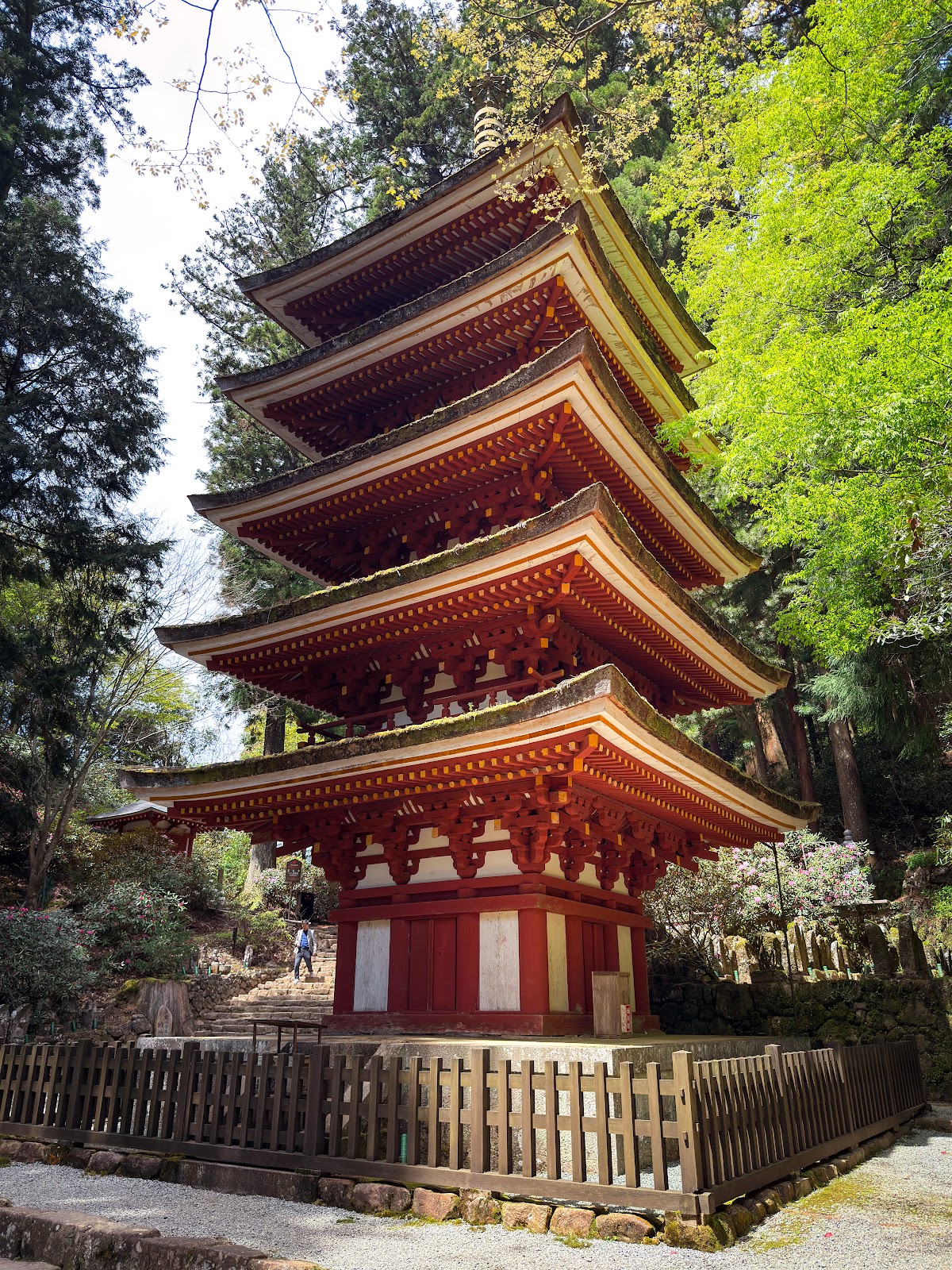
Known as the “Women’s Koyasan,” this is an ancient Buddhist temple of the Shingon sect. With numerous sights to see including the five-story pagoda, a National Treasure, and the main hall. Accessible by bus from Muuro-kuchiono Station and approximately 10 minutes by car from Taguchi Mizuwakenai Shrine.
Ōno Temple
Founded as the western great gate of Muroji Temple, this temple is famous for the Maitreya cliff Buddha (designated as a National Historic Site and Scenic Spot) carved into the bedrock of the opposite bank. Only 5 minutes on foot from Muuro-kuchiono Station with excellent access.
Soni Highland
A famous autumn location for Japanese pampas grass. The highland plateau, at approximately 700 meters in elevation, is covered with pampas grass meadows, particularly known for their beauty at dusk. Approximately 30 minutes by car from Taguchi Mizuwakenai Shrine.
Water Deity Faith in Uda City
Nara Prefecture, including Uda City, has been home to faith in water deities since ancient times. The Four Mizuwakenai Shrines of Yamato (Katsuragi, Yoshino, Tsuge, and Uta) are located at water sources in the mountains surrounding the Nara Basin, playing an important role as places to pray for stable supply of irrigation water.
Relationship with Uta Mizuwakenai Shrine
Taguchi Mizuwakenai Shrine was invited from Uta Mizuwakenai Shrine, an officially designated major shrine. Uta Mizuwakenai Shrine is said to have been founded during the reign of Emperor Sujin and currently possesses precious cultural properties including three main sanctuaries designated as National Treasures.
In the early Heian period, branch divisions were performed in various locations to spread the divine virtues of Uta Mizuwakenai Shrine. Taguchi Mizuwakenai Shrine was founded as one of these and has gathered the faith of the community as the tutelary shrine of Shimotaguchiō district.
Distribution of Mizuwakenai Shrines
Mizuwakenai Shrines exist not only throughout Nara Prefecture but also in Osaka Prefecture and the Hokuriku region. This demonstrates that faith in the deity governing the blessings of water was universally important to people engaged in agriculture.
Taguchi Mizuwakenai Shrine, as a shrine closely connected to the community among these Mizuwakenai Shrines, continues to be carefully preserved today.
Proper Etiquette and Conduct When Worshipping
When worshipping at Taguchi Mizuwakenai Shrine, please observe the following etiquette.
Basic Worship Procedures
- Bow Once Before Passing Through the Gate: A greeting before entering the sacred space
- Walk Along the Edge of the Approach Path: The center is considered the path of the deity
- Purify Yourself at the Water Basin: Cleanse your body and spirit before worshipping
- Two Bows, Two Claps, One Bow: The basic procedure for worshipping at a shrine
Precautions Specific to Mountain Shrine Worship
- Wear Comfortable Clothing and Shoes: Located in a mountainous area, easy-to-walk attire is recommended
- Prepare for the Season: Insect repellent in summer, warm clothing in winter
- Consideration for Nature: Always take trash with you and protect the natural environment
- Quiet Worship: Located within a small village, please be mindful of noise
Regarding Photography
Photography within the grounds is generally permitted, but please note the following:
- Do not photograph inside the main sanctuary or in areas marked as off-limits
- Be considerate of other worshippers
- Remember to approach photography with respect for the shrine and restraint
The Appeal of Taguchi Mizuwakenai Shrine
The greatest appeal of Taguchi Mizuwakenai Shrine lies in its simple and solemn atmosphere nestled in the quiet mountainous environment. Because it has not been commercialized as a tourist destination, you can directly experience the ancient faith as it has been.
Harmony with Nature
The rich nature surrounding the grounds displays its beauty throughout the four seasons. New greenery in spring, deep green in summer, autumn leaves in fall, and snowy landscapes in winter—each season reveals a different face.
Faith Rooted in Community
Taguchi Mizuwakenai Shrine, carefully preserved by local people, remains a living place of faith in modern times. Through community rituals and daily worship, you can experience that ancient faith in the water deity continues even today.
Historical Romance
Ancient Heian period origins, invitation from Uta Mizuwakenai Shrine, the role as guardian of water sources—Taguchi Mizuwakenai Shrine contains much historical romance.
Conclusion: A Recommendation to Visit Taguchi Mizuwakenai Shrine
Taguchi Mizuwakenai Shrine is a historic shrine that stands quietly in the mountains of Uda City, Nara Prefecture. Since its invitation from Uta Mizuwakenai Shrine in the early Heian period, it has gathered the faith of local people for more than a thousand years.
Enshrining Ame no Kuhisamochinokami, the deity governing the blessings of water, it is said to possess divine virtues of agricultural prosperity and water source protection. In its simple, uncommercial atmosphere, you can experience the face of ancient faith—a precious shrine.
While access from Muuro-kuchiono Station is somewhat inconvenient at approximately 15 minutes by car, this means you can enjoy worship in a serene environment. Nearby attractions are abundant, including Uta Mizuwakenai Shrine, Muroji Temple, and Ōno Temple.
Taguchi Mizuwakenai Shrine is important for understanding Nara Prefecture’s water deity faith. Why not visit it yourself? Worship in the clean mountain air, offering gratitude to the water deity, will be a precious experience that refreshes both body and spirit.
-800x450.jpg)
-800x450.jpg)
-800x450.jpg)