.jpg)
Kukami-yama (Niigata Prefecture) Complete Guide|The Charm of a Historic Mountain Connected to Ryokan and Thorough Explanation of Climbing Routes
What is Kukami-yama|A Treasure Trove of History and Nature Representing Niigata Prefecture
Kukami-yama is a mountain with an elevation of 313.2 meters located in Tsubame City, Niigata Prefecture. It is positioned at the southern end of a mountain range colloquially called the “Yahiko Mountain Range,” which extends from Tsunoda Mountain and Yahiko Mountain, and boasts an excellent location facing the Echigo Plain and the Sea of Japan.
Despite being a low mountain, it excels in views, and from the summit, you can overlook the Echigo Plain, the Oagatsugata Waterway, and the Sea of Japan. On clear days, you can even see Sado Island, the Noto Peninsula, and even the Echigo Three Mountains in the distance. Although its elevation is low, it has high historical and cultural value and a rich natural environment, making it one of Niigata Prefecture’s representative mountains, visited by many climbers and tourists throughout the year.
Geographic Features of Kukami-yama
Kukami-yama is located in the nearly central Niigata Prefecture, in the southwestern part of Tsubame City. It lies near the Oagatsugata Waterway, a tributary of the Shinano River, and forms part of the foothills that shape the western edge of the Echigo Plain. The mountain body is relatively gentle, with a complex terrain of multiple ridges and valleys.
Geologically, it is based on Tertiary strata, with volcanic ash and weathered soil deposited on top. This geological structure enables the growth of valuable beech forests that remain on the mountainside, and the beech forest remaining in the lowlands is designated as a natural monument of Niigata Prefecture.
Ryokan and Kukami-yama|The Period of Ascetic Training at the Gogou Hermitage
The primary reason Kukami-yama is known nationally is that Ryokan (1758-1831), a Zen monk from the late Edo period who was also known as a poet and calligrapher, spent his ascetic training on this mountain.
Ryokan’s Life on Kukami-yama
From around Kansei 2 (1790) to around Bunka 13 (1816), Ryokan lived for over 20 years in the Gogou Hermitage (Gogouuan) located within the temple grounds of Kukami-ji at the mid-slope of Kukami-yama. This hermitage has been restored and preserved, and many pilgrims visit it as an important historic site related to Ryokan.
Life in the hermitage was extremely simple, but Ryokan engaged in Zen training and left behind numerous poems and calligraphy. His life, sustained by food obtained through begging, playing with children, and living in unity with nature, continues to touch the hearts of many people today.
Historic Sites Related to Ryokan
Besides the Gogou Hermitage, many historic sites related to Ryokan remain on Kukami-yama. You can enjoy climbing while tracing Ryokan’s footsteps, including Kukami-ji Temple where Ryokan trained, poetry steles by Ryokan, and mountain paths that Ryokan was said to have enjoyed walking.
There is also a Ryokan Memorial Hall at the foot of the mountain, where visitors can gain a deeper understanding of Ryokan through displays of his calligraphy, personal effects, and materials relating to his life.
Kukami-ji Temple|The Oldest Venerable Temple in the Prefecture
Kukami-ji Temple, located at approximately 200 meters elevation on the mid-slope of Kukami-yama, is known as the oldest temple in Niigata Prefecture and is an ancient temple of the Shingon sect.
History of Kukami-ji Temple
Kukami-ji Temple is said to have been founded in Wado 2 (709) of the Nara period, boasting a history of over 1,300 years. It is said to have been founded by the Ochi clan, a powerful family in Echigo Province, and has long been revered as a sacred site.
The temple grounds feature numerous structures including the main hall, five-story pagoda, guest hall, and storage building. In particular, the vermilion-painted five-story pagoda, which was rebuilt in Heisei 21 (2009), can be seen from a distance as a symbol of Kukami-yama. This five-story pagoda stands at a height of approximately 30 meters and is a rare wooden five-story pagoda in Niigata Prefecture.
Beech Forest around Kukami-ji Temple
A pristine beech forest remains in and around the temple grounds of Kukami-ji, which is extremely rare for a lowland area at around 300 meters elevation. Normally, beeches are trees that grow in mountainous areas at elevations of 800 meters or higher, but on Kukami-yama, special weather conditions and topography allow beeches to grow even in lowlands.
This “rare beech forest remaining in the lowlands” is academically valuable and is designated as a natural monument of Niigata Prefecture. The climbing trail through the beech forest is cool even in summer and allows you to enjoy nature in all four seasons.
Climbing Routes on Kukami-yama|For Beginners to Advanced Climbers
Multiple climbing routes are maintained on Kukami-yama, and you can choose according to your fitness level and experience. Due to its low elevation and lack of dangerous areas, it is popular with climbing beginners and families with children.
Kukami-ji Temple Side Trailhead Course (For Beginners・Shortest Route)
Time Required: Round trip approximately 1 hour 30 minutes
Difficulty Level: For beginners
The most common course from the Kukami-yama Visitor Center (with parking) via Kukami-ji Temple to the summit. Since the Visitor Center is accessible by car, the elevation gain is only about 100 meters, and it can be enjoyed as hiking rather than mountain climbing.
After passing the five-story pagoda, you enter a more formal climbing trail, but it is well-maintained, and you can reach the summit in about 30 minutes. Along the way, there are historic sites related to Ryokan and viewpoint areas, allowing you to enjoy both nature and history simultaneously.
Miyamae Course (For Intermediate Climbers)
Time Required: Round trip approximately 2 hours 30 minutes
Difficulty Level: For intermediate climbers
This course begins at the Miyamae settlement at the foot of Kukami-yama. With an elevation gain of about 300 meters, you can enjoy the full scope of Kukami-yama. While there are some relatively steep sections on the trail, there are no dangerous areas, and it provides appropriate exercise.
Along the way, you can enjoy views of the Echigo Plain and the Sea of Japan from open viewpoints, and experience a climbing adventure with a sense of accomplishment. You can also visit Kukami-ji Temple on the way down.
Course from Michi-no-Eki Kukami
Time Required: Round trip approximately 3 hours
Difficulty Level: For intermediate climbers
This course starting from Michi-no-Eki Kukami (roadside station) allows you to enjoy rural landscapes while climbing. The route passes through settlements before gradually entering mountain trails, allowing you to feel the connection between community life and nature.
Loop Course (For Advanced Climbers)
Time Required: Approximately 4 hours
Difficulty Level: For advanced climbers
There is also a loop course that goes around multiple peaks on Kukami-yama, suitable for those confident in their fitness level or who wish to enjoy serious trekking. This course covers the highlights including the Asahi Mountain Observation Platform and the Sengan-do Suspension Bridge.
Points of Interest on Kukami-yama|Scenic Spots and Tourist Sites
Panoramic View from the Summit
From the summit of Kukami-yama (elevation 313.2 meters), a 360-degree panorama unfolds. To the northwest, you can see the Sea of Japan and Sado Island; to the northeast, the Echigo Plain and the Echigo Three Mountains (Hakkai Mountain, Nakano Peak, and Komagatake); to the southwest, Mount Yahiko; and to the southeast, the Shinano River and Oagatsugata Waterway.
The view on clear days is particularly spectacular, and you can sometimes see as far as the Noto Peninsula. There is a gazebo at the summit where you can rest and leisurely enjoy the scenery.
Asahi Mountain Observation Platform
The Asahi Mountain Observation Platform on the mid-slope of Kukami-yama is an excellent viewpoint offering a different perspective on the Echigo Plain and Oagatsugata Waterway than the summit. It is known particularly as a place where you can overlook the entire Oagatsugata Waterway and experience the scale of this massive water management facility.
The observation platform is about a 15-minute walk from Kukami-ji Temple and is equipped with barrier-free access, allowing wheelchair visitors to enjoy it.
Sengan-do Suspension Bridge
The Sengan-do Suspension Bridge, which spans a valley on Kukami-yama, is a suspension bridge approximately 124 meters long that is popular as a spot for thrilling experiences. From the bridge, you can look down on deep valleys and rich forests, and the scenery is particularly beautiful during the seasons of fresh greenery and autumn leaves.
Gogou Hermitage
The Gogou Hermitage, where Ryokan lived for about 20 years, is located about a 10-minute walk from Kukami-ji Temple. The current structure is a restoration, but you can feel the atmosphere of the simple hermitage where Ryokan lived.
A poetry stele by Ryokan stands before the hermitage, where you can contemplate Ryokan’s world in the quiet forest.
The Four Seasons on Kukami-yama|Seasonal Charm
Spring (March~May)
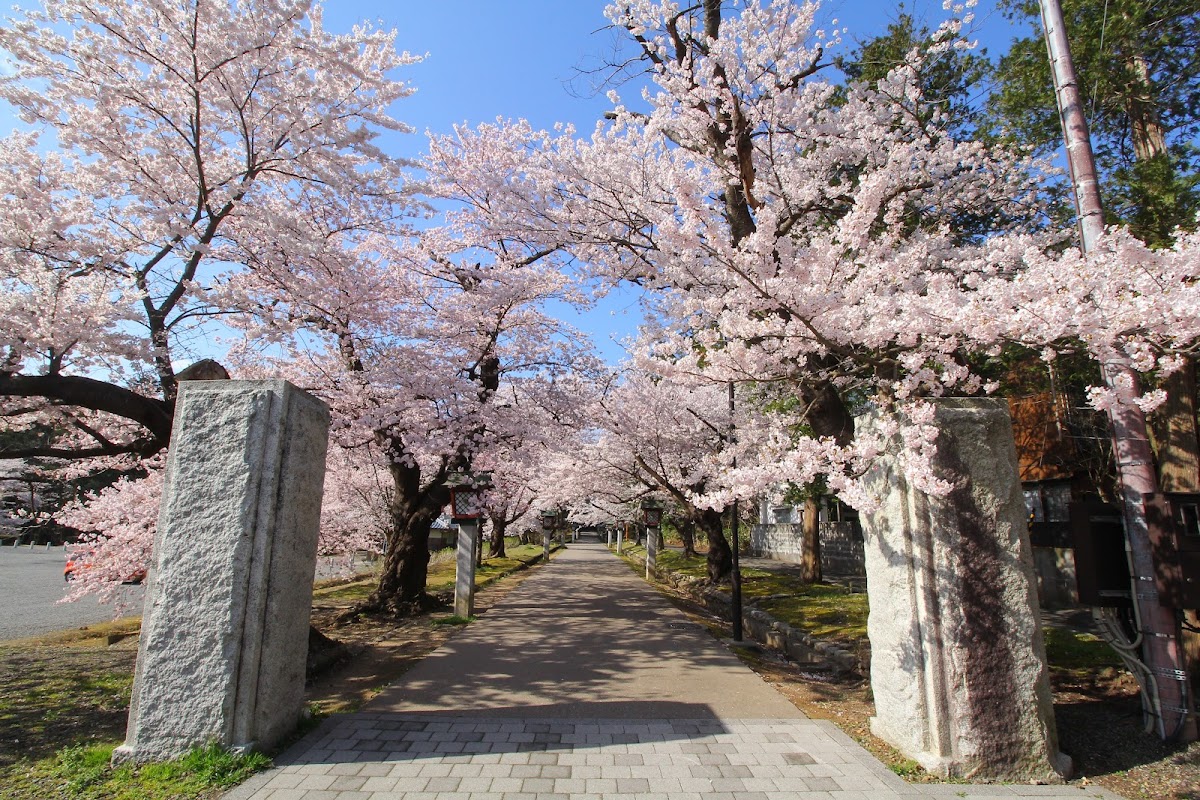
In spring, wild cherry blossoms and Japanese azaleas bloom in splendor on Kukami-yama, and the entire mountain becomes tinted in pale pink. The best viewing period is from mid-April to early May, attracting many flower viewing visitors. The beauty of fresh greenery is also exceptional, with young beech leaves shining in vivid green.
The temperature is mild, making it the ideal season for climbing. However, shortly after snowmelt, trails may be muddy, so caution is necessary.
Summer (June~August)
Summer on Kukami-yama features dense greenery, making it ideal for forest bathing. While temperatures are relatively high due to the low elevation, it remains cool within the beech forest and is a comfortable retreat. Early morning climbing is recommended, where you can view the sunrise from the summit. However, insects are numerous in summer, so insect repellent measures are necessary.
Autumn (September~November)
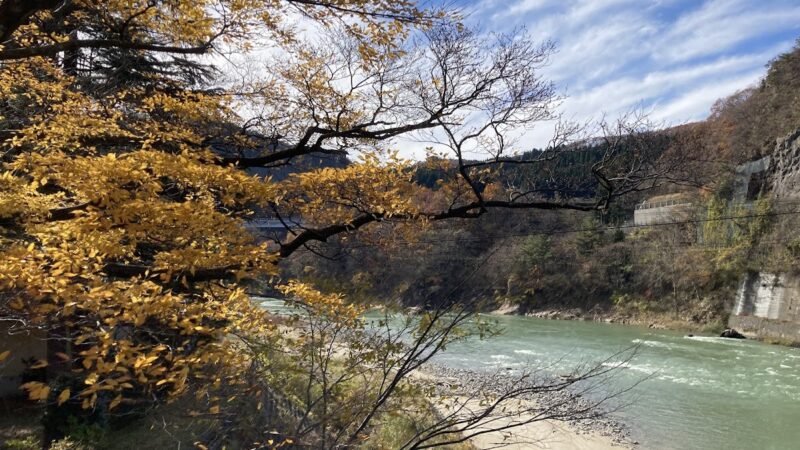
Autumn is the most beautiful season on Kukami-yama. From late October through early November, beeches and maples turn brilliant shades of red and yellow, dyeing the entire mountain. During peak foliage, many climbers visit, sometimes causing congestion on trails.
With clear air, the view from the summit is the most beautiful of the year, and you can often see Sado Island and the Noto Peninsula clearly.
Winter (December~February)
Winter on Kukami-yama is covered in snow and enveloped in silence. In heavy snow years, accumulation can exceed one meter, requiring winter mountaineering equipment. However, due to the low elevation, you can enjoy relatively safe snow mountain climbing.
On clear days, the contrast between snow scenery and blue sky is beautiful, allowing you to enjoy winter-specific scenic beauty. It is reassuring to have crampons or snowshoes.
Access and Parking Information
Access by Car
Via Hokuriku Expressway:
- About 15 minutes from Sanjo-Tsubame IC (approximately 10 km)
- About 20 minutes from Nakanosima-Mitsuke IC (approximately 12 km)
Car access is available to the Kukami-yama Visitor Center, which has complete parking facilities.
Parking Information:
- Kukami-yama Visitor Center Parking: approximately 50 regular vehicles (free)
- Michi-no-Eki Kukami Parking: approximately 100 regular vehicles (free)
- Kukami-ji Temple Parking: approximately 30 regular vehicles (free)
Access by Public Transportation
By JR:
- Get off at “Bunsuizu Station” on the Echigo Line, then about 10 minutes by taxi
- Get off at “Ensan-Sanjo Station” on the Yahiko Line, then about 20 minutes by taxi
By Bus:
- Tsubame City community buses operate, but with limited frequency, so it is recommended to check the schedule in advance.
Nearby Tourist Sites
Oagatsugata Waterway
The Oagatsugata Waterway, immediately near Kukami-yama, is a representative Japanese water management facility built to prevent flooding of the Shinano River. This massive artificial waterway extends approximately 10 kilometers and is awe-inspiring in scale.
A walking trail is maintained along the waterway, allowing leisurely walks. The Oagatsugata Waterway Museum provides opportunities to learn about the history and water management technology of the waterway.
Michi-no-Eki Kukami
At the Michi-no-Eki Kukami (roadside station) at the foot of Kukami-yama, you can purchase fresh local produce and specialty items. Products include metal Western tableware, a specialty of Tsubame City, and locally harvested vegetables and rice.
The restaurant serves dishes using local ingredients and is ideal for meals and rest before and after climbing.
Yahiko Hot Spring Resort
Located about 20 minutes by car from Kukami-yama, the Yahiko Hot Spring Resort is a hot spring area spread around the foot of Mount Yahiko. It is ideal for soothing tired bodies after climbing, and many day-use bathing facilities are available.
The spring quality is alkaline simple hot spring, gentle on the skin, and said to have beauty-enhancing effects.
Tsubame City Industrial History Museum
Tsubame City is world-renowned for the production of metal Western tableware. The Tsubame City Industrial History Museum exhibits the history, techniques, and products of Tsubame’s metal processing, allowing visitors to experience the excellence of Japanese traditional crafts.
Precautions and Preparations for Climbing
Clothing and Equipment
Although Kukami-yama is low in elevation and day climbing is the basic approach, the following equipment is recommended:
Essential Equipment:
- Hiking boots or trekking shoes
- Backpack (15~20 liters)
- Rain gear (rain jacket and pants)
- Drinking water (500 ml~1 liter)
- Trail snacks (rice balls, chocolate, etc.)
- Map or smartphone (with GPS function)
- Headlamp (with spare batteries)
- First aid kit
Useful Equipment:
- Trekking poles
- Hat, sunglasses
- Gloves
- Towel
- Change of clothes
- Camera
Safety Precautions
- Submit a climbing notification (climbing notification boxes are available at trailheads)
- Avoid climbing alone; travel with multiple people
- If weather worsens, do not push forward; turn back
- Stay on designated trails
- Be aware of wildlife (bears, wild boar, etc.) and carry a bear bell
- Take all trash with you
- Use of fire is prohibited
Best Season
Kukami-yama can be climbed year-round, but the particularly recommended periods are as follows:
- Spring (April~May): Cherry blossoms and fresh greenery are beautiful
- Autumn (October~November): Autumn foliage is spectacular and views are excellent
- Periods to Avoid: Extreme summer heat, heavy snow in deep winter
History and Culture of Kukami-yama
A Sacred Mountain with Ancient Faith
Kukami-yama has long been revered as a sacred mountain. The mountain name “Kukami” is said to mean either “a mountain standing above the land” or “a mountain protecting the land.”
After Kukami-ji Temple was founded in the Nara period, it flourished as a place for ascetic training in the Shugendo tradition, and many ascetics practiced on the mountain. In the medieval period, it was revered as the guardian deity of Echigo Province and received the patronage of the Uesugi clan during the Sengoku period.
Kukami-yama in Modern Times
After the Meiji period, as Ryokan’s achievements were reevaluated, Kukami-yama became nationally known as a place with ties to Ryokan. In the early Showa period, climbing trails were developed and it developed as a tourist destination.
After World War II, nature conservation activities became active, and efforts to protect the valuable beech forest progressed. Today, as a rural mountain where history, culture, and nature are in harmony, it is carefully preserved as a community treasure.
Model Courses to Enjoy Kukami-yama
Day-trip Tourism Model Course (Total Time: approximately 5 hours)
9:00 Arrive at Michi-no-Eki Kukami, gather information
9:30 Move to Kukami-yama Visitor Center
10:00 Visit Kukami-ji Temple, view the five-story pagoda
10:30 Visit Gogou Hermitage
11:00 Begin climbing (Kukami-ji Temple side course)
11:30 Arrive at summit, lunch and rest
12:30 Begin descent
13:00 Stop at Asahi Mountain Observation Platform
13:30 Sengan-do Suspension Bridge
14:00 Arrive at Kukami-yama Visitor Center
14:30 Shopping and rest at Michi-no-Eki Kukami
15:00 View the Oagatsugata Waterway
16:00 Bathe at Yahiko Hot Spring
18:00 Head home
Serious Mountain Climbing Model Course (Total Time: approximately 6 hours)
8:00 Begin climbing from Miyamae trailhead
9:30 Arrive at Kukami-ji Temple, rest
10:00 Visit Gogou Hermitage
10:30 Depart for summit
11:00 Arrive at summit, lunch
12:00 Head to Asahi Mountain Observation Platform via loop course
12:30 Sengan-do Suspension Bridge
13:00 Descend via alternate route
14:00 Arrive at Miyamae trailhead
Conclusion|Fully Experience the Charm of Kukami-yama
Despite being a low mountain with an elevation of 313 meters, Kukami-yama encompasses history, culture, nature, and views, making it a remarkably charming mountain. You can feel spirituality as a place with ties to Ryokan, and there are abundant points of interest including Kukami-ji, the oldest temple in the prefecture, and a valuable beech forest.
With diverse climbing routes suitable for beginners through advanced climbers, it is safe for families with children to enjoy. The beautiful nature of each season and the spectacular views from the summit provide deep emotional experiences to all who visit.
When visiting Niigata Prefecture, be sure to climb Kukami-yama, and experience the rich nature and history of a rural mountain while tracing Ryokan’s footsteps. After climbing, you can also enjoy nearby tourist sites and hot springs, making for a fulfilling day.
-800x450.jpg)
-800x450.jpg)