.jpg)
Complete Guide to Ōchi River Gorge and Kanagura Falls (Saitama Prefecture) | Autumn Foliage Peak Season, Access, and Nearby Attractions
Located in the Ōtaki district of Chichibu City, Saitama Prefecture, the Ōchi River Gorge is a spectacular scenic spot created by the nature of the inner Chichibu region, and is particularly a renowned autumn foliage destination visited by many tourists and photographers during the fall season. Among these, the area known as “Kanagura Falls” is known for its beautiful scenery of mountain streams and autumn colors. This article introduces the charm of Ōchi River Gorge and Kanagura Falls in full.
What is Ōchi River Gorge and Kanagura Falls?
The Ōchi River Gorge is a ravine that spreads along the Ōchi River flowing through the Ōtaki area of Chichibu City, and is located along National Route 140 (Saiko-Kai Highway). “Kanagura Falls” refers to a particularly scenic location near the entrance of this gorge and is cherished as the gateway to tourism in the Ōchi River Gorge.
The Origin of the Name Kanagura Falls
The intriguing name “Kanagura Falls” has an old legend behind it. It is said that travelers captivated by the extraordinarily beautiful scenery of the ravine would lean over to peer into the valley, and many would drop their kanagura (wallets) that they had in their pockets, which is how the place got its name. The scenery is so breathtaking that it captivates people to such an extent.
Historical Background of the Ōchi River
The ominous name “Ōchi River” (大血川) also has historical origins. After the death of Taira no Masakado, his wife Kikyo and 99 attendants fled to Daiyo Temple upstream, but they were cornered by pursuers and committed mass suicide near the source of the river. According to legend, the river water turned red for a time, which is how it came to be called the “Ōchi River” (literally “Great Blood River”). Knowing this historical background adds a different dimension to appreciating the gorge’s scenery.
The Charm of the Ōchi River Gorge and Kanagura Falls Autumn Foliage
Types of Trees That Change Color
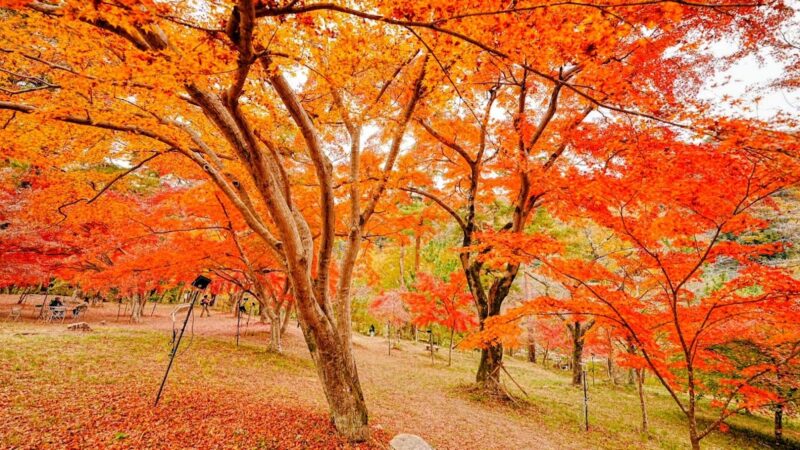
The Ōchi River Gorge features a diverse range of trees that display vibrant autumn colors. The main foliage trees are as follows:
- Japanese Maple: Bright red colors adorn the gorge
- Acer: Display a variety of colors from deep crimson to orange
- Nana Kamado: Characteristic bright red foliage
- Beech: Golden leaves shine in the autumn light
- Azalea: Add shades ranging from red to purple-tinted colors
The gradient created by these trees is truly a masterpiece created by nature.
Contrast Between Mountain Streams and Autumn Foliage
The greatest charm of the Ōchi River Gorge is the contrast between the clear stream and the autumn foliage. Since you descend through the gorge from National Route 140, you can enjoy the foliage from below, creating an ideal scenic backdrop for a drive. The foliage reflected in the blue water surface and the contrast between the rocky cliffs and the colored trees are perfect for photography.
As you proceed along the walking path, there are multiple viewpoints where you can see the stream and autumn foliage simultaneously. Particularly, in places slightly further into the gorge from Kanagura Falls, you can enjoy a spectacular view where the flow of the stream and foliage become one.
Autumn Foliage Peak Season and Color Development Status
Peak Season
The autumn foliage of the Ōchi River Gorge and Kanagura Falls typically progresses according to the following schedule:
- Beginning to color: Late October
- Peak foliage: Early November to mid-November
- Leaf fall: Late November
Depending on altitude and temperature, the progression of coloring varies, but the approximately two-week period from early to mid-November is the best time to enjoy the most beautiful autumn foliage. Because of its relatively high altitude among Saitama Prefecture’s autumn foliage spots, the foliage develops earlier than in lowland areas.
Oku-Chichibu Ōtaki Autumn Foliage Festival
To coincide with the autumn foliage season, the “Oku-Chichibu Ōtaki Autumn Foliage Festival” is held annually from late October to mid-November. During this event period, special programs are sometimes held at surrounding tourist facilities and restaurants, allowing you to enjoy a more enriched Chichibu experience.
We recommend checking the latest foliage status on the Chichibu City Tourism Association website and related facilities before visiting. The peak season timing may shift depending on weather conditions, so advance information gathering is important.
Access and Parking Information
By Car
Route from the Kan’etsu Expressway
- Exit at “Hanazono IC” on the Kan’etsu Expressway
- Take National Route 140 (Saiko-Kai Highway) toward Chichibu
- Pass through Chichibu city and head toward Ōtaki for approximately 1 hour and 30 minutes
- Arrive at Kanagura Falls by following the signs
National Route 140 is a main road connecting Chichibu and Yamanashi, and the drive itself offers an opportunity to enjoy gorge scenery. However, congestion is expected during the autumn foliage season, so plan with plenty of time to spare.
Parking Information
There is parking space near the entrance to the Ōchi River Gorge. Since the number of parking spaces is limited, early morning visits are recommended, especially on weekends or at peak foliage time. There are also places where you can park along the shoulder of National Route 140, but be careful not to obstruct traffic.
By Public Transportation
By Train and Bus
- Travel by train to either Seibu Railway “Seibu-Chichibu Station” or Chichibu Railway “Mimineokuchi Station”
- By taxi from Mimineokuchi Station for approximately 25 minutes (approximately 15km)
Access by public transportation is limited, so renting a car or making a taxi reservation in advance is recommended. There are car rental shops around Mimineokuchi Station, allowing you to freely enjoy sightseeing in the Chichibu area.
Expected Congestion Times and Avoidance Strategies
Peak Congestion Times
The Ōchi River Gorge and Kanagura Falls experience congestion mainly on weekends during the autumn foliage season. The following times are particularly busy:
- 10:00 AM to 2:00 PM: Most congested time
- Mornings on weekends and holidays: Parking lots may be full
- 3-day holidays in early November: Peak congestion period of the year
Points for Avoiding Congestion
To enjoy the autumn foliage comfortably, the following measures are effective:
- Early morning visits: Visiting around 7:00-8:00 AM allows you to avoid crowds. The foliage illuminated by morning light is also exceptional.
- Visiting on weekdays: If possible, weekday visits are recommended.
- Late afternoon visits: After 3:00 PM, it becomes relatively less crowded. Foliage tinged by the setting sun is a beautiful sight.
- Slightly off-peak timing: Late November foliage is still beautiful enough to enjoy.
How to Enjoy the Ōchi River Gorge and Kanagura Falls Autumn Foliage
Walking Path Exploration
There is a walking path maintained along the gorge from Kanagura Falls, where you can enjoy a hike on foot. Round-trip time takes approximately 30 minutes to 1 hour. The path has some slopes and steps, so comfortable walking shoes are recommended.
As you proceed along the path, you can view the foliage and stream from various angles, each revealing different characteristics. Particularly at points where you can descend to the stream, you can observe the foliage reflected on the water’s surface up close.
Best Photography Spots
Here are some popular shooting locations for photographers:
- Observation spot on National Route 140: A classic photography location where you can overlook the entire gorge
- On the bridge along the walking path: You can capture the stream and foliage together
- Rocky areas along the stream: Photography utilizing water surface reflection is possible
- Early morning misty scenery: Creates a fantastical atmosphere
Use of tripods requires consideration for other tourists. Also, avoid photography in dangerous areas and prioritize safety.
Enjoying by Drive
Driving along National Route 140 is also one of the attractions of the Ōchi River Gorge. The foliage viewed through the car window is beautiful like a moving painting. However, driving while viewing foliage requires caution. Park in safe locations to enjoy the scenery.
The road continuing from the Ōchi River Gorge to Mitsunine Shrine also has autumn foliage spots scattered throughout, and is popular as a Chichibu area autumn foliage driving course.
Nearby Autumn Foliage Spots
Mitsunine Mountain Foliage
Mitsunine Mountain, located approximately 30 minutes by car from the Ōchi River Gorge, is a mountain region with Myoho-dake (1,102m) as its main peak and is known as a power spot with Mitsunine Shrine. The Mitsunine mountain area is also known as an autumn foliage destination, and many tourists visit both spots together.
The foliage within the shrine grounds and along the approach path is also impressive, allowing you to enjoy autumn colors in a sacred atmosphere. One of the mountains visible from the gorge is Myoho-dake, and the mountain foliage visible from the gorge also creates a beautiful landscape.
Nakatsugō Gorge
Further up from the Ōchi River Gorge is Nakatsugō Gorge, called “Saitama’s Oirase,” is an autumn foliage destination. The ravine scenery spanning approximately 10km is spectacular, making it a signature scenic spot in the Oku-Chichibu region. Visiting Nakatsugō Gorge together with the Ōchi River Gorge allows you to fully appreciate Chichibu’s gorge beauty.
Chichibu Lake (Nise Dam)
Chichibu Lake, located approximately 15 minutes by car from the Ōchi River Gorge, is an artificial lake formed by the Nise Dam. The foliage reflected on the lake surface is beautiful, and observation platforms around the dam offer a sweeping view. You can also enjoy autumn foliage while strolling the lakeshore, experiencing a different type of autumn foliage scenery than the Ōchi River Gorge.
Nearby Hot Spring Facilities
After autumn foliage viewing, it is recommended to relax at one of Chichibu’s hot springs. Within a 10km radius of the Ōchi River Gorge, there are the following hot spring facilities:
Chichibu Ogashino Hot Spring Inn Ryozan-haku
Located approximately 40 minutes by car from the Ōchi River Gorge, Chichibu Ogashino Hot Spring Inn Ryozan-haku is a quiet hot spring inn surrounded by Chichibu’s mountains. The inn is known for its natural hot spring water from the source, and day-use bathing is also available. From the open-air bath, you can view the Chichibu mountain range, and during the foliage season, you can enjoy the hot spring while viewing the colored mountains.
The cuisine using local ingredients is also highly regarded, and an extended stay to leisurely enjoy Chichibu sightseeing is recommended.
Miyamoto no Yu
The day-use hot spring facility “Miyamoto no Yu” near Mimineokuchi Station is located approximately 30 minutes by car from the Ōchi River Gorge. It is an affordable hot spring facility that is easily accessible and popular with local residents.
It features an indoor bath and open-air bath, allowing you to enjoy hot springs while experiencing Chichibu’s nature. A dining area is also attached, where you can taste Chichibu specialties such as soba and udon.
Mangwan no Yu
Located near Chichibu Kegon Waterfall, “Mangwan no Yu” is approximately 50 minutes by car from the Ōchi River Gorge. It is a popular day-use hot spring facility in the Chichibu area, with spacious bathhouses and varied baths being its main attractions.
From the open-air bath, you can view the beauty of the Nagatorodōge ravine, and the foliage scenery is particularly beautiful during the autumn foliage season. The relaxation space and dining area are well-equipped, allowing you to spend a full day comfortably.
Nearby Attractions and Tourist Spots
Kumotori Mountain
Located at the source of the Ōchi River Gorge, Kumotori Mountain (2,017m) is one of Japan’s 100 Famous Mountains, situated at the border of Tokyo, Saitama, and Yamanashi prefectures. The starting point for climbing, Mitsunine Shrine, and the Kamozawa route can be accessed from the Ōchi River Gorge.
A full mountaineering expedition requires a 1-night 2-day itinerary, but Kumotori Mountain during the autumn foliage season offers spectacular summit views and is popular among mountaineering enthusiasts. Those with sufficient stamina may plan Kumotori Mountain climbing in combination with the Ōchi River Gorge foliage.
Mitsunine Shrine
Known as one of the leading power spots in the Kanto region, Mitsunine Shrine is located approximately 30 minutes by car from the Ōchi River Gorge. Located at an altitude of around 1,100m, the shrine is characterized by its dignified main building and mystical atmosphere.
The foliage around the shrine’s Zuishinmon gate and worship hall is also beautiful, allowing you to enjoy both worship and autumn foliage viewing simultaneously. The shrine’s original commemorative seal is popular, and many worshippers visit.
Michi no Eki Ōtaki Onsen (Roadside Station Ōtaki Hot Spring)
Located approximately 10 minutes by car from the Ōchi River Gorge, “Michi no Eki Ōtaki Onsen” is a convenient facility for rest, dining, and souvenir shopping. Local specialty products, fresh vegetables, and Chichibu confectionery are all available, and it can also be used as a sightseeing base.
The facility also includes a day-use hot spring “Yūyūkan,” making it perfect for stopping by after exploring the Ōchi River Gorge. The dining hall offers Chichibu specialties such as soba and waji cutlet bowl (katsudon).
Daiyo Temple
Daiyo Temple, associated with the Taira no Masakado legend that gave rise to the name Ōchi River, is located in the upper reaches of the Ōchi River Gorge. Though now unattended, it is an interesting place to understand historical background.
Visiting requires traveling along a forest road and is off the typical tourist route, but it is an intriguing spot for history enthusiasts.
Precautions and Recommended Attire for Your Visit
Clothing and Belongings
November temperatures in the mountainous areas of Chichibu are low, and especially early morning and evening temperatures drop significantly. Refer to the following for recommended clothing and belongings for your visit:
Clothing
- Warm clothes (fleece or down jacket)
- Comfortable walking shoes (essential for walking path exploration)
- Hat or gloves (for early morning or late afternoon visits)
- Rainwear (mountain weather changes quickly)
Belongings
- Camera/smartphone (don’t forget chargers)
- Drinking water
- Light snacks (few dining options in the area)
- Insect repellent spray (may be necessary depending on season)
Safety Precautions
- Walking path use: Wet rocks and fallen leaves create slippery areas. Watch your footing carefully.
- Stream proximity: Waterside areas are slippery and dangerous. Special caution is needed when traveling with children.
- Wildlife: The Chichibu mountainous area is home to bears and wild boar. Avoid traveling alone and carry something that makes noise, such as a bell.
- Cell phone reception: Mountain areas may have poor signal. Check maps in advance.
Manners
To preserve the beautiful natural environment, follow these guidelines:
- Always take trash with you
- Do not pick or damage plants
- Avoid entering restricted areas
- Show consideration for other tourists (when taking photos, etc.)
- Do not park along the roadside
Gourmet Information Around the Ōchi River Gorge
Chichibu Soba
The Chichibu area is known as a region producing high-quality soba. Consider stopping at a local soba shop on the way to or from the Ōchi River Gorge. The rich flavor of hand-made soba is an essential part of autumn Chichibu sightseeing.
Waraji Cutlet Bowl
Famous as Chichibu’s B-class gourmet, waraji cutlet bowl is a rice bowl topped with a large cutlet. Available at roadside stations and restaurants in Chichibu city, it is popular with tourists for its hearty portions.
Chichibu Game Cuisine
Mountain restaurants in the Chichibu area offer game cuisine using deer and wild boar meat. Dishes featuring local ingredients offer a unique Chichibu taste experience.
Conclusion
The Ōchi River Gorge and Kanagura Falls is a premier autumn foliage destination boasting Chichibu, Saitama Prefecture, offering spectacular views created by the contrast between mountain streams and autumn foliage. During the peak season from early to mid-November, a variety of trees including Japanese maple, acer, nana kamado, beech, and azalea display their colors, captivating all who visit.
Despite its convenient location along National Route 140, it is a valuable place where you can feel the deep nature of Chichibu, offering various ways to enjoy it including driving, hiking, and photography. The surrounding area is also well-equipped with nearby spots such as Mitsunine Shrine, hot spring facilities, and roadside stations, allowing you to leisurely savor Chichibu’s autumn over a full day.
For avoiding crowds, early morning or weekday visits are recommended, but beautiful foliage scenery awaits at any time you visit. Prepare appropriate warm clothing and comfortable footwear, take safety precautions, and enjoy the wonderful autumn foliage of the Ōchi River Gorge and Kanagura Falls.
The historically-based name of the Ōchi River, the legend of dropping wallets in such spectacular scenery, and the natural beauty passed down to modern times—all of these elements combine to make the Ōchi River Gorge and Kanagura Falls a premier autumn foliage destination in the Kanto region worthy of a visit.
-800x450.jpg)
-800x450.jpg)