Oboke Tokushima Complete Guide | Thorough Explanation of Gorge Beauty, Access, and Tourism Information
Oboke (大歩危), located in Miyoshi City, Tokushima Prefecture, is a magnificent gorge created by the Yoshii River over 200 million years. Together with Koboke, it is designated as a National Natural Monument and scenic site, and as a representative scenic spot in Shikoku, it attracts many tourists from both Japan and abroad. This article provides a thorough explanation of the charm of this beautiful gorge, covering Oboke’s geographical features, the origin of its name, tourist attractions, access methods, and surrounding facilities.
Table of Contents
- What is Oboke
- Geography and Geological Features
- Name Origin and History
- Tourist Attractions
- Access Information
- Surrounding Facilities and Scenic Sites
- Oboke Hot Spring Area
- How to Enjoy Throughout the Seasons
- National Route 32 Oboke Tunnel Construction Plan
- Precautions When Visiting
What is Oboke
Oboke (大歩危) is a gorge located in the southwestern part of Miyoshi City, Tokushima Prefecture, approximately 6 km downstream from the Kochi Prefecture border. This gorge, which spreads across the middle reaches of the Yoshii River, is formed by a topographical feature called a mature valley and is also called Oboke Gorge (大歩危峡).
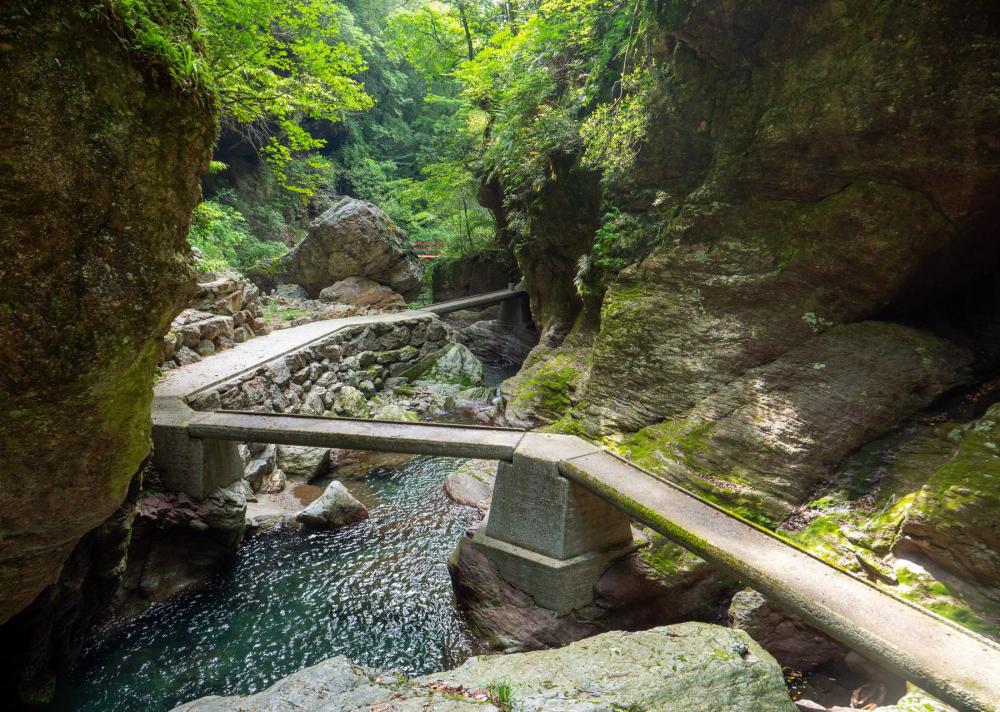
Together with Koboke (小歩危), it is designated as a National Natural Monument and scenic site as “Oboke Koboke,” with its range extending approximately 8 kilometers. The turbulent Yoshii River, which cuts across the Shikoku Mountains, has carved away the bedrock over long periods, forming the majestic V-shaped valley seen today.
Characteristics of Oboke
- Nationally Designated Natural Monument and Scenic Site: Designated as a cultural property as “Oboke Koboke”
- Length of Gorge: Approximately 8 kilometers (including Koboke)
- Geological Age: Composed of rocks from approximately 200 million years ago
- Location: Nishi-u, Yamashiro Town, Miyoshi City, Tokushima Prefecture
- River: Yoshii River (the largest river in Shikoku)
Oboke is not merely a scenic spot but also a place of high value in geological terms. As an important component of the Miyoshi Geopark, it stands as a precious natural heritage telling the story of Earth’s history.
Geography and Geological Features
Geographical Location
Oboke is located in the western part of Tokushima Prefecture, in Miyoshi City, and spreads along the Yoshii River flowing through the nearly central part of the Shikoku Mountains. The elevation is around 200 meters, and the surrounding area is rugged terrain surrounded by mountains with elevations exceeding 1,000 meters.
The Yoshii River, with a total length of 194 kilometers, is the largest river in Shikoku, flowing through Kochi and Tokushima prefectures. Near Oboke, the river narrows and becomes rapids, carving away bedrock as it flows. These fierce currents are the primary factor that produced Oboke’s unique gorge beauty.
Geological Value
The greatest feature of Oboke lies in its geological structure. The rocks constituting the gorge are called schist, a metamorphic rock, and the following types are primarily observed:
- Arenaceous Schist (砂質片岩): Formed when sandstone undergoes metamorphic transformation
- Pelitic Schist: Rock created when mudstone metamorphoses
- Greenschist: Created when basaltic volcanic rock undergoes metamorphism
These rocks were formed approximately 200 million years ago during the Jurassic Period of the Mesozoic Era, having undergone high-pressure, low-temperature metamorphic transformation due to plate subduction. The rock surfaces display characteristic striped patterns, which are the result of mineral rearrangement due to metamorphic action.
V-Shaped Valley Formation Process
The V-shaped valley of Oboke is a type of gorge called a mature valley. A mature valley is a valley formed when a river continues downward erosion while keeping pace with mountain range uplift.
The formation process is as follows:
- Initial Stage: The Yoshii River flowed through relatively gentle topography
- Uplift Begins: Uplift of the Shikoku Mountains commences
- Downward Erosion: The river continues erosion downward in opposition to the uplift
- V-Shaped Valley Formation: A deep V-shaped valley is completed through long periods of erosion
This process has taken several million years or more, and erosion continues today. The cliffs of Oboke reach heights of tens of meters, and their powerful scenery overwhelms visitors.
Geological Significance
The rocks of Oboke serve as important clues for understanding the formation process of the Japanese archipelago. The presence of schist indicates that this area was once a subduction zone of oceanic plates, making it valuable research material for plate tectonics studies.
The Miyoshi Geopark positions Oboke as a “window to the Earth,” utilizing it as a site for geological education and research. Explanatory plaques are installed along the gorge, allowing general tourists to learn about geology’s fascination.
Name Origin and History
The Origin of the Name “Oboke”
The unique place name Oboke has several theories about its origin. The most widely known is the following:
Folk Etymology Theory: “Taking large steps is dangerous, hence Oboke; taking small steps is also dangerous, hence Koboke.” This theory has been passed down locally for a long time and is cherished as an expression of the gorge’s ruggedness.
Ancient Language Theory: A more academic theory suggests that it derives from the ancient word “Hoke.” “Hoke” is said to be an old Japanese word meaning “cliff” or “steep place,” which remained as a Shikoku regional dialect. It is theorized that “O-Hoke” and “Ko-Hoke” transformed into “Oboke” and “Koboke.”
Topographical Description Theory: Another theory states that a word expressing the appearance of cliffs carved away by the fierce currents of the Yoshii River became the place name. “Hoke” literally means “land where walking is dangerous,” naming the region based on its geographical characteristics.
All theories share a common point in expressing the ruggedness and danger of the land of Oboke, showing that this gorge was regarded with reverence by people long ago.
Historical Background
The Oboke area has long been a strategic point for transportation. The route along the Yoshii River was an important path for crossing Shikoku from east to west and was utilized as a main route connecting Kochi and Tokushima.
Heike Fugitives Legend: Numerous legends of Heike fugitives remain in the area from Oboke to Iya. The tradition holds that fugitive members of the Heike clan, defeated in the Battle of Dannoura, fled to this steep mountainous region. Indeed, place names and traditions related to the Heike remain in the Iya area today.
Edo Period Traffic Routes: During the Edo period, the Tosa Kaido (predecessor to National Route 32) was developed, and Oboke prospered as a post town. However, it was also known as a difficult point for traffic due to the gorge’s ruggedness, and many travelers are recorded as having suffered hardship.
Modern Development: Following the Meiji period, road improvements progressed, and National Route 32 was developed during the Showa period. Additionally, the opening of the JR Dosan Line greatly improved access to Oboke.
Tourist Attractions
Oboke has diverse tourist spots and activities. The charm of Oboke tourism lies not only in enjoying the gorge’s beauty but also in various experiences available.
Oboke Gorge Sightseeing Cruise
The sightseeing cruise is arguably the highlight of Oboke tourism. A boat journey taking approximately 30 minutes to tour the gorge is the activity that allows the best up-close experience of Oboke’s charm.
Cruise Features:
- Duration: Approximately 30 minutes
- Navigation Section: Approximately 4 kilometers of Oboke Gorge
- Commentary: Explanation provided by experienced boatmen
- Highlights: Unique rock formations, cliffs, and striped patterns of schist
From the boat, visitors can view the gorge from angles not visible from land, observing the striped patterns carved into the rock face and unusual rock formations near the water’s surface up close. The boatmen’s commentary covers rock types, name origins, and regional history, deepening understanding of Oboke.
The seasonal scenery is also appealing, with the gorge displaying different characters through spring’s fresh green, summer’s deep green, autumn’s crimson leaves, and winter’s serenity.
Oboke Gorge Mannaka Observation Deck
Oboke Gorge Mannaka Observation Deck is a popular viewing spot overlooking the gorge. Located along National Route 32, it offers convenient car access.
From the observation deck, visitors can view Oboke Gorge’s V-shaped valley from above, enjoying the magnificent scenery of the river’s flow and the cliffs flanking both banks. Particularly during the autumn foliage season, it becomes an exceptional sight attracting many photography enthusiasts.
Rafting and Kayaking Experiences
The Yoshii River is known as one of Japan’s premier rafting spots, with multiple rafting companies operating around Oboke. The thrilling experience of running rapids is hugely popular with outdoor enthusiasts.
Types of Activities:
- Rafting: Running rapid rapids in 6-8 person rubber boats
- Kayaking: River descent in 1-2 person kayaks
- SUP (Stand-Up Paddleboarding): Enjoyable in relatively calm sections
Various courses ranging from beginner-friendly to advanced are available, allowing safe enjoyment under instructor guidance. The season runs from spring to autumn, with summer being particularly busy with participants.
Oboke Station Area
The area around JR Dosan Line’s Oboke Station is also a noteworthy spot. The station building features a design considerate of the gorge’s scenery, and the platform itself offers views of the Yoshii River.
Souvenir shops and restaurants near the station offer local specialties and regional cuisine. Additionally, the sightseeing cruise boarding location is within walking distance from the station, making it a convenient hub for tourism.
Yokai Mansion and Stone Museum
Oboke features two unique facilities: the “Yokai Mansion” and the “Stone Museum.”
Yokai Mansion: A facility introducing yokai legends handed down in the Iya region, enjoyable for all ages.
Stone Museum: Displays precious rocks and minerals from around the world, including Oboke’s schist. A must-see for those interested in geology.
Access Information
Access to Oboke is available via three methods: car, train, and bus. Details of each are explained below.
Access by Car
Using Expressways:
- From Tokushima Area: Take Tokushima Expressway, exit at “Ikawa Ikeda IC,” proceed on National Route 32 toward Kochi for approximately 35 minutes
- From Kochi Area: Take Kochi Expressway, exit at “Otoyodo IC,” proceed on National Route 32 toward Tokushima for approximately 30 minutes
- From Matsuyama Area: Via Matsuyama Expressway to “Kawanoe-Higashi JCT,” then Tokushima Expressway to “Ikawa Ikeda IC,” proceed on National Route 32 toward Kochi for approximately 35 minutes
Using General Roads:
- National Route 32 passes through Oboke, accessible in approximately 1 hour 30 minutes from central Tokushima and approximately 1 hour from central Kochi
Parking Information:
- Free parking available at the cruise boat boarding location (approximately 50 spaces)
- Parking available near the observation deck
- Early arrival is recommended due to congestion during tourist season
Access by Train
Using JR Dosan Line:
- Oboke Station: Nearest station for Oboke tourism
- From Okayama Area: Limited express “Nankai” approximately 2 hours 30 minutes
- From Kochi Area: Limited express “Nankai” approximately 50 minutes
- From Tokushima Area: Local trains with transfer at Awaikeda Station, approximately 1 hour 30 minutes
From Oboke Station to the cruise boat boarding location is approximately a 5-minute walk, making train access convenient. The journey also allows enjoyment of gorge scenery through the train window, making train visits recommendable.
Access by Bus
Regular Bus Routes:
- Operated by Shikoku Transportation (limited number of services)
- Buses available from Awaikeda Station toward Oboke area
Expressway Buses:
- Expressway buses operating between Tokushima and Kochi passing via National Route 32 (only some services make stops)
With limited bus services, advance confirmation of timetables is necessary.
Access Precautions
- Winter: Preparation for snow tires or chains necessary due to possible snow and icing
- Typhoons and Heavy Rain: Cruise boats may be suspended during increased water levels, requiring advance confirmation
- Golden Week and Autumn Foliage Season: Public transportation use is recommended due to expected congestion
Surrounding Facilities and Scenic Sites
Numerous facilities and scenic sites worth visiting alongside Oboke surround the area.
Koboke
Located approximately 2 kilometers downstream from Oboke, Koboke (小歩危) is equally designated as a National Natural Monument and scenic site. While somewhat smaller in scale than Oboke, it offers comparable gorge beauty.
An observation deck at Koboke provides scenic views of the gorge, making it recommendable to visit as a set with Oboke.
Iya Kazura Bridge
Iya Kazura Bridge (祖谷のかずら橋), located approximately 20 minutes by car from Oboke, is counted among Japan’s three unusual bridges. This suspension bridge made of Siratchi vines is 45 meters long and 14 meters high, offering a thrilling experience.
Legend holds that Heike fugitives constructed the bridge, adding historical value to this tourist spot.
Iya Gorge
Iya Gorge (祖谷渓) spreads along Iya River and is a representative scenic site in Miyoshi City alongside Oboke. Known for the “Little Boy Statue,” the figure of a boy standing on a cliff is a popular photography spot.
Biwa no Taki Waterfall
Biwa no Taki (琵琶の滝), a waterfall in the Iya region, retains legend of Heike fugitives playing the lute while yearning for the capital. This beautiful waterfall with a 50-meter drop is surrounded by developed walking paths.
Mount Tsurugi
Mount Tsurugi (剣山), Shikoku’s second-highest peak at 1,955 meters elevation, is accessible by car from Oboke. Visitors can enjoy hiking and mountain climbing, with panoramic views of Shikoku’s mountains from the summit.
Oboke Hot Spring Area
The Oboke area is known as the Oboke Iya Hot Spring Area, offering a place to enjoy hot springs after experiencing gorge scenery. After enjoying the gorge beauty, visitors can relax in a hot spring bath.
Hot Spring Characteristics
Hot springs in the Oboke area are primarily alkaline simple hot springs, characterized by mild water quality gentle on the skin. Many inns and hotels along the gorge feature open-air baths where visitors can bathe while viewing the Yoshii River or the gorge.
Main Hot Spring Facilities
Oboke Hot Spring: Located along the Yoshii River, allowing bathing while viewing gorge scenery
Iya Hot Spring: Famous as a secret hot spring accessible via cable car down the valley
Shin-Iya Hot Spring: Popular for its open-air bath overlooking sea clouds
Many facilities offer day-trip bathing, allowing visitors to stop by during tourism.
Accommodations
The Oboke area offers various accommodation options from established inns to modern hotels. Many establishments serve regional cuisine using local ingredients, allowing guests to enjoy local specialties such as Iya soba, dekimawashi (skewered grilled meat), and salt-grilled sweetfish.
How to Enjoy Throughout the Seasons
Oboke possesses different charms in each season.
Spring (March to May)
Spring is the season of fresh greenery. Mountains sprout buds, and the entire gorge becomes painted in bright green. During cherry blossom season, cherry blossoms bloom along the Yoshii River, creating beautiful scenery through the contrast with the gorge.
Mild temperatures make this ideal season for beginning activities such as rafting.
Summer (June to August)
Summer is Oboke’s busiest season. River activities including rafting and kayaking become popular in earnest, attracting many tourists. The gorge becomes covered in deep green, with the clear Yoshii River providing refreshment.
Cruise boat operations increase frequency, with early morning and evening time slots also becoming available.
Autumn (September to November)
Autumn is the foliage season, considered Oboke’s most beautiful period. From late October through mid-November, the entire gorge becomes painted in red and yellow, offering magnificent scenery.
Autumn foliage viewed from a cruise boat is exceptional, with 360-degree foliage views including reflections on the water surface. Observation deck views are equally stunning, making it ideal for photography.
Winter (December to February)
Winter brings Oboke into tranquil silence. With fewer tourists, the season allows leisurely enjoyment of gorge beauty. Snow-covered gorge scenery possesses fantastical beauty, creating landscapes resembling ink paintings.
Hot springs are particularly exceptional during winter, ideal for warming a chilled body. However, snow and icing risks require careful attention to access.
National Route 32 Oboke Tunnel Construction Plan
Construction planning for the National Route 32 Oboke Tunnel is progressing in the Oboke area.
Plan Overview
The current National Route 32 runs along Oboke Gorge with numerous curves and poses icing hazards during winter. The new tunnel is planned to avoid the gorge, instead passing through the mountainside, with a total length of approximately 2.5 kilometers.
Purpose and Benefits
- Improved Traffic Safety: Avoiding dangerous curved sections
- Winter Safety: Reduced freezing risks
- Shortened Travel Time: Reduced travel time for Tokushima-Kochi movement
- Alternative Disaster Route: Alternative route during current road closures
Consideration for Scenery
The current National Route 32 is planned to be preserved as a scenic route following tunnel construction. This allows both tourists to continue enjoying gorge-side driving while through traffic utilizes the tunnel, creating a division of use.
Precautions When Visiting
Precautions for visiting Oboke are summarized below.
Safety
- Walking Paths: Some areas are slippery; wear appropriate walking shoes
- Observation Decks: Some areas lack fencing; children require supervision
- High Water: Avoid river banks following heavy rains when the river is in flood
- Wildlife: Monkeys and wild boar may appear; feeding is strictly prohibited
Clothing and Belongings
- Spring and Autumn: Bring outerwear for chilly mornings and evenings
- Summer: Wear hats and apply sunscreen due to strong sunlight
- Winter: Warm clothing is essential; wear shoes with non-slip soles during snow
- Rain Gear: Bring collapsible umbrellas or raincoats due to changeable mountain weather
Etiquette
- Trash: Always carry trash out (trash bins are limited)
- Smoking: Smoking prohibited except in designated areas
- Photography: Do not enter private property or restricted areas
- Noise: Keep conversations quiet to maintain the serene environment
Helpful Information
- Tourist Passes: Discounted passes available for visiting multiple Miyoshi City attractions
- Discount Coupons: Discount coupons distributed at official websites and tourist information centers
- Set Tickets: Cruise boat and hot spring set tickets available at discounted rates
Conclusion
Oboke is a gorge with 200 million years of Earth history inscribed upon it and one of Shikoku’s premier scenic sites offering enjoyment of nature’s sculptural beauty. Its value as a National Natural Monument and scenic site lies not merely in its beauty but also in its geological importance.
View the gorge up close from a sightseeing cruise, appreciate the grand scenery from an observation deck, experience fierce rapids through rafting. Soak in a hot spring to ease fatigue and enjoy regional cuisine. Oboke offers numerous ways to appreciate nature with all five senses.
Spring’s fresh green, summer’s deep green, autumn’s crimson leaves, and winter’s silence—Oboke, which transforms its expression with each season, offers new discoveries with each visit. When visiting Tokushima Prefecture, be sure to experience this magnificent gorge beauty. The natural masterpiece created by the Yoshii River awaits you.