Mogami Gorge, Yamagata Prefecture Complete Guide | The Charm of Japan’s Three Major Rapids and Boat Riding Experience
The Mogami Gorge boasts magnificent valley scenery woven by the Mogami River, the mother river of Yamagata Prefecture. Spanning approximately 16 km from the Koriguchi district of Tozawa Village to the Kiyokawa district of Shonai Town, this scenic area forms the core of Yamagata Prefectural Natural Park and is known as one of Japan’s three major rapids, offering particularly beautiful landscapes along the Mogami River.
This place, which Matsuo Basho wrote about in the haiku “Samidare wo / Atsumete hayashi / Mogamigawa” (The gathering rains / make swift / the Mogami River), displays different faces throughout the four seasons, continuing to captivate visitors. This article provides comprehensive explanations of everything you should know before visiting, from the charm of Mogami Gorge to boat-riding experiences, access methods, and surrounding tourist attractions.
What is Mogami Gorge | A Treasure House of Valley Scenery in Yamagata Prefecture
Geography and Characteristics of Mogami Gorge
Mogami Gorge is a gorge in the middle reaches of the Mogami River spreading from Tozawa Village in Mogami County, Yamagata Prefecture to the Shonai region. This section spanning approximately 15-16 km was formed as the rapids of the Mogami River eroded sedimentary rock over a long period, dividing the Dewa Mountains from east to west, creating a natural sculptural beauty.
The Mogami River boasts a total length of 229 km and holds the record as the longest river in Japan that flows through only one prefecture without crossing multiple prefectures. Among these, Mogami Gorge is characterized by the magnificent landscape with mountains pressing in on both banks and is highly regarded as “the most scenic location in the Mogami River basin.”
History as One of Japan’s Three Major Rapids
The Mogami River is one of Japan’s three major rapids alongside the Kuma River (Kumamoto Prefecture) and the Fuji River (Yamanashi and Shizuoka Prefectures). As mentioned in Basho’s haiku, it was once known as a rapid stream, but in modern times it has come to show a more leisurely, grand flow due to flood control projects.
Nevertheless, the force of the river and the power of nature remain intact, and combined with the mountains pressing in on both banks, it gives visitors an opportunity to experience the dynamism of nature.
Value as a Yamagata Prefectural Natural Park
Mogami Gorge is designated as the core of Yamagata Prefectural Natural Park, where rich natural environment and ecosystems are protected. Along the gorge, diverse vegetation is visible, and particularly during the autumn foliage season, Japanese maples and maples turn color, creating a beautiful landscape reflected on the water surface.
Mogami Gorge Through the Four Seasons | The Charm of Spectacular Views Changing with Seasons
Spring at Mogami Gorge | Performance of Cherry Blossoms and Fresh Greenery
In spring, Mogami Gorge experiences snowmelt that activates the river’s flow, and cherry blossoms bloom abundantly on both banks. From late April to early May, the contrast between the pale pink of the blossoms and the budding fresh greenery is beautiful, allowing you to feel the breath of spring with your entire body.
A boat ride during this season becomes a special experience where you can feel the energy of nature awakening from winter’s silence.
Summer at Mogami Gorge | Deep Green and Refreshing Coolness
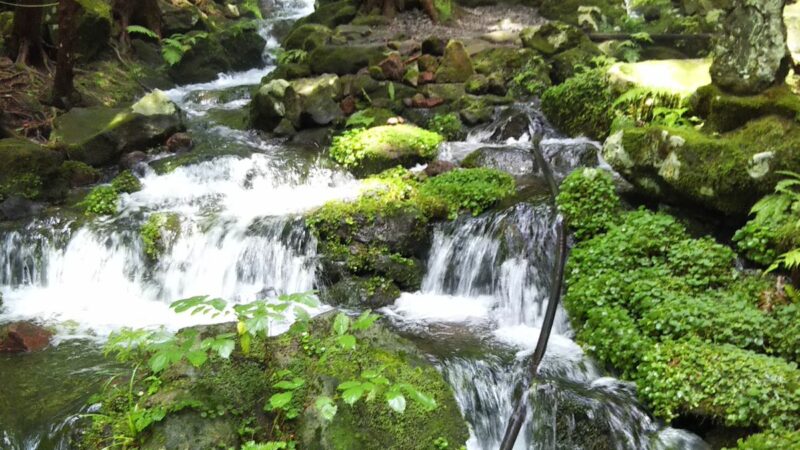
In summer, Mogami Gorge is enveloped in deep green. The mountains on both banks are dyed in dark green, and the wind crossing the river surface carries pleasant coolness. Even in midsummer, the interior of the gorge remains relatively cool and is popular as a summer retreat.
During the fresh greenery season, you can feel the vitality-filled appearance of nature up close, and it’s perfect for refreshment while bathing in plenty of negative ions.
Autumn at Mogami Gorge | Spectacular Autumn Foliage Spot
Mogami Gorge is most crowded with tourists during autumn’s foliage season. It typically reaches its best from late October to early November, with Japanese maples, maples, rowan and other trees turning red and yellow, enveloping the entire gorge in brocade-like beauty.
The autumn foliage reflected on the water surface is especially popular as “reflected foliage,” and the scenery viewed from a boat ride is extraordinary. While autumn foliage can be enjoyed while driving along National Route 47, the spectacular impact of foliage seen from the river is a unique charm of boat riding.
Winter at Mogami Gorge | Snow-Covered Scenery and “Kotatsu Boat”
In winter, Mogami Gorge unfolds a world like sumi-e (ink wash painting) created by snow-covered mountains and the quiet flow of the river. A unique pleasure of this season is the boat-riding experience on a “kotatsu boat.”
The luxurious time spent gazing at snowy scenery while sitting in a kotatsu set up inside the boat is a special experience that can only be tasted in winter at Mogami Gorge. Because you can enjoy the scenery slowly without worrying about the cold, it maintains high popularity even during winter tourism.
Mogami Gorge Basho Line Sightseeing | The Charm of the Boat Riding Experience
Basic Information about Boat Riding
The best way to fully enjoy Mogami Gorge is through a boat-riding experience at “Mogami Gorge Basho Line Sightseeing.” Departing from the boarding point at Koriguchi in Tozawa Village, you travel approximately 12 km over about one hour at a leisurely pace.
The views of both banks seen from the boat maneuvered by the boatman are spectacular. As the experienced boatman skillfully operates the boat, he explains the highlights and history of Mogami Gorge, allowing you to understand the charm of Mogami Gorge more deeply.
Boatman’s Boat Songs and the World’s Three Major Boat Songs
One of the major attractions of boat riding is the performance of “Mogami River Boat Song” by the boatman. This boat song is counted among the world’s three major boat songs alongside Italy’s “Canzone” and Russia’s “Volga Boatman Song.”
The boat song echoing through the river flow and mountains stirs feelings of travel romance, making the natural beauty of Mogami Gorge even more impressive. A boat journey while listening to the boatman’s narration and singing becomes a special experience that will remain in your heart.
Reservation Methods and Fees
Boat rides with Mogami Gorge Basho Line Sightseeing are expected to be crowded especially during the foliage season and major holidays, so advance reservation is recommended. Reservations are available through the official website or by phone, and group use is also accommodated.
Fares differ between adults and children, and may fluctuate depending on season and operating conditions, so it’s recommended to check the official site for the latest information. The winter “kotatsu boat” may have different fares than regular charges, so advance confirmation is necessary here as well.
Flow of Boarding and Time Required
Boarding takes place at the “Mogami Gorge Basho Line Sightseeing Boarding Point” in Koriguchi, Tozawa Village. After completing check-in, you put on a life jacket and board. After enjoying approximately one hour of boat riding, the disembarking point is “River Station Mogami Gorge Kusanagi.”
After disembarking, you can return to the boarding point by free shuttle bus, so those arriving by car can feel at ease. The total time required including boarding, disembarking, and shuttle bus travel should be approximately 1.5 to 2 hours.
Access Methods to Mogami Gorge
Access by Car
From Tokyo
- Tohoku Expressway “Murata JCT” → Yamagata Expressway “Shinjo IC” → via National Route 47 for about 20 minutes
- Total travel time: approximately 4 hours 30 minutes
From Sendai
- Tohoku Expressway “Murata JCT” → Yamagata Expressway “Shinjo IC” → via National Route 47 for about 20 minutes
- Total travel time: approximately 2 hours
From Yamagata City
- Via National Route 13 → National Route 47
- Travel time: approximately 1 hour 30 minutes
The Mogami Gorge Basho Line Sightseeing boarding point has a free parking lot with space for approximately 200 regular vehicles.
Access by Public Transportation
When Using JR
- Get off at JR Rikuu Western Line “Koriguchi Station,” approximately 15 minutes on foot to the boarding point
- Approximately 30 minutes from Shinjo Station to Koriguchi Station
When Using Express Bus
- Use express buses heading to Shinjo from Sendai or Yamagata, then transfer to JR Rikuu Western Line at Shinjo Station
When using public transportation, the number of trains is limited, so it’s recommended to confirm the timetable in advance and plan your travel accordingly.
River Station Mogami Gorge Kusanagi | Enjoyment After Disembarking
Facility Overview
“River Station Mogami Gorge Kusanagi,” the disembarking point for boat rides, is a hub facility for Mogami Gorge sightseeing. The facility is equipped with a restaurant, souvenir shop, and rest area, allowing you to spend time leisurely after the boat ride.
From the facility, you can view the majestic flow of the Mogami River, and you can enjoy meals and rest while viewing the seasonal landscapes—an excellent location.
Special Meal Featuring Local Ingredients
A major attraction of “River Station Mogami Gorge Kusanagi” is cuisine using abundant fresh local ingredients. The “special meal” allows you to savor local cuisine using seasonal ingredients from Yamagata Prefecture.
You can enjoy traditional dishes of the Mogami region and river fish dishes caught from the Mogami River, cuisines unique to this area. In addition to the special meal by reservation, there’s “Terminal Kitchen Kusanagi” which can be used without reservation, allowing you to enjoy meals casually.
Souvenirs and Specialty Products
The shop inside the facility offers a wide selection of specialty products and souvenirs from Yamagata Prefecture and the Mogami region. Products featuring the Mogami River as a motif, local confectioneries, crafts, and other items perfect as souvenirs are displayed.
Tourist Attractions Around Mogami Gorge
Points of Interest in Tozawa Village
Phantom Forest
A mysterious forest where giant trees stand tall, where you can see giant Japanese beeches and Japanese cedars with ages of several hundred years. It’s perfect for a forest bath walk.
Tozawa Clan Ship Checkpoint
A museum conveying the history of river transportation in the Edo Period. You can learn about the prosperity and history of Mogami River shipping.
Tourist Attractions in Shinjo City
Shinjo Hometown History Center
A facility introducing the history and culture of Shinjo Clan. Festival floats from the Shinjo Festival are also displayed, allowing you to touch the region’s traditional culture.
Mogami Park
A park developed from the Shinjo Castle ruins, also known as a famous cherry blossom viewing spot. In spring, approximately 300 cherry blossoms bloom and attract flower-viewing crowds.
Sakegawa Village Eco Park
A nature experience facility located approximately 30 minutes by car from Mogami Gorge. You can enjoy outdoor activities such as camping, barbecuing, and river play. It’s a popular spot with families.
Hijiri Hot Spring
Located approximately 50 minutes by car from Mogami Gorge, this is a hot spring town with a history of 1,200 years since its opening. It’s a quiet hot spring town in the mountains where day-trip bathing is possible. A hot spring trip combined with Mogami Gorge sightseeing is also recommended.
Best Season for Mogami Gorge Tourism and Ways to Enjoy It
Foliage Season (Late October to Early November)
The high season for Mogami Gorge sightseeing is the foliage period. This period experiences particularly heavy congestion, making early reservation and flexible scheduling important. Boat rides departing in early morning hours are relatively less crowded, and the foliage illuminated by the morning sun is also beautiful, making it recommended.
Fresh Green Season (May to June)
The next most popular season after foliage is the fresh greenery season. You can simultaneously enjoy the beauty of newly budded young leaves and the power of the Mogami River with increased water volume from snowmelt. Congestion is not as severe as during the foliage season, allowing you to sightsee at a leisurely pace.
Winter-Only “Kotatsu Boat” (December to March)
For those seeking special winter-only experiences, the “kotatsu boat” is recommended. Traveling by boat under snowy scenery while sitting in a warm kotatsu is a luxury experience found nowhere else. The scenery viewed in winter’s crisp, clear air has an exceptional beauty.
Precautions and Etiquette for Mogami Gorge Tourism
Clothing and Belongings
Spring and Autumn
- Layered clothing to accommodate temperature changes is recommended
- Bring a jacket as the wind from the river surface can be chilly
Summer
- Prepare a hat and sunscreen as the sun is strong
- Insect repellent spray is convenient
Winter
- Warm clothing is essential (cold when boarding and disembarking even on kotatsu boats)
- Choose slip-resistant shoes
Photography Etiquette
Photography during boat rides is permitted, but standing up or leaning over the side of the boat is dangerous and should be avoided. Be considerate of other passengers and follow the boatman’s instructions when taking photos.
Operating Conditions Due to Weather
Operations may be suspended during flooding or bad weather. Especially during typhoon season or after heavy rain, it’s recommended to confirm operating conditions in advance. Check the official website or call for the latest information before visiting.
Mogami Gorge and Matsuo Basho | The Stage of History and Literature
“Oku no Hosomichi” and the Mogami River
In 1689, Matsuo Basho visited the Mogami River during his “Oku no Hosomichi” (Narrow Road to the Deep North) journey and left the famous haiku “Samidare wo / Atsumete hayashi / Mogamigawa” (The gathering rains / make swift / the Mogami River). This haiku describes the appearance of the Mogami River swiftly flowing with gathered monsoon rains, and it’s a famous haiku known to all Japanese people.
It’s believed that Basho actually traveled by boat in a section somewhat downstream from Mogami Gorge, but the grandeur and power of nature of the Mogami River have captivated people since ancient times.
Visiting Historical Sites Related to Basho
Historical sites and poem markers related to Basho are scattered throughout the Mogami Gorge area. The name “Basho Line” for the boat ride is derived from this historical background. A journey through Mogami Gorge where literature and nature merge will provide deeper emotional impact.
Nature and Ecosystems of Mogami Gorge
Diversity of Fauna and Flora
The area surrounding Mogami Gorge is blessed with a rich natural environment where diverse fauna and flora inhabit. Along the river, riparian forests of willows and alders have developed, and in the mountainous areas, deciduous broadleaf forests of Japanese beech and water oak spread.
For birds, kingfishers, mountain kingfishers, and mandarin ducks can be observed, and with luck, you might encounter them during a boat ride.
Geological Value
The topography of Mogami Gorge was formed through geological processes spanning millions of years. The erosion action of the Mogami River has carved away sedimentary rock, creating the current gorge beauty. The rock face along the riverbank allows you to see traces of long periods of time, making you feel the history of the Earth.
Ways to Spend Time at Mogami Gorge | Sample Courses
Day-Trip Course
Morning
- 9:00 AM Arrive at Mogami Gorge Basho Line Sightseeing boarding point
- 9:30 AM Boat ride departs
- 10:30 AM Arrive at River Station Mogami Gorge Kusanagi
- 11:00 AM Lunch with local cuisine
Afternoon
- 12:30 PM Scenic drive along National Route 47
- 2:00 PM Visit Tozawa Clan Ship Checkpoint
- 3:00 PM Shop for souvenirs at Tozawa Roadside Station
- 4:00 PM Depart for return trip
2-Day, 1-Night Course
Day 1
- Arrive in afternoon, experience boat ride
- Stay in Hijiri Hot Spring or Shinjo City
Day 2
- Sightsee in Shinjo City (Shinjo Hometown History Center, Mogami Park, etc.)
- Outdoor experience at Sakegawa Village Eco Park
- Depart for return trip in afternoon
Conclusion | To Fully Enjoy the Charm of Mogami Gorge
Yamagata’s Mogami Gorge is a special place where you can enjoy the magnificent valley beauty created by the Mogami River, one of Japan’s three major rapids, and the spectacular scenery woven by nature throughout the four seasons. During a boat-riding experience, while hearing the boatman’s boat song, you can feel the dynamic landscape created by the mountains pressing in on both banks and the river’s flow up close.
The beauty during the foliage season is particularly extraordinary, and it has become a popular destination attracting many tourists from throughout the country. However, the cherry blossoms and fresh green of spring, the deep green of summer, the snowy landscape of winter and the kotatsu boat—a key characteristic of Mogami Gorge is that you can discover different charms no matter which season you visit.
The surrounding area is enriched with hot springs, historical sites, and nature experience facilities, allowing you to plan a fulfilling trip centered on Mogami Gorge. With advance reservations and careful planning, you can fully savor the charm of Mogami Gorge.
At Mogami Gorge, a scenic landmark representing Yamagata Prefecture, please enjoy a special experience touching Japan’s beautiful nature and traditional culture.