
.jpg)
Nishizawa Gorge (Yamanashi Prefecture) Complete Guide: Thorough Explanation of Hiking Courses to Enjoy Japan’s Premier Gorge Beauty
Nishizawa Gorge, located in the Mitomi District of Yamanashi City, Yamanashi Prefecture, is a nationally renowned scenic spot also known as the “last unexplored frontier of the Okuchichibu region.” Situated within Chichibu-Tama-Kai National Park, the natural artwork created by clear streams flowing through primeval forests and eroding massive granite rocks continues to captivate visitors. This article provides comprehensive information you should know before visiting the site, covering Nishizawa Gorge’s attractions, access methods, hiking course details, and recommended visiting periods.
Nishizawa Gorge: A Spectacular Gorge Boasted by Okuchichibu
Nishizawa Gorge is located in the Nishisawa area at the headwaters of the Fujikawa tributary, the Akaishi River. Developed over four years beginning in 1962, it has now acquired numerous titles including “Forest Bathing Forest 100 Selections,” “Japan’s 100 Famous Waterfalls,” “New Japan Tourist Attractions 100 Selections,” “Water Source Forests 100 Selections,” “Japanese Nature to Preserve for the 21st Century 100 Selections,” and “Heisei Famous Water 100 Selections.” Furthermore, it has been certified as a “Forest Therapy Base,” making it a popular spot visited by numerous tourists seeking physical and mental healing.
Geographical Characteristics of Nishizawa Gorge
Nishizawa Gorge is located within Chichibu-Tama-Kai National Park, where Saitama, Yamanashi, and Nagano prefectures meet. The gorge stretches across elevations of approximately 1,100 to 1,400 meters, surrounded by lush primeval forests, forming a unique landscape where clear streams cascade sharply down granite riverbeds. The gorge extends approximately 10 kilometers in total length, and thanks to well-maintained walking trails, even beginners can enjoy trekking relatively safely.
Multiple Titles Demonstrate Natural Value
The numerous titles Nishizawa Gorge has acquired speak to the richness of its natural environment and high conservation value. In particular, its certification as a Forest Therapy Base represents scientific evidence recognizing the effectiveness of forest bathing, and the location is drawing attention as a place where health benefits such as stress reduction and immune system enhancement can be expected. Additionally, its designation as a water source forest indicates that this area plays an important role in nourishing precious water resources for the greater Tokyo metropolitan area.
Nishizawa Gorge’s Highlights: Gorge Beauty Woven by Waterfalls and Peculiar Rocks
The greatest charm of Nishizawa Gorge lies in the spectacular views created by waterfalls of various sizes and clear streams. Along the walking trail, waterfalls and peculiar rocks with different appearances appear in succession, never failing to captivate visitors.
Nanatsu-Kama Gozdan Waterfall: Symbol of Nishizawa Gorge
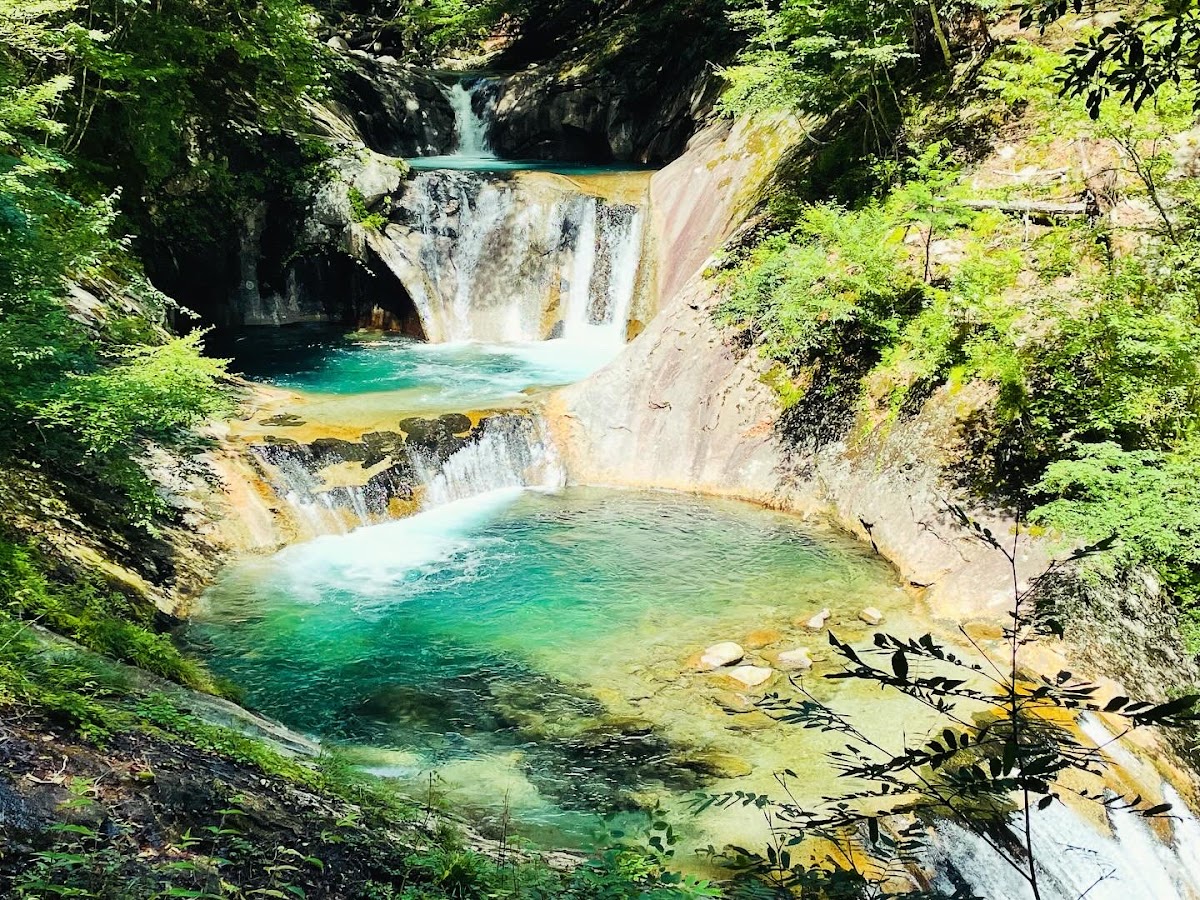
The Nanatsu-Kama Gozdan Waterfall, also considered the highlight of Nishizawa Gorge, is a famous waterfall selected for “Japan’s 100 Famous Waterfalls.” This waterfall, composed of seven waterfalls basins and five cascades, is spectacular as emerald-green clear water flows down granite bedrock. Located approximately two hours on foot from the Nishizawa Gorge entrance, many hikers enjoy trekking with this waterfall as their destination. An observation deck has been installed in front of the waterfall, allowing visitors to experience its magnificent power up close.
Other Attractive Waterfall Groups
Besides the Nanatsu-Kama Gozdan Waterfall, numerous impressive waterfalls are scattered throughout Nishizawa Gorge.
Mie Falls is a beautiful waterfall that flows in three distinct stages as its name suggests, and can be viewed from close proximity along the walking trail. During periods of abundant water flow, it is particularly impressive, allowing visitors to fully bask in negative ions.
Ryujin Falls is characterized by its unique form of flowing as if crawling down rocky surfaces, earning its name from its appearance resembling a dragon ascending to heaven.
Koisuito Falls is charming for its delicate beauty as thin water streams flow down rocks, and legends related to romance remain about the origin of its name.
Teiisen Falls is impressive for the way pure water emerges, and has long been cherished by local people.
Each of these waterfalls possesses different characteristics, harmonizing with seasonal nature and enchanting those who visit.
Peculiar Rocks and Gorge Beauty
The charm of Nishizawa Gorge extends beyond waterfalls. The peculiar rocks and gorge beauty carved by clear streams eroding granite over long periods are also noteworthy attractions.
Botai Fuchi is a mystical spot named after its round-carved bedrock that evokes the image of a mother’s womb.
Kaeru Rock is a massive rock shaped like a frog as its name suggests, allowing visitors to appreciate the sculptural beauty created by nature.
Throughout the gorge, the landscape woven by white granite rock surfaces, emerald-green clear streams, and lush primeval forests truly deserves to be called “natural artwork.”
Nishizawa Gorge Hiking Course Details
The trekking course at Nishizawa Gorge is a circular route of approximately 10 kilometers with a duration of about 4 to 4.5 hours. Well-maintained walking trails make this a course accessible even to beginners.
Course Overview and Duration
Standard Course
- Total distance: Approximately 10 kilometers
- Duration: Approximately 4 to 4.5 hours
- Elevation change: Approximately 250 meters
- Difficulty: Beginner to intermediate
The course begins at the Nishizawa Gorge entrance bus stop, crosses the Futomata suspension bridge, and ascends the left bank of the stream. It takes approximately 2 hours to reach the Nanatsu-Kama Gozdan Waterfall, after which it becomes a circular route through the former forest tramway route on the return.
Course Highlights and Checkpoints
Nishizawa Gorge Entrance to Futomata Suspension Bridge (approximately 30 minutes)
Proceeding along the walking trail from the Nishizawa Gorge entrance bus stop leads to the Futomata suspension bridge, the first checkpoint. The true gorge trekking experience begins here. From the suspension bridge, visitors can enjoy beautiful scenery of clear streams and primeval forests.
Futomata Suspension Bridge to Nanatsu-Kama Gozdan Waterfall (approximately 1 hour 30 minutes)
After crossing the suspension bridge and proceeding along the left bank walking trail, waterfalls and peculiar rocks appear in succession. Passing through Mie Falls, Ryujin Falls, Koisuito Falls, Botai Fuchi, and Kaeru Rock, you reach the climactic Nanatsu-Kama Gozdan Waterfall. This section is concentrated with highlights, and frequent photo stops are common, so it is recommended to proceed with ample time.
Nanatsu-Kama Gozdan Waterfall to Nishizawa Gorge Entrance (approximately 2 hours)
Beyond the Nanatsu-Kama Gozdan Waterfall, the course becomes a relatively flat former forest tramway route. Different from the gorge, visitors can enjoy forest bathing at a leisurely pace during the return. This section places minimal strain on the feet, allowing the fatigued body to be soothed while walking.
Trekking Precautions and Preparations
Although trekking at Nishizawa Gorge is beginner-friendly, one must not forget this is mountainous terrain. Prepare yourself by paying attention to the following points.
Clothing and Equipment
- Trekking shoes or hiking boots (with slip-resistant soles)
- Comfortable, quick-drying clothing
- Warm layers (due to high elevation and low temperature)
- Rain gear (to prepare for weather changes)
- Hat and sunscreen
- Gloves (to protect hands on rocky and chained sections)
Items to Bring
- Sufficient drinking water (1 liter or more recommended)
- Trail snacks (rice balls, chocolate, nuts, etc.)
- Towel and tissue
- First aid supplies
- Smartphone (for emergency contact, though signal may be unavailable in some areas)
- Map or pamphlet
Safety Precautions
- Avoid hiking alone; travel in groups
- Start early in the morning and descend before sunset
- Refrain from entering on days with poor weather or forecasted deterioration
- Do not leave designated walking trails
- Do not get too close to waterfalls or rivers (slip hazard)
- Do not push yourself if feeling unwell
Access Methods to Nishizawa Gorge
Access to Nishizawa Gorge is available via private vehicle or public transportation. Understand the characteristics of each method and choose the one that suits you.
Access by Private Vehicle
Routes from Major Cities
From Tokyo: Approximately 50 minutes from Katsunuma IC on the Chuo Expressway via National Route 140 (Karuzaka Road)
From Nagoya: Approximately 50 minutes from Katsunuma IC on the Chuo Expressway via National Route 140
From Nagano: Approximately 1 hour 20 minutes from Suyama IC on the Chuo Expressway via National Route 140
Parking Information
Multiple parking lots are available at Nishizawa Gorge.
Municipal Parking Lot (North Parking Area)
- Capacity: Approximately 100 vehicles
- Fee: 500 yen per day for regular vehicles
- Location: Closest to Nishizawa Gorge entrance
- Restrooms: Available
Michi-no-Eki Mitomi Parking Lot
- Capacity: Approximately 50 vehicles
- Fee: Free
- Location: Approximately 15 minutes on foot from Nishizawa Gorge entrance
- Note: Alternative option for early arrivals or when municipal parking lot is full
During busy periods such as autumn foliage season, parking lots may become full by early morning. Especially on weekends and holidays, arrival by 6:00 to 7:00 AM is recommended. If full, temporary parking lots or the Michi-no-Eki Mitomi parking lot will be used.
Access via Public Transportation
Train and Bus Combination
A bus to the Nishizawa Gorge entrance operates from “Enzan Station” on the JR Chuo Main Line.
- Operating period: Late April to late November (closed during winter)
- Duration: Approximately 1 hour
- Fare: Approximately 1,300 yen one way
- Operating company: Yamanashi Kotesu
Since bus service is limited, it is important to confirm the timetable in advance and plan accordingly. Particularly, confirm the return bus departure time and plan your trekking duration accordingly.
Day Trip Bus Tour Usage
Numerous day-trip bus tours including Nishizawa Gorge trekking operate from the greater Tokyo metropolitan area including Tokyo and Kanagawa. The benefits of using a tour include the following.
- No need to worry about transportation
- Peace of mind with guided tours available for beginners
- Rest breaks available during return travel
- Relatively affordable pricing
Travel agencies offer various plans, allowing you to choose one that matches your preferences.
Nishizawa Gorge’s Best Season and Seasonal Charm
Nishizawa Gorge displays different characteristics throughout the four seasons, each with unique appeal. The way to enjoy the gorge changes depending on the visiting period, so choose a time that aligns with your objectives.
Spring (Late April to June): Season of Fresh Greenery and Rhododendrons
Spring, when the gorge awakens with snowmelt, is a season when the beauty of fresh greenery stands out. Particularly from late May to early June, rhododendron flowers come into bloom, coloring the gorge. The contrast between pale pink rhododendrons and fresh greenery is a spring-exclusive spectacle.
Additionally, increased snowmelt water raises water volume, amplifying waterfall impact. The sight of waterfalls including the Nanatsu-Kama Gozdan Waterfall flowing down with abundant water is awe-inspiring.
Temperatures are relatively mild, but due to high elevation, mornings and evenings can be cold. Bringing warm layers is recommended.
Summer (July to August): Escape from Heat and Forest Bathing
Summer Nishizawa Gorge makes one forget the sweltering heat of urban areas. Thanks to the high elevation and cool clear streams flowing through the gorge, even midsummer allows comfortable trekking.
With greenery at its densest, this period is when forest bathing effects are felt most intensely. One can thoroughly refresh both body and mind while bathing in abundant negative ions.
While family groups visit frequently during summer vacation, early starts allow enjoyment of trekking during relatively quiet periods. However, afternoon weather tends to become unstable, so aim for earlier action.
Autumn (October to Early November): Spectacular Autumn Foliage
The time when Nishizawa Gorge displays its most vibrant appearance is the autumn foliage season. Typically from mid-October to early November, the entire gorge becomes painted in reds and yellows.
The autumn foliage around the Nanatsu-Kama Gozdan Waterfall is particularly magnificent, and the contrast between emerald-green clear streams and autumn colors is breathtakingly beautiful. Trees along the walking trail also change color, and the scenery transforms with each step.
The autumn foliage period is also when Nishizawa Gorge becomes most crowded. On weekends and holidays, parking lots often fill by early morning, so consider arriving as early as possible or visiting on weekdays. Additionally, with lower temperatures during this period, ensure thorough cold weather preparations.
Winter (December to March): Closure Period
During winter, the Nishizawa Gorge walking trails are closed due to snow accumulation and freezing. The closure period typically runs from early December to late April, though it may vary depending on that year’s snowfall. Winter entry is dangerous for general hikers and is not recommended. Wait for spring opening.
How to Choose Your Visiting Time
Recommended for beginners: Spring (May to June) or early autumn (late September to early October)
Climate is mild, and crowds are relatively limited.
For spectacular views: Autumn foliage period (mid-October to early November)
Be prepared for crowds while enjoying the most beautiful scenery.
Combining cooling off: Summer (July to August)
Cool and comfortable trekking is possible.
Tourism Information Around Nishizawa Gorge
Enjoying nearby tourist attractions when visiting Nishizawa Gorge makes for a more fulfilling trip.
Michi-no-Eki Mitomi
Located at the gateway to Nishizawa Gorge, Michi-no-Eki Mitomi offers fresh local vegetables, fruits, and specialty products. It is convenient as a light meal stop before trekking or a rest spot on the way back.
Usui River Fruit Park
A facility unique to Japan’s premier fruit-producing region where seasonal fruit picking can be enjoyed. Located approximately 40 minutes by car from Nishizawa Gorge, it is ideal for a post-trekking visit.
Hot Spring Facilities in Yamanashi City
To heal a body tired from trekking, nearby hot spring facilities are recommended. Yamanashi City has multiple hot spring facilities offering day-use bathing, including Hottarakashi Hot Spring and Hanakage Hot Spring.
Sites Associated with Takeda Shingen
Yamanashi Prefecture is also known as the homeland of Sengoku warlord Takeda Shingen. Those interested in history might visit Enrinji Temple or Takeda Shrine.
Using Nishizawa Gorge Guide Services
For those wishing to know Nishizawa Gorge more deeply or first-time trekkers with concerns, guide service usage is recommended.
Benefits of Guide Services
- Detailed explanations of gorge formation and flora and fauna
- Safe pacing considerations for comfortable hiking
- Information about best photography locations
- Peace of mind for emergency response
- Easier participation for solo travelers
Application Methods
Nishizawa Gorge guide services can be arranged through the Yamanashi City Tourism Association. During busy periods, reservations fill quickly, so early booking is recommended. Fees and details are available on the Yamanashi City Tourism Association official website.
Ways to Enjoy Nishizawa Gorge Trekking
Here are pointers for maximizing enjoyment of Nishizawa Gorge.
Photography Tips
Nishizawa Gorge is a treasure trove of photography spots. Here are some tips for taking beautiful photographs.
Waterfall Photography
- Express water flow using slow shutter (ND filter is useful)
- Use tripod to prevent camera shake
- Aim for times with front lighting (morning recommended)
Autumn Foliage Photography
- Cloudy days produce more vivid color
- Foliage reflected in water is also worth capturing
- Use wide-angle lens to capture overall gorge atmosphere
Nature Observation Enjoyment
Nishizawa Gorge possesses a rich ecosystem of primeval forests. Various flora and fauna can be encountered during trekking.
Bird Watching
- Stream birds such as Crested Kingfisher, Dipper, and Grey Wagtail
- Binoculars make observation easier
Plant Observation
- Rhododendron and azalea flowers
- Giant trees and moss-covered rocks
- Autumn mushrooms (edible varieties require expert identification)
Manners and Rules
To preserve beautiful nature and pass it on to future generations, observe the following manners:
- Always take litter with you
- Do not collect plants
- Do not enter areas outside designated walking trails
- Do not speak loudly (consideration for wildlife)
- Smoking only in designated areas
- Avoid bringing pets (if bringing them, always use a leash)
Basic Information and Inquiries about Nishizawa Gorge
Basic Information
Location
Kawagura, Mitomi District, Yamanashi City, Yamanashi Prefecture
Operating Period
Late April to late November (varies depending on snow conditions)
Admission Fee
Free
Trekking Duration
Approximately 4 to 4.5 hours (including breaks)
Course Distance
Approximately 10 kilometers
Parking
Municipal parking: 500 yen/day for regular vehicles
Restrooms
Nishizawa Gorge entrance and several locations along the course
Contact Information
Yamanashi City Tourism Association
- Phone: 0553-22-1111
- Business hours: Weekdays 8:30 AM to 5:15 PM
Latest Nishizawa Gorge Information
- Snow conditions and traffic closure information are available on the Yamanashi City Tourism Association or Yamanashi City official website
- Walking trails may be closed due to weather conditions
Conclusion: Experience Supreme Nature at Nishizawa Gorge
Nishizawa Gorge, as a nationally premier scenic spot boasting spectacular gorge beauty, continues to captivate nature enthusiasts and hiking lovers. The numerous waterfalls including the Nanatsu-Kama Gozdan Waterfall, emerald-green clear streams, and the landscape woven by lush primeval forests profoundly move those who visit.
Fresh greenery and rhododendrons in spring, cool streams in summer, blazing autumn foliage, and the seasonal shifts in nature’s appearance throughout the year offer new discoveries no matter how many times one visits. Well-maintained walking trails make this accessible even to beginners, and the certified Forest Therapy Base offers a healing space where both body and mind can be refreshed.
Access is also relatively good, allowing for day trips from Tokyo. Whether by private vehicle or public transportation, visitors can choose a visitation method suited to their style, with day-trip bus tours also well-established.
When visiting Nishizawa Gorge, prepare appropriate equipment and gear, and enjoy trekking while respecting nature. Mindful behavior is essential to preserve this beautiful nature and pass it on to future generations.
At Nishizawa Gorge, called the “last unexplored frontier of Okuchichibu,” fully experience the magnificence of nature that Japan boasts. It will surely become an unforgettable memory.
-800x450.jpg)
-800x450.jpg)
-800x450.jpg)