Complete Guide to Akiu Onsen Resort and Senaku Line|A Journey to Akita’s Oldest Hidden Hot Spring and Spectacular Autumn Foliage
Akiu Onsen Resort, located in Yuzawa City, Akita Prefecture, is Akita’s oldest hot spring resort, said to have been discovered by the Buddhist monk Gyoki during the Nara period. Surrounded by the rich nature of Kurikoma Quasi-National Park and dotted along the Yakunai River as hidden hot springs, it has been cherished by many literati including Mushakoji Saneatsu. Additionally, the “Senaku Line” along National Route 108 connecting Yuzawa City in Akita Prefecture and Osaki City in Miyagi Prefecture is known as a spectacular scenic driving route where primeval beech forests unfold.
This article provides a comprehensive introduction to the charm of this remote area, including the history and appeal of Akiu Onsen Resort, highlights of the Senaku Line, how to enjoy the autumn foliage season, characteristics of each hot spring facility, and access information.
History and Characteristics of Akiu Onsen Resort
History as Akita’s Oldest Hot Spring
Akiu Onsen Resort has a long history, with a legend that it was discovered by the Buddhist monk Gyoki during the Nara period. The first hot spring inn opened in 1702 (the 15th year of Genroku in the Edo period), and since then it has thrived as a hot spring spa for over 300 years.
Among the hot springs in the resort is “Taka-no-Yu Onsen,” which is said to have been named after a legend of a wounded hawk that healed its wounds in these waters. Many such stories have been passed down about the hot springs here. Since the Meiji era, it has been known as a famous hot spring in the former Ugo region, and today its value is publicly recognized with its designation as a National Health and Wellness Hot Spring in 1978 (Showa 53).
Abundant Hot Springs and Diverse Water Qualities
A major characteristic of Akiu Onsen Resort is the abundance of hot spring sources. Currently, over 40 hot spring sources have been confirmed throughout the resort, with each accommodation facility owning its own unique source—a rarity nationwide.
Many households residing in the area also pipe in hot spring water, truly making it a “region that lives with hot springs.” The water quality varies depending on the source, but mainly consists of chloride springs, sulfate springs, and simple thermal springs, each with different expected effects.
The highly transparent water has a soft feel, and the large public bath at Taka-no-Yu Onsen features a bathing pool approximately 130 cm deep, with water so clear that your feet are visible even when standing and soaking.
Four Hot Spring Areas Composing the Resort
Akiu Onsen Resort consists of four hot spring areas stretching from the upper to lower reaches of the Yakunai River.
Yu-no-Mata Onsen
The quietest hidden hot spring located at the uppermost stream. Positioned in a deep mountain setting, it offers a sense of unity with nature.
Taka-no-Yu Onsen
A hot spring with a legend of a wounded hawk healing its wounds. Characterized by highly transparent waters, it is highly valued by hidden hot spring enthusiasts.
Inazumi Onsen
A hot spring with a history of visits by literati such as Mushakoji Saneatsu. It features a cultural atmosphere and a calm environment.
Yu-no-Daira Onsen
Located at the lowest point of the river, this is a relatively accessible hot spring area.
Each has a different character, making hot spring hopping another major appeal of Akiu Onsen Resort.
Charm and Highlights of the Senaku Line
What is the Senaku Line?
The Senaku Line is the nickname for a scenic road located approximately in the middle of National Route 108, which connects Yuzawa City in Akita Prefecture and Osaki City in Miyagi Prefecture. The name “Senaku” derives from connecting Sendai (Miyagi Prefecture) and Akita.
This road passes through primeval beech forests left in their natural state, offering untouched natural scenery from both the Akita and Miyagi sides. This route, spanning approximately 20 km, showcases beautiful scenery throughout the four seasons, but the beauty during the autumn foliage season is especially exceptional.
Spectacular Scenery Woven by Primeval Beech Forests
The greatest appeal of the Senaku Line is the landscape of primeval forests centered on beeches. A succession of giant beech trees preserves beauty that might be called the original Japanese landscape.
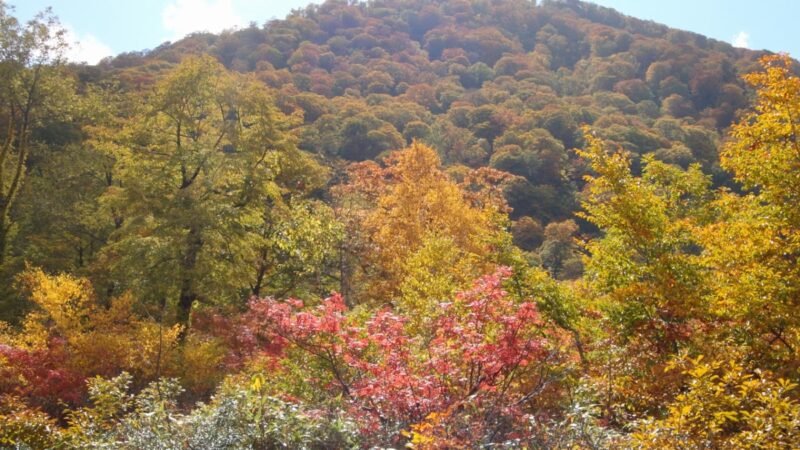
It displays a different appearance with each season: spring greenery, summer deep green, autumn foliage, and winter snow scenes. Especially in autumn, the gradation of colors created by golden beech, red maple, and brown oak leaves is breathtaking.
Multiple viewing spots are set along the road where you can stop your car and leisurely enjoy the scenery. Forest bathing walks are also possible, allowing you to fully enjoy air filled with negative ions.
Connection to Kurikoma Quasi-National Park
The Senaku Line passes through part of Kurikoma Quasi-National Park, from which you can view the majestic form of Kurikoma Mountain. Kurikoma Mountain is an active volcano with an elevation of 1,626 m and is nationally known as a renowned spot for autumn foliage called the “Carpet of God.”
From the Senaku Line, you can view the mountain’s form, and on clear days, you can even see the foliage near the summit from a distance. Combining Akiu Onsen Resort, Kurikoma Mountain, and the Senaku Line allows for a more fulfilling autumn foliage viewing trip.
How to Enjoy the Autumn Foliage Season
Peak Season and Characteristics of Foliage
The foliage season in the Akiu Onsen Resort and Senaku Line area typically runs from mid-October through early November. Since the timing of color changes varies by elevation and location, you can enjoy autumn foliage for approximately three weeks.
Early to mid-October
The colors begin to appear from the high elevations of Kurikoma Mountain, and the upper Senaku Line area reaches its peak.
Mid to late October
The entire Senaku Line and the surrounding Akiu Onsen Resort area reach their full bloom. This period attracts the most tourists.
Late October to early November
The lower areas of the resort and lower elevations turn color, ushering in the final stages of the foliage season.
With beech’s golden color as the base, maple, oak, and poison sumac turn red and orange, creating beautiful scenery through contrast with the green of evergreens.
Recommended Foliage Spots
Senaku Line Observation Deck
From observation decks set along the Senaku Line, you can view the primeval forest foliage in full. With parking space available, it is ideal for photography.
Walking Trail Along the Yakunai River
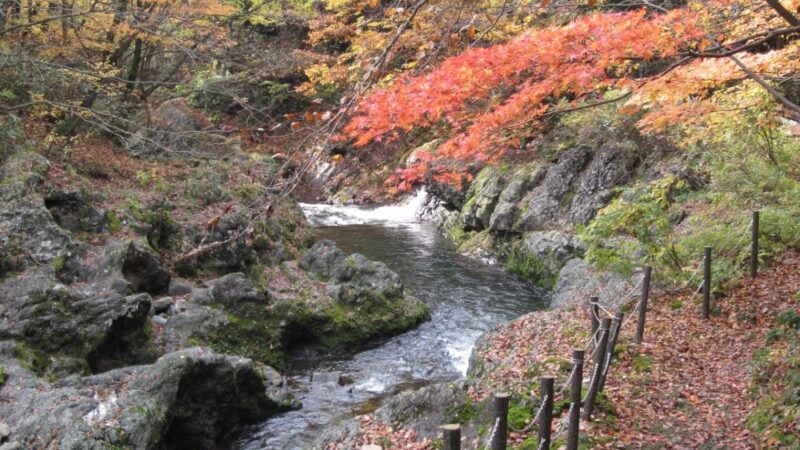
A walking trail is maintained along the Yakunai River flowing through Akiu Onsen Resort, allowing enjoyable autumn foliage walks while listening to the river’s murmur. It is appealing as an easy-access spot from hot spring inns.
Sanzu River Gorge
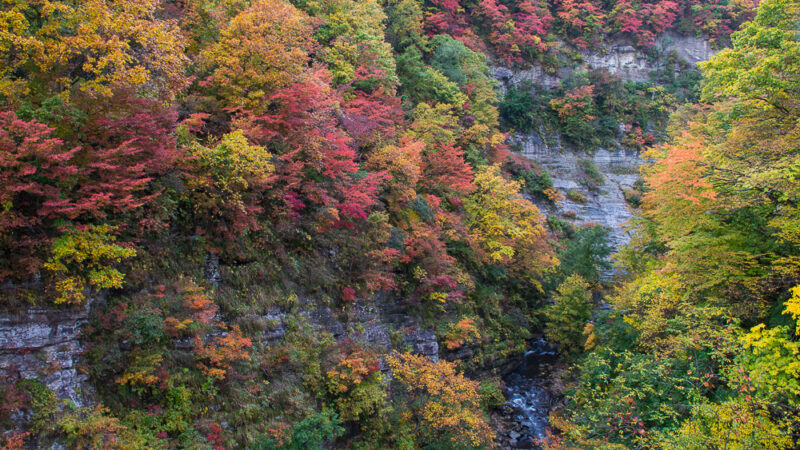
Located near Akiu Onsen Resort, the Sanzu River Gorge is also known as a foliage hot spot. The collaboration between gorge scenery and foliage is magnificent.
Akiu Sanso Surroundings
The area around Akiu Sanso, operated by Akita Prefecture, is an ideal location to enjoy both hot springs and foliage simultaneously. The autumn foliage view from the observation bath is exceptional.
Synergistic Effect of Hot Springs and Foliage
The greatest charm of Akiu Onsen Resort is being able to soak in hot springs while viewing autumn foliage. Many accommodation facilities have open-air or observation baths where you can bathe while viewing the colorfully changing mountains.
Many facilities offer day-use bathing, allowing you to enjoy foliage and hot springs while stopping during your drive. Foliage at dusk is especially beautiful, and soaking in hot springs while enjoying the ever-changing light and colors is highly recommended.
Major Accommodation Facilities in Akiu Onsen Resort
Taka-no-Yu Onsen
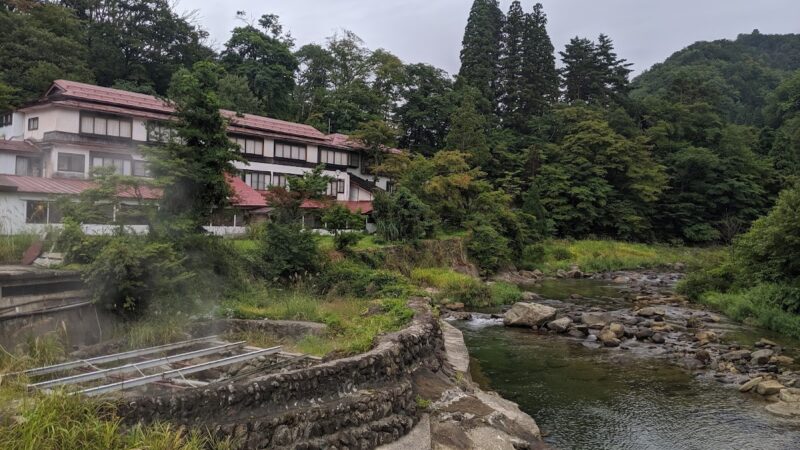
One of the hidden hot springs representing Akiu Onsen Resort. A single inn situated along the Yakunai River, a pristine stream where wild iwana (char) inhabit. It is a historically deep hot spring said to have been discovered in the Nara period, named after the legend of a wounded hawk being healed in these waters.
The highly transparent water has a soft feel, and in the standing deep bath approximately 130 cm deep, you can experience water so clear that your toes are distinctly visible. Hidden hot spring enthusiasts highly rate it as “a hot spring you must visit at least once.”
Inazumi Onsen
A hot spring with a history of visits by literati such as Mushakoji Saneatsu. Its cultural atmosphere and quiet environment make it suitable for those who wish to enjoy bathing at leisure.
Each inn has its own hot spring source, allowing you to enjoy different water qualities and atmospheres. It is especially recommended for those with an interest in literature.
Akiu Sanso
A public accommodation operated by Akita Prefecture. From April 1, 2025, Kyoritsu Solutions Inc. will become the designated manager. It is a hot spring inn with viewing baths in all rooms, allowing you to enjoy hot springs and nature at reasonable prices.
The observation large public bath offers views of seasonal scenery, and the autumn foliage view is particularly spectacular. The facility is also suitable for use by families and groups.
Yu-no-Mata Onsen and Yu-no-Daira Onsen
Located at the uppermost and lowermost reaches of the hot spring resort, these two hot spring areas offer respectively a deeper hidden hot spring atmosphere and convenient accessibility. Both have their own hot springs and are areas worth visiting when enjoying a hot spring tour.
Access and Transportation Information
Access by Car
From the Akita area
- Approximately 40 minutes from “Yuzawa IC” on the Akita Expressway via National Route 13 and National Route 108
- Approximately 2 hours from central Akita
From the Miyagi area
- Approximately 1 hour 20 minutes from “Furukawa IC” on the Tohoku Expressway via National Route 47 and National Route 108
- Approximately 2 hours from central Sendai
From the Yamagata area
- Approximately 1 hour 30 minutes from “Yamagata-Kita IC” on the Yamagata Expressway via National Route 13 and National Route 108
The Senaku Line is subject to closures during winter (approximately late November to late April) due to snow. It is recommended to check road information beforehand.
Access by Public Transportation
Train and Bus
- Approximately 50 minutes by Ugo Kotsu bus “Akiu Onsen Resort bound” from “Yuzawa Station” on the JR Ou Main Line
- Approximately 40 minutes by taxi from “Nariko Onsen Station” on the JR Rikuu East Line (from the Miyagi side)
As bus services are limited, it is important to check the timetable in advance. Especially during the foliage season, congestion is expected, so early reservations and time flexibility are necessary.
Nearest Stations
- “Yokobori Station” on the JR Ou Main Line: approximately 15 km to the resort (approximately 20 minutes by taxi)
- “Yuzawa Station” on the JR Ou Main Line: approximately 25 km to the resort (by bus or taxi)
Parking Information
Each accommodation facility has a dedicated parking lot. Most facilities allow parking for day-use bathing guests as well.
Parking spaces are set at viewing spots along the Senaku Line, but peak foliage season causes congestion. Roadside parking is dangerous, so always use designated parking spaces.
Nearby Tourist Attractions
Yuzawa Geopark
Akiu Onsen Resort and its surroundings are recognized as the geosite “Akiu Onsen Resort” in the Yuzawa Geopark. You can enjoy tourism while learning about geologically valuable landforms and geological formations.
Understanding the formation of hot springs and the geological features of the region allows you to appreciate the value of hot springs more deeply.
Oyasukyo Gorge
Approximately 30 minutes by car from Akiu Onsen Resort, Oyasukyo Gorge is a scenic area featuring a V-shaped valley approximately 60 m deep. The sight of hot water and steam spouting from a rock crevasse called the “Daifunyu” is spectacular, and during foliage season, you can enjoy the competition between gorge scenery and autumn colors.
Kawahara-ge Hell
Counted as one of Japan’s three great spiritual sites, this volcanic phenomenon area. The barren landscape of ash-white lava lives up to the name “Hell.”
Downstream is “Kawahara-ge Daiyutaki,” a natural waterfall hot spring where you can bathe during a limited period from mid-July through mid-September (though a different season from Akiu Onsen Resort, it is recommended when visiting in summer).
Kurikoma Mountain Climbing
For those who enjoy mountaineering, climbing Kurikoma Mountain is recommended. Multiple climbing courses are available, suitable for both beginners and advanced climbers. The 360-degree panoramic view from the summit is spectacular, and during foliage season, magnificent foliage called the “Carpet of God” spreads out.
A popular plan is staying at Akiu Onsen Resort and climbing Kurikoma Mountain the next day.
Precautions and Etiquette When Visiting
Congestion Countermeasures During Foliage Season
Weekends from mid to late October are expected to be particularly crowded. Early reservations at accommodation facilities are essential. For day-use visits, arriving early in the morning allows for relatively leisurely enjoyment of the scenery.
The Senaku Line has narrow sections, so exercise caution regarding oncoming vehicles and practice safe driving. Photography stops should always be made in safe locations.
Clothing and Belongings
Akiu Onsen Resort is at high elevation and colder than lowland areas. Especially after late October, morning and evening temperatures can be very cold, so bring warm clothing.
- Comfortable walking shoes (for walking on trails)
- Warm clothing (fleece or down jacket)
- Rain gear (mountain weather changes rapidly)
- Camera (for foliage photography)
- Beverages (few vending machines available)
Consideration for the Natural Environment
The Akiu Onsen Resort and Senaku Line area maintains rich natural environments. Always take trash with you, and refrain from harvesting plants or feeding animals.
Consideration is also needed for hot spring source protection and river water quality. Follow facility instructions and practice etiquette when enjoying hot springs.
Winter Travel Restrictions
The Senaku Line typically has closure sections due to snow from late November through late April of the following year. While Akiu Onsen Resort itself operates in winter, access via the Senaku Line will not be available.
If visiting in winter, use the access route from the Akita side (Yuzawa City side) and check the latest road information before departing.
Local Food Culture and Specialties
Yuzawa City Local Cuisine
Yuzawa City, home to Akiu Onsen Resort, is nationally famous as the production area for Inaniwa udon. Many accommodation facilities serve Inaniwa udon.
Mountain vegetable dishes are also abundant, with spring offering warabi, zenmai, and tara-no-me, and autumn offering mushrooms—seasonal delicacies used in dishes. Grilled wild iwana (char) caught in the Yakunai River is exquisite.
Akita Sake
Akita Prefecture is known nationwide as a sake production area, and Yuzawa City is home to multiple sake breweries. Local sake can be enjoyed at hot spring inns, and the combination of hot springs and local sake is exceptional.
Brands such as “Ryogaku” and “Ranman” are representative sakes of Yuzawa City. They can be purchased at accommodation facilities and souvenir shops.
Recommended Souvenirs
- Inaniwa udon: Yuzawa City’s specialty product
- Local sake: Japanese sake from Yuzawa City breweries
- Processed mountain vegetables: Salted or dried mountain vegetables
- Onsen manju: Original products from each hot spring inn
- Locally produced honey and mountain delicacies
Conclusion: The Charm of Akiu Onsen Resort and Senaku Line
Akiu Onsen Resort and the Senaku Line represent a treasure trove of nature and hot springs in Yuzawa City, Akita Prefecture. Akita’s oldest hot spring resort, continuing since the Nara period, has over 40 hot spring sources, with each inn offering unique water qualities—a rarity nationwide.
The spectacular scenery woven by the Senaku Line’s primeval beech forests, particularly during the foliage season (mid-October to early November), is breathtaking. The luxury of soaking in hot springs while viewing autumn foliage can be experienced. The hidden hot springs, including Taka-no-Yu Onsen, offer a healing space apart from daily life.
Car travel is convenient for access, though public transportation options are also available. However, note that portions of the Senaku Line close in winter, requiring attention to visit timing.
The surrounding area offers abundant attractions including Oyasukyo Gorge, Kawahara-ge Hell, and Kurikoma Mountain. The area is also recognized as a geosite in the Yuzawa Geopark, holding high geological value.
A trip to the quiet hot spring resort loved by literati such as Mushakoji Saneatsu, where you can savor nature, hot springs, and Akita’s food culture, will provide a special experience refreshing both body and mind. During foliage season, congestion is particularly intense, so early reservations and planned visits are recommended.
Akiu Onsen Resort and Senaku Line, where you can experience Akita’s profound charm. Why not consider them for your next trip?