Asukayama Park, Kita Ward, Tokyo – Complete Guide | History, Highlights, and Access Information
Asukayama Park in Kita Ward, Tokyo is a historic park known as one of the finest cherry blossom viewing spots in Tokyo, with roots dating back to the Edo period. Adjacent to JR Oji Station, the approximately 7.3-hectare grounds feature three museums, a playground, a park rail, and various other facilities. This article provides a thorough explanation of the charm of Asukayama Park.
History and Origins of Asukayama Park
Development by Tokugawa Yoshimune and the Birth of a Cherry Blossom Viewing Spot
The history of Asukayama Park dates back to the Kyoho era (1716-1736) of the Edo period. The eighth shogun, Tokugawa Yoshimune, developed Asukayama as part of the Kyoho Reforms as a leisure destination where commoners could casually enjoy cherry blossom viewing.
Yoshimune planted approximately 1,200 cherry trees on Asukayama and permitted alcohol consumption, which was prohibited at locations such as Ueno at the time, making it rapidly popular among Edo commoners as a cherry blossom viewing spot. Due to this historical background, Asukayama became established as a place of respite for Edo residents.
Japan’s First Park Designation
In March 1873 (Meiji 6), Asukayama Park was designated as one of Japan’s first parks alongside Ueno Park, Shiba Park, Asakusa Park, and Fukutawa Park. The establishment of this park system was an important event in Japan’s modernization, and Asukayama Park has been loved by citizens for over 150 years as a symbolic landmark of Kita Ward, Tokyo.
Deep Connection with Shibusawa Eiichi
Shibusawa Eiichi, known as the father of modern Japanese economy, made his residence on Asukayama starting in 1879 (Meiji 12) and lived there until his death at age 91 in 1931 (Showa 6). Asukayama is deeply connected to Shibusawa Eiichi’s life, and the Shibusawa Historical Museum and former Shibusawa Garden remain in the park today.
Highlights and Facilities Guide of Asukayama Park
Charm as a Cherry Blossom Viewing Spot
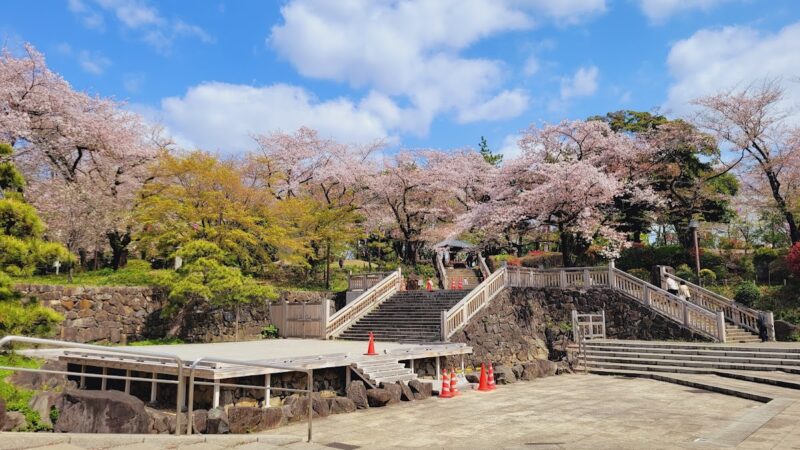
Asukayama Park remains known as one of Tokyo’s premier cherry blossom viewing spots. The park contains approximately 600 to 650 cherry trees, drawing many hanami enthusiasts in spring. Centered around Somei Yoshino, various varieties of cherry trees are planted, reaching peak bloom from late March to early April.
During cherry blossom season, events such as the “Kita Ward Sakura SA*KASO Festival” are held, and illuminated night cherry blossoms can also be enjoyed. The major charm of Asukayama Park is the ability to enjoy hanami while feeling the history continuing from the Edo period.
Seasonal Flowers
The charm of Asukayama Park extends beyond cherry blossoms. In spring, approximately 15,000 azaleas bloom abundantly, coloring the entire park. Additionally, on the west side of the mountain is a walking path called “Asuka no Komichi,” with approximately 1,300 hydrangeas planted. During the rainy season, beautiful hydrangea scenery can be enjoyed.
Three Museums
Three distinctive museums are located within Asukayama Park, playing an important role as cultural and educational facilities.
Kita Ward Asukayama Museum
A museum where one can comprehensively learn about the history, culture, and nature of Kita Ward, Tokyo. The permanent exhibition introduces the history of Kita Ward from the Paleolithic period to the present chronologically. As a facility for deeply understanding local history, it is visited by not only local residents but also many tourists.
Museum of Paper
A facility known as one of the world’s leading specialty paper museums. It features exhibits on paper history, manufacturing technology, and cultural significance, and also holds workshops such as paper-making experiences. A valuable museum where one can learn about the development of Japan’s papermaking industry.
Shibusawa Historical Museum
A museum introducing the life and achievements of Shibusawa Eiichi, the father of modern Japanese economy. Historical materials and documents related to Shibusawa Eiichi are on display, and its prominence has increased with the 2024 new banknote issuance. The former Shibusawa Garden is also adjacent, where visitors can stroll through the Japanese garden loved by Shibusawa Eiichi.
Asuka Park Rail (Monorail)
One of the major characteristics of Asukayama Park is the free lift facility “Asuka Park Rail” connecting the park entrance to the mountaintop. It covers a distance of 48 meters and a height difference of 17.4 meters in approximately 2 minutes.
The park rail is a facility designed for elderly people and families with small children to easily reach the mountaintop, and is evaluated as a barrier-free park. Use is free, with operations from 10 a.m. to 4 p.m. (may suspend due to weather or maintenance).
Playground and Child-Friendly Facilities
Asukayama Park features a playground popular with children. Centered around a large castle-shaped play structure, it includes a sandbox, swings, slides, and play equipment featuring animal and ship motifs.
Particularly popular are the displays of actual Toden 6080 streetcar and steam locomotive D51. Visitors can actually enter the vehicles, and children can experience the feeling of being a conductor. These displays were installed during the 1960s-1970s and have become a spot enjoyable across three generations.
A water play area is also available, drawing many children during summer. The playground serves as a valuable play space where child-rearing families in Kita Ward, Tokyo can easily visit.
Access Information
Access by Train
Asukayama Park is very conveniently accessible by public transportation.
JR Line
- About 1 minute walk from JR Keihin-Tohoku Line “Oji Station” Central or South Exit
Tokyo Metro
- About 3 minutes walk from Tokyo Metro Namboku Line “Oji Station” Exit 1
Arakawa Line Toden
- Walking distance from Arakawa Line “Asukayama Stop” or “Oji Station-mae Stop”
Oji Station is a major transportation hub where multiple lines converge, with good access from central Tokyo. When using the shinkansen, it takes approximately 20 minutes from Tokyo Station via JR Keihin-Tohoku Line.
Car Access and Parking Information
Access from Expressway
- About 5 minutes from Metropolitan Expressway Central Ring “Oji-Minami” or “Oji-Kita” Exit
Parking Lot
Asukayama Park has a paid parking lot.
- Standard vehicles: 21 spaces (including disabled parking)
- Operating hours: 8:30 a.m. to 7:30 p.m.
- Rates: 150 yen for the first 30 minutes, then 100 yen per 30 minutes
- Note: The lot becomes very crowded during events and cherry blossom season, so public transportation is recommended
The parking lot is located within Asukayama Park, but with limited spaces, it frequently reaches capacity, especially on weekends and during events.
Event Information
Kita Ward Sakura SA*KASO Festival
The largest event held annually at Asukayama Park in spring. Coinciding with cherry blossom bloom, various stage events, food stalls, and illumination are held. It is a spring tradition representing Kita Ward, inheriting the cherry blossom viewing tradition continuing from the Edo period to the present day.
Kita Ward Citizens Festival
A major community festival held in autumn. With Asukayama Park as the main venue, parades, stage events, and various stalls are held, drawing large crowds. It serves as an important event strengthening community bonds.
Other Seasonal Events
Throughout the year, various events are held at Asukayama Park. Museum-hosted special exhibitions and workshops, music events, markets, and diverse programs are offered. The latest event information can be found on the official website of Kita Ward, Tokyo and the official page of Asukayama Park.
Usage Information and Basic Details
Operating Hours and Admission Fee
- Operating hours: Open 24 hours
- Admission: Free
- Closed days: None
However, each museum within the park has individual operating hours and admission fees. Additionally, the park rail operates from 10 a.m. to 4 p.m.
Facility Usage Rules
To use Asukayama Park comfortably, please follow these rules.
- Open flames are only permitted in designated areas (barbecuing is generally prohibited)
- Dogs are permitted but must be on a leash
- Take all trash with you
- Care for the park’s plants and facilities
- Be considerate of other visitors
Barrier-Free Accommodations
Asukayama Park implements barrier-free design, including the installation of the Asuka Park Rail, with park paths designed for easy wheelchair access and accessible restrooms available. The park is accessible and welcoming to elderly people and those with disabilities.
Nearby Tourist Attractions
Oji Shrine
An ancient shrine located about 5 minutes walk from Asukayama Park. It is counted among Tokyo’s Ten Shrines and is worshipped as the local tutelary deity. It attracts many visitors throughout the year for New Year’s prayers, shichigosan (children’s blessing ceremonies), and other occasions.
Oto-nashi Riverside Park
A riverside park adjacent to the south of Asukayama Park. Selected as one of “Japan’s Best Urban Parks,” it features a waterside space created using the old course of the Shakujii River. It becomes busy with children enjoying water play during summer.
Nanushi-no-taki Park
A park with a waterfall, rare in Tokyo, located about 15 minutes walk from Asukayama Park. Developed as a park from a garden created by a wealthy merchant of the Edo period, it offers naturally rich scenery.
Ways to Enjoy Asukayama Park
Recommendations by Season
Spring (March-May)
Cherry blossom and azalea bloom season. Hanami viewing is best on weekday mornings. Weekends draw large crowds.
Summer (June-August)
Strolling through Asuka no Komichi when hydrangeas are in bloom is recommended. The water play area in the playground is also popular.
Autumn (September-November)
During fall foliage season, the park takes on autumn colors, offering a tranquil atmosphere. The Citizens Festival is also held.
Winter (December-February)
A relatively quiet period ideal for leisurely museum visits.
Recommended Course for Families
- Walk to the park entrance from JR Oji Station
- Move to the mountaintop via Asuka Park Rail
- Play in the playground
- View the streetcar and locomotive displays
- Visit Kita Ward Asukayama Museum or Museum of Paper
- Enjoy a picnic lunch in the park
- Stroll through Asuka no Komichi
Recommended Course for History Enthusiasts
- Learn about Shibusawa Eiichi’s life at the Shibusawa Historical Museum
- Stroll through the former Shibusawa Garden
- Learn about regional history at Kita Ward Asukayama Museum
- Visit historical monuments in the park
- Pay respects at Oji Shrine
Summary of Asukayama Park’s Charm
Asukayama Park in Kita Ward, Tokyo is a comprehensive park featuring history continuing from the Edo period, nature throughout the seasons, substantial cultural facilities, and amenities enjoyed by everyone from children to the elderly.
The excellent access from central Tokyo—within walking distance of JR Oji Station—is also a major attraction. Beyond being known as a cherry blossom viewing spot, it serves various purposes as a destination for museum visits, a children’s play space, and a venue for community events.
The barrier-free accommodations symbolized by the Asuka Park Rail installation, cultural value brought by three specialized museums, and above all, the spirit of a “place of respite for the common people” inherited since the Edo period make Asukayama Park a special place today.
Whether you wish to experience history and nature on a Tokyo visit, are looking for a park where families can relax together, or want to learn about Shibusawa Eiichi, Asukayama Park serves diverse needs. Please visit once and experience its charm for yourself.
Designated as one of Japan’s first parks over 150 years ago, Asukayama Park continues to evolve while maintaining its history. At this wonderful park, which Kita Ward, Tokyo is proud to offer and where history and modernity harmonize, please spend special time.