Rinjikenmori Park, Tokyo | Complete Guide to the Lush Metropolitan Park Spanning Shinagawa and Meguro Wards
Rinjikenmori Park, which spans across Shinagawa Ward and Meguro Ward in Tokyo, is a precious green oasis where visitors can enjoy abundant nature despite being in the heart of the city. Established on the grounds of a forestry experimental station founded in Meiji 33 (1900), this park has been cherished by local residents and nature enthusiasts since its opening in Heisei 1 (1989). Across its vast grounds of approximately 120,000 square meters (equivalent to about 2.5 Tokyo Domes), roughly 200 species of rare trees from Japan and abroad are planted, including giant trees over 100 years old, allowing visitors to enjoy nature observation and walks through the four seasons.
History and Origins of Rinjikenmori Park
A Center for Forestry Research Since the Meiji Era
The history of Rinjikenmori Park dates back to June of Meiji 33 (1900). The Forestry Bureau of the Ministry of Agriculture and Commerce established this site as the Meguro Experimental Nursery. Originally, it was relocated and planted from a tree testing facility that had been near the current Takinogawa Park in Kita Ward. In Meiji 43 (1910), it was renamed the Forestry Experimental Station.
Subsequently, as an affiliated institution of the Forestry Agency, it served as the center of Japan’s forestry and forest research for approximately 80 years until Showa 53 (1978). Throughout this long history, experimental cultivation and research of various trees were conducted, establishing the foundation for the park’s current rich tree environment.
Rebirth as a Metropolitan Park
In Showa 53, the Forestry Experimental Station relocated to Tsukuba City, Ibaraki Prefecture, in conjunction with the construction of the Tsukuba Research and Academic City. The former grounds were temporarily opened as “Meguro Park,” and then underwent full-scale park development. On June 1, Heisei 1 (1989), it was officially opened as Metropolitan Rinjikenmori Park.
Since the development preserved as many valuable trees from the Forestry Experimental Station era as possible while equipping the park with modern park facilities, it has become a park that combines historical value with contemporary convenience. It holds an important position in the Tokyo Metropolitan Area Disaster Prevention Plan as well as the disaster prevention plans of Meguro and Shinagawa Wards, serving as an evacuation site during disasters.
Park Characteristics and Basic Information
Park Scale and Shape
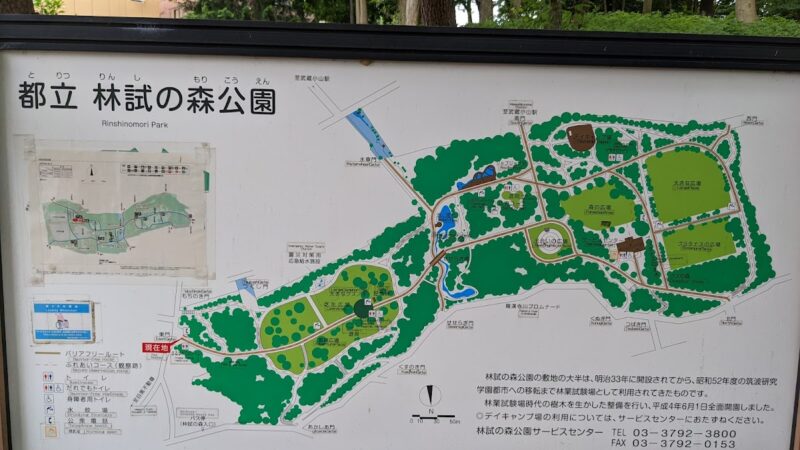
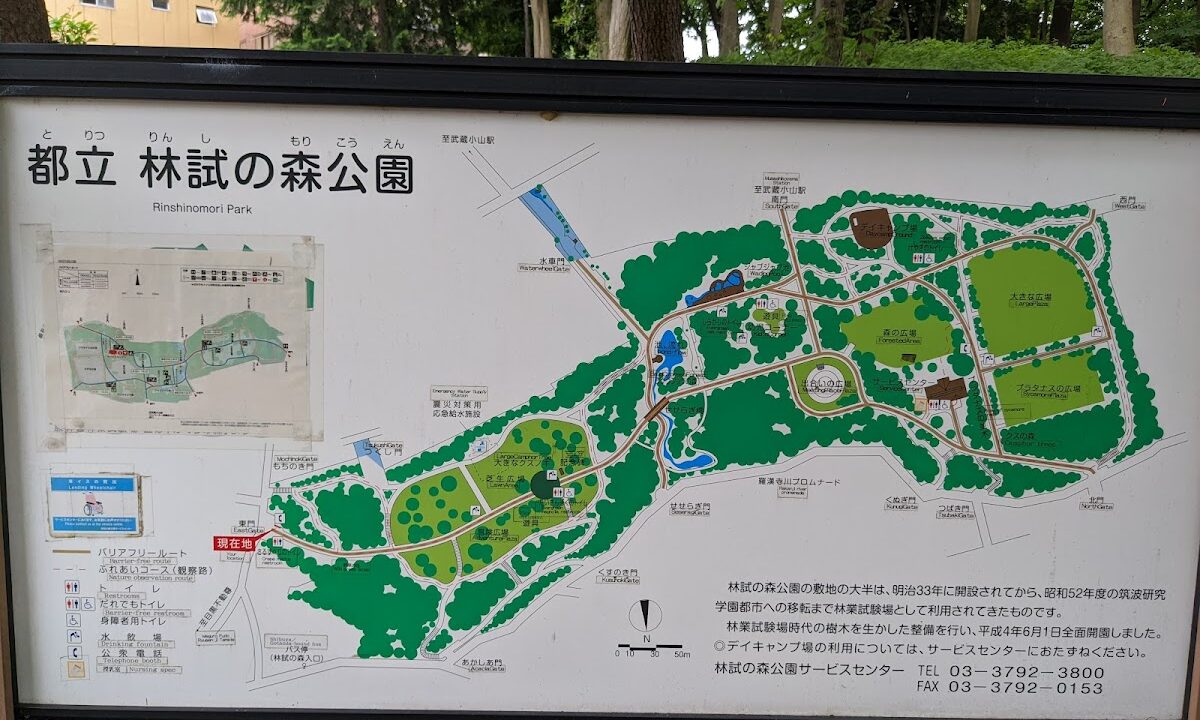
Rinjikenmori Park extends approximately 700 meters from east to west and about 250 meters from north to south, forming an elongated shape. With a total area of approximately 120,000 square meters, it takes about 45 minutes to walk around the outer perimeter path. The park spans both Shinagawa Ward’s Koyamadai district and Meguro Ward’s Shimomeguro and Meguro Honcho districts, serving as a valuable green hub for residents of both wards.
Location and Access Information
Address: 〒142-0061 Koyamadai 2-6-11, Shinagawa Ward, Tokyo (Rinjikenmori Park Service Center)
Access by Train:
- About 10 minutes walk from Musashi-Koyama Station (Tokyu Meguro Line, Toei Mita Line, Tokyo Metro Namboku Line)
- About 15 minutes walk from Fudoumae Station (Tokyu Meguro Line)
Access by Bus:
- 1 minute walk from “Rinjikenmori Entrance” bus stop on the Tokyu Bus line (Route 72) heading to Gotanda via Ebisu, departing from JR Shibuya Station
Parking: There is no parking lot within the park; public transportation is recommended.
Operating Hours: Always open (some facilities have time restrictions)
Admission: Free
Inquiries: Rinjikenmori Park Service Center (03-3792-3800)
Main Attractions and Facilities in the Park
Rich Tree Environment
The greatest appeal of Rinjikenmori Park is the diverse trees inherited from the Forestry Experimental Station era. Many giant trees with trunk circumferences exceeding 3 meters are found here, and trees over 100 years old are not uncommon.
Main Tree Species:
- Hanagagashi: A rare tree designated as endangered
- Racks Wood: Known as the Bald Cypress grove, displaying beautiful autumn foliage
- Zelkova: Arranged throughout the park as homestead trees
- Plane Trees: Planted as rows along park paths
- Other rare domestic and foreign tree species, approximately 200 varieties, are planted throughout
With many tree species rarely seen in other parks, the environment is ideal for tree observation and nature education.
Jab-Jab Pond (Water Play Area)
The Jab-Jab Pond, opened seasonally during summer, is extremely popular with children through early elementary school. The stone arrangement using white granite is beautiful, and the design ensures safe water play.
Operating Period: Typically mid-July through early September (varies depending on weather and water quality)
Operating Hours: 10:00 AM to 4:00 PM (closed from noon to 1:00 PM for cleaning)
Target Age: Early elementary school and younger
On hot summer days, the pond is bustling with families, filled with children’s laughter.
Day Camp Area
The Day Camp Area, primarily for elementary and middle school groups, is one of the signature facilities of Rinjikenmori Park. Surrounded by Zelkova homestead trees in a natural-rich environment, it offers cooking experience and camp learning.
Usage Overview:
- Operating Period: May through October
- Maximum Capacity: Up to 50 people
- Reservation Required: Advance reservation at the park’s service center is necessary
- Usage Fee: Paid (contact for details)
With the opportunity for authentic camping experience in the heart of the city, it is highly popular with schools and youth organizations.
Adventure Playground and Play Equipment
The park features an Adventure Playground where children can play actively, equipped with combination play equipment, swings, and sandboxes. With abundant shade, the area remains relatively comfortable even in summer.
Lawn Area
The spacious lawn area is perfect for picnicking, ball games, reading, or simply relaxing. On weekends, families and couples can be seen spreading out their sheets and enjoying leisure time.
Park Paths and Walking Courses
The outer perimeter path is approximately 1.8 kilometers long, ideal for jogging and walking. With abundant shade, it remains cool and comfortable even in summer. Visitors can enjoy healthy exercise while experiencing the changing appearance of trees with the seasons.
Natural Beauty and Flowers Throughout the Four Seasons
Spring Scenery
Rinjikenmori Park in spring is also known as a cherry blossom viewing spot.
- Somei Yoshino: Peak bloom late March through early April
- Kan-hizakura: Early-blooming cherry, flowering late February through early March
- Yamato Cherry: Blooms slightly after Somei Yoshino
- Azalea Species: Colorful blooms throughout the park late April through early May
While cherry blossom season brings many visitors, the spacious park allows for relatively leisurely enjoyment.
Summer Scenery
Summer is when the greenery is most lush.
- Sunflowers: Bloom vibrantly July through August
- Crape Myrtle: Blooms for extended periods throughout summer
- The abundant shade provides relief from the intense urban heat
- Jab-Jab Pond water play reaches its peak season
Autumn Scenery
Autumn at Rinjikenmori Park enchants visitors with beautiful autumn foliage.
- Bald Cypress: Displays beautiful autumn colors late October through mid-November
- Ginkgo: Glows golden mid to late November
- Maple Species: Peak bloom mid-November through early December
- Zelkova: Yellow-brown foliage colors the park
Walking on park paths carpeted with fallen leaves is a unique pleasure of autumn.
Winter Scenery
Winter still offers green to enjoy thanks to the abundance of evergreen trees.
- Camellia: Blooms with red flowers December through February
- Wintersweet: Releases sweet fragrance January through February
- After deciduous trees drop their leaves, tree forms and trunk textures become observable
- The season is ideal for bird watching, with the joy of spotting wintering birds
A Paradise for Bird Watching
Rinjikenmori Park is a precious spot where diverse birds can be observed despite being in the heart of the city. The rich tree environment and water areas attract various birds.
Main Observable Bird Species
Resident Birds (visible year-round):
- Great Tit
- Japanese White-eye
- Brown-eared Bulbul
- Japanese Pygmy Woodpecker
- Kingfisher: Shows its beautiful form at water’s edge
Summer Birds (visible spring through summer):
- Blue-and-White Flycatcher: Characterized by beautiful blue plumage
- Narcissus Flycatcher: Striking yellow and black contrast
- Asian Paradise Flycatcher: Notable for its long tail feathers, a rare bird
Winter Birds (visible autumn through winter):
- Daurian Redstart
- Fieldfare
- White-bellied Thrush
Early morning hours are optimal for bird watching, making it a popular spot for birdwatching enthusiasts. Bringing binoculars allows for more detailed observation.
Disaster Prevention Functions and Regional Role
Rinjikenmori Park fulfills not only recreational functions but also important disaster prevention roles.
Evacuation Site Function
In the Tokyo Metropolitan Area Disaster Prevention Plan and the disaster prevention plans of Shinagawa and Meguro Wards, Rinjikenmori Park is designated as an evacuation site. Its vast open spaces function as a green belt preventing fire spread during disasters.
Value as a Green Hub
In the densely residential areas of Shinagawa and Meguro Wards, Rinjikenmori Park serves as a precious green oasis. It plays an important environmental role in mitigating urban heat island effects, purifying air, and conserving biodiversity.
Together with the nearby Meguro Fudo Temple, it forms a green network in the area, contributing to improved urban environmental quality.
Events and Seasonal Celebrations
Throughout the year, various events and nature observation meetings are held at Rinjikenmori Park.
Regular Events
- Tree Observation Meetings: Learn about park trees with expert commentary
- Bird Watching Meetings: Welcoming even birdwatching beginners
- Nature Crafts Classes: Hands-on experiences with acorns and branches for children
- Seasonal Flower Observation Meetings: Learn about seasonal flowers
Event information can be found at the park’s service center and the Tokyo Metropolitan Park Association’s official website.
Usage Notes and Etiquette
Prohibited Activities
- Dog Walking: Always use a leash and remove waste
- Bicycle Riding: Cycling on park paths is prohibited (walking with bikes is permitted)
- Ball Play: Use of hard balls or disruptive play should be avoided
- Open Flames: Fire use is strictly prohibited outside the day camp area
- Plant Collection: Plants in the park cannot be harvested
- Drone Flying: Flying drones without permission is not permitted
Recommended Etiquette
- Always take your trash with you
- Be considerate not to disturb other visitors with loud noise
- Smoke only in designated areas
- Observe wildlife quietly without startling them
Nearby Tourist Attractions and Combination Plans
Meguro Fudo Temple (Senryu Temple)
Located about 15 minutes walk from Rinjikenmori Park, Meguro Fudo Temple is a historic temple continuing from the Edo period. The monthly 28th festival day attracts many worshippers. Visiting the temple in combination with a park walk is recommended.
Musashi-Koyama Shopping Street Palm
Around Musashi-Koyama Station, the arcade shopping street “Palm” extends approximately 800 meters. Convenient for meals or shopping after playing in the park.
Walking Along Meguro River
The Meguro River, famous as a cherry blossom spot in spring, is nearby. A popular course leads from Meguro Fudo Temple along the Meguro River toward Naka-Meguro.
Tips for Maximizing Enjoyment of Rinjikenmori Park
Time-Based Recommendations
Early Morning (6:00 AM–8:00 AM):
- Optimal time for bird watching
- Quiet walks possible with fewer people
- Trees beautifully illuminated by morning light
Morning (9:00 AM–12:00 PM):
- Ideal for family visits
- Play equipment and lawns can be used before crowds
- Recommended for tree observation and photography
Afternoon (1:00 PM–4:00 PM):
- Optimal for picnicking and leisurely time
- Summer Jab-Jab Pond reaches its busiest
Evening (4:00 PM–6:00 PM):
- Trees beautifully illuminated by sunset
- Ideal for commute walks or jogging
Seasonal Enjoyment Methods
Spring: Cherry blossom viewing, new green walks
Summer: Water play at Jab-Jab Pond, shaded picnics
Autumn: Autumn foliage viewing, walks on fallen leaf carpets
Winter: Bird watching, searching for winter flowers
Helpful Items to Bring
- Leisure sheet (for lawn picnics)
- Binoculars (for bird and tree observation)
- Field guides (tree and bird identification books)
- Camera (for nature photography)
- Water bottle or drinks (limited vending machines in the park)
- Hat and sunscreen (summer)
- Warm clothing (winter)
- Change of clothes (when using Jab-Jab Pond)
Park Management and Management Plan
The Tokyo Metropolitan Government Bureau of Construction has formulated the Rinjikenmori Park Management Plan as a long-term management policy. This plan emphasizes the following principles:
- Historical Value Conservation: Protection of remaining trees with historical significance as former forestry experimental station grounds
- Natural Environment Conservation: Maintaining habitat for diverse organisms
- Community Coordination: Park operations in cooperation with Shinagawa and Meguro Wards
- Disaster Prevention Function Enhancement: Maintenance and improvement of evacuation site functions
- Visitor Service Improvement: Facility development meeting diverse needs
Based on these principles, the Public Interest Incorporated Foundation Tokyo Metropolitan Park Association, as the designated manager, conducts daily park operations.
Conclusion: Enjoying Nature at a Urban Oasis
Rinjikenmori Park has inherited the history of the Forestry Experimental Station continuing from the Meiji era, and since its opening in Heiwei 1 (1989), has been cherished as an important green hub for Shinagawa and Meguro Wards.
Across its vast 120,000 square-meter grounds spread approximately 200 tree species, seasonal flowers, and diverse birds. This park, offering abundant nature despite its urban location, is worth visiting for various purposes including walking, jogging, picnicking, children’s play, nature observation, and bird photography.
The convenience of being just a 10-minute walk from Musashi-Koyama Station is also appealing, allowing easy, casual visits. Weekend family outings are ideal, as is refreshing evening walks through greenery on weekdays after work.
Why not visit Rinjikenmori Park, where century-old giant trees nurtured over 100 years since the Forestry Experimental Station era stand watch, to forget urban bustle and feel the blessings of nature? Each seasonal visit reveals new discoveries.
If seeking a nature-rich park in Tokyo, please visit Rinjikenmori Park.