Kenrokuen, Ishikawa Prefecture Complete Guide | Thorough Explanation of the Charm, History, and Highlights of One of Japan’s Three Most Beautiful Gardens
Kenrokuen, located in Kanazawa City, Ishikawa Prefecture, is designated as a Special Place of Scenic Beauty alongside Mito’s Kairakuen and Okayama’s Korakuen, earning it the title of “One of Japan’s Three Most Beautiful Gardens.” As a vast stroll garden with pond and stream style landscape that conveys the history of the Kaga Million Koku domain to the present day, it has become Ishikawa Prefecture’s representative tourist destination, attracting over three million visitors from Japan and abroad annually.
This article comprehensively explains everything you should know before visiting, from the historical background of Kenrokuen to its spectacular seasonal views, highlights within the garden, and access methods.
What is Kenrokuen | A Nationally Designated Special Place of Scenic Beauty with a Stroll-Style Daimyo Garden
Kenrokuen is a representative daimyo garden of the Edo period, boasting a vast site of approximately 11.7 hectares (approximately 3.5 acres). It was designated as a Special Place of Scenic Beauty by the national government in 1985 (Showa 60), and has received the highest three-star rating in the Michelin Green Guide Japan.
Status as One of Japan’s Three Most Beautiful Gardens
Kenrokuen is called “One of Japan’s Three Most Beautiful Gardens” because it possesses six excellent qualities of landscape: grandeur, mystery, human artifice, antiquity, water features, and distant views. These are the conditions for beautiful gardens recorded in China’s “Luoyang Famous Garden Records,” and it is generally considered difficult for a single garden to possess all of these qualities. The name Kenrokuen derives from the meaning of “a garden that combines all six excellences.”
Characteristics of the Stroll Garden with Pond and Stream Style
Kenrokuen is designed as a stroll garden with pond and stream style landscape, allowing visitors to enjoy various scenery as they walk through the garden. Treasure Mountain, pavilions, and tea houses are arranged around the central Kasumi Pond, with flowing streams, waterfalls, and bridges skillfully positioned throughout. The changing scenery with each step creates a beauty truly like a “moving painting.”
History of Kenrokuen | The Garden Culture Built by the Kaga Domain Maeda Family
From Creation to the Present
The history of Kenrokuen begins in 1676 (Enpō 4) when the 5th domain lord, Maeda Tsunanori, developed the Hasuike Pavilion and its surroundings as the “Hasuike Garden” in the outer perimeter of Kanazawa Castle. Subsequently, successive Kaga domain lords spent approximately 180 years expanding and renovating the garden.
Major Historical Changes:
- 1676 (Enpō 4): 5th domain lord Maeda Tsunanori creates the Hasuike Garden
- 1759 (Hōreki 9): A fire destroys most of the Hasuike Garden
- 1774 (An’ei 3): 11th domain lord Maeda Harushige begins reconstruction
- 1822 (Bunsei 5): 12th domain lord Maeda Naritoyo constructs the Takezawa Residence and expands the garden
- 1837 (Tenpō 8): 13th domain lord Maeda Nariakira completes the foundation of the current form by improving the area around Kasumi Pond
- 1871 (Meiji 4): Limited-time public opening begins
- May 7, 1874 (Meiji 7): Official public opening
- 1922 (Taishō 11): Designated as a National Place of Scenic Beauty
- 1985 (Shōwa 60): Designated as a National Special Place of Scenic Beauty
The Domain Lords’ Feelings Toward the Garden
The successive domain lords of the Maeda family, proud rulers of the Million Koku domain of Kaga, cultivated Kenrokuen not merely as a viewing garden, but as a space embodying the heights of culture. It was used as a place for tea ceremony, poetry gatherings, and martial arts training, serving as a symbolic representation of the domain’s power and high level of cultural refinement.
Long kept as the exclusive garden of the domain lords and closed to the public, after the Meiji Restoration it opened to the general public. This has made it a valuable cultural heritage where anyone can today experience the history and culture of the Million Koku domain of Kaga.
Spectacular Seasonal Views | The Charms of Kenrokuen
The greatest appeal of Kenrokuen is the different faces it shows with each season. Here are the highlights for each season.
Kenrokuen in Spring | Competition Between Cherry Blossoms and New Greenery
In spring, approximately 420 cherry blossom trees adorn Kenrokuen throughout the garden. With multiple varieties of cherry blossoms—including Somei Yoshino, Higan Cherry, Yamato Cherry, and Sato Cherry—blooming at staggered intervals, visitors can enjoy cherry blossoms over an extended period.
Spring Highlights:
- Cherry blossom season (late March to mid-April)
- Free admission period (approximately one week during cherry blossom season)
- Illumination event “Kanazawa Castle and Kenrokuen Four Seasons Story”
- Blooming of Japanese iris (mid-May to late May)
Kenrokuen in Summer | Seeking Deep Green and Coolness
In summer, Kenrokuen becomes a quiet space enveloped in deep green. As the trees’ foliage becomes denser, the scenery reflected on the surface of Kasumi Pond is exceptionally beautiful. During the early morning opening hours, visitors can enjoy a leisurely walk in the cool air.
Summer Highlights:
- Harmony of lush green trees and water landscapes
- Cool morning stroll during early opening (from 7:00)
- Matcha tea experience at Shigure Pavilion
- Natural sounds created by cicada choruses and water sounds
Kenrokuen in Autumn | Tapestry of Autumn Leaves
In autumn, approximately 340 Japanese maple and ginkgo trees turn red and yellow, adorning Kenrokuen like a brocade tapestry. The autumn foliage around Kasumi Pond and Yamazaki Mountain is particularly spectacular, and the sight of autumn leaves reflected on the water surface is breathtakingly beautiful.
Autumn Highlights:
- Peak autumn foliage season (mid-November to late November)
- Free admission period (approximately one week during autumn foliage season)
- Illumination events
- Snow rope tying work on the Karasaki Pine (November 1 onwards)
Kenrokuen in Winter | Snow Ropes and Snowy Landscape
The defining winter tradition of Kenrokuen is the “snow rope tying” (yukitsuri). The snow rope tying on the Karasaki Pine is particularly famous as a symbol of Kenrokuen, with approximately 800 ropes creating a beautiful cone shape. When snow accumulates in the garden, it creates a fantastical world like an ink landscape painting.
Winter Highlights:
- Snow rope tying (November 1 to mid-March)
- Snowy landscape (January to February)
- Free admission period (around early February)
- Illumination event “Winter Section”
Highlights of Kenrokuen | 15 Must-See Spots
Kenrokuen’s vast grounds contain numerous highlights, including historic structures and natural scenery.
1. Kotoji Lantern (Kotoji Touro)
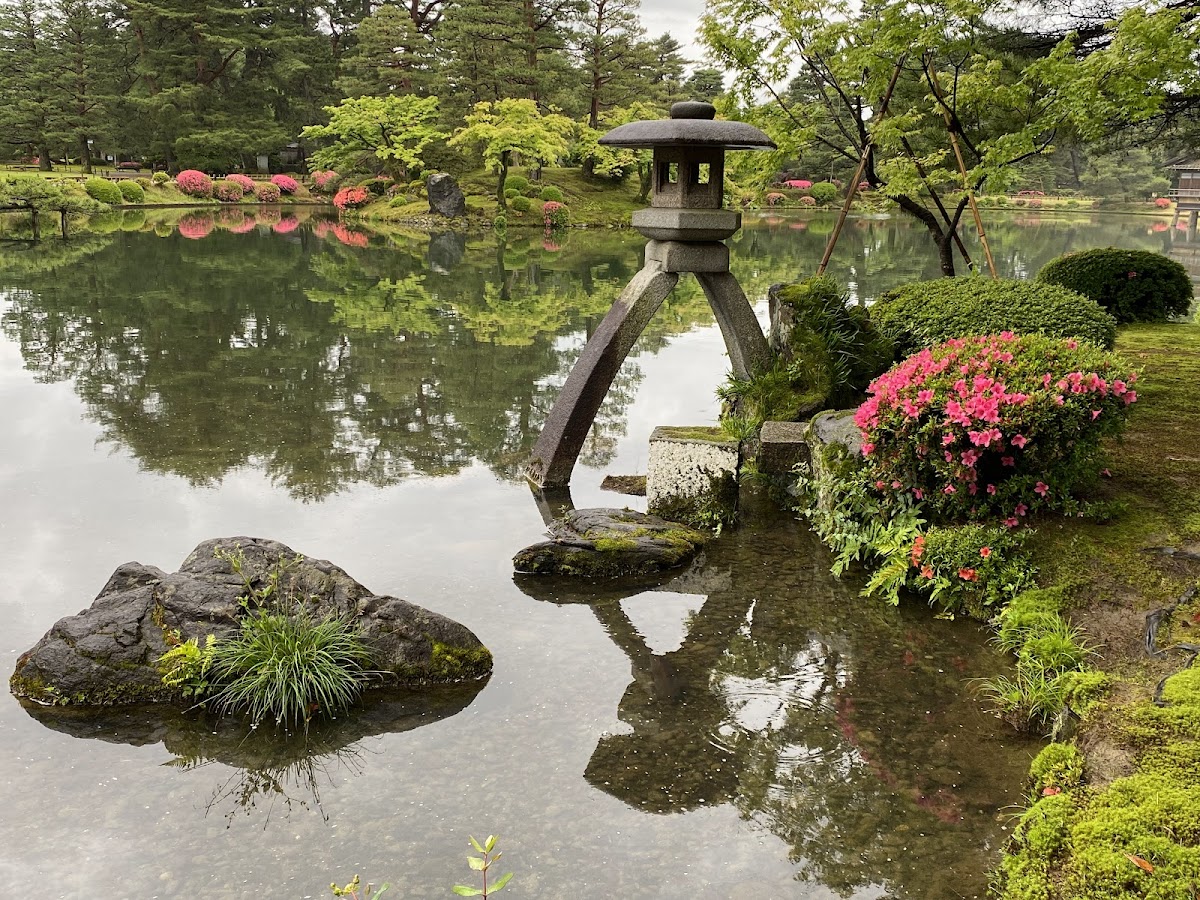
The most famous stone lantern in Kenrokuen and its symbol. It is named after its forked legs, which resemble the bridge of a koto (traditional Japanese stringed instrument). The composition with the Rainbow Bridge and Kasumi Pond in the background is one of Kenrokuen’s most representative scenic spots.
2. Kasumi Pond (Kasumigaike)
The largest pond in the garden, with an area of approximately 5,800 square meters. In the center of the pond is the Horai Island, expressing a paradise of immortality. This central feature of the stroll garden allows visitors to enjoy the scenery from various angles as they walk around its perimeter.
3. Karasaki Pine (Karasaki no Matsu)
A black pine grown from seeds brought from the shores of Lake Biwa by the 13th domain lord, Maeda Nariakira. The winter snow rope tying has become synonymous with Kenrokuen, and the cone-shaped beauty created by approximately 800 ropes is magnificent.
4. Neagari Pine (Neagari no Matsu)
A remarkable pine with roots exposed up to two meters above ground. According to tradition, the 13th domain lord, Maeda Nariakira, planted a young pine with soil piled around it and later removed the soil to expose the roots as it grew.
5. Meiji Memorial Monument (Meiji Kinen no Hyō)
Japan’s oldest fountain, created in 1861 (Bunkyū 1). Using Kasumi Pond as its water source, it shoots water approximately 3.5 meters high using only natural water pressure.
6. Observation Platform
Located at the highest point in the garden, it offers views of Kanazawa city, Iō Mountain, and the Hakusan mountain range. On clear days, you can see as far as the Sea of Japan.
7. Hyotan Pond (Hyosagoke)
Kenrokuen’s oldest pond, named after its gourd-like shape. The nearby Midori Falls and other scenic points are arranged around it.
8. Shigure Pavilion (Shigure-tei)
A tea house restored in 2000 where visitors can enjoy matcha tea and Japanese sweets (fee required). Having tea while admiring the garden will become a special memory of your Kenrokuen visit.
9. Sazae Mountain (Sazaeyama)
An earthen mound created from soil dug from Kasumi Pond, with a spiral path leading to its summit. From the top, you can take in views of the entire garden.
10. Ganko Bridge (Gankoubashi)
A stone bridge where eleven red Takao stones are arranged to resemble wild geese flying in formation. It is also called “Kikko Bridge” because of its tortoise-shell shape.
11. Flowing Stream (Kyokusui)
A small stream flowing through the garden with a winding course that adds charm. Water is drawn from the Tatsumi Water System, supplying the garden’s ponds and waterfalls.
12. Flower Viewing Bridge (Hanamibashi)
A wooden bridge over Kasumi Pond that becomes a famous spot for cherry blossoms in spring and autumn leaves in fall. The view from the bridge is beautiful throughout the four seasons and is popular with photographers.
13. Boat Pavilion (Funa no Ochin)
A pavilion on the shore of Kasumi Pond that was formerly used as a rest stop during boat excursions.
14. Evening Gourd Pavilion (Yugao-tei)
A tea house on the shore of Hyotan Pond and the oldest existing structure in Kenrokuen. Its modest appearance expresses the spirit of tea ceremony.
15. Cherry Tree Lining Near the Ishikawa Gate
The cherry tree-lined path leading from Kanazawa Castle’s Ishikawa Gate to Kenrokuen is a popular spring photography spot. This area connecting Kanazawa Castle and Kenrokuen is a special space where historical scenery and natural beauty harmonize.
Basic Information | Opening Hours, Admission Fee, and Access
Opening Hours
Kenrokuen is open year-round with seasonal variations in opening hours.
Regular Opening Hours:
- March 1 to October 15: 7:00 AM to 6:00 PM (closing time)
- October 16 to end of February: 8:00 AM to 5:00 PM (closing time)
Early Morning Opening:
- April to August: 4:00 AM to 6:45 AM (free)
- March, September, October: 5:00 AM to 6:45 AM (free)
- November to February: 6:00 AM to 7:45 AM (free)
Admission Fee
Individual:
- Adults (18 years and older): 320 yen
- Children (ages 6 to under 18): 100 yen
Groups (30 or more):
- Adults: 250 yen
- Children: 80 yen
Free Admission Days:
- Every Saturday and Sunday: Free for Ishikawa Prefecture residents (proof required)
- During cherry blossom blooming period (approximately one week)
- During autumn foliage season (approximately one week)
- Year-end and New Year period (December 31 to January 3)
- During other special events
Access
Location:
〒920-0936 Kanazawa City, Ishikawa Prefecture, Kenroku-cho 1
Public Transportation:
- From JR Kanazawa Station by bus: approximately 15 minutes
- Hokuriku Bus or Shikamachi Kanazawa Sightseeing Bus “Kenrokuen-shita, Kanazawa Castle” bus stop, 3 minutes’ walk
- From Kanazawa Station on foot: approximately 30 minutes
Private Vehicle:
- Approximately 30 minutes from Kanazawa West IC on the Hokuriku Expressway
- Approximately 30 minutes from Kanazawa East IC on the Hokuriku Expressway
- Parking: Multiple paid parking lots around Kenrokuen available (Kanazawa Prefecture Kenroku Parking Lot, etc.)
Contact Information
Kanazawa Castle and Kenrokuen Management Office
- Address: 〒920-0937 Kanazawa City, Ishikawa Prefecture, Maru-no-uchi 1-1
- Phone: 076-234-3800
- FAX: 076-234-5292
Tourist Attractions Around Kenrokuen
When visiting Kenrokuen, it is recommended to also visit nearby attractions.
Kanazawa Castle Park
Kanazawa Castle, adjacent to Kenrokuen, was the residence of the Million Koku domain of Kaga. Important Cultural Properties including the Ishikawa Gate, Gojikken Long House, and Hashizume Gate have been restored, and visitors can stroll through the vast castle grounds. A combination ticket for both Kenrokuen and Kanazawa Castle is available.
Seisontei (Seisontei)
The former residence of the wife of Kaga domain lord Maeda, located adjacent to Kenrokuen. Designated as an Important Cultural Property, it is a valuable architectural structure conveying the refined Kaga culture of the late Edo period.
Kanazawa Shrine (Kanazawa Jinja)
Located southeast of Kenrokuen, this shrine is dedicated to Sugawara Michizane, known as the deity of learning. Many worshippers visit during examination season.
Kinjō Reizawa (Kanazawa Sacred Spring)
The fountain that gave Kanazawa its name, located within the grounds of Kanazawa Shrine. A legend tells of sand gold being discovered while washing vegetables here.
Ishikawa Living Crafts Museum (Formerly Ishikawa Prefectural Traditional Crafts Museum)
A facility displaying traditional crafts of Ishikawa Prefecture, where visitors can see 36 types of crafts including Kaga Yuzen dyeing, Kutani porcelain, and Wajima lacquerware. Located within walking distance of Kenrokuen.
21st Century Museum of Art
A contemporary art museum that has received high acclaim from domestic and international critics. Located approximately 10 minutes’ walk from Kenrokuen, it offers a fusion of history and modernity in Kanazawa culture.
Model Courses for Kenrokuen Sightseeing
Here are suggested itineraries to efficiently enjoy Kenrokuen.
Basic Course (Duration: Approximately 1 hour 30 minutes)
- Enter from Katsurazaka Gate → Kotoji Lantern and Rainbow Bridge → Kasumi Pond → Karasaki Pine → Neagari Pine → Meiji Monument → Observation Platform → Hyotan Pond → Shigure Pavilion (rest) → Exit from Mayumi-zaka Gate
Leisurely Enjoyment Course (Duration: Approximately 3 hours)
- Enter during early morning opening (free) → Enjoy quiet morning walk through garden → Matcha tea experience at Shigure Pavilion → Visit major spots → Move to Kanazawa Castle Park → Visit Seisontei → Lunch in surrounding area
Seasonal Event Experience Course
- Spring: Evening cherry blossom illumination viewing → Morning cherry blossom viewing the next day during early opening
- Summer: Cool morning stroll during early opening → Matcha tea experience at Shigure Pavilion
- Autumn: Evening autumn foliage illumination viewing → Detailed autumn foliage observation the next day during daytime
- Winter: Enjoy beautiful snow rope tying → Snowy landscape photography
Tips for Enjoying Kenrokuen
Using Guided Tours
The Kenrokuen Tourism Association provides guided tour services with guides knowledgeable about the garden. By listening to detailed explanations of historical background and garden design techniques while touring, you can gain a deeper appreciation of Kenrokuen’s appeal.
Photography Spots
- Kotoji Lantern and Rainbow Bridge: Representative composition of Kenrokuen
- Karasaki Pine snow rope tying: Winter tradition
- Panoramic view from observation platform: Views of Kanazawa cityscape and mountains
- Water reflection of Kasumi Pond: Seasonal scenery reflected in the water
Barrier-Free Access
While Kenrokuen has many steps and slopes due to its garden landscape, wheelchair access is possible. Ramps are installed at the Katsurazaka Gate and Mayumi-zaka Gate, and major garden routes are maintained for wheelchair passage. It is recommended to contact the management office in advance.
Clothing and Items to Bring
- Comfortable walking shoes: The garden is vast with gravel paths and slopes
- Season-appropriate clothing: Sun umbrella and hat for summer; warm clothing for winter
- Camera: Many spectacular photo spots throughout the garden
- Drinks: While vending machines are available in the garden, bringing water is recommended in summer
Events and Illumination Information
Various events are held throughout the year at Kenrokuen.
Kanazawa Castle and Kenrokuen Four Seasons Story
Illumination events for Kanazawa Castle and Kenrokuen are held during each of the four seasons. Visitors can enjoy the garden’s fantastical nighttime appearance, different from its daytime presentation.
Event Periods:
- Spring Section: During cherry blossom blooming (early April)
- Summer Section: Late July to early August
- Autumn Section: Autumn foliage season (mid-November to late November)
- Winter Section: Early February
During illumination periods, night admission is free, and the garden is open from sunset to approximately 9:00 PM.
Snow Rope Tying Work Viewing
Starting November 1st each year, snow rope tying work on the Karasaki Pine begins. This is a rare opportunity to witness traditional craftsmanship up close.
Cherry Blossom and Autumn Foliage Free Admission Periods
During cherry blossom season and autumn foliage peak season, approximately one-week free admission periods are established. While these peak seasons attract many visitors, they offer ample opportunity to experience the seasonal beauty.
Cultural Value of Kenrokuen
Significance as a Special Place of Scenic Beauty
Kenrokuen was designated as a National Special Place of Scenic Beauty in 1985. This designation is given to places of scenic beauty of particularly high national value, with only 36 such designations in Japan (as of 2024). Kenrokuen is evaluated as the highest standard among Edo-period daimyo gardens in garden techniques, historical value, and scenic beauty.
International Recognition
Since receiving three stars in the Michelin Green Guide Japan in 2009, foreign tourists visiting Kenrokuen have increased significantly. The highest rating of “worth the trip” has served to showcase the beauty of Japanese gardens to the world.
Pinnacle of Garden Design Technique
Kenrokuen displays high levels of Edo-period garden design technique throughout. Water management systems that distribute water from the Tatsumi Water System to various locations in the garden, positioning of artificial hills utilizing natural topography, and use of perspective to manipulate spatial perception—all represent cutting-edge technology of the era brought together in one place.
Conclusion | Experience the History and Natural Beauty of the Million Koku Domain of Kaga at Kenrokuen
Kenrokuen in Kanazawa City, Ishikawa Prefecture, as one of Japan’s Three Most Beautiful Gardens and a nationally designated Special Place of Scenic Beauty, continues to captivate all who visit with the highest expression of Japanese garden beauty. This vast stroll garden with pond and stream style landscape, built over 180 years by the Kaga domain’s Maeda family, displays different faces with each season, enchanting visitors year-round.
Beyond the obvious seasonal spectacles—spring cherry blossoms, summer deep greens, autumn foliage, and winter snow rope tying—the garden offers abundant highlights including the Kotoji Lantern, Karasaki Pine, and Kasumi Pond. By visiting nearby attractions such as Kanazawa Castle Park and Seisontei alongside Kenrokuen, visitors can develop a deeper understanding of the history and culture of the Million Koku domain of Kaga.
The location offers excellent access, just approximately 15 minutes by bus from Kanazawa Station. With early morning openings and seasonal illumination events, there are many ways to enjoy Kenrokuen. When visiting Ishikawa Prefecture, be sure to experience the harmony of Japanese traditional beauty and nature at this special garden.