
Kiyotsu Gorge, Niigata Prefecture Complete Guide | Explaining the Spectacular Views of Japan’s Top Three Gorges and the Charm of the Gorge Tunnel in Detail
Kiyotsu Gorge (清津峡) located in Tokamachi City, Niigata Prefecture is counted as one of Japan’s three greatest gorges alongside Kurobe Gorge and Osugi Valley, and is one of Japan’s most renowned scenic spots. The V-shaped grand gorge formed over long periods by the Kiyotsu River, a tributary of the Shinano River, was designated as a National Scenic Spot and Natural Monument in 1941 (Showa 16) and became part of the Joshinetsu Kogen National Park in 1949 (Showa 24).
Across the approximately 12.5-kilometer-long gorge, massive columnar jointed rock faces stand vertically on either side of the river, and the changing natural beauty throughout the seasons continues to captivate visitors. In particular, the “Kiyotsu Gorge Tunnel,” renovated at the 2018 Art Triennale, has garnered attention from both domestic and international visitors as a unique experiential space where nature and art converge.
History and Geological Significance of Kiyotsu Gorge
History of Gorge Formation
Kiyotsu Gorge was formed by welded tuff created by volcanic activity approximately 16 million years ago being eroded by the Kiyotsu River. As a result of the river’s flow continuously carving through the bedrock over millions of years, the current magnificent V-shaped gorge was born.
The columnar jointing visible on both banks of the gorge consists of hexagonal columnar cracks formed as lava contracted during cooling. Due to their scale and excellent preservation, they are considered to have very high academic value. The columnar jointed rock faces reaching heights of tens of meters represent the pinnacle of nature’s sculptural beauty.
Designation as a National Scenic Spot and Natural Monument
Kiyotsu Gorge was designated as a National Scenic Spot and Natural Monument on April 23, 1941. This designation signifies recognition not only of the gorge’s scenic beauty but also of its geological and academic value. Among Japan’s three greatest gorges, the development of columnar jointing is particularly notable here, and it holds an important position as educational material for geology.
In 1949 after the war, it was incorporated into the Joshinetsu Kogen National Park, allowing for management that balances natural environmental conservation with utilization as a tourism resource.
Kiyotsu Gorge Tunnel | The Charm of Tunnel of Light
Background of Tunnel Excavation
Previously, Kiyotsu Gorge had a maintained footpath, but it was forced to close following a major rockfall accident in 1988. Subsequently, to allow safe enjoyment of the gorge’s beauty, a 750-meter-long pedestrian-only tunnel opened in 1996.
This tunnel was excavated through the mountainside and features four viewing platforms from which visitors can safely enjoy the gorge’s spectacular scenery. Inside the tunnel, a temperature of approximately 13 degrees is maintained year-round, making it cool in summer and relatively warm in winter.
Transformation into an Art Space through the Art Triennale
During the 2018 “Art Triennale Echigo-Tsumari” (大地の芸術祭), the Kiyotsu Gorge Tunnel was reborn as an art work titled “Tunnel of Light” under the direction of MAD Architects, led by Ma Yansong, a world-renowned architect of Chinese origin.
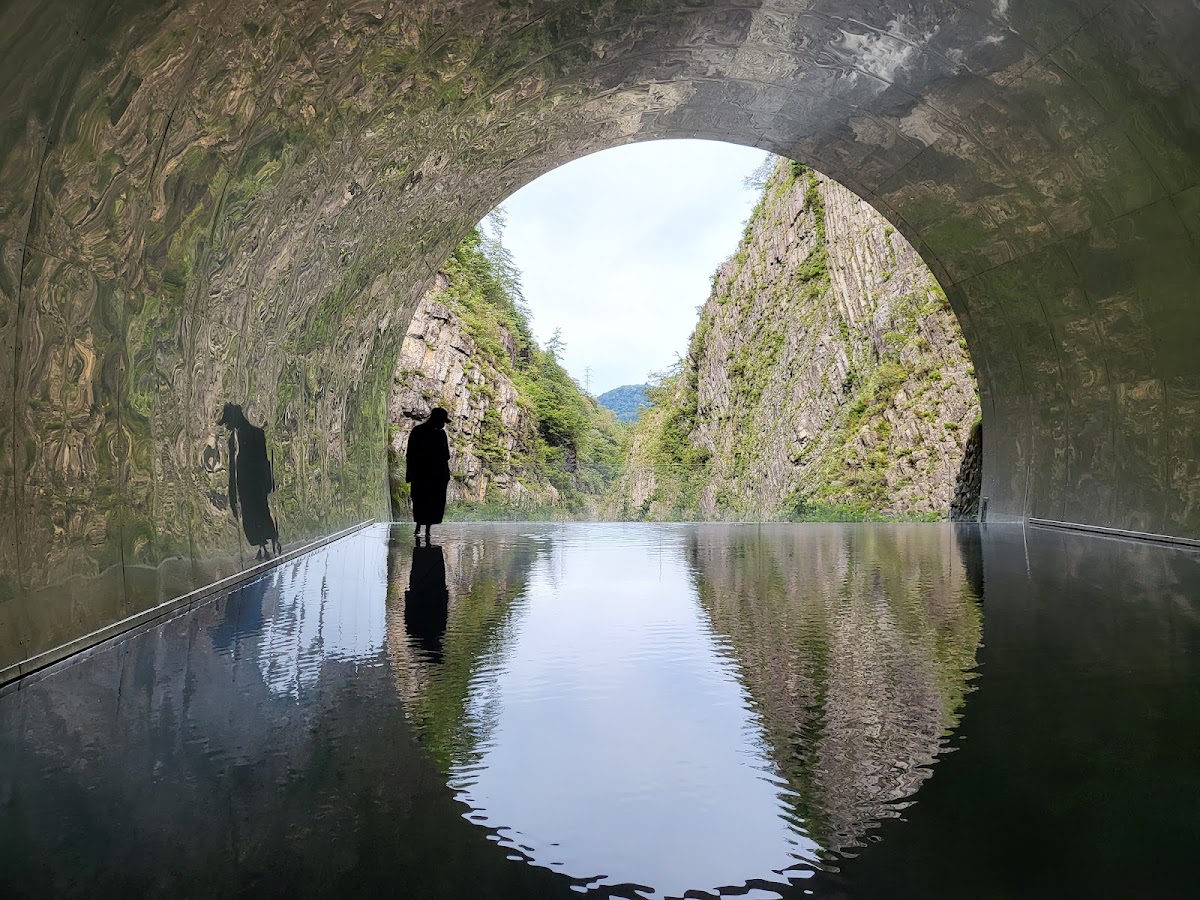
Multiple art spaces have been created within the tunnel, with the panorama station at the end being particularly impressive. A semi-circular stainless steel arch installed at the tunnel’s tip and a water mirror on the floor reflect the gorge scenery like a mirror, creating a fantastical space as if within a kaleidoscope.
Characteristics of the Four Viewing Platforms
At the First Viewing Platform, the first gorge viewpoint from the tunnel entrance offers close observation of columnar jointed rock faces. Light art effects utilizing natural light are displayed here.
The Second Viewing Platform, called the “Drop Shelter,” is a unique space with a spherical object installed. From here, visitors can view the middle reaches of the gorge and enjoy the changing expressions of the flowing stream with the seasons.
At the Third Viewing Platform, visitors can look down at the deepest part of the gorge, offering the most powerful experience of the V-shaped gorge’s scale.
The Panorama Station (endpoint) is the main attraction, where visitors can enjoy the spectacular “reversed gorge” reflected in the water mirror. The interplay of light, water, and rock face changes with time of day and weather, offering new discoveries even with repeated visits.
The Charm of Kiyotsu Gorge Throughout the Seasons
Spring at Kiyotsu Gorge (April–May)
The Kiyotsu River, swollen with snowmelt, brings dynamic vitality to the spring gorge. The operating season typically begins in late April, and as new greenery begins to sprout, the gorge presents a landscape full of life force.
The contrast between remaining snow and fresh greenery is beautiful, and May in particular offers mild weather ideal for sightseeing. The Golden Week period is expected to be crowded, so early morning or weekday visits are recommended.
Summer at Kiyotsu Gorge (June–August)
The gorge covered in deep green during summer draws visitors seeking coolness. The tunnel’s maintenance of a constant temperature of approximately 13 degrees year-round makes comfortable exploration possible even in peak summer heat, a major attraction.
The Obon period in August is the most crowded time, with entrance queues sometimes occurring on weekends. To avoid crowds, consider visiting early in the morning right at opening or during evening hours. Additionally, food trucks are particularly active during this period, offering dishes made with local ingredients.
Autumn at Kiyotsu Gorge (September–November)
Kiyotsu Gorge displays its most vibrant appearance during the autumn foliage season. From mid-October through early November, the entire gorge is colored in reds and yellows, creating a picture-like landscape with striking contrast against the gray rock walls.
The autumn foliage season is a crowded period comparable to the Golden Week in spring, with many tourists visiting from early morning especially on weekends. October and November feature shortened operating hours of 10:00–16:00, so planned visits are essential.
In the crisp autumn air, the reflected image of autumn leaves in the water mirror at the panorama station becomes an unforgettable scenic memory.
Winter Closure Period
The Kiyotsu Gorge Tunnel closes seasonally from December through late March or early April of the following year due to heavy snow and freezing conditions for safety reasons. During this period the entire facility is closed and entry is not permitted.
Although the area around Kiyotsu Gorge becomes subject to the harsh environment of a heavy snowfall region in winter, spring’s reopening brings the special scenery created by snowmelt streams and fresh greenery.
Operating Information for Kiyotsu Gorge Tunnel
Operating Periods and Hours
The Kiyotsu Gorge Tunnel’s operating period varies slightly depending on snowfall conditions, but is generally as follows:
- Operating Period: Late April–late November (typically)
- Closed Days: Open every day during the operating season (though closed Tuesdays and Wednesdays may apply during Art Triennale years)
- Operating Hours:
- April–September: 8:30–17:00 (final entry 16:30)
- October–November: 8:30–16:00 (final entry 15:30)
※During the Art Triennale operating period, hours may change to 10:00–17:00. It is recommended to confirm the latest operating information on the official website.
Admission Fees
Admission fees for the Kiyotsu Gorge Tunnel are as follows:
- Adults (high school and above): 1,000 yen
- Elementary and middle school students: 400 yen
- Preschool children: Free
Group discounts (20 or more) and discounts for visitors with disabilities are also available. If you have an Art Triennale art appreciation passport, separate confirmation is needed.
Ticket Purchase Methods
Admission tickets can be purchased at the entrance facility on-site, but advance online reservation purchase is recommended during crowded periods. Especially on weekends during Golden Week or the autumn foliage season, long wait times are likely without reservations.
Advance reservations through the official website enable smooth entry. When purchasing reservations, care must be taken not to make mistakes with dates and time slots.
Crowding Conditions and Countermeasures
Crowding at the Kiyotsu Gorge Tunnel varies greatly depending on the season and day of the week:
Most Crowded Periods:
- Golden Week (late April–early May)
- Obon period (mid-August)
- Autumn foliage season weekends (mid-October–early November)
Crowd Avoidance Tips:
- Consider visiting on weekdays
- Aim for early morning right at opening (8:30–9:30)
- Utilize advance reservation purchase
- Avoid the foliage season’s peak viewing times
Since the tunnel is not one-way traffic, a spirit of consideration for others is important during crowded times. Particularly during photography at the panorama station, do not forget consideration for other visitors.
Detailed Transportation Access
Access by Car
Via Kanetsu Expressway:
- Approximately 25 minutes from Shiozawa Ishiuchi IC via National Route 353 (approximately 25 km)
- Approximately 30 minutes from Muika Machi IC via National Routes 253 and 353 (approximately 30 km)
Via Joshinetsu Expressway:
- Approximately 25 minutes from Shiozawa Ishiuchi IC via National Route 353
When setting navigation, search using the phone number “025-763-4800” or address “〒949-8433 Niigata Prefecture, Tokamachi City, Koide Kan 2119-2.”
Parking Information
Approximately 155 parking spaces are available around the Kiyotsu Gorge Tunnel:
- Parking Lot 1: Closest to the entrance, accommodates 7 large buses
- Parking Lots 2–4: Used when Lot 1 is full
Parking Fee: Free
Operating Hours: 7:00–18:00 (closed at night)
Parking lots may become full during crowded periods, so arriving early is recommended. Parking Lots 1–4 are within walking distance, but there is some distance, so allow time for the walk.
Access by Public Transportation
From JR Echigo-Yuzawa Station:
- Approximately 25 minutes by Minamietsogo Tourist Bus “Morimiyanohara bound” express bus, get off at “Kiyotsu Gorge Entrance,” approximately 30 minutes on foot
- Or approximately 30 minutes on foot from the bus stop (approximately 2.5 km)
From JR Tokamachi Station:
- Approximately 25–30 minutes by Minamietsogo Tourist Bus, get off at “Kiyotsu Gorge Entrance,” approximately 30 minutes on foot
Since bus frequency is limited, it is important to confirm the timetable in advance. Failing to check the return bus schedule can result in long waits.
Taxi Use:
- Approximately 20–25 minutes from Echigo-Yuzawa Station (approximately 6,000–8,000 yen)
- Approximately 20 minutes from Tokamachi Station (approximately 5,000–7,000 yen)
For group visits or when carrying luggage, taxi use is worth considering.
Entrance Facility and Other Points of Interest
Entrance Facility
The entrance to the Kiyotsu Gorge Tunnel features fully equipped facilities including a gift shop, rest areas, and restrooms, where visitors can spend time comfortably before and after the tunnel tour.
The terrace space allows relaxation while viewing the gorge, offering an ideal location on clear days. During crowded seasons, food trucks are stationed, offering light meals and beverages using local ingredients.
Foot Bath for Relaxation
A free foot bath is installed near the entrance facility where visitors can soothe tired feet after the tunnel walk. Using hot spring water from Kiyotsu Gorge Koide Hot Spring, the foot bath offers a pleasant time while viewing the gorge’s nature.
Foot bath use is free, and towels can be brought along or purchased at the gift shop. Particularly during cool autumn or chilly early spring, the warm foot bath provides exceptional comfort.
Kiyotsu Gorge Koide Hot Spring
In the Kiyotsu Gorge area, there is a small hot spring town called Kiyotsu Gorge Koide Hot Spring with two operating inns. A stay combining gorge sightseeing with hot spring bathing becomes a luxury experience not possible on a day trip.
The spring water is a sodium calcium-chloride hot spring believed to be effective for neuralgia, muscle pain, and fatigue recovery. Soaking in the hot spring in a quiet environment surrounded by nature helps one forget urban hustle and bustle.
Art Triennale Echigo-Tsumari
Overview of the Art Festival
When discussing Kiyotsu Gorge, the “Art Triennale Echigo-Tsumari” (大地の芸術祭 越後妻有アートトリエンナーレ) is indispensable. This international art festival, spanning the Echigo-Tsumari region (approximately 760 square kilometers) across Tokamachi City and Tsunan Town in Niigata Prefecture, is held once every three years and is among the world’s largest international art festivals.
Since its first edition in 2000, based on the fundamental philosophy of “humans are contained within nature,” numerous works merging satoyama nature and culture, people’s ways of life, and art have been created. The Kiyotsu Gorge Tunnel has become one of the festival’s signature permanent installations.
2026 Echigo-Tsumari Festival Information
The next Art Triennale is scheduled for 2026:
Operating Period: April 25, 2026 (Saturday)–November 8, 2026 (Sunday)
Closed Days: Tuesdays and Wednesdays except holidays (though August 12 is open, and if Tuesday/Wednesday are holidays, the following business day is closed)
Operating Hours: 10:00–17:00 (10:00–16:00 in October and November)
Venue: Echigo-Tsumari region (Tokamachi City and Tsunan Town, Niigata Prefecture), 760 km²
During the festival period, hundreds of art works are distributed throughout the region, and ordinarily quiet villages welcome art enthusiasts from around the world.
Special Events During Festival Period
During the Art Triennale operating period, special events and programs may be held at Kiyotsu Gorge. Artist talks, musical events, workshops experiencing local food culture, and other activities offer enjoyment different from normal times.
Detailed event information will be announced on the official website as the festival approaches, so it is recommended to check before visiting.
Nearby Attractions
Bijin Forest
Approximately 20 minutes by car from Kiyotsu Gorge, “Bijin Forest” features beautiful beech trees approximately 100 years old standing in rows. Named for the beautiful appearance of their slender trunks, this forest is particularly beautiful in May with fresh green leaves and late October with autumn foliage.
Matsudai “Nohbutai”
One of the Art Triennale’s base facilities, this complex includes permanent art exhibitions, a restaurant, and shops. With good access approximately 15 minutes by car from Kiyotsu Gorge, visitors can more deeply understand the art festival’s world.
Hoshitoge Rice Terraces
Hoshitoge displays the beautiful scenery of rice terraces representing Japan’s original landscape and is popular with photography enthusiasts. Approximately 30 minutes by car from Kiyotsu Gorge, the early morning sea of clouds covering the terraces is particularly fantastical.
Echigo-Tsumari Contemporary Art Museum MonET
Located in central Tokamachi City, this museum features permanent exhibitions of Art Triennale works. Indoor art appreciation allows leisurely enjoyment unaffected by weather.
Precautions and Etiquette for Visits
Clothing and Items to Bring
The Kiyotsu Gorge Tunnel requires a 750-meter walk. The following preparations are recommended:
- Walking shoes: While the tunnel is paved, some areas are wet and non-slip soles are necessary
- Jacket: With tunnel temperatures around 13 degrees year-round, a layer is comfortable even in summer
- Towel: Essential if using the foot bath
- Beverages: Especially important in summer for hydration
- Camera and smartphone: Ensure sufficient charge
Photography Etiquette
Panorama station photography is extremely popular, but during crowding consideration for other visitors is necessary:
- Take turns photographing without monopolizing spots for extended periods
- Avoid tripod use during crowded times
- Be considerate to avoid photographing other visitors
- Exercise care with location information when posting to social media
Safety Precautions
- Though the tunnel has lighting, some dark areas exist requiring attention to footing
- Water mirror areas are slippery requiring particular care
- With young children, hold hands while walking
- If feeling unwell, turn back without overexertion
Cooperation in Environmental Protection
To protect Kiyotsu Gorge’s natural environment, designated as a National Scenic Spot and Natural Monument, observe the following etiquette:
- Always take trash with you
- Do not enter areas outside designated zones
- Collecting plants and animals is prohibited
- Keep conversation volume low
Tips for Maximum Enjoyment of Kiyotsu Gorge
Optimal Visiting Times
Early Morning (8:30–10:00):
- Little crowding allows leisurely photography
- Soft morning light beautifully illuminates the gorge
- Parking is easily secured
Afternoon (14:00–16:00):
- Changed sun angle offers different perspectives
- Past peak crowding in many cases
Recommended Length of Stay
- Tunnel round trip only: Approximately 60–90 minutes
- Including foot bath and entrance facilities: Approximately 2–3 hours
- Including nearby attractions: Half day to full day
Allowing time flexibility enables unhurried enjoyment of Kiyotsu Gorge’s charms.
Seasonal Recommendations
Spring (April–May): Snowmelt streams and fresh greenery, relatively uncrowded
Summer (June–August): Cool tunnel interior is comfortable, verdant landscape
Autumn (October–November): Spectacular autumn foliage, most vibrant season (note crowding)
Each season offers different charms; visiting multiple times reveals Kiyotsu Gorge’s diverse expressions.
Conclusion
Kiyotsu Gorge is a tourism destination without parallel in the world where the magnificent natural beauty of one of Japan’s three greatest gorges and contemporary art converge. The columnar jointed rock faces designated as a National Scenic Spot and Natural Monument and the landscape created by the Kiyotsu River are nature’s artistic masterpiece created by millions of years.
Reborn as “Tunnel of Light” at the 2018 Art Triennale, the Kiyotsu Gorge Tunnel has become a unique space experiencing the dialogue between nature and art. The spectacular “reversed gorge” reflected in the water mirror at the panorama station continues to move visitors deeply.
Positioned in the heavy snowfall region of Tokamachi City, Niigata Prefecture, it captivates numerous visitors from spring through autumn and contributes to the cultural and economic revitalization of the entire Echigo-Tsumari region. Confirming operating periods and crowding conditions in advance and making appropriate preparations enables more fulfilling Kiyotsu Gorge experiences.
Changing appearance with each season, Kiyotsu Gorge offers new discoveries with every visit. Create unforgettable memories at Kiyotsu Gorge where nature’s grandeur and human creativity harmonize.
