Sakanashi Pass, Akita Prefecture | Complete Guide to the History, Autumn Foliage, and Access of a Prefectural Border Pass on National Route 282
Sakanashi Pass (さかなしとうげ) is a mountain pass located at an elevation of 455 meters on the prefectural border between Kosaka Town in Kamikita District, Akita Prefecture and Hirakawa City in Aomori Prefecture. This pass, through which National Route 282 runs, is known as a mountain road with continuous steep grades and sharp curves, and in autumn it is also popular as a beautiful autumn foliage spot. This article provides a detailed explanation of everything you should know before visiting Sakanashi Pass, from its geographical characteristics and history to its seasonal attractions and access methods.
Overview and Geographical Features of Sakanashi Pass
Basic Information
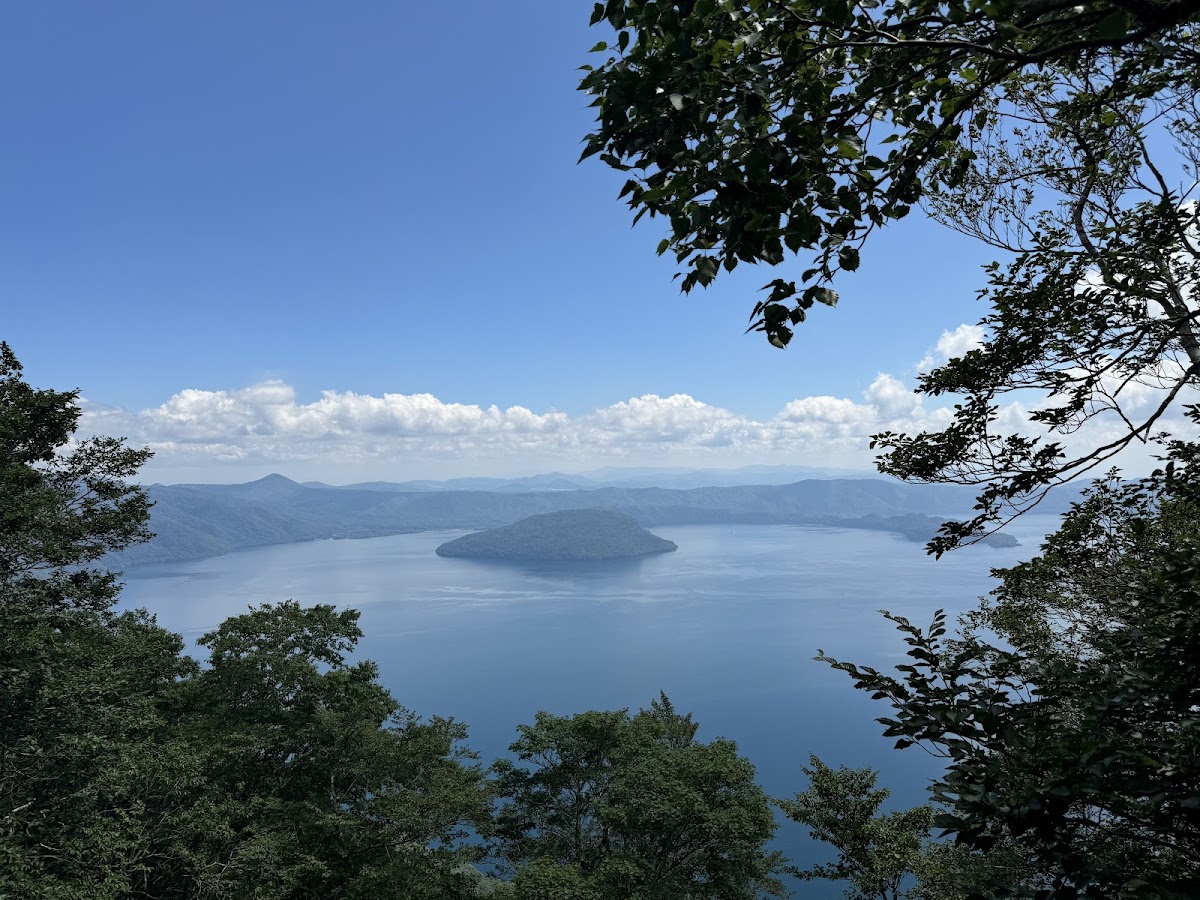
Sakanashi Pass is located approximately 15 kilometers west of Lake Towada and forms an important border between Akita and Aomori prefectures. This pass at 455 meters elevation forms part of the Ou Mountain Range, and the surrounding area is covered with abundant beech forests.
Location:
- Akita Prefecture side: Kosaka, Kosaka Town, Kamikita District
- Aomori Prefecture side: Ikari-Gaseki, Hirakawa City
Roads that pass through:
- National Route 282 (general national highway)
- Tohoku Expressway (via Sakanashi Tunnel)
Topography and Road Characteristics
The Sakanashi Pass section of National Route 282 has harsh conditions typical of mountain roads. Particularly when descending toward Akita Prefecture, gradients of up to 8% appear, and hairpin curves continue in succession. The summit area of the pass has a typical cut-through structure with a prefectural border marker installed.
On the other hand, the Tohoku Expressway runs through the pass directly beneath it via the 4,265-meter-long Sakanashi Tunnel, which is the longest tunnel on the Tohoku Expressway. Due to the existence of this tunnel, expressway users can avoid the steep grades of the pass, but vehicles using National Route 282 still must travel over the pass road.
Historical Background of Sakanashi Pass
As a Key Point on the Tsugaru Road
Since the Edo period, Sakanashi Pass has functioned as an important waypoint on the “Old Tsugaru Road.” This route was a major link between Akita Domain and Tsugaru Domain, and was indispensable for the transport of goods and movement of people. It served as one of the few mountain passes that remained passable even under severe winter weather conditions, playing a vital role in supporting regional commerce.
Relationship Between Sakanashi Pass and the Kosaka Mine
From the Meiji period through the early Showa period, Sakanashi Pass was an extremely important logistics route for the Kosaka Mine. The Kosaka Mine thrived as one of Japan’s leading copper mines, and mined ore and refined copper were transported over this pass toward Hirosaki City in Aomori Prefecture.
Before the opening of the Ou Main Line, Sakanashi Pass was the shortest route connecting Kosaka and Hirosaki, and was a hub of traffic with horse carts and wagons frequently passing through. Tea houses and rest stops were also established along the pass road, bustling as places of rest for travelers and transport workers.
Modernization and Road Development
With the progress of motorization starting in the Showa period, road improvements at Sakanashi Pass also advanced. In the 1960s, it was designated as National Route 282 and paving work was carried out. However, due to geographical constraints, it proved difficult to eliminate the steep grades and sharp curves, and today the pass still retains strong characteristics as a mountain road.
In the late 1980s, construction of the Tohoku Expressway progressed, and the Sakanashi Tunnel opened in 1991. This 4,265-meter-long tunnel was a major project incorporating the latest civil engineering technology of the time, dramatically improving logistics between Aomori and Akita.
Autumn Foliage at Sakanashi Pass | A Hidden Scenic Gem in Tohoku
Best Viewing Period for Autumn Foliage
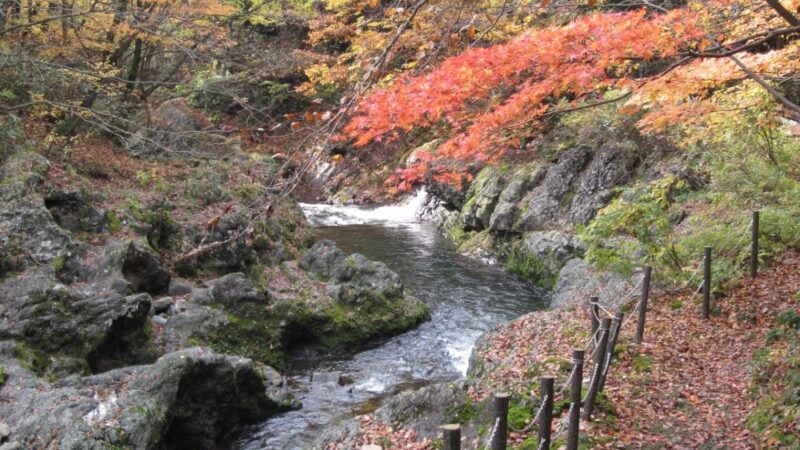
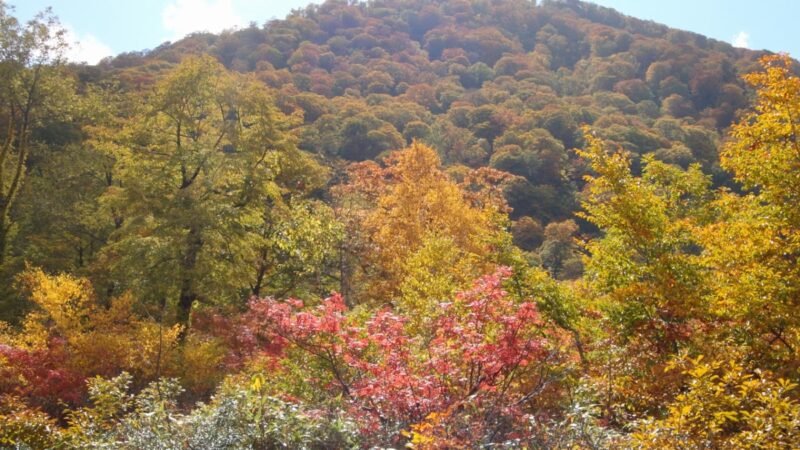
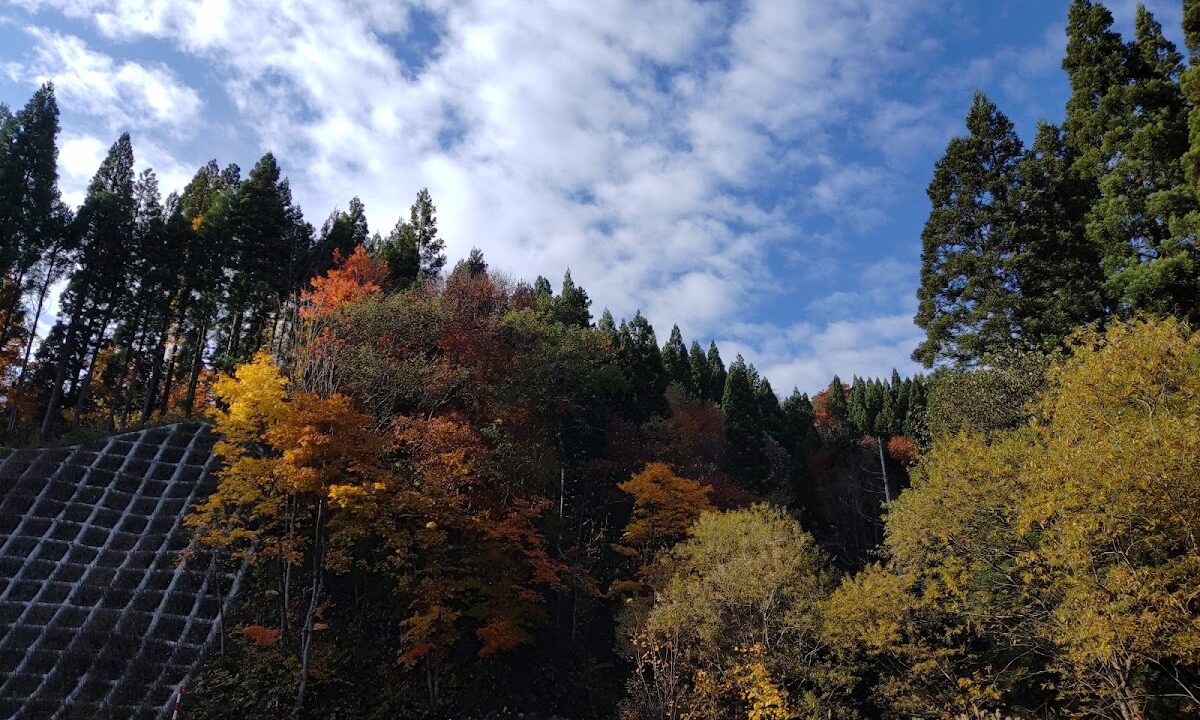
Sakanashi Pass is known as one of Akita Prefecture’s premier autumn foliage spots. Thanks to its elevation of 455 meters and abundant deciduous broadleaf forests, one can enjoy vibrant autumn colors.
Best viewing period:
- Color beginning: Early to mid-October
- Peak season: Late October to early November
- Leaf fall: Mid to late November
Due to the elevation difference, the autumn foliage front gradually descends from the summit to the base, making it possible to enjoy autumn colors for approximately one month.
Tree Species that Display Autumn Colors
The main autumn-coloring trees found in the Sakanashi Pass area are as follows:
Red autumn colors:
- Japanese maple (vibrant deep red)
- Itaya maple (orange to red)
- Mountain ash (dark red)
Yellow autumn colors:
- Beech (golden yellow)
- White birch (bright yellow)
- Ermans birch (pale yellow)
In particular, the autumn yellowing of beech forests is magnificent, and traveling the pass road provides an experience of passing through a tunnel of golden color. The contrast between red and yellow is beautiful, making it popular as a photography spot.
How to Enjoy an Autumn Foliage Drive
National Route 282 has relatively light traffic, and even during foliage season, traffic jams are rare. This charm as a “hidden autumn foliage spot” has recently drawn attention on social media and other platforms.
Recommended driving routes:
- Climbing from the Akita side (Kosaka Town): As you gain elevation gradually, you can enjoy changes in the foliage
- Climbing from the Aomori side (Hirakawa City): A spectacular foliage view spreads out beyond the steep climb
There is a small parking space near the summit of the pass, allowing brief stops. However, because there are many curves and sections with poor visibility, please practice safe driving.
Sakanashi Pass Through the Four Seasons
Spring Green (May–June)
From May to June after the snow melts, Sakanashi Pass is enveloped in fresh greenery. The sight of beech leaves budding all at once is called a “shower of green,” and there is a refreshing beauty different from autumn foliage. During this period, bird activity is also active, making it suitable for birdwatching.
Summer Deep Green (July–August)
During summer, everything is covered in deep green, allowing visitors to enjoy the cool climate of a high-altitude plateau. Temperatures are 3–5 degrees lower than at lower elevations, giving it value as a summer retreat. However, afternoon fog often develops during summer, which can cause poor visibility, so care is required when driving.
Winter Snowy Landscape (December–March)
Sakanashi Pass becomes a heavy snow area in winter. Snowfall can reach 1–2 meters, and snow removal is performed on National Route 282, but winter tires (studless tires) and tire chains are essential. During blizzards, visibility can be nearly zero, and even local drivers sometimes avoid traveling through. On the other hand, snowy landscapes on clear days are breathtakingly beautiful, and ice crystals and rime ice can sometimes be seen. However, crossing the pass in winter requires adequate equipment and experience.
Access Information and Nearby Facilities
Access by Car
From the Akita side:
- Approximately 15 km from Kosaka IC on the Tohoku Expressway via National Route 282 (approximately 20 minutes)
- Approximately 40 km from downtown Odate via National Routes 103 and 282 (approximately 50 minutes)
From the Aomori side:
- Approximately 25 km from Owani-Hirosaki IC on the Tohoku Expressway via National Route 282 (approximately 35 minutes)
- Approximately 45 km from downtown Hirosaki via National Routes 7 and 282 (approximately 60 minutes)
Access by Public Transportation
There is no public transportation that directly passes through Sakanashi Pass. The nearest public transportation hubs are as follows:
Akita side:
- Approximately 30 minutes by taxi from “Towadaminami Station” on the JR Hanawa Line
- Approximately 20 minutes by taxi from downtown Kosaka Town
Aomori side:
- Approximately 40 minutes by taxi from “Owani Onsen Station” on the JR Ou Main Line
Renting a car is the most convenient option.
Nearby Tourist Attractions
Akita side:
- Kosaka Mine Office (Important Cultural Property of Japan): Western-style architecture built in Meiji 38
- Korakukan (Important Cultural Property of Japan): Japan’s oldest operating theater
- Lake Towada: A scenic spot approximately 30 minutes by car from the pass
- Kosaka Town General Museum Folk History Hall: A facility where you can learn about mining history
Aomori side:
- Owani Onsen Resort: A hot spring area with a history spanning 800 years
- Ikari-Gaseki Onsen Resort: A hot spring area at the foot of the pass
- Mount Iwaki: A famous peak known as the Tsugaru Fuji
Precautions When Traveling on Sakanashi Pass
Road Conditions and Driving Points
The Sakanashi Pass section of National Route 282 has the following characteristics as a mountain road:
Road characteristics:
- Maximum gradient: 8% (descending on the Akita side)
- Sharp curves: Multiple hairpin curves with radii of less than 30 meters
- Road width: Possible for ordinary vehicles to pass each other, but care is needed for large vehicles
- Road surface: Paved, but with uneven areas due to aging
Driving precautions:
- Use engine braking to prevent overheating of the foot brake
- Pay attention to oncoming vehicles and reduce speed sufficiently before curves
- Reduce speed when fog occurs and turn on lights
- Watch out for wild animals (especially deer and raccoon dogs) jumping out
Winter Passage
Traveling through Sakanashi Pass in winter (December–March) requires special preparation:
Essential equipment:
- Studless tires (grooves at least 50% depth recommended)
- Tire chains (for emergencies)
- Shovel and towing rope
- Cold-weather clothing, emergency food, and blankets
Checking weather information:
- Akita Prefecture Road Information System
- Aomori Prefecture Road Information System
- Japan Road Traffic Information Center (JARTIC)
Road closures due to blizzards also occur, so it is important to check road information in advance during winter.
Mountaineering and Hiking Information
Nearby Hiking Courses
There are multiple hiking courses around Sakanashi Pass and have become popular spots on hiking apps such as YAMAP.
Main mountains:
- Sumizuka Forest (elevation 842 m): About 10 minutes by car from the trailhead to the pass
- Shirajiyama (elevation 830 m): A mountain on the Akita–Aomori border
Hiking difficulty level:
- Suitable for beginners to intermediate hikers
- Hiking time: 3–4 hours round trip
- Best hiking season: Late May to late October
Precautions for Trekking
Please note the following points when trekking around Sakanashi Pass:
- Bear protection: This is an area inhabited by Asian black bears. Carry a bear bell and avoid hiking alone
- Equipment: Hiking boots, rain gear, maps, and compass (or GPS) are essential
- Water: Spring water may not be suitable for drinking, so bring an adequate supply of drinking water
- Hiking plan: Inform family and friends of your destination and expected return time
Weather and Natural Environment of Sakanashi Pass
Climate Characteristics
Sakanashi Pass is located at the boundary between Japan Sea side and Pacific Ocean side climates, possessing unique weather conditions.
Annual temperature:
- Average temperature: Approximately 7–8°C (3–4°C lower than lower elevations)
- Maximum temperature: Around 25°C in August
- Minimum temperature: Below minus 10°C in January and February
Precipitation:
- Annual precipitation: Approximately 1,500–1,800 mm
- Particularly high snowfall in winter
Vegetation and Ecosystem
The area around Sakanashi Pass belongs to the “beech zone” and is covered with abundant deciduous broadleaf forests.
Main tree species:
- Beech (dominant species)
- Mongolian oak
- Itaya maple
- Magnolia obovata
- Horse chestnut
Wild animals:
- Asian black bear
- Japanese serow
- Japanese sika deer
- Foxes and raccoon dogs
- Diverse bird species (great spotted woodpecker, Chinese paradise flycatcher, etc.)
This rich natural environment is also an important area from the perspective of biodiversity conservation.
Sakanashi Pass and the Tohoku Expressway Sakanashi Tunnel
Overview of the Tunnel
The Sakanashi Tunnel on the Tohoku Expressway is an important infrastructure that runs directly beneath Sakanashi Pass.
Tunnel specifications:
- Total length: 4,265 m (longest on the Tohoku Expressway)
- Opening: 1991 (Heisei 3)
- Structure: Dual tunnel (separate for uphill and downhill lanes)
- Maximum overburden: Approximately 200 meters
Using the Tunnel and Pass Road
Where a highway and general national road run parallel at Sakanashi Pass, it is possible to choose which to use based on your purpose.
When to choose the Tohoku Expressway (Sakanashi Tunnel):
- When time is a priority
- During bad winter weather
- When traveling with large vehicles
- For long-distance travel
When to choose National Route 282 (Sakanashi Pass):
- When you want to enjoy the scenery
- During autumn foliage season driving
- When stopping at nearby tourist attractions
- When you want to save expressway tolls
Local Traditions and Culture
Stories Passed Down About the Pass
Various legends have been handed down about Sakanashi Pass over the centuries. Due to the harsh winter conditions, there is a tradition of enshrining the “pass deity,” and it is said that a small shrine once stood at the summit of the pass. Travelers would pray for safety there and give thanks for having crossed the pass safely.
Origin of the Place Name
There are several theories about the origin of the name “Sakanashi,” but the most plausible is that “sakana-shi” (坂梨) was derived from “saka-nashi” (坂無し, meaning no slope). Although the pass actually features continuous steep slopes, it is said that in ancient times, compared to other routes, it was called “without slopes” because it felt more passable.
Locally, theories are also passed down such as “there were many pear trees” and theories of Ainu language origins.
Sakanashi Pass as a Photography Spot
Recommended Photography Points
Sakanashi Pass offers abundant subjects of interest to photography enthusiasts.
Best shot points:
- Pass summit: Prefectural border marker and surrounding mountain ranges
- Around the 5th station on the Akita side: Combination of curves and autumn foliage
- Viewpoint on the Aomori side: Distant view of Mount Iwaki
Best times for photography:
- Early morning (5:00–7:00 AM): Contrast of morning mist and sunrise
- Late afternoon (4:00–6:00 PM): Autumn foliage illuminated by setting sun
- Peak autumn foliage period: Late October to early November
Precautions When Photography
Photography on the road can obstruct traffic, so always park your car in a safe location before photographing. Because the shoulders are narrow in many sections, turning on hazard lights and alerting following vehicles is also important.
Summary: Experience the Charm of Sakanashi Pass
Sakanashi Pass is a historic pass connecting Akita and Aomori prefectures and continues to function as an important traffic route today. The 455-meter pass road features continuous steep grades and sharp curves, requiring careful driving; however, in return, one can experience the natural beauty of all seasons up close. This makes it a fascinating route.
Especially during the autumn foliage season from late October to early November, it captivates many people as a hidden scenic gem in Tohoku. The relatively light traffic also makes it possible to enjoy a leisurely drive, which is a major attraction.
Historically, it served as a key point on the Tsugaru Road and as a logistics route for the Kosaka Mine, supporting the region’s development. Today, the Sakanashi Tunnel on the Tohoku Expressway runs parallel to it, but the general national highway pass road remains active, still serving as a local traffic route and tourist destination.
When visiting, make sure to prepare adequately according to the season and weather conditions, and practice safe driving. Especially in winter, when it becomes a heavy snow area, adequate equipment and checking weather information are essential.
Sakanashi Pass is one of Akita Prefecture’s representative passes, where one can simultaneously experience the beauty of nature, the weight of history, and the exhilaration of mountain road driving. Please be sure to visit this fascinating pass at least once.