Shiretoko Pass, Hokkaido Complete Guide | Spectacular Views from an Elevation of 738m and the Charm of Four Seasons, Access Information
Shiretoko Pass, located at the highest point of Shiretoko Yokodan Road that traverses the Shiretoko Peninsula, a UNESCO World Natural Heritage Site in Hokkaido, is one of Hokkaido’s premier scenic spots offering a panoramic view of magnificent natural landscapes from an elevation of 738m. From this pass on Route 334 connecting Utoro in Shari Town and Rausu Town, you can see the majestic form of Mt. Rausu before you, the deep green primeval forest spreading below, and on clear days, Kunashir Island floating beyond the Nemuro Strait.
This article will convey the full charm of Shiretoko Pass and explain in detail the information you should know when visiting.
What is Shiretoko Pass | A Special Place Where You Can Experience a UNESCO World Natural Heritage Site
Shiretoko Pass is located at the border between Rausu Town in Nemuro District and Shari Town in Shari District, Hokkaido, and also sits on the boundary line between the Okhotsk General Subprefecture and Nemuro Subprefecture. It is the summit section of Shiretoko Yokodan Road (Route 334), which runs through the center of the Shiretoko Peninsula registered as a UNESCO World Natural Heritage Site in 2005, and is counted as one of the “Eight Views of Shiretoko.”
Due to its high elevation of 738m, it is blessed with a cool climate different from flatlands and the refreshing scent of coniferous forests that welcomes visitors. The observation platform at the pass offers a 360-degree panoramic view, making it a precious spot where you can feel Shiretoko’s primordial nature firsthand.
Spectacular Views Visible from Shiretoko Pass
The greatest charm of Shiretoko Pass lies in its overwhelming landscape. Standing at the pass, Mt. Rausu (elevation 1,661m), the highest peak of the Shiretoko Peninsula, rises majestically before you. This mountain is also selected as one of Japan’s 100 Famous Mountains, and its magnificent form deeply moves all who visit.
Below, primordial forests of mixed coniferous and broad-leaved trees such as Japanese oak and Sakhalin spruce spread endlessly. This vast sea of deep green trees is a landscape unique to Shiretoko with its pristine natural environment. In summer, the leaves show deep green, while in autumn, the maple leaves dyed in golden and red tones create a wonderful contrast with the evergreen conifers, presenting different faces depending on the season of your visit.
On clear days, the blue surface of the Nemuro Strait sparkles to the east, and beyond it, the mountain ranges of Kunashir Island stand out clearly. Particularly at dawn, you can witness the sunrise from Kunashir Island, and a mystical scene unfolds. At night, with minimal light pollution, you can observe a starry sky in all its glory, making it an ideal location for observing the Milky Way and meteor showers.
Shiretoko Yokodan Road | Japan’s National Road with the Shortest Operating Period
Shiretoko Yokodan Road (Route 334) through Shiretoko Pass is a mountain road approximately 27km in length (the closed section centered on the pass is 23.8km). This road is the only route connecting Utoro on the Okhotsk Sea side and Rausu on the Pacific side and opened in 1980 (Showa 55).
Severe Natural Environment and Road Closure Periods
Shiretoko Yokodan Road is known as “Japan’s national road with the shortest operating period.” The Shiretoko Peninsula experiences particularly severe natural conditions even for Hokkaido, and with snowfall reaching several meters in winter, the road is completely closed for approximately half the year, typically from late October to late April of the following year.
The closure period varies annually depending on snow conditions and weather, but generally follows the schedule below:
- Closure begins: Late October to early November
- Road opens: Late April to early May
Shortly after opening in spring, snow walls several meters high often remain alongside the road, becoming a popular photography spot known as the “snow corridor.” Remaining snow can sometimes be seen even in late July, and the characteristic cool climate persists even in midsummer.
How to Enjoy the Drive and Precautions
Shiretoko Yokodan Road is a mountain road with continuous curves. Climbing from the Utoro side, the elevation gradually increases as you drive through dense coniferous forests. From the car windows, you can enjoy the view of primeval forests, and if you’re lucky, you may encounter wild animals such as Ezo deer or red foxes.
Please note the following points while driving:
- Sharp curves and slopes: Drive at a reduced speed and practice safe driving on this winding mountain pass
- Wildlife crossings: Be careful of collision accidents with animals, especially at dawn and dusk
- Rapid weather changes: Weather near the pass is prone to sudden changes, and fog can develop
- Mobile phone reception: In some areas, signal may not reach
- Gasoline: Fill up at Utoro or Rausu (no gas stations around the pass)
Shiretoko Pass in Four Seasons | Changing Faces with the Seasons
Shiretoko Pass presents a completely different landscape in each season. Let’s explore the charm of each season in detail.
Spring (May-June) | Season of Snowmelt and Fresh Greenery
The Shiretoko Yokodan Road opens from late April to early May. At Shiretoko Pass in spring, the contrast between the remaining snow walls along the road and the budding fresh greenery creates a beautiful sight. Particularly right after opening, the snow walls are especially high, and the experience of passing through a snow corridor exceeding the vehicle’s height is spectacular.
From late May to June, alpine flowers begin to bloom, and you can see Mt. Rausu still with snow remaining on its slopes. During this period, there are relatively fewer tourists, making it an ideal season to enjoy the spectacular views in relative solitude.
Summer (July-August) | Deep Green and Healing Breeze
Summer at Shiretoko Pass is the season when the dense green primeval forest is most beautiful. While temperatures exceed 30 degrees on flatlands, at the pass at elevation 738m, it’s around 20 degrees, making it ideal as a summer resort. The fresh scent of coniferous trees and cool breeze give visitors an exhilarating sensation.
Remaining snow can sometimes be seen even in late July, offering the chance to encounter the strange sight of summer and winter coexisting. Additionally, this period with relatively high clear-sky rates increases the probability of viewing Kunashir Island. Early morning sometimes brings sea of clouds, allowing visitors to enjoy fantastical scenery.
Autumn (September-October) | Spectacular Autumn Foliage
From mid-September to early October, Shiretoko Pass reaches its peak autumn foliage season. Broad-leaved trees such as Japanese oak and birch are dyed in golden and red hues, creating a magnificent landscape with striking contrasts against the evergreen conifers.
The foliage begins at the summit of Mt. Rausu and gradually descends to lower elevations, a phenomenon called the “foliage front” that is unique to this season to observe. The view of Kunashir Island in the crisp autumn air is particularly beautiful, making this a popular season for photography enthusiasts.
In late October, early snow may fall, offering the rare opportunity to see both autumn foliage and snow simultaneously. However, as the closure period approaches, it is important to check the latest road information before visiting.
Winter (November-April) | Shiretoko During the Closure Period
During winter, the pass is closed and access to Shiretoko Pass is not possible. During this period, the pass is covered with several meters of snow, quietly waiting for spring under severe natural conditions. During the closure period on the Shiretoko Peninsula, you can enjoy ice floe viewing and winter-specific activities.
Access to Shiretoko Pass
Access to Shiretoko Pass is primarily by automobile or bus tour.
Access by Automobile
From the Utoro side
- Approximately 2 hours from Women’s Mashike Airport
- Approximately 1 hour 30 minutes from Abashiri city center
- Approximately 30 minutes from Utoro hot spring area (approximately 14km)
From the Rausu side
- Approximately 1 hour 30 minutes from Nakashibetsu Airport
- Approximately 30 minutes from Rausu city center (approximately 13km)
Whether approaching from Utoro or Rausu, travel time to the pass is approximately the same. The route from Utoro features relatively gentle gradients, while the route from Rausu tends to have more sharp curves.
Access by Public Transportation
There are no regular bus routes directly to Shiretoko Pass, but during the tourism season, bus tours operating via Shiretoko Yokodan Road are sometimes available. Additionally, the use of sightseeing taxis or rental cars based in Utoro or Rausu is common.
Access from major nearby cities:
From Sapporo
- Approximately 6 hours by car (using expressway)
- Flying to Women’s Mashike Airport plus car travel is convenient
From Kushiro
- Approximately 3 hours 30 minutes by car
Parking Information
A free parking lot is maintained at the top of Shiretoko Pass. It can accommodate approximately 20-30 vehicles, and it sometimes fills up during peak tourism seasons (particularly summer vacation periods and autumn foliage weekends). Early morning and weekdays tend to have relatively available spaces.
The parking lot has toilet facilities (basic toilets), but there are no shops or vending machines, so it’s recommended to prepare drinking water and light snacks in advance.
Tourist Spots Around Shiretoko Pass
By visiting tourist spots around Shiretoko Pass, you can make your Shiretoko tour more fulfilling.
Tourist Spots on the Utoro Side
Shiretoko Five Lakes
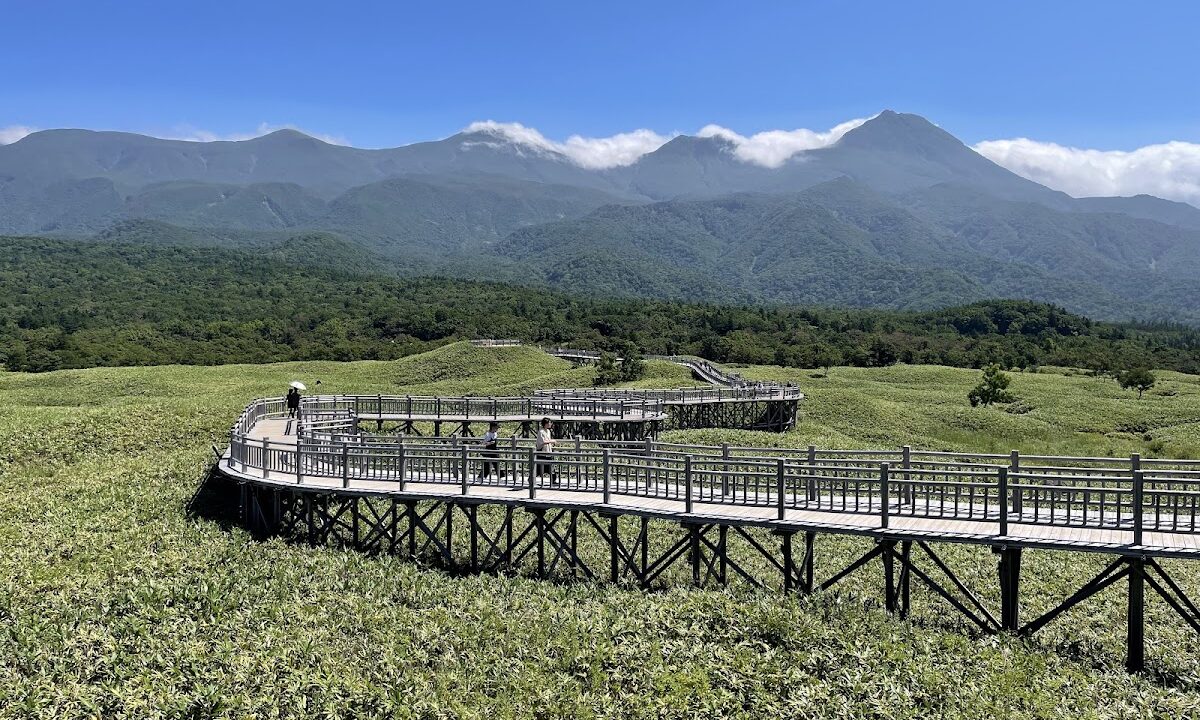
A walking course around five lakes surrounded by primeval forest. You can enjoy spectacular lake views with Mt. Rausu in the background from the elevated wooden walkway. If walking on the ground trail, you must receive a briefing on bear safety measures.
Oshinkoshin Falls
One of the Eight Views of Shiretoko and selected as one of Japan’s 100 Waterfalls. Called the “Falls of Dual Beauty” due to its split streams, you can climb stairs to the middle of the waterfall.
Fraepe Falls (Maiden’s Tears)
A rare waterfall where groundwater seeps from a cliff and flows into the sea. You can view it from an observation platform about a 20-minute walk along the trail, and the views of the Okhotsk Sea and the Shiretoko mountain range are also wonderful.
Utoro Hot Spring
A hot spring area with views of the Okhotsk Sea. Famous for its beautiful sunsets, it offers outdoor baths where you can bathe while viewing ice floes in winter.
Tourist Spots on the Rausu Side
Mt. Rausu Climbing
Mt. Rausu, one of Japan’s 100 Famous Mountains and the highest peak of the Shiretoko Peninsula (1,661m). While it’s serious mountaineering, the 360-degree panorama from the summit is extraordinary. The climbing entrance is about 10 minutes by car from Shiretoko Pass.
Rausu Hot Spring
Located on the Pacific side of the Shiretoko Peninsula. There’s also a free open-air bath called “Bear Bath” along the coast, offering a rustic bathing experience.
Whale, Dolphin, and Birdwatching
The waters off Rausu are a rare location globally where orcas, sperm whales, and dolphins can be observed with high probability. Cruise tours operate mainly during summer.
Rausu Kelp
Rausu is known as a production area for premium kelp. The town has many kelp direct sales shops, making it ideal for souvenirs.
Sample Itinerary Examples
One-Day Course (Departing from Utoro)
- Morning: Depart Utoro → Shiretoko Five Lakes walk (2 hours)
- Lunch: Shiretoko Pass scenic viewing and meal (1 hour)
- Afternoon: Head down Rausu side, shopping at Rausu seafood market → Return to Utoro
- Evening: Visit Oshinkoshin Falls → Enjoy sunset at Utoro Hot Spring
Two-Day Course (Round-Trip Plan)
- Day 1: Arrive at Utoro → Shiretoko Five Lakes and Fraepe Falls sightseeing → Stay at Utoro hot spring
- Day 2: Early morning sunrise viewing at Shiretoko Pass → Head to Rausu → Whale watching → Head to Nakashibetsu Airport
Preparation and Precautions When Visiting Shiretoko Pass
To safely and comfortably enjoy Shiretoko Pass, please confirm the following preparations and precautions.
Clothing and Items to Bring
Clothing
- Long-sleeved jackets or windbreakers even in summer (temperatures can drop below 10 degrees)
- Comfortable walking shoes (the area from parking lot to viewing area is paved, but trekking shoes are preferable for exploring the surroundings)
- Hat and sunglasses (effective on sunny or windy days)
Items to bring
- Drinking water and light snacks (no shops in the surrounding area)
- Camera and binoculars (for spectacular photography and wildlife observation)
- Sunscreen (high elevation means strong ultraviolet rays)
- Warm clothing (particularly important in spring and autumn)
- Rain gear (weather changes frequently)
Bear Countermeasures
The Shiretoko Peninsula has one of the world’s highest densities of bear populations. While the parking area around Shiretoko Pass is relatively safe, please note the following:
- Do not stray from designated walking paths
- Keep food and trash in your vehicle, don’t leave it outside
- Carry bear bells (especially at dawn and dusk)
- If you spot a bear, don’t provoke it; quietly maintain distance
- Check the latest bear sighting information beforehand
Checking Weather and Road Conditions
The area around Shiretoko Pass experiences changeable weather with fog that can develop and severely limit visibility. Please check the following information before your visit:
- Hokkaido Development Bureau road information (closure information)
- Japan Meteorological Agency weather forecast
- Latest information from Shiretoko Nature Center and other tourism information facilities
Particularly right after spring opening and before autumn closures, there is risk of sudden snowfall or road surface freezing, so winter tire installation and chain carrying are recommended.
Best Times for Photography
Recommended times of day for photography at Shiretoko Pass:
Early morning (5:00-7:00)
- Sunrise from Kunashir Island
- Sea of clouds sometimes develop
- Few tourists, allowing for quiet photography
Daytime (10:00-15:00)
- Mt. Rausu and blue sky contrast
- Relatively high clear-sky rates
Evening (17:00-19:00)
- Mt. Rausu illuminated by sunset
- Sky and mountains dyed in orange hues
Nighttime
- Starry sky and Milky Way (minimal light pollution)
- Ideal for meteor observation
Shiretoko Pass and the UNESCO World Natural Heritage Site of Shiretoko
The Shiretoko Peninsula was registered as a UNESCO World Natural Heritage Site in 2005, Japan’s third such designation. It was evaluated for its value regarding the interaction between marine and terrestrial ecosystems, diverse biota, and as habitat for rare species.
Shiretoko Pass is the only road running through the core area of this world natural heritage site, making it a precious place where you can feel close to pristine natural environments. The landscape visible from the pass allows you to simultaneously experience both the richness and severity of Shiretoko’s nature, truly worthy of a world heritage site.
Nature Conservation Efforts in Shiretoko
In Shiretoko, registered as a UNESCO World Natural Heritage Site, efforts are being made to balance natural environment conservation and sustainable tourism. When visiting, please follow these rules and contribute to preserving this precious nature for future generations:
- Always take your trash with you
- Do not pick plants
- Do not feed wild animals
- Do not stray from designated routes
- Minimize impact on the natural environment
Accommodations and Dining Around Shiretoko Pass
Accommodation around Shiretoko Pass is typically based in hot spring areas on either the Utoro or Rausu side.
Accommodations in the Utoro Area
Utoro has many hot spring hotels and inns with views of the Okhotsk Sea. Famous for beautiful sunsets, winter accommodations with views of ice floes are also popular. Many inns specialize in seafood cuisine, where you can enjoy fresh sea delicacies such as sea urchin, scallops, salmon, and more.
Accommodations in the Rausu Area
The Rausu side is a fisherman’s town facing the Pacific, centered on more rustic guesthouses and small hotels. Cuisine featuring local seafood products such as Rausu kelp, autumn salmon, and pollock is attractive.
Shiretoko Gastronomy
Seafood Cuisine
The area around Shiretoko is a treasure trove of seafood. Sea urchin, scallops, salmon, pollock, and Taraba crab are particularly famous. Restaurants in Utoro and Rausu offer fresh seafood bowls and set meals.
Rausu Kelp
Known as a premium product, Rausu kelp is ideal for souvenirs. Processed products using kelp are also abundant.
Ezo Deer Cuisine
Shiretoko also offers game cuisine using Ezo deer meat. This low-fat, high-protein ingredient is gaining attention as a healthy food.
Conclusion | Experience Hokkaido’s Great Nature at Shiretoko Pass
Shiretoko Pass is Hokkaido’s representative scenic spot, offering panoramic views of Mt. Rausu, primeval forests, and Kunashir Island from an elevation of 738m. Located at the highest point of Shiretoko Yokodan Road running through the core of the UNESCO World Natural Heritage Site of Shiretoko, it presents a different face with each season.
With an operating period typically limited to approximately half the year from late April to late October, it becomes a place of special value to visit. Spring snow corridors, summer deep green and cool breezes, autumn foliage, and early morning sunrises or nighttime starry skies all offer varied spectacular views depending on the season and time of day.
Located at the center of the drive route connecting Utoro and Rausu, it’s ideal as a base for Shiretoko sightseeing. Abundant nearby attractions include Shiretoko Five Lakes, Oshinkoshin Falls, and whale watching in Rausu.
When visiting Shiretoko Pass, it’s important to check weather and road conditions in advance, prepare appropriate clothing and supplies, and enjoy safely. Additionally, understand the value of a UNESCO World Natural Heritage Site, follow nature conservation rules, and fully experience this precious natural environment.
Shiretoko Pass, with its majestic Hokkaido nature and pristine primeval scenery—once you visit, you’ll be captivated by its overwhelming scale and beauty. By all means, fully experience Hokkaido’s great nature at Shiretoko Pass.