Complete Guide to Shuzenjionsen “Bamboo Grove Path” and “Shuzenji Temple” | Exploring the History and Nature of Izu City, Shizuoka Prefecture
Shuzenjionsen, located in Izu City, Shizuoka Prefecture, is a hot spring resort with over 1,200 years of history, opened in 807 by Kobo Daishi Kukai. Also called the “Little Kyoto of Izu,” this region features a charming landscape where history and nature interweave, including hot spring streets along the Katsuragawa River, the Bamboo Grove Path, and Shuzenji Temple.
This article provides a detailed explanation of the representative tourist spots of Shuzenjionsen—the “Bamboo Grove Path” and “Shuzenji Temple”—along with surrounding attractions, access methods, and how to enjoy each season, incorporating local information.
History and Charm of Shuzenjionsen
A Hot Spring with 1,200 Years of History
The history of Shuzenjionsen dates back to the early Heian period in 807 (Daido 2). Legend has it that when Kobo Daishi Kukai visited this area, he saw a boy washing his sick father’s body in the Katsuragawa River. Kukai struck a rock in the river with his tokko (a Buddhist ritual object), and hot spring water gushed forth.
This hot spring is called “Tokko-no-yu (Hot Spring of the Tokko)” and remains in the Katsuragawa River today as the birthplace of Shuzenjionsen. While bathing is no longer possible, it remains a symbolic landmark that attracts many tourists.
Why It’s Called the “Little Kyoto of Izu”
Shuzenjionsen is called the “Little Kyoto of Izu” due to its historically significant temples and shrines, picturesque hot spring town scenery, and natural beauty in each season. The vermillion-painted bridge spanning the Katsuragawa River, the walking path surrounded by bamboo groves, and streets lined with traditional hot spring inns evoke the ambiance of Kyoto.
Particularly during autumn’s autumn foliage season, the entire hot spring town turns red and yellow, and this beauty has captivated numerous literary figures throughout history. Famous writers such as Natsume Soseki, Okamoto Kido, and Ozaki Koyo have visited this area and used it as the setting for their works.
The Charm of the Bamboo Grove Path (Chikurin no Komichi)
Basic Information and Access
The Bamboo Grove Path is a walking trail developed along the Katsuragawa River running through the center of Shuzenjionsen. Developed over three years beginning in Heisei 6 (1994), it has become a representative tourist attraction in Shuzenjionsen.
Location: Around 1031-1 Shuzenji, Izu City, Shizuoka
Length: Approximately 300–400 meters
Walking time: Approximately 5–10 minutes one way (15–20 minutes for leisurely strolling)
Admission: Free
Illumination hours: Sunset to around 23:00
Access: About 8 minutes by bus from Shuzenji Station; 3 minutes walk from “Shuzenjionsen” bus stop
Highlights of the Bamboo Grove Path
Walking Path Along Katsuragawa River
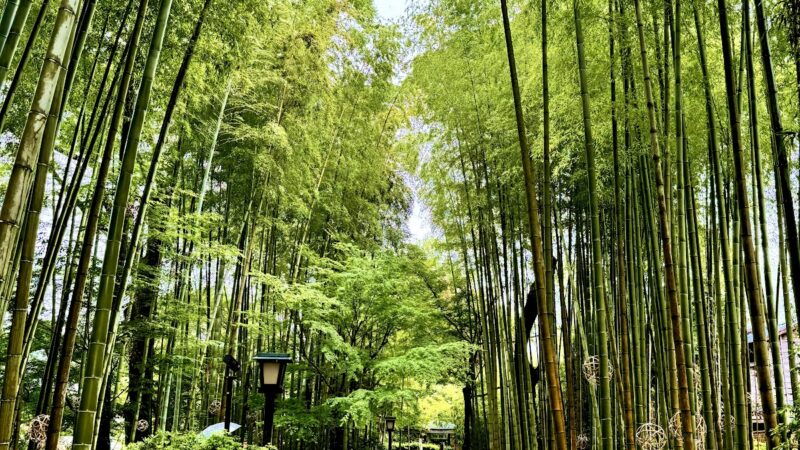
The Bamboo Grove Path extends from Maple Avenue beside the Tokko-no-yu hot spring to Takishita Bridge upstream. Moso bamboo grows densely on both sides, creating a green tunnel overhead that produces a serene space allowing visitors to forget the hustle and bustle of the city.
Along the path, two beautiful red-railed bridges—”Katsura Bridge” and “Maple Bridge”—span the river. The view of the bamboo grove and Katsuragawa River from these bridges provides an excellent photo opportunity. Early morning hours are particularly recommended, as there are fewer tourists and the atmosphere is peaceful.
Circular Bamboo Bench
Near the center of the Bamboo Grove Path stands a large circular bench made of bamboo. This bench, approximately 3 meters in diameter, is an iconic symbol of the Bamboo Grove Path and has been featured in numerous television programs and magazines.
Sitting on the bench, visitors can hear the sound of wind passing through the bamboo and the gentle murmur of the Katsuragawa River, allowing them to fully experience the nature of Shuzenji with all five senses. Lying on the bench and gazing up at the bamboo grove is popular, and it has become a standard photo spot.
Nostalgic Fire Watchtower
A fire watchtower from the Showa era stands along the walking path. Now rarely seen, this fire watchtower is a precious structure that evokes the history of the hot spring town. The contrast between the bamboo grove and the fire watchtower creates a nostalgic landscape.
Tea Houses for Rest
Several charming tea houses dot the Bamboo Grove Path. Visitors can take a break during their walk while enjoying matcha and Japanese sweets. Tea enjoyed while overlooking the bamboo grove is truly special and evokes a leisurely flow of time.
Seasonal Enjoyment
Spring: Fresh Green and Cherry Blossoms
Spring at the Bamboo Grove Path offers beautiful contrast between fresh green bamboo and cherry blossoms. From late March through early April, cherry blossoms bloom along the Katsuragawa River, creating a magnificent landscape where bamboo green and cherry blossom pink interweave.
Summer: Seeking Coolness
During summer, the Bamboo Grove Path feels like a natural air conditioner. The bamboo shades the sunlight while the cool breeze from the Katsuragawa River brings pleasant refreshment, making it ideal as a summer retreat. Early morning and evening walks are recommended, with the atmosphere particularly magical during the time just before evening illumination begins.
Autumn: A Famous Autumn Foliage Spot
The Bamboo Grove Path is also a signature autumn foliage spot of Shuzenjionsen. Approximately 60 Japanese maples are planted along the path, primarily Iroha maples, with peak foliage from mid-November through early December.
The contrast between bamboo green and maple red and yellow is breathtakingly beautiful. The view of autumn leaves from Katsura Bridge and Maple Bridge is especially stunning. Nighttime illuminated foliage is equally mystical, revealing a different character than daytime.
Winter: Beauty in Silence
Winter at the Bamboo Grove Path offers peaceful strolling with fewer tourists. When snow falls, the snow-covered bamboo and Katsuragawa River landscape is especially beautiful, resembling an ink wash painting.
Evening Illumination
The Bamboo Grove Path features nighttime illumination from sunset until around 23:00. A completely different, magical atmosphere emerges, with the illuminated bamboo creating a mysterious beauty.
Illumination during the autumn foliage season is particularly popular, with many visitors returning after their daytime visit to experience the path again at night. The illuminated Katsura Bridge and Maple Bridge are also noteworthy, with the entire hot spring town enveloped in a romantic atmosphere.
History and Attractions of Shuzenji Temple (Shuzenji)
History of Shuzenji Temple
Shuzenji Temple is a historic temple from which Shuzenjionsen derives its name. Its formal name is “Fukuchiyama Shuzen Bannan Zen Temple,” and it is said to have been founded in 807 (Daido 2) by Kobo Daishi Kukai.
Originally a Shingon Buddhist temple, it converted to the Soto Zen sect during the Kamakura period and continues today. It is deeply connected to the history of the Kamakura shogunate and is known as the tragic stage for the Minamoto clan.
A Place Associated with the Minamoto Clan
Shuzenji Temple is remembered in history as the final place of Minamoto no Yoriie, the second shogun of the Kamakura shogunate. In 1204 (Genku 1), Yoriie was confined to this location by the Hojo clan and was assassinated the following year at just 23 years old.
Within the temple grounds stands the “Shigetsu-den,” said to be Yoriie’s tomb, which was built by his mother, Hojo Masako, to pray for his afterlife. This tragic history became the subject of Okamoto Kido’s play “Shuzenji Monogatari,” which brought nationwide attention to Shuzenji Temple.
Attractions of Shuzenji Temple
Main Hall and Dainichi Nyorai Statue
The main hall of Shuzenji Temple was rebuilt in the mid-Edo period. The principal image is Dainichi Nyorai, said to have been carved by Kobo Daishi Kukai. The interior of the main hall exudes a solemn atmosphere, and quiet prayer brings peace of mind.
Treasure House
The treasure house of Shuzenji Temple houses precious cultural properties narrating the temple’s history. Visitors can view items related to Minamoto no Yoriie and calligraphy and paintings by successive head priests, with materials spanning from the Kamakura to Edo periods.
Admission: 300 yen
Hours: 8:30–16:30 (may vary by season)
Natural Scenery Within the Temple Grounds
The temple grounds are a place where visitors can enjoy nature through each season. Spring brings cherry blossoms, summer green foliage, autumn maple leaves, and winter camellia, each season revealing a different character.
Particularly during autumn foliage season, the entire temple grounds turn red and yellow, and the contrast between the main hall and foliage is striking. Visiting during early morning quiet hours heightens the sense of solemnity.
Bell Tower and Bronze Bell
The bell tower of Shuzenji Temple houses a bronze bell cast during the Edo period. It is rung as the New Year’s bell on New Year’s Eve, attracting many visitors for worship.
Tips for a Temple Visit
Visitors to Shuzenji Temple can deepen their experience by noting the following points:
- Early morning visits: Visiting during early hours when tourists are few allows for peaceful worship.
- Temple seals: Shuzenji Temple provides temple seals. Bring a seal book.
- Temple grounds walk: Walking the entire grounds slowly, not just the main hall, allows visitors to sense the weight of history.
- Seasonal events: Check for seasonal events such as spring flower festivals and autumn foliage illuminations.
Shuzenji Passage
Along the Bamboo Grove Path lies “Shuzenji Passage,” a free-admission gallery. It features photo exhibitions capturing Shuzenji across the four seasons and displays on the region’s history and culture.
Restrooms and a tourist information center are also available, making it a convenient rest stop during walks. Those interested in learning more about the history and attractions of Shuzenji should definitely visit.
Location: Izu City, Shizuoka Prefecture, Shuzenji
Hours: 9:00–17:00 (may vary by season)
Admission: Free
Facilities: Restrooms, tourist information center
Tokko-no-yu Hot Spring (Tokko-no-yu)
Tokko-no-yu, the birthplace of Shuzenjionsen, is a small hot spring in the Katsuragawa River. This hot spring, with its legend of Kobo Daishi Kukai striking rocks with his tokko to release the waters, is an iconic symbol of Shuzenjionsen.
While bathing is no longer possible, it can be viewed from bridges spanning the Katsuragawa River. Particularly during evening illumination, it exudes a mystical atmosphere.
Location: Along Katsuragawa River, Shuzenji, Izu City, Shizuoka
Viewing: Free access (bathing not permitted)
Illumination: Sunset to around 23:00
Hie Shrine
Positioned on a hilltop in Shuzenjionsen, Hie Shrine is a shrine that has long been revered as the tutelary shrine of Shuzenji Temple. It is said to have been established when Kobo Daishi Kukai founded Shuzenji Temple in 807, at which time he enshrined Sanno Gongen.
Attractions
Kodakara-no-yu (Hot Spring for Fertility)
Within the shrine grounds lies “Kodakara-no-yu,” a hot spring said to bring blessings for fertility and safe childbirth, drawing many visitors.
Ancient Ilex Tree
The grounds feature an ancient ilex tree over 800 years old, designated a natural monument of Izu City. This tree, a living witness to the history of Shuzenjionsen, has stood watching over the hot spring town throughout the ages.
View
Positioned on a hilltop, Hie Shrine offers a panoramic view of the Shuzenjionsen hot spring town. Particularly during autumn foliage season, when the town turns red and yellow, it provides a spectacular viewing point.
Location: Izu City, Shizuoka Prefecture, Shuzenji
Worship hours: Free access
Access: About 10 minutes walk from Shuzenjionsen bus stop
Hakoya (Hakoya)
Hakoya is a day-use bathing facility in Shuzenjionsen. It opened in Heisei 12 (2000) in the form of a restoration of “Hakoya,” the oldest hot spring building remaining in Shuzenji.
Features
The Hakoya building features traditional bathhouse architecture using Izu stone and wood, with both exterior and interior conveying a historic atmosphere. The hot spring is source-fed and allows visitors to enjoy the soft water quality unique to Shuzenjionsen.
Location: Izu City, Shizuoka Prefecture, Shuzenji
Hours: 10:00–18:00 (reception until 17:30)
Closed: Thursdays (open if a holiday)
Bath fee: 350 yen adults, 200 yen children
Water quality: Alkaline simple hot spring
Shuzenji Nijino Sato
Shuzenji Nijino Sato is a nature park located about 10 minutes by car from Shuzenjionsen. Across its expansive 500,000-square-meter grounds spread Japanese gardens, an English village, and a Canadian village, among areas themed around various countries.
Attractions
Autumn Foliage Illumination
Shuzenji Nijino Sato is renowned as one of the finest autumn foliage spots in the Izu Peninsula. The park features approximately 1,000 Japanese maples, reaching peak foliage from mid-November through early December.
During foliage season, nighttime illumination transforms the landscape into a mystical world. The Japanese garden illumination is particularly popular, with the reflection of foliage on water surfaces taking the breath away.
Romney Railway
A miniature steam locomotive, the “Romney Railway,” runs through the park, offering enjoyment for guests from children to adults. The approximately 15-minute journey around the park showcases seasonal scenery from the train windows.
Seasonal Flowers
Shuzenji Nijino Sato features various flowers year-round. Spring brings cherry blossoms and tulips, summer hydrangeas, autumn maple and cosmos, and winter camellia and narcissus, with each season painting the grounds in different colors.
Location: 4279-3 Shuzenji, Izu City, Shizuoka
Hours: 9:00–17:00 (may vary by season)
Closed: Tuesdays (open if a holiday; no closure during summer vacation and foliage season)
Admission: 1,220 yen adults, 610 yen children
Access: About 20 minutes by bus from Shuzenji Station
Issekian (Issekian)
Issekian is a renowned soba restaurant in Shuzenjionsen. Hand-pulled soba made with Shuzenji’s fine water and locally-produced soba flour is known as exceptional to discerning soba connoisseurs.
Recommended Menu
- Juwari Soba: Pure 100% soba flour with fragrant aroma
- Tenzaru: Crispy tempura with perfectly complemented soba
- Kamo Seiro: Rich duck broth enhances the soba’s flavor
Location: Izu City, Shizuoka Prefecture, Shuzenji
Hours: 11:00–15:00 (closes upon sellout)
Closed: Irregular
Budget: 1,000–2,000 yen
Access to Shuzenjionsen
Train Access
From Tokyo:
- About 45 minutes by JR Tokaido Shinkansen to Mishima Station
- About 30 minutes by Izuhakone Railway Sunzu Line from Mishima to Shuzenji Station
- About 8 minutes by Tokai Bus from Shuzenji Station to Shuzenjionsen
From Nagoya:
- About 1 hour 30 minutes by JR Tokaido Shinkansen to Mishima Station
- About 30 minutes by Izuhakone Railway Sunzu Line from Mishima to Shuzenji Station
- About 8 minutes by Tokai Bus from Shuzenji Station to Shuzenjionsen
Car Access
From Tokyo:
- About 30 km from Tomei Expressway Numazu IC (approximately 40 minutes)
- About 30 km from Shin-Tomei Expressway Nagaizumi-Numazu IC (approximately 40 minutes)
From Nagoya:
- About 30 km from Tomei Expressway Numazu IC (approximately 40 minutes)
Parking Information
Multiple parking areas are available throughout Shuzenjionsen.
- Shuzenjionsen Parking: 150 regular vehicles, 500 yen per day
- Shuzenji Parking: 30 regular vehicles, free (for visitors)
Public transportation is recommended during peak foliage season and weekends due to congestion.
Model Courses for Exploring Shuzenjionsen
Here are suggested routes for efficiently touring Shuzenjionsen.
Half-Day Course (About 3 Hours)
- Shuzenji Station → Bus (8 minutes)
- Shuzenjionsen Bus Stop → 3 minutes walk
- Tokko-no-yu (view 15 minutes) → immediate walk
- Bamboo Grove Path (walk 30 minutes) → immediate walk
- Shuzenji Passage (view 20 minutes) → 5 minutes walk
- Shuzenji Temple (worship and walk grounds 45 minutes) → 10 minutes walk
- Hie Shrine (worship 20 minutes) → 10 minutes walk
- Hakoya (bath 60 minutes)
- Shuzenjionsen Bus Stop → Return to Shuzenji Station by bus
Full-Day Course (About 6 Hours)
In addition to the half-day course, add the following:
- Lunch at Issekian (60 minutes)
- Shuzenji Nijino Sato (2 hours)
- Akakeru Park (walk 20 minutes)
- Shuzenji Nature Park (maple grove walk 40 minutes)
Gourmet Information About Shuzenjionsen
Local Specialties
Wasabi Dishes
Izu is famous as a wasabi-producing region, and Shuzenjionsen offers fresh wasabi cuisine. Options include wasabi rice bowls, wasabi pickles, and wasabi soft-serve ice cream.
Black Rice Dishes
Shuzenji has long cultivated black rice, and dishes using it are local specialties. Black rice, black rice onigiri, and black rice amazake represent healthy black rice cuisine.
Sweetfish Dishes
Cuisine featuring sweetfish caught in the Katsuragawa River is popular. Options include salted grilled sweetfish, sweetfish stewed in syrup, and sweetfish rice.
Recommended Cafés
Tea Room Fuyo
A tea house along the Bamboo Grove Path offering matcha and Japanese sweets. Tea enjoyed while viewing the bamboo grove is exceptional.
Café Lounge Doppo
A café positioned along the Katsuragawa River with terrace seating overlooking the river flow, serving coffee and sweets.
Accommodations in Shuzenjionsen
Shuzenjionsen offers various accommodation types, from historic inns to modern hotels.
Historic Inns
- Kikuya: Historic inn with 380 years of history
- Arai Ryokan: Building designated as nationally registered tangible cultural property
- Asaba: High-end inn receiving high praise from the Michelin Guide
Budget-Friendly Accommodations
- Shuzenji Onsen Hotel Takitei: Affordable hot spring experience
- Shuzenji Onsen Yugaro Kikuya: Popular for rooms with private hot spring baths
Tourist Attractions Near Shuzenjionsen
Akakeru Park “Evening of Fireflies”
Located in a corner of Shuzenjionsen, Akakeru Park is a magical spot where fireflies flutter from early to mid-June. The “Evening of Fireflies” event draws many visitors.
Shuzenji Nature Park Maple Grove
The maple grove within Shuzenji Nature Park, planted with approximately 1,000 Japanese maples, is a renowned autumn foliage spot. From mid-November through early December, the entire mountain turns red and yellow in spectacular fashion.
Location: Izu City, Shizuoka Prefecture, Shuzenji
Admission: Free
Access: About 15 minutes walk from Shuzenjionsen bus stop
Experience Spots Recommended for Children
Pottery Experience
Pottery workshops in Shuzenjionsen offer experiences for children and adults alike. Creating personalized ceramic pieces becomes a memorable keepsake.
Bamboo Craft Experience
Inspired by the Bamboo Grove Path, bamboo craft experiences are popular. Visitors can create traditional toys like bamboo dragonflies and bamboo whistles.
Indoor Attractions Enjoyable on Rainy Days
Shuzenji Passage
As mentioned, this free-admission gallery allows comfortable time on rainy days.
Shuzenji Temple Treasure House
As an indoor facility, it permits leisurely viewing even during rain. It’s ideal for learning temple history.
Day-Use Hot Spring Facilities
Day-use facilities like Hakoya allow comfortable hot spring enjoyment on rainy days.
Event Information for Shuzenjionsen
Shuzenji Plum Festival (February–March)
Approximately 1,000 red and white plums bloom in the Shuzenji Plum Grove. Various events occur throughout the period.
Evening of Fireflies (June)
Firefly observation events take place in Akakeru Park. Visitors enjoy the magical glow of fireflies.
Shuzenji Maple Festival (November–December)
Held during foliage season, this festival features illuminations and special openings.
Precautions When Visiting Shuzenjionsen
Clothing
Shuzenjionsen features many slopes and stairs, so comfortable walking shoes are recommended. Sneakers or other suitable footwear are essential, particularly for visits to Hie Shrine or Shuzenji Nature Park.
Peak Seasons
The autumn foliage season (mid-November through early December), Golden Week, and summer vacation see particularly heavy crowds. For leisurely walks, weekday or early morning visits are advised.
Photography
Popular photography spots like the Bamboo Grove Path and Shuzenji Temple can become congested. Please photograph with consideration for other visitors.
Conclusion
The “Bamboo Grove Path” and “Shuzenji Temple” of Shuzenjionsen are signature tourist destinations of Izu, where 1,200 years of history and nature interweave. The serene walk surrounded by bamboo, historic Shuzenji Temple, and picturesque hot spring town landscape offer spaces of healing that allow visitors to forget daily chaos.
Seasonal natural beauty, historic structures, delicious cuisine, and hot springs make Shuzenjionsen wonderfully appealing. Its convenient access from Tokyo, enabling same-day visits, adds further attraction.
Why not enjoy a trip exploring history and nature in Shuzenjionsen, called the “Little Kyoto of Izu”? Walking the Bamboo Grove Path, reflecting on history at Shuzenji Temple, and soothing mind and body in hot springs—such luxurious time awaits in Shuzenjionsen.
-800x450.jpg)
-800x450.jpg)