Shirakawa-go, Gifu Prefecture Complete Guide | Charm, Access, and Tourist Information of the World Heritage Gassho-zukuri Settlement
Shirakawa-go, located in Shirakawa Village, Ono District, Gifu Prefecture, continues to captivate visitors from around the world as one of Japan’s leading World Heritage sites. Centered around the Ogimachi district, where traditional gassho-zukuri farmhouses stand in rows, the beautiful landscape that represents Japan’s original rural scenery is still preserved today. This article provides comprehensive information about Shirakawa-go that you should know when visiting, from its historical background to major tourist attractions, access methods, accommodations, and event information.
What is Shirakawa-go | Gassho-zukuri Settlement Registered as a World Heritage Site
Shirakawa-go is a term for the region spreading across the Shogawa River basin in the northwestern part of Gifu Prefecture, located on the eastern slope of Mount Hakusan. Particularly the Ogimachi district is known as a valuable settlement where over 100 large and small gassho-zukuri farmhouses remain in existence, and people still actually live their daily lives there.
In December 1995, the Ogimachi district of Shirakawa-go, together with the Gokayama areas (Ainokura and Suganuma districts) in Toyama Prefecture, was registered as a UNESCO World Heritage Site (Cultural Heritage) under the name “Gassho-zukuri Villages of Shirakawa-go and Gokayama.” This registration was highly valued not only for the beauty of the buildings and landscape, but also largely because of the traditional communal system of mutual aid among residents known as “yui” (結), which is deeply rooted in the region.
Furthermore, in 1976, it was designated by the government as an Important Preservation District for Groups of Historic Buildings, making it an extremely significant region from the perspective of Japan’s cultural property protection.
What is Gassho-zukuri Architecture
Gassho-zukuri is a uniquely Japanese architectural style featuring steeply pitched thatched roofs. The name derives from the resemblance of the roof shape to “gassho” (合掌), the Buddhist gesture of pressing palms together in prayer. This architectural style developed to adapt to the severe natural environment of Shirakawa-go, a heavy snowfall area.
The steeply pitched roofs (45 to 60 degrees) are designed so that snow naturally slides off during heavy snowfall, reducing the burden on buildings from accumulated snow. The vast attic space was historically used for sericulture, when silk production was thriving. Even today, attic spaces in many gassho-zukuri structures are utilized as display areas or accommodation facilities.
The buildings use no nails at all, employing traditional techniques that rely solely on rope and wooden joints to support the structure, thereby creating a flexible framework that is also resistant to earthquakes.
The History and Culture of Shirakawa-go
Shirakawa-go has a long history, with settlements reportedly already forming by the late Heian period. Due to geographical conditions surrounded by steep mountains, the area remained a “hidden village” with limited contact with the outside world for a long time.
The Legend of Heike Refugees and Shirakawa-go
Shirakawa-go retains a legend that clan members of the Heike who lost the Gempei War fled to this region. Indeed, place names and historical sites connected to the Heike are scattered throughout Shirakawa-go, and their influence can be seen in the region’s culture and customs.
Shirakawa-go During the Edo Period
During the Edo period, Shirakawa-go came under the rule of the Kanamori clan and later became a tenryo (direct shogunate territory). During this period, the gassho-zukuri architectural style became established, and sericulture and saltpeter (gunpowder ingredient) production supported the regional economy. Saltpeter in particular enriched Shirakawa-go’s economy as an important tribute to the Kaga Domain.
Modernization and Preservation Efforts
In the 1960s, the wave of modernization sweeping across Japan also reached Shirakawa-go, and many gassho-zukuri structures faced the danger of demolition. However, through preservation efforts by local residents and experts, the “Association to Protect the Natural Environment of the Shirakawa-go Ogimachi Settlement” was established in 1971, and a residents’ charter declaring “not to sell, not to rent, not to demolish” was enacted.
This preservation movement bore fruit, leading to the designation as an Important Preservation District for Groups of Historic Buildings in 1976, and ultimately to World Heritage registration in 1995.
The Four Seasons of Shirakawa-go and Attractions
Shirakawa-go displays a different appearance with each season, each with its own unique charm.
Spring in Shirakawa-go (March–May)
Spring, arriving with the snow melt, is a season when Shirakawa-go is filled with the breath of life. From late April to early May, cherry blossoms around the settlement bloom in full, creating a beautiful landscape contrasting gassho-zukuri farmhouses with cherry blossoms.
In May, when rice planting preparations begin, you can enjoy the scenic view of “inverted gassho,” where gassho-zukuri structures are reflected in water-filled rice paddies. This period has relatively fewer tourists, making it a hidden gem season for leisurely strolling through Shirakawa-go.
Summer in Shirakawa-go (June–August)
Summer in Shirakawa-go is a season featuring striking contrast between mountains covered in deep green and blue skies. Temperatures are cooler than in urban areas, making it popular as a summer retreat destination.
From July to August, summer festivals are held within the settlement, and preparations for “doburoku matsuri,” a traditional local performing art festival, also begin. At night, you can see fireflies dancing in the air in certain locations, creating a fantastical scene.
Autumn in Shirakawa-go (September–November)
Autumn is the season when Shirakawa-go becomes most colorful. From mid-October to early November, the mountains surrounding the area are dyed red and yellow with autumn leaves, creating spectacular scenery with the brown of the thatched roofs.
In rice paddies where harvesting has finished, rice straw is dried, allowing you to feel the origin of Japanese agricultural landscape. The weather is stable in autumn, making it one of the best seasons for sightseeing.
Winter in Shirakawa-go (December–February)
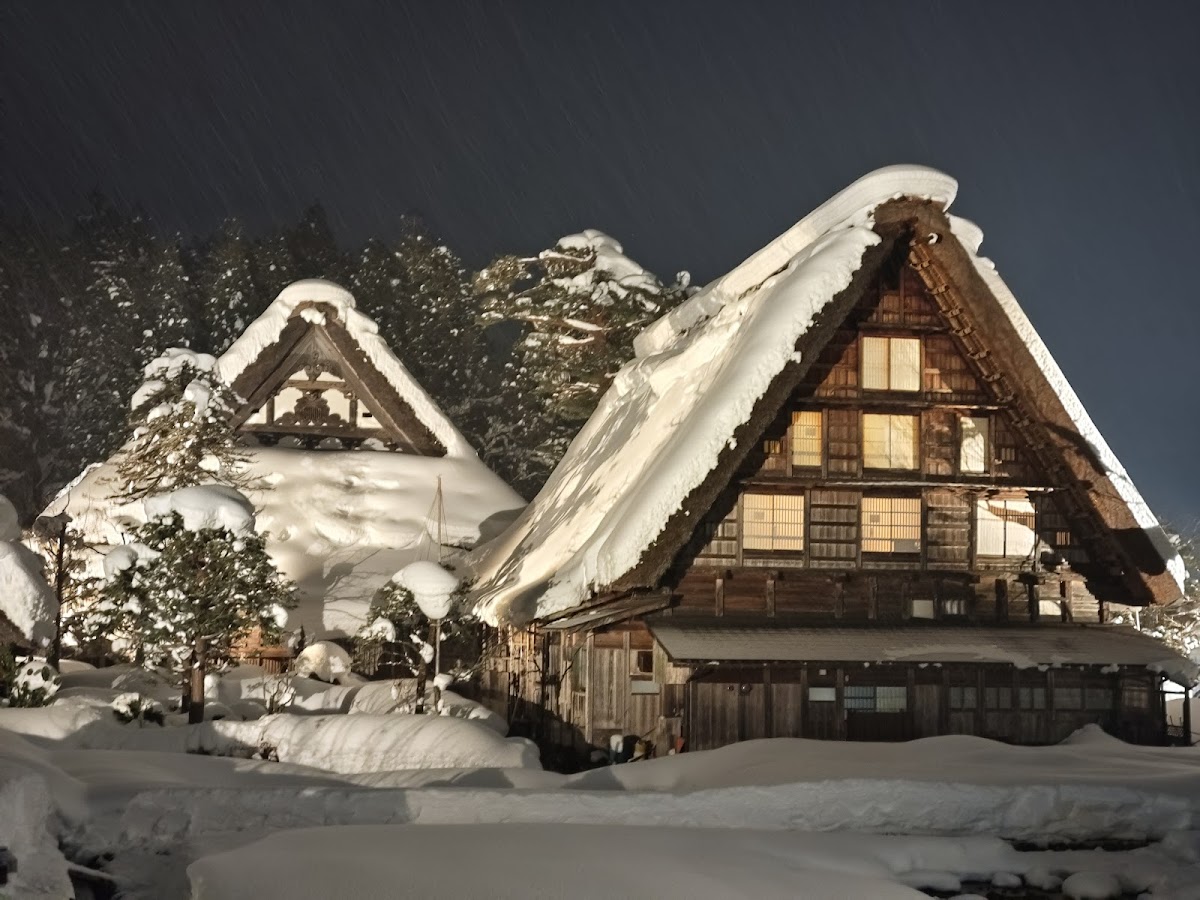
Winter in Shirakawa-go transforms into a fantastical world covered in deep snow. Snow accumulated on the thatched roofs of gassho-zukuri structures creates a landscape reminiscent of a fairy tale world.
Particularly, the “Shirakawa-go Light-up” held from January to February is the most popular event throughout the year. The sight of the entire gassho-zukuri settlement illuminated against the snowy landscape is magical and unforgettable. However, this event is available by reservation only, and advance booking is essential.
During winter, snowfall can exceed 2 meters, potentially affecting road conditions and transportation, so it is important to confirm the latest information before visiting.
Major Tourist Spots in Shirakawa-go
Ogimachi Castle Ruins Observation Deck
An absolute must-see when visiting Shirakawa-go is the Ogimachi Castle Ruins Observation Deck. The view from this observation deck, which overlooks the entire settlement, is known as the iconic scenery of Shirakawa-go.
The observation deck can be reached on foot in about 20 minutes from the settlement, or by shuttle bus running from the Seseragi Park parking lot. Early morning hours and dusk are particularly beautiful for lighting and ideal for photography.
The observation deck has a rest area where you can leisurely enjoy the scenery. You can appreciate landscapes in every season, but the snowy scenery and autumn foliage periods are particularly spectacular.
Wada House
Wada House is the largest gassho-zukuri farmhouse in Shirakawa-go and is designated as a National Important Cultural Property. Built in the late Edo period, this structure has a history of approximately 300 years and is currently open to the public while descendants of the Wada family actually reside there.
The first floor and part of the second floor are open to the public, where you can view the irori (hearth) sitting room, household utensils, and tools used for sericulture. It is a valuable facility where you can learn in detail about the gassho-zukuri structure and the lifestyle of that era.
Myozenji Shrine Local Museum
Myozenji is the only temple in Shirakawa-go with both a main hall and storehouse built in the gassho-zukuri style. The main hall, constructed in 1748, draws attention as a rare example of gassho-zukuri religious architecture.
The storehouse is open to the public as a local museum, displaying the history, culture, and household implements of Shirakawa-go. The bell tower gate is also in gassho-zukuri style, making it a valuable spot where you can appreciate the diversity of the architectural style.
Open-air Museum Gassho-zukuri Minkaen
The Gassho-zukuri Minkaen is an open-air museum located slightly away from the Ogimachi district of Shirakawa-go. It preserves and exhibits 25 gassho-zukuri structures that required relocation due to dam construction and other development in the 1960s.
The former Yamashita Yojiro family residence, constructed in the 1750s, along with four main buildings and five auxiliary structures, are designated as Important Cultural Properties of Gifu Prefecture. Each structure displays items from daily life, agricultural implements, and folk utensils of that era, allowing you to learn deeply about the history and culture of Shirakawa-go.
The facility includes a performance hall, rest areas, and a tea room, and it is recommended to take your time exploring.
Nagase House
Nagase House is one of the oldest gassho-zukuri structures in Shirakawa-go, featuring a large five-story building. The Nagase family, with a lineage of physicians who also served as village headmen at one point, has displays of medical instruments and household implements.
Particularly noteworthy is the sericulture loft structure in the attic, which provides valuable information for understanding how gassho-zukuri architecture was connected to the sericulture industry.
Doburoku Matsuri Hall
This is a facility displaying materials related to “doburoku matsuri,” an important traditional event in Shirakawa-go. Doburoku matsuri is held annually in October at Shirakawa Hachiman Shrine, Hatogaya Hachiman Shrine, and Iijima Hachiman Shrine, and is designated as a National Important Intangible Folk Cultural Property.
The museum introduces tools and costumes used in the festival, as well as the doburoku production process, allowing you to touch the spiritual culture of Shirakawa-go.
Access to Shirakawa-go
Since Shirakawa-go is located in a mountainous area, public transportation or personal vehicles are the primary means of access.
Access by Public Transportation
From Kanazawa Station
- Approximately 75 minutes by Nōhibus or Hokuriku Railroad Bus
- 8–10 services per day (varies by season)
- Fare: Approximately 2,000 yen one-way
From Takayama Station
- Approximately 50–60 minutes by Nōhibus
- 8–10 services per day
- Fare: Approximately 2,600 yen one-way
From Nagoya Station
- Approximately 2 hours 50 minutes by Gifu Bus express bus (reservation required)
- 3–4 services per day
- Fare: Approximately 3,900 yen one-way
From Toyama Station
- Approximately 1 hour 30 minutes by Nōhibus
- 3–5 services per day
- Fare: Approximately 1,700 yen one-way
Bus service frequencies vary by season and day of the week, so it is recommended to check the latest timetables on the official website of the Shirakawa-go Tourism Association.
Access by Personal Vehicle
From the Nagoya area
- Approximately 5 minutes from the Shirakawa-go IC on the Tokai-Hokuriku Expressway via National Route 156
- Approximately 2 hours 30 minutes from Nagoya
From the Kanazawa area
- Via National Routes 157 and 156 from Kanazawa West IC on the Hokuriku Expressway, approximately 1 hour 30 minutes
- Or via Shirakawa-go IC on the Tokai-Hokuriku Expressway
From the Takayama area
- Via National Routes 158 and 156, approximately 50 minutes
Parking Information
Shirakawa-go restricts vehicle access into the settlement to preserve the environment and alleviate traffic congestion.
Seseragi Park Parking Lot
- Capacity: Approximately 200 vehicles
- Fee: 1,000 yen per day for regular cars
- Approximately 5 minutes’ walk to the settlement
Midashima Park Parking Lot
- Capacity: Approximately 100 vehicles
- Fee: 1,000 yen per day for regular cars
- Approximately 10 minutes’ walk to the settlement
During peak seasons (Golden Week, summer vacation, autumn foliage season, and year-end/New Year holidays) and special events, parking lots may be full. Early arrival is recommended.
Accommodations in Shirakawa-go | Staying in Gassho-zukuri
To fully savor the charm of Shirakawa-go, staying at a gassho-zukuri minshuku (family-run inn) is highly recommended. Spending a night actually within a gassho-zukuri structure allows you to experience the region’s history and culture more deeply.
Characteristics of Gassho-zukuri Minshuku
There are approximately 20 gassho-zukuri minshuku in Shirakawa-go, most of which provide accommodation in houses where people actually live.
Accommodation features:
- Dinner around the irori (hearth) (provided at most inns)
- Local cuisine using local ingredients
- Tatami room accommodation (with futon bedding)
- Shared bath or private bath
- Interaction with inn proprietors
Rates are generally 8,000–15,000 yen per night including two meals. At many minshuku, there is a time for interaction around the irori during dinner with the proprietors and other guests, which is the highlight of staying in Shirakawa-go.
Reservation Methods and Notes
Since gassho-zukuri minshuku have limited rooms, during peak seasons they often book up months in advance. Check information about each inn on the official website of the Shirakawa-go Tourism Association and make reservations by calling them directly, which is the standard procedure.
Notes for staying:
- Many minshuku do not have locks on rooms
- Toilets and washing facilities may be shared
- Heating may be limited during winter
- Check-in time is generally 15:00–17:00
- Dinner time is usually around 18:00–19:00
Hirarase Onsen Area
The Hirarase Onsen area, about 15 minutes by car from the Ogimachi district, also has accommodation facilities. This area is centered on hot spring inns and is recommended for those seeking more comfortable amenities. Located at the foot of Mount Hakusan, you can relax in a nature-rich environment.
Event Information for Shirakawa-go
Various events are held throughout the year in Shirakawa-go.
Shirakawa-go Light-up (January–February)
The major winter event in Shirakawa-go, where the entire gassho-zukuri settlement is illuminated against the snowy landscape. In 2024, approximately 6–7 events are planned mainly on Sundays from January to February.
Advance reservation is required and entry is not permitted without prior booking. Reservations are accepted on the official website of the Shirakawa-go Tourism Association, with booking typically opening around October. The event is very popular and seats often fill immediately upon reservation opening, so early booking is necessary.
Doburoku Matsuri (October)
The most important traditional event in Shirakawa-go, held to pray for a bountiful harvest. Held sequentially at Shirakawa Hachiman Shrine (October 14–15), Hatogaya Hachiman Shrine (October 16–17), and Iijima Hachiman Shrine (October 18–19).
During the festival, traditional performing arts such as lion dances and folk songs are performed, and visitors receive doburoku brewed at the shrines (limited quantity). This is a valuable traditional event designated as a National Important Intangible Folk Cultural Property.
Rice Planting Festival (May)
An event celebrating the arrival of spring that recreates traditional rice planting. The sight of local people dressed in old-fashioned clothing performing rice planting while singing folk songs is a precious opportunity to experience Japanese agricultural culture.
Summer Light-up of Shirakawa-go Gassho-zukuri Settlement (July–August)
A summer light-up event launched in recent years, allowing you to enjoy the lush summer Shirakawa-go at night. It offers a different atmosphere from the winter light-up.
Important Notes and Etiquette for Visiting Shirakawa-go
Shirakawa-go is a World Heritage site where people currently live their daily lives. When visiting as a tourist, the following etiquette is important to observe.
Respect for Residents’ Lives
Most gassho-zukuri structures are homes where residents actually live. Trespassing on private property without permission or peering into homes through windows is strictly prohibited. When taking photographs, be considerate of residents’ privacy.
No Entry Beyond Designated Areas
Never enter rice paddies, fields, or private land. In particular, entering rice paddies for photography can damage crops and damage the trust relationship with residents.
Always Take Trash With You
There are hardly any trash receptacles throughout the settlement. Be sure to take away food waste and other litter with you.
No Parking on Roads
The roads in the settlement are narrow, and parking on roads interferes with residents’ daily life and emergency vehicle access. Always use designated parking lots.
Drone Use Prohibited
Drone use for tourism purposes is generally prohibited in Shirakawa-go. Respect this rule to protect residents’ privacy and ensure safety.
Smoking Restrictions
Gassho-zukuri structures are wooden buildings with thatched roofs, making them extremely vulnerable to fire. Smoke only in designated areas and never smoke while walking.
Sightseeing Spots Around Shirakawa-go
Combining visits to nearby sightseeing spots when visiting Shirakawa-go will make your trip more fulfilling.
Gokayama (Toyama Prefecture)
Approximately 30 minutes by car from Shirakawa-go, Gokayama is a gassho-zukuri settlement registered as a World Heritage site together with Shirakawa-go. With two settlements—Ainokura and Suganuma—they offer a quieter atmosphere than Shirakawa-go on a smaller scale.
Hida Takayama
About 50 minutes by car from Shirakawa-go, Takayama City is known as the “Little Kyoto of Hida,” featuring charming historic streets. Popular tourist attractions include old town streets, Takayama Jinya, and morning markets.
Hakusan Shirakawa-go White Road
A 33.3-km mountain scenic route connecting Gifu and Ishikawa prefectures, allowing you to enjoy the grand nature of Hakusan National Park. Open from late May to early November, the scenery is particularly beautiful during the new green and autumn foliage seasons.
Miboro Dam and Shotokawa Sakura
Located about 20 minutes by car from Shirakawa-go, Miboro Dam is one of Japan’s major rockfill dams. On the dam lake shore stands the Shotokawa Sakura, a cherry tree over 450 years old that was transplanted during dam construction, blooming beautifully in spring.
Dining and Cuisine in Shirakawa-go
You can enjoy local cuisine using local ingredients in Shirakawa-go.
Hida Beef
A representative brand beef from Gifu Prefecture that can be enjoyed at restaurants around Shirakawa-go. It is characterized by beautiful marbling and rich flavor.
Magnolia Leaf Miso
A local dish of miso and vegetables and mushrooms grilled on a magnolia leaf. It is served at many minshuku and dining establishments.
Soba
The area around Shirakawa-go is also known as a soba-producing region, with several shops serving handmade soba. Soba made with clean water is fragrant and flavorful.
Gohei-mochi
A local treat made by wrapping crushed rice on a skewer and glazing it with sweet and spicy miso sauce. It is popular as a walk-around food within the settlement.
Doburoku
The traditional cloudy sake of Shirakawa-go, available at the Doburoku Matsuri Hall and some dining establishments (limited quantity).
Model Courses for Shirakawa-go Sightseeing
Day-trip Course (5–6 hours)
Morning:
- 9:00 Arrival at Seseragi Park Parking Lot
- 9:15 Depart for Ogimachi Castle Ruins Observation Deck (by shuttle bus or on foot)
- 10:00 Begin settlement exploration
- 10:30 Visit Wada House
- 11:30 Visit Myozenji Shrine Local Museum
Afternoon:
- 12:30 Lunch (at a restaurant in the settlement)
- 13:30 Visit Gassho-zukuri Minkaen
- 15:00 Free time for settlement exploration and souvenir shopping
- 16:00 Depart
1-night, 2-day Course
Day 1:
- 13:00 Arrival at Shirakawa-go
- 13:30 Visit Gassho-zukuri Minkaen
- 15:00 Settlement exploration, visits to Wada House and Myozenji
- 16:00 Minshuku check-in
- 18:00 Dinner (around the irori)
- 19:30 Evening settlement stroll (during light-up periods, view the light-up)
Day 2:
- 7:00 Early morning settlement exploration (enjoy the quiet morning atmosphere)
- 8:00 Breakfast
- 9:00 Check-out
- 9:30 Ogimachi Castle Ruins Observation Deck
- 10:30 Souvenir shopping
- 11:30 Depart from Shirakawa-go
- Afternoon: Takayama sightseeing or Gokayama sightseeing
Conclusion
Shirakawa-go in Shirakawa Village, Gifu Prefecture, is a precious location transmitting traditional rural culture and landscape of Japan to the present day as a gassho-zukuri settlement registered as a World Heritage site. With over 100 gassho-zukuri structures preserved and centered around the Ogimachi district, people still actually live there, earning it high value as a “living heritage.”
Beautiful scenery that changes with each season, traditional architectural styles, the culture of mutual aid rooted in the region known as “yui,” and warm interaction with local residents—Shirakawa-go preserves precious things that modern society is losing.
When visiting Shirakawa-go, it is important to approach it not merely as a tourist destination, but with respect for the regional community that continues to protect Japan’s cultural heritage. Visit with respect for residents’ lives and in compliance with manners, contributing to passing this precious cultural heritage to future generations.
The official website of the Shirakawa-go Tourism Association updates event information, access information, and accommodation facility guides regularly. Be sure to check before your visit and plan your trip carefully. Your experience in Shirakawa-go will surely become an unforgettable memory etched deeply in your heart.