Complete Guide to Tsunagi Gorge|Experiencing Spectacular Fresh Greenery and Autumn Leaves in Showa Village, Fukushima Prefecture
Tsunagi Gorge (Tsunagi Keikoku), located in Showa Village, Ono District, Fukushima Prefecture, is a natural masterpiece created over long years by the Nojiri River, a tributary of the Tadami River that originates in Oze. The gorgeous gorge scenery, with its unique rock formations and strange stones in succession, displays its various faces from spring’s fresh greenery to autumn’s crimson leaves, captivating many nature enthusiasts and photographers as a representative scenic spot of Showa Village.
This article provides detailed information about Tsunagi Gorge’s attractions, access methods, best seasons, and surrounding tourist spots—everything you should know before visiting.
What is Tsunagi Gorge? A Hidden Gem in Fukushima’s Oku-Aizu Region
Tsunagi Gorge is a gorge located on the border between Showa Village and Kaneyama Town in Ono District, Fukushima Prefecture, and is known as one of Showa Village’s most scenic spots. It features a unique terrain formed by the Nojiri River, a tributary of the Tadami River originating from Oze National Park, through long years of erosion.
A national highway runs along the gorge, allowing visitors to enjoy its magnificent scenery from their car windows. In particular, the Houshoku Rock (Houshoku-gan), a colossal unique rock formation, overwhelms visitors as a symbolic presence of Tsunagi Gorge.
Geographical Features of Tsunagi Gorge
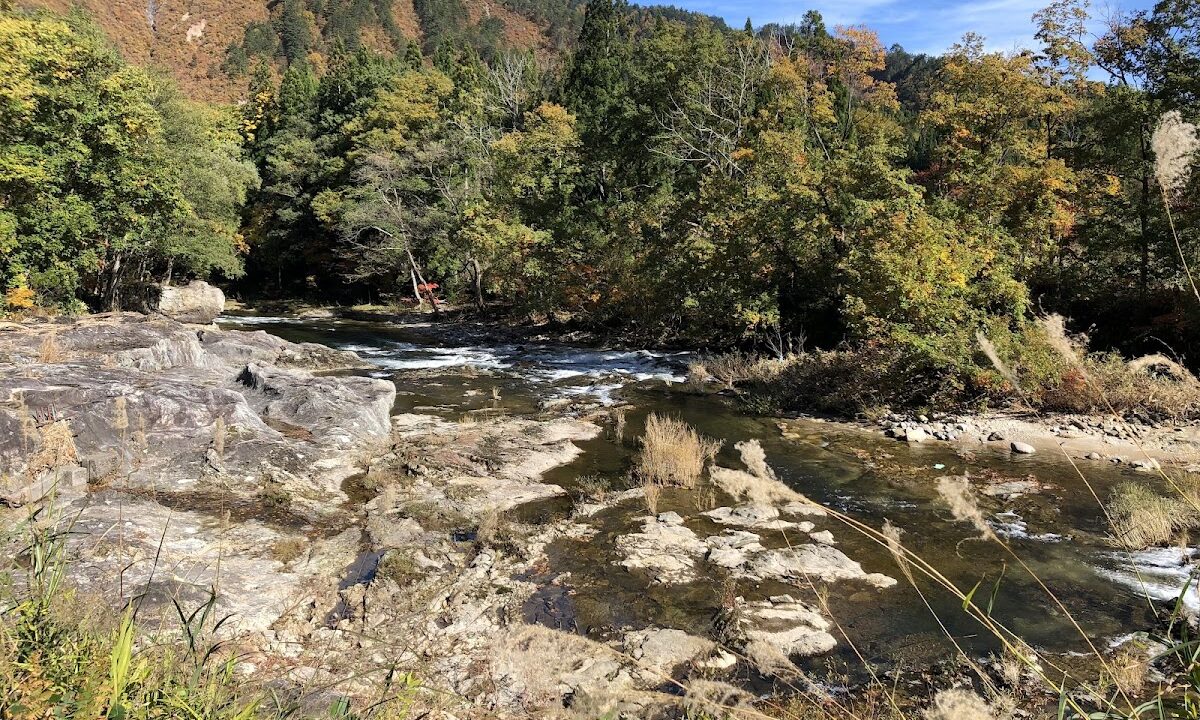
The Nojiri River flows downward while collecting abundant water from Oze, forming a steep gorge in the Tsunagi district. The unique rock formations and strange stones created by the river’s flow carving into bedrock convey both the powerful and beautiful forces of nature.
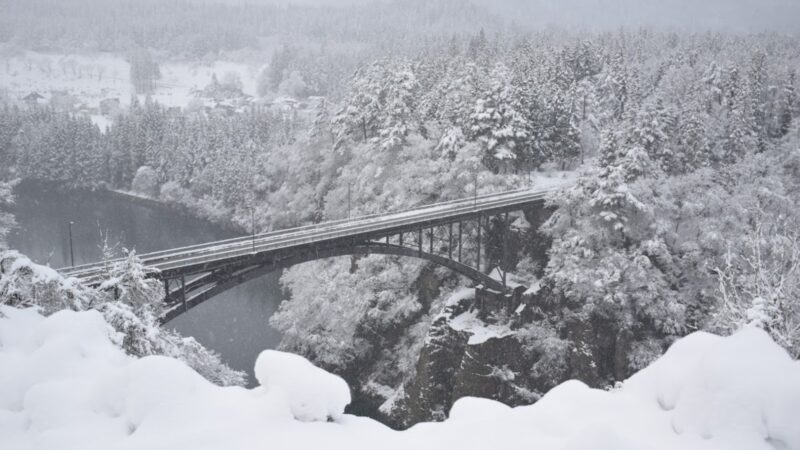
Deep forests extend along both banks of the gorge, with vibrant fresh greenery in spring and summer, and fiery autumn leaves adorning the gorge in fall. In winter, the gorge is covered with snow, offering a different kind of scenic beauty.
Attractions and Charm of Tsunagi Gorge
Houshoku Rock (Houshoku-gan)
The greatest attraction of Tsunagi Gorge is the colossal unique rock formation called “Houshoku Rock.” This rock has a distinctive shape as if embracing something, and you can appreciate the natural sculptural beauty created by long years of wind, rain, and water flow. It can be viewed from beside the national highway, and its imposing appearance leaves a lasting impression on many tourists.
Succession of Unique and Strange Rock Formations
In addition to Houshoku Rock, numerous unique and strange rocks are scattered throughout Tsunagi Gorge. Each possesses a distinctive shape and presents a different appearance depending on the viewing angle and how light falls upon it. These rocks, together with the clear flow of the Nojiri River, further enhance the gorge’s beauty.
Clear Waters of the Nojiri River
The water of the Nojiri River, originating from Oze, is exceptionally pure, and the way it flows along the gorge’s rocky surfaces soothes the viewer’s heart. Water volume varies by season, offering a vigorous flow in spring with snowmelt and a gentle current in summer.
The Charm of Tsunagi Gorge Through the Four Seasons
Tsunagi Gorge presents different beauty throughout the year. The major appeal of this gorge is the ability to enjoy completely different scenery depending on the visiting season.
Spring Fresh Greenery (May to June)
Spring, arriving with snowmelt, is the season of fresh greenery. Trees covering both banks of the gorge bud in unison, and vibrant green envelops the entire gorge. The Nojiri River’s flow, with increased volume from snowmelt, is powerful and conveys the vitality of spring.
During this period, temperatures are mild, making it an ideal season for drives and motorcycle tours. The sight of unique rock formations floating among the fresh greenery creates a crisp and fresh spring landscape.
Summer Deep Green (July to August)
In summer, fresh greenery transforms into deep green, creating a more lush world. The gorge interior maintains lower temperatures than surrounding areas, becoming a place of respite for those seeking coolness. The murmuring of the Nojiri River’s clear waters is nature’s BGM that makes you forget the summer heat.
Autumn Foliage (Mid-October to Early November)
Tsunagi Gorge attracts the most tourists during the fall foliage season. It typically begins to color around mid-October, with peak viewing around late October to early November.
Maple, Japanese maple, and beech trees turn red and yellow, and the entire gorge is wrapped in fiery colors. The contrast between unique rocks and foliage is spectacular, and many photographers visit during this season. The fall foliage visible from the national highway is popular as a drive course, with many vehicles passing through during the season.
Winter Snow Scenery (December to March)
Winter in Tsunagi Gorge is covered in deep snow and enveloped in silence. The winter landscape created by snow-covered unique rocks and frozen gorge streams produces a completely different fantastical atmosphere from other seasons. However, winter visits require careful attention due to heavy snow and icy road conditions.
Access and Parking Information
Access to Tsunagi Gorge is primarily by car. Public transportation options are limited, making rental cars or personal vehicles recommended.
Access by Car
From Tokyo:
- Approximately 2.5 hours via National Highway 400/121 from “Nishi-Nasushiobara Shiobara IC” on the Tohoku Expressway
- Approximately 1 hour via National Highways 252/401 from “Aizu-Sakashita IC” on the Banetsutsu Expressway
From Fukushima City:
- Approximately 2 hours via National Highways 115/121/401
From Aizu-Wakamatsu City:
- Approximately 1.5 hours via National Highways 121/401
Tsunagi Gorge is located along National Highway 401 near the border between Showa Village and Kaneyama Town. You can arrive by searching for “Tsunagi Gorge” or “Showa Village Tsunagi” on your car’s navigation system.
Parking
While Tsunagi Gorge has no dedicated parking facilities, there are several spaces along the national highway where vehicles can be parked. Especially during the fall foliage season when many tourists visit, arriving early is recommended.
When parking along the roadside, be careful not to obstruct other vehicles and park in a safe location.
Important Notes
- Tsunagi Gorge has no maintained hiking trails, so viewing is basically from beside the national highway
- Winter (December to March) may make passage difficult due to snow and ice
- As a mountainous area, cellular phone reception may be poor in some locations
- Few gas stations and convenience stores exist, so prepare supplies before visiting
How to Enjoy Tsunagi Gorge
Landscape Appreciation from the National Highway
With no hiking trail, viewing Tsunagi Gorge is done primarily from National Highway 401. Park your car in a safe location and slowly enjoy the gorge scenery. You can experience the beauty of unique rocks including Houshoku Rock, the clear flow of the Nojiri River, and nature’s seasonal beauty.
Photography Spots
Tsunagi Gorge is an excellent photography location. Especially during the fall foliage season, both professional and amateur photographers visit.
Photography Tips:
- Early morning (6:00-8:00) or evening (4:00-6:00) with soft light is recommended
- Composing around Houshoku Rock creates powerful photographs
- Wide-angle photography capturing the entire gorge is effective during foliage season
- Long-exposure photography of the Nojiri River’s flow creates a fantastical atmosphere
Drive and Touring Course
National Highway 401, also called the “Oku-Aizu Panorama Line,” is popular as a beautiful scenic drive course. The Showa Village area, including Tsunagi Gorge, is an excellent route where nature’s seasonal beauty can be enjoyed from your car window.
Motorcycle touring enthusiasts also favor this area, particularly during the fresh greenery and fall foliage seasons when many riders visit.
Showa Village Tourism Association and Facility Information
When visiting Tsunagi Gorge, also utilize information from the Showa Village Tourism Association. Showa Village is known for “karamushi weaving,” a traditional craft, and has many attractions beyond the gorge.
The Showa Village Tourism Association provides tourism pamphlets, latest event information, and access details. Checking their website before visiting allows you to plan a more fulfilling trip.
Tourist Attractions Around Tsunagi Gorge
Visiting nearby attractions when exploring Tsunagi Gorge enables you to enjoy a more fulfilling journey through Oku-Aizu.
Attractions in Showa Village
Karamushi Weaving Village:
Showa Village is known for “karamushi weaving,” a traditional craft. Quality fabrics made from karamushi (fiber plant) are designated as Important Intangible Folk Cultural Property, and facilities offer weaving experiences and product sales.
Hagure Elementary School (Hagure-sho):
A community facility utilizing a former elementary school where you can learn about Showa Village’s history and culture. Check event information that may coincide with your visit.
Kaneyama Town Area
Since Tsunagi Gorge is located on the border between Showa Village and Kaneyama Town, visiting Kaneyama Town is convenient. Kaneyama Town features beautiful natural scenery and hot spring facilities, making combined visits worthwhile.
Scenic Spots in the Tadami River Basin
The Nojiri River flowing through Tsunagi Gorge is a tributary of the Tadami River. Many scenic spots dot the Tadami River basin, and the scenery from the “Tadami Line” train windows is also renowned as spectacular. If time permits, consider a drive along the Tadami River or a Tadami Line journey.
Access to the Oze Area
Oze National Park, the source of Tsunagi Gorge, is relatively accessible from Showa Village. It’s possible to enjoy Oze’s magnificent nature and then visit Tsunagi Gorge, or plan your itinerary in the reverse order.
Etiquette and Precautions When Visiting
Observe the following etiquette and precautions to protect Tsunagi Gorge’s beautiful nature and enjoy it safely.
Natural Conservation Etiquette
- Always take your trash with you
- Plant collection and rock graffiti are strictly prohibited
- Do not feed wildlife
- Avoid entering areas not designated for public access
Safety Precautions
- With no hiking trail, refrain from forcibly entering the gorge
- Be careful of vehicles when photographing along the national highway
- Prepare rain gear as weather can change suddenly
- Bear and other wildlife may appear (carrying a bear bell is recommended)
- Recognize that cell phone reception is poor in some areas
Seasonal Precautions
Spring/Fall:
Bring protective clothing as temperature differences between morning and evening are large.
Summer:
Insect repellent and sunscreen are helpful.
Winter:
Studless tires or chains are essential to handle snow and ice. Check weather information beforehand and avoid visiting in difficult conditions.
Best Seasons and Timing for Tsunagi Gorge Photography
For photography enthusiasts, Tsunagi Gorge offers compelling subjects throughout the year. Here are optimal shooting timings for each season.
Fresh Greenery Photography (Mid-May to Early June)
- Time of Day: Early morning (6:00-8:00) or evening (4:00-6:00)
- Weather: Clear skies or light clouds
- Points: Contrast between newly budded bright green and unique rocks
Fall Foliage Photography (Mid-October to Early November)
- Time of Day: Early morning (6:00-8:00) is most recommended (morning mist may appear)
- Weather: Clear days (blue sky and foliage contrast beautifully)
- Points: Peak timing varies yearly—confirm with Showa Village Tourism Association beforehand
Winter Scenery Photography (January to February)
- Time of Day: Daytime (10:00-2:00 PM) with good lighting
- Weather: Clear days right after snowfall
- Points: Fantastical winter landscape of snow-covered unique rocks and frozen gorge streams
Conclusion: Experience Oku-Aizu’s Natural Beauty at Tsunagi Gorge
Tsunagi Gorge in Showa Village, Fukushima, is a natural masterpiece created by the Nojiri River originating from Oze. Unique rocks and strange stones including Houshoku Rock, clear gorge waters, and abundant nature changing with the four seasons continue to captivate visitors.
While there is no hiking trail, the advantage of enjoying spectacular scenery easily from beside the national highway is one of its appeals. Spring fresh greenery, summer deep green, autumn crimson leaves, and winter snow scenes—Tsunagi Gorge reveals a different face in each season and offers new discoveries on every visit.
The beauty of the fall foliage season is particularly exceptional, and it’s known as one of Fukushima Prefecture’s premier autumn foliage spots. Enjoy Oku-Aizu’s natural beauty through each visitor’s preferred method—driving, touring, or photography.
Beyond Tsunagi Gorge, Showa Village has many other attractions, including the traditional craft of karamushi weaving and beautiful rural landscapes. Combining gorge sightseeing with exploring all of Showa Village’s charm is recommended.
Please experience the spectacular scenery of Tsunagi Gorge, Fukushima’s hidden gem, while observing nature-respecting etiquette. The seasonal beauty will surely be deeply imprinted on your heart.
-800x450.jpg)
-800x450.jpg)