Yasukuni Shrine Tokyo Complete Guide | Comprehensive Explanation of History, Access, Attractions, and Surrounding Information
Yasukuni Shrine, located in Kudan-kita, Chiyoda Ward, Tokyo, is a historic shrine founded in 1869 (Meiji 2) at the behest of Emperor Meiji. This shrine enshrines the spirits of approximately 2.466 million war dead from the end of the Edo period through the Greater East Asia War, and carries a name imbued with the wish to “bring peace to the nation.” As an important shrine representing Tokyo, it continues to welcome many visitors to this day.
This article provides comprehensive information useful for those planning a visit, including detailed history of Yasukuni Shrine, access methods, highlights within the grounds, exhibition contents of the Yushukan, and recommended tourist spots and dining information in the surrounding area.
About Yasukuni Shrine
History and Origins of Yasukuni Shrine
The origins of Yasukuni Shrine trace back to the “Tokyo Shokonsha” founded on June 29, 1869 (Meiji 2) at the behest of Emperor Meiji. This memorial shrine was established to console the spirits of those who died in service to the nation during the Boshin War, and was renamed “Yasukuni Shrine” in 1879 (Meiji 12).
The name “Yasukuni” carries a profound wish to “bring peace to the fatherland” and “establish a peaceful nation.” Since its founding, the spirits of those who died in service to the nation since 1853 (Kaei 6) have been enshrined continuously, and today approximately 2.466 million divine spirits are enshrined here.
From Former Special Rank Official Shrine to Present
Yasukuni Shrine held the rank of Special Rank Official Shrine in the former shrine classification system, and currently holds a special position as a Chokusai (imperial-affiliated) shrine to which the Emperor sends an imperial envoy. As an independent shrine not belonging to the Japan Shrine Association, it has the distinctive characteristic of historically having no parishioner districts.
Before the war, it was managed by the Ministry of the Army and Ministry of the Navy, but after the war it became an independent religious organization, and continues to serve as an important place for consoling Japan’s war dead.
Enshrined Deities
Yasukuni Shrine enshrines the spirits of approximately 2.466 million people who died in service to the nation, including late Edo period patriots such as Yoshida Shoin and Sakamoto Ryoma, and those who fell in the battles Japan was involved in: the Meiji Restoration, the Seinan War, the First Sino-Japanese War, the Russo-Japanese War, World War I, the Manchurian Incident, the Second Sino-Japanese War, and the Greater East Asia War (World War II).
These enshrined deities include not only military personnel but also military nurses, military civilian employees, and students who died during student mobilization, with the spirits of all who devoted themselves to the nation being enshrined here.
Basic Information about Yasukuni Shrine
Location and Contact Information
- Address: 〒102-8246 3-1-1 Kudan-kita, Chiyoda Ward, Tokyo
- Telephone: 03-3261-8326
- Official Website: https://www.yasukuni.or.jp/
Visiting Hours
Visiting hours at Yasukuni Shrine vary by season.
- March~October: 6:00~18:00
- November~February: 6:00~17:00
- Mitama Matsuri period (July 13-16): 6:00~21:00 (approximately)
The grounds are open for worship year-round. Entry to the grounds is possible outside these hours, but formal worship at the main hall is available only during operating hours.
Admission Fee
Worship in the grounds of Yasukuni Shrine is free. However, a separate fee is required for admission to the Yushukan.
Access and Transportation Guide
Access by Train
Yasukuni Shrine is accessible from multiple stations, all within walking distance.
Nearest Stations and Travel Time
- Kudan-shita Station (Tokyo Metro Tozai Line, Hanzomon Line; Toei Shinjuku Line) Exit 1, approximately 5 minutes on foot【Closest】
- Iidabashi Station (Tokyo Metro Tozai Line, Marunouchi Line, Chiyoda Line; Toei Oedo Line) Exits A2, A5, B2a, approximately 10 minutes on foot
- Ichigaya Station (Tokyo Metro Marunouchi Line, Chiyoda Line; Toei Shinjuku Line) Exit A4, approximately 10 minutes on foot
Kudan-shita Station is most convenient, with the large torii gate visible immediately after heading west along Kudan-dori from Exit 1.
Access by Car and Parking
Yasukuni Shrine has a parking lot for visitors.
- Parking Lot: Approximately 100 vehicles can be accommodated on the grounds
- Parking Fee: 400 yen for the first hour, 200 yen for each additional 30 minutes
- Operating Hours: According to visiting hours
Congestion is expected on weekends and during festival periods, so public transportation is recommended. There are several paid parking lots in the surrounding area, though rates vary by facility.
Access by Bus
Toei buses and private buses are also available.
- Kudan-shita Stop: Multiple routes stop here
- Kudan-kami Stop: Along Kudan-dori
The shrine is reached in approximately 3-5 minutes on foot from the bus stop.
Highlights Within the Grounds
Great Torii Gate and Approach
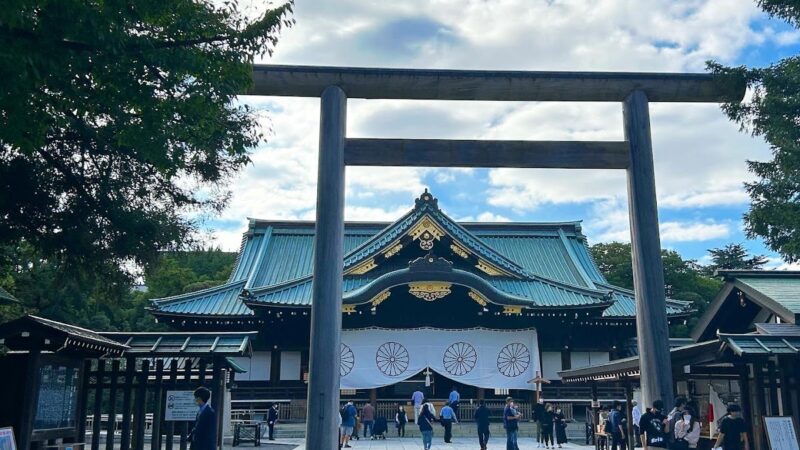
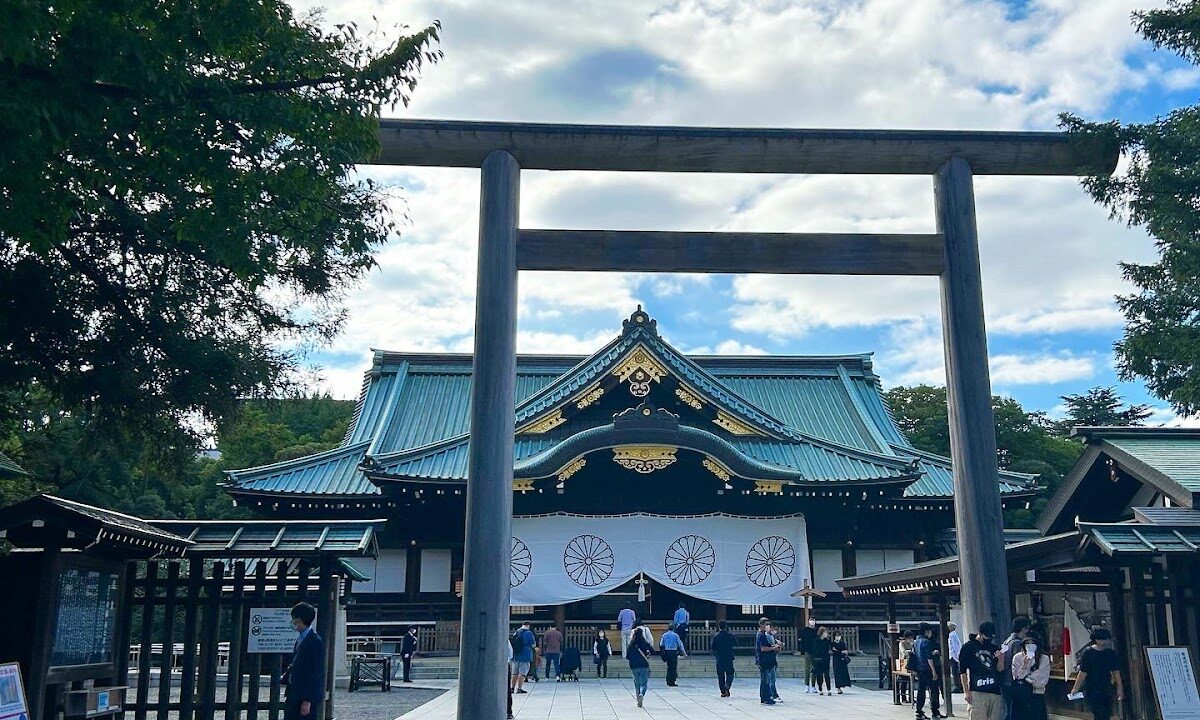
The first torii gate of Yasukuni Shrine is one of Japan’s largest, standing 25 meters tall with pillars 3 meters in diameter. This steel torii gate, erected in 1974, is a striking sight even from Kudan-dori and has become the symbolic gate welcoming visitors.
Beyond the torii gate, a long approach path lined with cherry trees on both sides continues. In spring, this approach is covered in blooming cherry blossoms and becomes one of Tokyo’s most famous cherry blossom viewing spots, drawing large crowds of flower-viewing enthusiasts.
Oratory and Main Hall
As one proceeds along the approach, a solemn oratory comes into view. The oratory displays the imperial chrysanthemum seal, indicating its deep connection to the imperial family. Beyond the oratory lies the main hall, where the 2.466 million enshrined deities rest.
Those wishing formal worship may apply at the shrine office. General worship can be performed in front of the oratory.
Sacred Gate
The sacred gate in front of the oratory was erected in 1934 and stands imposingly. Copper statues and memorial monuments symbolizing the war dead are positioned on either side of this gate, evoking quiet respect from visitors.
Noh Theater
The grounds contain a full-scale Noh theater where performances are dedicated in spring and autumn. Built in 1903, this Noh theater is known as a valuable traditional structure within Tokyo. It is not normally open to the public, but viewing is possible during dedicated performances.
Cherry Blossom Reference Tree
Within the shrine grounds is a cherry blossom reference tree designated by the Tokyo District Meteorological Observatory for observing bloom status. This tree’s blooming is the standard for Tokyo’s cherry blossom opening announcement, and meteorological office staff visit each year for observation.
Located beside the approach, this specimen is a Somei Yoshino cherry tree and plays a very important role in Tokyo’s cherry blossom bloom forecasts.
Yasukuni Shrine as a Cherry Blossom Viewing Spot
Yasukuni Shrine is renowned as one of Tokyo’s representative cherry blossom viewing spots. Approximately 500 cherry trees are planted within the grounds, blooming beautifully from late March through early April.
The cherry tree-lined approach is particularly impressive, creating a tunnel-like landscape of cherry blossoms at full bloom. Nighttime illumination is also provided, allowing for enchanting nighttime cherry blossom viewing. During flower-viewing season, the area is crowded with visitors and tourists, becoming a defining spring tradition of Tokyo.
About the Yushukan
Overview of the Yushukan
The Yushukan (Yuushuukan) is a treasure house and war museum located within the grounds of Yasukuni Shrine. This historically significant facility opened in 1882 (Meiji 15), with its current building completely renovated in 2002.
The name “Yushukan” derives from a passage in the “Encouragement of Learning” chapter of the Xunzi: “The gentleman must choose a province to reside in; when engaging in leisure, he must seek out men of integrity,” carrying the meaning “to pursue learning and devote oneself to righteousness.”
Exhibition Contents
The Yushukan displays the last letters and personal effects of the enshrined deities, along with abundant war-related historical materials.
Main Exhibits
- Mitsubishi Zero Model 52: A real Zero fighter aircraft is displayed, commanding an overwhelming presence
- Letters from Special Attack Force Members: Poignant final letters written before sortie
- Military Uniforms and Equipment: Military uniforms and gear from various periods
- Weapons and Ordnance: Actual swords, firearms, cannons, and artillery
- Photographs and Video Materials: Valuable records documenting conditions in war zones
- Personal Belongings: Daily items and letters used by the war dead
Exhibits are arranged chronologically, allowing detailed study of Japan’s war history from the late Edo period through the Showa era.
Basic Information about the Yushukan
- Opening Hours: 9:00~16:30 (admission until 30 minutes before closing)
- Closed: Open year-round (with several days of closure at the end of June and December)
- Admission Fee:
- Adults: 1,000 yen
- University Students: 500 yen
- Middle School and High School Students: 300 yen
- Elementary School Students: Free
- Time Required: Approximately 2-3 hours for thorough viewing
Yushukan Café and Restaurant
The Yushukan features a restaurant called “Yui,” serving primarily Japanese cuisine. Dining while viewing the grounds through large windows is possible, making it convenient for rest breaks during visits. Restaurant-only use is possible without paying the admission fee.
Annual Events and Activities
Mitama Matsuri
The largest event at Yasukuni Shrine is the “Mitama Matsuri” held annually from July 13-16. This summer festival to console the spirits of the enshrined deities features approximately 30,000 lanterns illuminating the grounds, creating an enchanting atmosphere.
Numerous food stalls operate, and Bon dancing and dedicated performances are held. With over 300,000 visitors during the four-day period, it has become a defining summer tradition of Tokyo.
Spring and Autumn Grand Festivals
Grand festivals are held twice annually in spring (April 21-23) and autumn (October 17-20). These important ceremonies are conducted with the participation of an imperial envoy from the Emperor, held in a solemn atmosphere.
Dedicated performances and Noh dedications are also held during these periods, providing valuable opportunities to experience traditional culture.
Other Major Events
- New Year Festival (January 1): Ceremony to welcome the new year
- Foundation Day Festival (February 11): Ceremony on National Foundation Day
- End of War Commemoration Day (August 15): Worship coinciding with the All Japan War Dead Memorial Service
- Thanksgiving Labor Day (November 23): Festival on Labor Thanksgiving Day
Recommended Tourist Spots Around Yasukuni Shrine
Chidorigafuchi Park and Chidorigafuchi Green Road
Located approximately 5 minutes on foot from Yasukuni Shrine, Chidorigafuchi is one of Tokyo’s representative cherry blossom viewing spots. Approximately 260 cherry trees are planted along the moat on the northwest side of the Imperial Palace, with a spectacular view of cherry blossoms reflected on the water’s surface.
A boat rental facility is available, allowing cherry blossom viewing from boats during cherry blossom season. It is recommended to visit in combination with Yasukuni Shrine.
Kitanomaru Park
Kitanomaru Park, which spreads south of Yasukuni Shrine, is a metropolitan park developed on the site of the northern compound of the former Edo Castle. Rich nature remains on the extensive grounds, allowing forest bathing while in the city center.
The Science and Technology Museum and the Nippon Budokan are also located within the park, making it accessible for various purposes.
Nippon Budokan
Located within Kitanomaru Park, the Nippon Budokan is a holy ground for martial arts, built in conjunction with the 1964 Tokyo Olympics. Martial arts competitions in judo, kendo, karate, and others are held here, and it is also famous as a major concert venue.
Its distinctive octagonal roof is a striking sight even from a distance.
Imperial Palace East Gardens
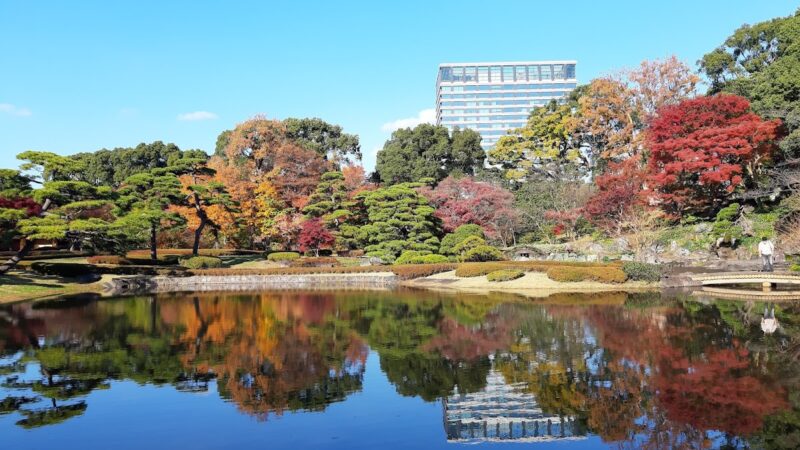
Located approximately 15 minutes on foot from Yasukuni Shrine, the Imperial Palace East Gardens is a garden developed from portions of the former Edo Castle’s main enclosure, secondary enclosure, and tertiary enclosure, open free to the public.
Historical ruins of the former castle tower foundation and the quarters of the women of the inner court remain, and seasonal plants can also be enjoyed—an oasis in the city center.
Tokyo National Museum of Modern Art
Located within Kitanomaru Park, the Tokyo National Museum of Modern Art is Japan’s first national art museum. It houses approximately 13,000 works centered on Japanese art from the Meiji period to the present.
Special exhibitions are held regularly, and it is a must-see spot for art enthusiasts.
Jimbocho Used Book District
Located approximately 10 minutes on foot from Yasukuni Shrine, Jimbocho is known as the world’s largest used book district. Approximately 180 used bookstores line the area, offering books in all genres from specialized works to literature to manga.
Book lovers can easily spend half a day in this appealing area, with abundant cafés and dining establishments.
Recommended Dining Around Yasukuni Shrine
Notable Restaurants in the Kudan-shita and Jimbocho Area
Curry Specialty Restaurants
Jimbocho is famous as a “curry city” with many distinctive curry restaurants.
- Ethiopia: A representative name in Jimbocho curry. Vegetable curry is the specialty
- Bondy: A long-established establishment famous for cheese curry
- Saboru: Popular as a café curry
Soba and Udon
- Kanda Yabu Soba: A long-established soba shop founded in the Meiji era
- Kanda Matsuya: A famous restaurant for Edo-style soba
Ramen
- Kudan Ikaruga: Popular for rich chicken white broth ramen
- Jimbocho Kurosu: A specialty restaurant for bonito-based ramen
Set Meals and Japanese Cuisine
- Saboru 2: Generous set meals
- Imoya: A long-established set meal restaurant in Jimbocho
Restaurant at Yasukuni Shrine Grounds and Yushukan
As mentioned previously, the restaurant “Yui” within the Yushukan serves Japanese cuisine while guests enjoy views of the grounds. It is convenient for rest breaks during visits.
Hotels and Accommodations Around Yasukuni Shrine
Various accommodations from business hotels to luxury hotels are available around Yasukuni Shrine.
Recommended Hotels
Luxury Hotels
- Palace Hotel Tokyo: A top-tier hotel adjacent to the Imperial Palace
- Hotel Metropolitan Edmont: A long-established hotel near Iidabashi Station
Business Hotels
- Hotel Grand Palace: Within walking distance of Kudan-shita Station
- Toyoko Inn Iidabashi: A chain hotel with excellent cost-performance
- APA Hotel Jimbocho Station East: Convenient with direct connection to Jimbocho Station
Capsule Hotels and Guesthouses
- Nine Hours Takebashi: A modern capsule hotel
- WISE OWL HOSTELS TOKYO: A backpacker-friendly guesthouse
Hotel search and reservations are recommended early in trip planning. Crowding is expected especially during cherry blossom season and festival periods.
Visitor Trends at Yasukuni Shrine
Characteristics of Visitors
Yasukuni Shrine welcomes diverse visitors throughout the year.
- Family Members and Relatives: War dead’s family members and associates visit for memorial services
- History Enthusiasts: People interested in Japan’s modern history
- Foreign Tourists: Overseas visitors coming to learn about Japanese history and culture
- Cherry Blossom Viewers: Visitors increase during spring cherry blossom season for flower viewing
- School Groups: Students visiting as part of history education
Optimal Times to Visit
Yasukuni Shrine welcomes visitors year-round, with different charms depending on the season.
Spring (Late March ~ Early April)
Cherry blossoms are in full bloom, making this the most vibrant time. Many flower-viewing crowds are expected, as is congestion.
Summer (Mid-July)
Mitama Matsuri is held, offering an enchanting shrine experience lit by lanterns.
Autumn (Mid-October ~ Late October)
The Autumn Grand Festival is held, and autumn foliage is beautiful. The climate is also mild, making it ideal for worship.
Winter (December ~ February)
Visitors are relatively few, allowing quiet worship. New Year’s Day experiences crowding from first shrine visitors.
Time Estimates for Visit
- Grounds worship only: 30 minutes to 1 hour
- Grounds worship plus Yushukan viewing: 2-3 hours
- Including surrounding sightseeing: Half day to full day
Advance planning allowing ample time is recommended.
Recommended Shrines, Shrines, and Temples to Visit
Tokyo Daijingu
Located approximately 15 minutes on foot from Yasukuni Shrine, Tokyo Daijingu is affectionately known as “Tokyo’s Ise Shrine.” It is particularly popular among young women, known for blessings of romantic relationships.
Kanda Myojin (Kanda Shrine)
Positioned between Akihabara and Jimbocho, Kanda Myojin is a shrine with nearly 1,300 years of history as Edo’s chief protective shrine. It is said to offer blessings for business prosperity and romantic relationships.
Yushima Tenmangu (Yushima Tenjin)
Yushima Tenjin, enshrining Sugawara Michizane, the deity of studies, draws many students seeking examination blessings during exam season. It is also known as a plum blossom viewing spot.
Zojoji
Located near Tokyo Tower, Zojoji is a major temple known as the family temple of the Tokugawa shoguns. With its magnificent Sankaizatsumon gate and the Tokugawa family mausoleum, it is a historically significant temple.
Etiquette and Notes for Worship
Basic Worship Etiquette
- How to pass through torii gates: Bow before passing through the torii gate
- How to walk the approach: Walk on the sides of the approach path, as the center is considered the path of the deity
- Water purification ritual: Purify your hands and mouth at the purification basin before worship
- Bowing ritual: The standard is two bows, two hand claps, and one bow
Photography Notes
Photography within the grounds is generally permitted, but the following points require attention:
- Photography inside the oratory may be prohibited
- Be considerate not to disturb other worshippers
- Refrain from tripod use during crowded times
- Some areas within the Yushukan prohibit photography
Dress Code
While there is no strict dress code, clothing reflecting awareness of the sacred nature of the place is desirable. Formal attire is recommended if requesting formal worship.
Frequently Asked Questions About Yasukuni Shrine
Is there a worship fee?
Worship in the grounds is free. A separate fee is required for Yushukan admission.
Can I receive a shrine stamp?
Yes, you can receive a shrine stamp (goshuin) at the shrine office. The usual donation is approximately 300 yen. Original shrine stamp books are also sold.
Can I purchase amulets and talismans?
Various amulets and talismans are available from the shrine office. Many varieties exist, including traffic safety, academic success, and household protection.
Can I visit with pets?
Visits with pets are generally not permitted within the grounds. Exception is made for service dogs such as guide dogs.
Is wheelchair access possible?
The grounds have undergone barrier-free improvements, allowing wheelchair access. However, some areas have steps, so advance inquiry is recommended if uncertain.
Can foreigners worship?
Of course. Regardless of nationality, all individuals can worship. English explanation panels are provided at the Yushukan.
Conclusion
Yasukuni Shrine, located in Kudan-kita, Chiyoda Ward, Tokyo, has enshrined the spirits of approximately 2.466 million who died in service to the nation since its founding in 1869 (Meiji 2). Beyond its historical significance, it is also renowned as a cherry blossom viewing spot, welcoming numerous visitors throughout the year.
Within the grounds are notable attractions including the solemn oratory and main hall, as well as the Noh theater, and the Yushukan offers valuable war history materials and artifacts of the enshrined deities. With its convenient location just 5 minutes on foot from Kudan-shita Station, the surrounding area is rich in attractions including Chidorigafuchi Park, Kitanomaru Park, and the Jimbocho used book district.
When visiting Tokyo, be sure to visit Yasukuni Shrine to touch upon Japan’s history and culture. From spring cherry blossoms to summer’s Mitama Matsuri to autumn’s grand festival, the location offers different charms each season.
For detailed information and the latest opening hours and event information, consultation of the official website is recommended. Plan your visit carefully for a fulfilling worship experience.