Imperial Palace East Gardens Tokyo | Complete Guide to Free Public Gardens Where You Can Experience the History of Edo Castle
Located in the heart of Chiyoda Ward, Tokyo, the Imperial Palace East Gardens is a historically valuable garden that has revived the central parts of Edo Castle, which was once the residence of the Tokugawa shogunate. Spanning approximately 210,000 square meters, the vast grounds include portions of the Honmaru (inner citadel), Ninomaru (second citadel), and Sannomaru (third citadel) of the former Edo Castle, and have been open to the general public since October 1, 1968, as long as imperial court functions are not disrupted. This urban oasis, which can be visited free of charge without advance reservations, is beloved by numerous tourists and history enthusiasts from around the world as a special space where historical heritage from the Edo period and rich nature harmonize.
About the Imperial Palace East Gardens | Imperial Residence Attached Gardens Developed on Edo Castle Ruins
The Imperial Palace East Gardens were decided to be developed as imperial residence attached gardens based on a cabinet decision on January 29, 1960, utilizing portions of the former Honmaru, Ninomaru, and Sannomaru of Edo Castle in the eastern imperial palace district. Construction began in 1961, was completed in September 1968, and public access began on October 1 of that year.
Under the jurisdiction of the Imperial Household Agency, this garden is designated as part of the national special historic site “Edo Castle Ruins” and is an important cultural property that is indispensable in discussing Japanese history. The fact that a place that served as the political and economic center of the Tokugawa shogunate for more than 260 years is now open as a public park where anyone can freely stroll holds great historical and cultural significance.
Historical Background of the Imperial Palace East Gardens
Edo Castle functioned as the seat of government for the Edo shogunate from 1603 when Tokugawa Ieyasu was appointed Shogun. The Honmaru contained the shogun’s residential spaces and administrative offices, the Ninomaru housed the shogun’s heir’s palace, and the Sannomaru was arranged with waiting rooms for various daimyo during their official visits. After the Meiji Restoration, Edo Castle became the imperial palace, and took its present form following post-war development.
In developing the Imperial Palace East Gardens, efforts were made to preserve Edo-period structures as much as possible while incorporating modern park functions. Ruins of structures such as the castle keep foundation, stone walls, and turrets retain their historical appearance, allowing visitors to experience the grand scale of the Edo period.
Access to the Imperial Palace East Gardens | Three Entrance Gates and Nearest Stations
The Imperial Palace East Gardens has three entrances: the Otemmon Gate, Hirakawamon Gate, and Kitakuruwabashibashomon Gate, each accessible from different nearest stations. The address is 1 Chiyoda, Chiyoda Ward, Tokyo.
Entrance via Otemmon Gate
The main entrance is the Otemmon Gate. This historic gate was used as the principal entrance to Edo Castle and remains the entry point for most visitors today.
Access to Otemmon Gate:
- About 5 minutes’ walk from exit C13a of Otemachi Station (Tokyo Metro Marunouchi, Tozai, Chiyoda, and Hanzomon lines, and Toei Mita Line)
- About 15 minutes’ walk from Marunouchi North Exit of JR Tokyo Station
Otemachi Station is a major terminal station served by multiple train lines, so it is important to head toward exit C13a. Upon emerging from underground to street level, the stone walls of Otemmon Gate come into view.
Entrance via Hirakawamon Gate
Hirakawamon Gate was also called the “unclean gate” during the Edo Castle period and is known to have been used primarily by women and prisoners. It currently serves as a quiet entrance.
Access to Hirakawamon Gate:
- About 5 minutes’ walk from exit 1a of Takebashi Station (Tokyo Metro Tozai Line)
- About 10 minutes’ walk from exit C13b of Otemachi Station (Tokyo Metro Hanzomon, Tozai lines and Toei Shinjuku Line)
Access from Takebashi Station is the closest, with directional signage for the Imperial Palace East Gardens visible immediately upon exiting the station.
Entrance via Kitakuruwabashibashomon Gate
Kitakuruwabashibashomon Gate is located on the northern side of the Imperial Palace East Gardens and is often less crowded, making it a hidden gem entrance.
Access to Kitakuruwabashibashomon Gate:
- About 8 minutes’ walk from exit 1a of Takebashi Station (Tokyo Metro Tozai Line)
Kitakuruwabashibashomon Gate provides direct access to the Honmaru district and is convenient for those who want to tour the gardens efficiently.
Opening Hours and Closure Days | Essential Information to Confirm Before Your Visit
The opening hours of the Imperial Palace East Gardens vary by season. Additionally, there are regular closure days, so it is recommended to confirm before visiting.
Opening Hours (as of 2024)
- March 1 to April 14: 9:00 AM to 5:00 PM (admission until 4:30 PM)
- April 15 to end of August: 9:00 AM to 6:00 PM (admission until 5:30 PM)
- September 1 to end of September: 9:00 AM to 5:00 PM (admission until 4:30 PM)
- October 1 to end of October: 9:00 AM to 4:30 PM (admission until 4:00 PM)
- November 1 to end of February: 9:00 AM to 4:00 PM (admission until 3:30 PM)
Closure Days
- Mondays (however, national holidays other than the Emperor’s birthday are open; if a Monday falls on a holiday, the following Tuesday becomes a closure day)
- Fridays (however, national holidays other than the Emperor’s birthday are open; if a Friday falls on a holiday, the preceding Thursday becomes a closure day)
- December 28 through January 3 of the following year
- Days when ceremonies are held or for other unavoidable reasons that interfere with operations
Admission Fee and Advance Reservations
Admission to the Imperial Palace East Gardens is free of charge. Furthermore, no advance reservations are required, and you can enter freely anytime during operating hours. However, you must receive an admission ticket at each gate upon entry and return it when leaving. This admission ticket is used to manage the number of visitors in the garden and does not require any personal information to be filled in.
Main Attractions of the Imperial Palace East Gardens | Edo Castle Ruins and Historic Structures
The Imperial Palace East Gardens preserves many valuable Edo-period structures, each with historical significance and points of interest.
Tenshu-dai (Castle Keep Foundation) | Where Japan’s Largest Castle Keep Once Stood
The Tenshu-dai is located at the highest point of the Honmaru and is the stone foundation upon which the Edo Castle keep once stood. The current Tenshu-dai was reconstructed in 1658 after the castle was destroyed in the Great Meireki Fire of 1657, but the keep structure itself was never rebuilt.
The Tenshu-dai stands approximately 11 meters high, and climbing to the top offers panoramic views of the Honmaru ruins, Ninomaru gardens, and even Tokyo’s high-rise buildings beyond. Standing at this location allows you to imagine the views once seen by the shogun and feel the passage of time from the Edo period to modern Tokyo.
Otemmon Gate | A Symbol of Dignity as Edo Castle’s Principal Gate
Otemmon Gate was the principal entrance to Edo Castle, used by daimyo during official visits and the most formally honored gate. The current Otemmon Gate was reconstructed in 1967 after being destroyed in wartime bombing, but its massive stone walls and masugata (square defensive structure) faithfully recreate the Edo-period appearance.
Massive stone walls several meters high flank both sides of the gate, and their precise stonework speaks to the advanced civil engineering techniques of the era. In particular, the corner construction technique called “sangi-zumi” (wedge stacking) is known for its earthquake-resistant design.
Fujimi Yagura (Fujimi Turret) | The Only Surviving Three-Story Turret
Fujimi Yagura is the only surviving three-story turret at Edo Castle and is designated as a national important cultural property. After the Great Meireki Fire, when the castle keep was not rebuilt, this turret served as a substitute for the keep.
The turret’s name derives from the fact that Mount Fuji could once be seen from this location. Today, surrounding buildings prevent views of Mount Fuji, but this structure remains an invaluable building that conveys Edo-period architectural style, attracting many visitors.
Fujimi Tamon (Fujimi Multi-Story Connecting Turret) | Important Cultural Property Long-House Turret
Fujimi Tamon is a tamon yagura (turret structure) built as a long-house on top of the Honmaru stone walls and, like Fujimi Yagura, is designated as a national important cultural property. Tamon yagura are defensive structures built in long-house form on stone walls, serving as storage for weapons and provisions.
The current Fujimi Tamon was reconstructed in 1965, and while its interior is not normally open to the public, you can see its solid construction from the exterior.
Hyakuninbanshō (Hundred Guards Post) | Edo Castle’s Largest Guard Station
Hyakuninbanshō was established to guard the entrance to the Honmaru and was staffed by samurai of the Teppō Hyakurenin (hundred riflemen corps). It is the largest surviving guard station, with a long-house structure approximately 50 meters in length.
During the Edo period, as many as 100 samurai took turns guarding this post, a testament to the extreme importance of Edo Castle’s security. The building was reconstructed in 1967 but retains enough of the period atmosphere to give a strong sense of the era.
Ninomaru Garden | Pond Stroll Garden Created by Enshu Kobori
The Ninomaru Garden is a pond stroll garden said to have been created by Enshu Kobori, a renowned garden designer of the early Edo period. After falling into disrepair following the Meiji period, excavation surveys were conducted from 1960, and it was restored to its Edo-period appearance.
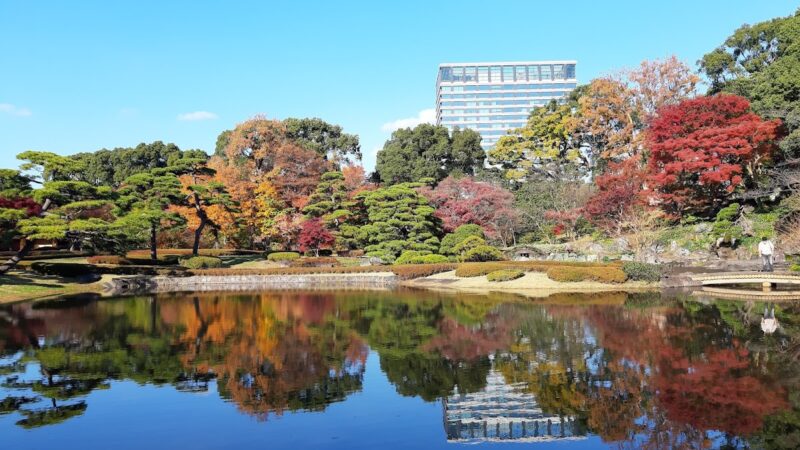
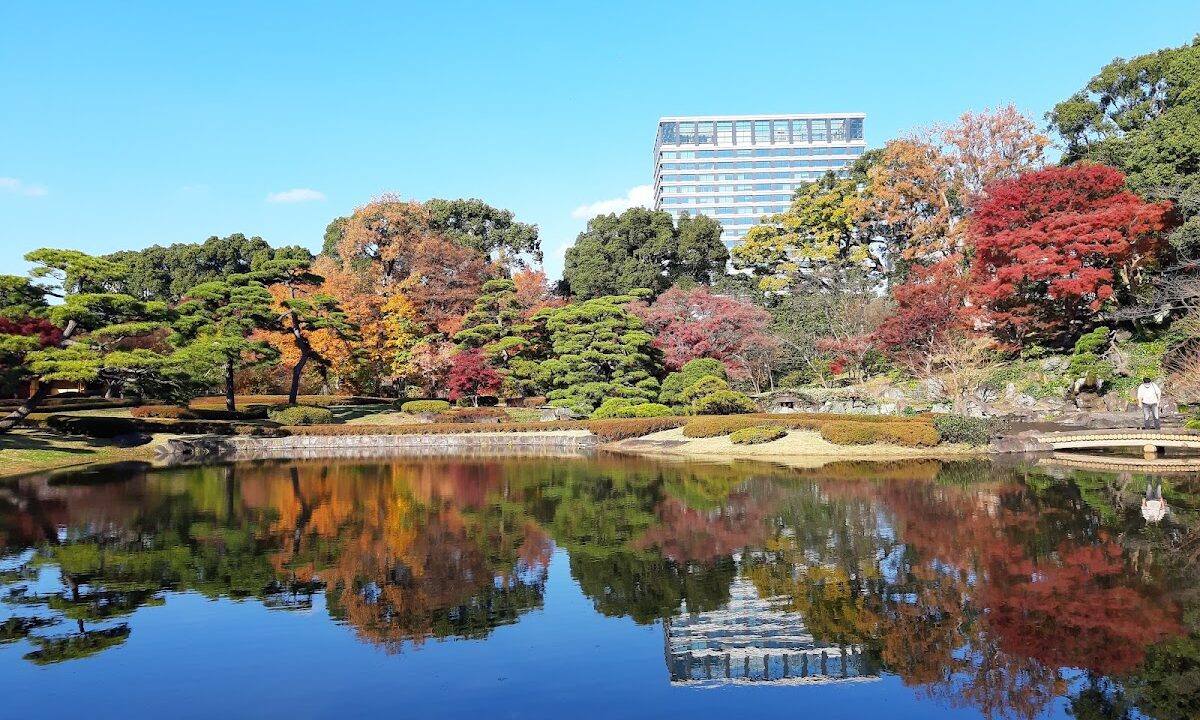
At the center of the garden is a large pond, and you can enjoy varied perspectives on the scenery by strolling around its perimeter. With cherry blossoms in spring, iris flowers in early summer, autumn foliage in fall, and plum blossoms in winter, the gardens display beautiful seasonal landscapes that enchant all visitors. Carp swim in the pond, and water birds visit the shoreline, offering a experience of rich nature despite the urban location.
Matsu no Rōka Ato (Pine Corridor Site) | The Historic Site of the Loyal Retainers’ Vendetta
The Matsu no Rōka Ato is the location where the famous “Loyal Retainers’ Vendetta” incident occurred in 1701, when Asano Takuminokami of the Akō domain drew his sword against Kira Kōzuke. A stone monument marks the location, and many history enthusiasts visit this site of one of Japan’s most famous historical incidents.
The actual pine corridor was approximately 50 meters long, with pictures of pine trees painted on both sides of the corridor, giving it its name. While the building no longer remains, signage indicates its location and scale, allowing visitors to imagine the scene of that time.
Sannomaru Shōzōkan (Sannomaru Collection Building) | Exhibiting Imperial Household Art
The Sannomaru Shōzōkan opened in 1993 as a facility for preserving and displaying art and crafts belonging to the imperial household. The collection comprises approximately 9,800 items spanning paintings, calligraphy, and crafts among other categories.
Displays are rotated regularly with changing themes. Admission is free, offering a precious opportunity to view important works representing Japanese art history up close. However, the Sannomaru Shōzōkan is sometimes closed for renovations, so it is recommended to check the Imperial Household Agency website before visiting.
Four Seasons in the Imperial Palace East Gardens | Seasonal Highlights and Flower Viewing Spots
The Imperial Palace East Gardens is a popular destination for enjoying nature across all four seasons, displaying different characteristics each season.
Spring (March–May) | Cherry Blossoms and Fresh Greenery
Spring in the Imperial Palace East Gardens is famous as a cherry blossom viewing destination, with approximately 280 cherry trees in bloom. Various varieties are planted, including Somei Yoshino, yamazakura, and weeping cherry, with peak bloom occurring from late March to early April.
In the Honmaru grass plaza, you can enjoy cherry blossoms leisurely beneath the trees. The cherry blossoms surrounding the Ninomaru garden are also beautiful, with blossoms reflected in the pond creating an extraordinary sight. Though the cherry blossom season attracts many tourists, the vast grounds allow for relatively unhurried viewing.
From late April through May, the season of beautiful fresh greenery arrives. Trees burst into leaf all at once, and the garden is enveloped in vibrant green. This period also features pleasant weather, making it an ideal season for strolling.
Summer (June–August) | Iris Flowers and Shaded Coolness
In June, Japanese irises come into bloom at the iris garden in the Ninomaru. Approximately 84 varieties and 1,700 plants are planted, with flowers blooming in purple, white, yellow, and other colors. Though the rainy season arrives at this time, rain-dampened iris flowers possess their own charm.
Summer in the Imperial Palace East Gardens offers abundant shade despite the urban location, making it relatively cool for strolling. Early morning or evening visits provide a more comfortable experience. Throughout the Honmaru grass plaza, visitors can be seen resting beneath large trees.
Fall (September–November) | Autumn Foliage and the Harvest Season
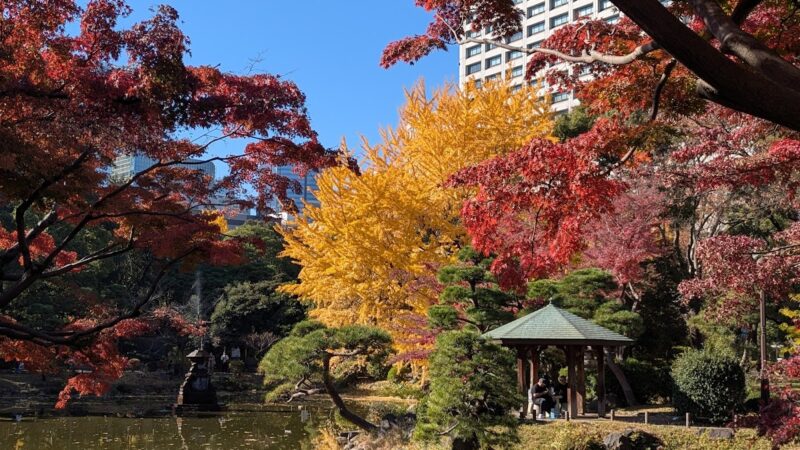
Autumn in the Imperial Palace East Gardens is a season of beautiful foliage. From mid-November through early December, Japanese maples and ginkgos turn color, painting the garden in reds and yellows. The foliage surrounding the Ninomaru garden is particularly spectacular, with foliage reflected in the pond creating a painting-like beauty.
Fall is also a season when various fruits ripen. Persimmons, chestnuts, pomegranates, and other fruit trees planted since the Edo period bear fruit, helping visitors feel the passage of seasons.
Winter (December–February) | Silence and Plum Blossoms’ Fragrance
Winter in the Imperial Palace East Gardens is quiet with fewer tourists. Bare trees reveal the forms of Edo Castle stone walls and structures more clearly, making it the ideal season for carefully observing historical structures.
By late February, plum blossoms begin to bloom in the plum grove of the Ninomaru garden. Approximately 50 plum trees are planted, with white and red plum flowers blooming with fragrant blooms. Though still cold, plum blossoms serve as messengers of spring’s arrival, offering hope to all who visit.
Efficient Viewing Route of the Imperial Palace East Gardens | Model Courses by Time Required
Given the vast grounds of the Imperial Palace East Gardens, planning an efficient viewing route is important. We present model courses organized by time required.
One-Hour Course | Covering Main Attractions
This course efficiently covers main attractions for those with limited time.
- Enter via Otemmon Gate (5 minutes)
- View Hyakuninbanshō (5 minutes)
- Climb Tenshu-dai (15 minutes)
- View Fujimi Yagura exterior (5 minutes)
- Stroll the Honmaru grass plaza (10 minutes)
- Complete circuit of Ninomaru garden (15 minutes)
- Exit via Hirakawamon Gate (5 minutes)
This course focuses on the Honmaru and Ninomaru, the core sections of Edo Castle. Enjoy panoramic views from the Tenshu-dai and the beauty of the Ninomaru garden while experiencing Edo Castle’s history.
Two-Hour Course | Learning History Thoroughly
This course allows more detailed viewing at a leisurely pace for those wishing to study more deeply.
- Enter via Otemmon Gate, observing gate structure (10 minutes)
- View Sannomaru Shōzōkan (30 minutes) *if open*
- View Hyakuninbanshō, Ōbanshō, Nakakanamon ruins (15 minutes)
- Climb Tenshu-dai and enjoy surrounding scenery (20 minutes)
- Reflect on history at Matsu no Rōka Ato (10 minutes)
- View Fujimi Yagura and Fujimi Tamon (10 minutes)
- Rest at Honmaru grass plaza (15 minutes)
- Leisurely stroll Ninomaru garden (20 minutes)
- Exit via Hirakawamon Gate (10 minutes)
This course allows adequate time at each spot to deeply learn about Edo Castle’s history and architectural styles. Careful reading of explanatory plaques enriches understanding.
Three-Hour Course | Enjoying Seasonal Nature Too
This enriching course allows enjoyment of both history and nature for those with extended time.
- Enter via Otemmon Gate (10 minutes)
- View Sannomaru Shōzōkan (40 minutes) *if open*
- View Dōshinbanshō, Hyakuninbanshō, Ōbanshō (20 minutes)
- Pass Nakasumeemon ruins, Nakakanamon ruins (10 minutes)
- Climb Tenshu-dai and savor the scenery (25 minutes)
- Observe stone walls around Tenshu-dai (15 minutes)
- View Matsu no Rōka Ato, Ōoku ruins (15 minutes)
- View Fujimi Yagura, Fujimi Tamon (15 minutes)
- Picnic rest at Honmaru grass plaza (30 minutes)
- Complete Ninomaru garden circuit, enjoying seasonal flowers (30 minutes)
- Stroll Ninomaru mixed woods (15 minutes)
- Exit via Hirakawamon Gate (10 minutes)
This course dedicates sufficient time to both historical structures and seasonal flowers and nature. Bringing a bento and picnicking at the Honmaru grass plaza is highly recommended.
Precautions and Etiquette When Visiting the Imperial Palace East Gardens
The Imperial Palace East Gardens is part of the imperial palace and a public space managed by the Imperial Household Agency. When visiting, observe the following rules and etiquette.
Prohibited Actions
- Bringing bicycles, kick scooters, or other vehicles
- Bringing pets (except guide dogs and assistance dogs)
- Ball games or frisbee and similar play
- Playing instruments or shouting loudly
- Picking or damaging plants
- Smoking outside designated areas
- Using drones
- Commercial photography (personal commemorative photos are permitted)
- Setting up tents or tarps
- Using fire
Recommended Etiquette
- Care for grass and plantings: Walk on designated paths and avoid stepping in planted areas.
- Take trash with you: As no trash bins are provided in the garden, you must take all trash with you.
- Quiet viewing: View quietly to avoid disturbing other visitors.
- Respect cultural properties: Do not climb on or touch stone walls or structures.
- Follow staff directions: Always follow instructions from Imperial Household Agency staff and security personnel.
Clothing and Luggage Advice
- Comfortable walking shoes: The grounds are vast with stone-paved and gravel paths, so wear comfortable walking shoes.
- Season-appropriate clothing: Choose clothing suited to the season, as summer sun is intense and winter winds are cold.
- Rain gear: Bring a collapsible umbrella or raincoat if the weather is uncertain.
- Beverages: Especially in summer, bring drinks for heat stroke prevention. Vending machines exist in the garden but in limited numbers.
- Camera: Bring a camera or smartphone to photograph beautiful scenery and historic structures.
Tourist Attractions Around the Imperial Palace East Gardens
Visiting attractions surrounding the Imperial Palace East Gardens during your visit allows for a more enriching Tokyo experience.
Imperial Palace Outer Gardens and Nijūbashi Bridge
Located about 15 minutes’ walk from the Imperial Palace East Gardens, the Imperial Palace Outer Gardens is a vast grass plaza extending in front of the imperial palace’s main gate. Nijūbashi Bridge is known as an iconic imperial palace landscape and a popular spot for tourist photos.
Kitanomaru Park
Located immediately beyond the Kitakuruwabashibashomon Gate of the Imperial Palace East Gardens, Kitanomaru Park is developed on the site of the former Edo Castle northern citadel. The park features facilities including the Nippon Budōkan, National Museum of Nature and Science, and National Archives of Japan, allowing for leisurely strolling amid abundant nature.
Tokyo Station Marunouchi Station Building
Located about 15 minutes’ walk from Otemmon Gate, Tokyo Station’s Marunouchi Building is a beautiful red brick structure built in 1914. Restored to its original appearance in 2012, it is designated a national important cultural property. The building houses restaurants and cafes, making it an ideal rest spot during sightseeing.
Marunouchi and Otemachi Business Districts
Surrounding the Imperial Palace East Gardens are Japan’s representative business districts of Marunouchi and Otemachi. The contrast between modern high-rise buildings and remaining historic structures is fascinating. The areas are fully developed with shopping and dining options, allowing you to enjoy both sightseeing and commerce.
Hibiya Park
Located about 20 minutes’ walk southwest of the Imperial Palace East Gardens, Hibiya Park is Japan’s first Western-style modern park, opened in 1903. Enjoy seasonal flowers throughout the year, and rest at restaurants and cafes during your stroll.
To Deepen Your Understanding of Imperial Palace East Gardens History
We recommend studying Edo Castle and Edo-period history before visiting to maximize enjoyment.
Recommended Preparation Methods
- Imperial Household Agency website: Latest opening information and attractions are detailed.
- History books and tourist guides: Learn detailed information about Edo Castle history and architecture.
- Online videos: Viewing introductory videos of the Imperial Palace East Gardens on YouTube and similar sites helps form a clear pre-visit image.
Using Guided Tours
The Imperial Household Agency occasionally offers free guided tours of the Imperial Palace East Gardens (availability varies by period). Expert guides provide detailed explanations, allowing deeper historical understanding. Private tour companies also offer tours around the imperial palace area—research beforehand if interested.
Summary | A Precious Place to Experience Edo History and Nature in the Urban Center
The Imperial Palace East Gardens in Chiyoda Ward, Tokyo is a vast approximately 210,000-square-meter garden developed on the former sites of the Honmaru, Ninomaru, and Sannomaru of Edo Castle. This urban oasis, visitable free of charge without advance reservations, is beloved by countless domestic and international tourists as an accessible place where everyone can easily visit.
With access from three entrances—Otemmon Gate, Hirakawamon Gate, and Kitakuruwabashibashomon Gate—and located only a 5-minute walk from Tokyo Metro Otemachi and Takebashi stations, transportation is convenient. Numerous valuable Edo-period ruins remain, including the Tenshu-dai, Fujimi Yagura, Hyakuninbanshō, and Ninomaru garden, allowing visitors to feel Japanese history firsthand.
The charm of seasonal nature is also significant, with spring cherry blossoms, early summer iris flowers, autumn foliage, and winter plum blossoms displaying varying characteristics each season. Whether relaxing on the vast grass plaza or carefully viewing historic structures, each visitor can enjoy this space in their own way.
Closure days are Mondays and Fridays (national holidays other than the Emperor’s birthday are open), and years-end through early January, so always confirm the latest information on the Imperial Household Agency website before visiting. When visiting Tokyo, be sure to experience the history of Edo and rich nature at the Imperial Palace East Gardens.