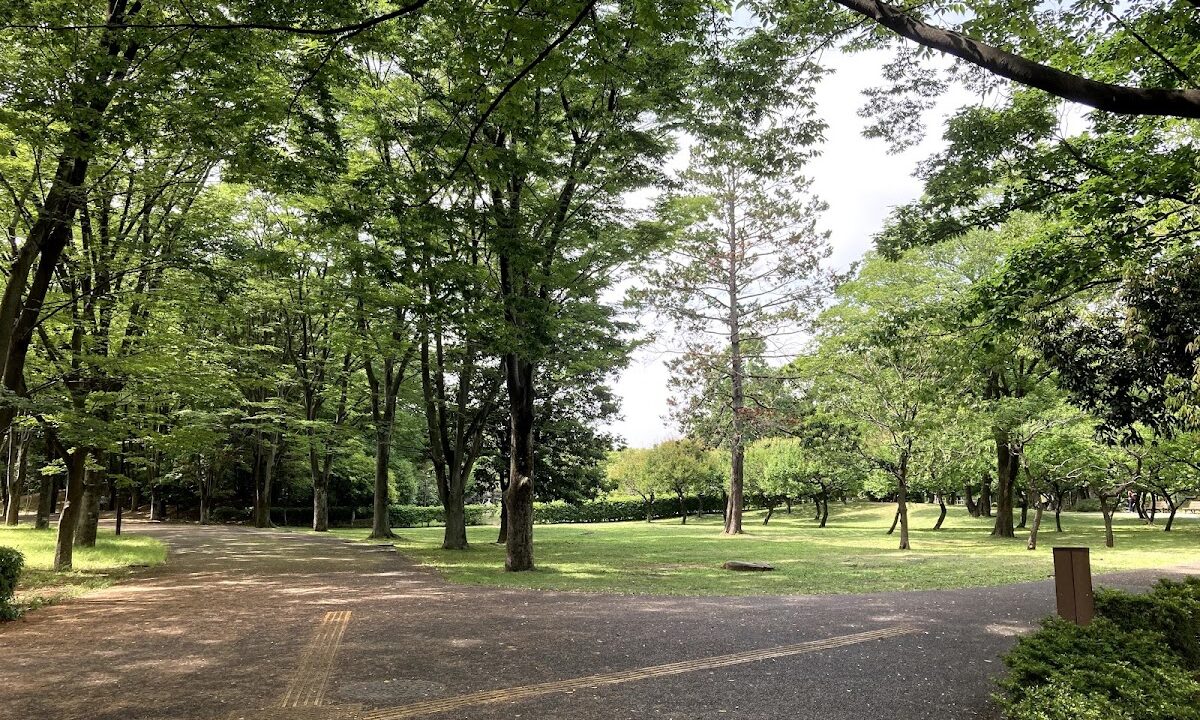
Fuchu no Mori Park, Tokyo | Complete Guide | Access, Facilities, Event Information
Located in Sengen-cho, Fuchu City, Tokyo, Fuchu no Mori Park (Fuchu Forest Park), a prefectural park operated by the Tokyo Metropolitan Government, is cherished by local residents and tourists as a family sports park featuring forests, hills, and waterside areas surrounded by Musashino greenery. Developed utilizing the site of the former U.S. military Fuchu base, this park boasts an expansive area of approximately 17.1 hectares (equivalent to about 3.65 Tokyo Domes) and is an urban comprehensive park where sports facilities, cultural facilities, and natural landscapes harmonize.
History and Origins of Fuchu no Mori Park
Fuchu no Mori Park has a history of being developed as parkland based on the base site utilization policy. This area, which once housed the U.S. military Fuchu base, was planned with consideration for improved living environments in the region, the necessity of sports facilities, and functionality as a disaster evacuation site after its return.
Development proceeded gradually from the 1980s onward, and the park is now a representative metropolitan park in Fuchu City, bustling with many visitors throughout the year. In developing the park, emphasis was placed on preserving and recreating the natural environment of the Musashino Plateau as much as possible, and the “Musashino Forest” area, which conveys the appearance of this region’s forests from centuries past, has been developed on the southern side of the park.
Access Methods and Basic Information
Train Access
The nearest station to Fuchu no Mori Park is Keio Line “Higashi-Fuchu Station,” located approximately a 10-minute walk from the station. Higashi-Fuchu Station is served by Keio Line semi-express and express trains, accessible in approximately 25 minutes from Shinjuku Station and approximately 35 minutes from Shibuya Station. The route from the station to the park is flat, with a calm atmosphere passing through residential areas.
Access by Car and Parking
For those traveling by car, the park is approximately 15 minutes from the Chuo Expressway “Kunitachi Fuchu IC” or approximately 20 minutes from “Chofu IC.” The park is equipped with paid parking accommodating approximately 100 regular vehicles. Parking fees are 300 yen per hour, with an additional 100 yen charged per 30 minutes thereafter (fees may change, so it is recommended to check the official website before visiting).
Opening Hours and Admission
Fuchu no Mori Park is open year-round with free admission. However, if using sports facilities within the park (baseball fields, tennis courts, soccer fields, etc.), advance reservations and usage fees are required.
Main Facilities and Area Introductions
Flower Promenade and Flower Plaza
One of the park’s highlight spots is the “Flower Promenade.” In spring, a cherry blossom-lined path extends for approximately 300 meters, with a tunnel of cherry blossoms centered on Somei Yoshino captivating visitors. During the cherry blossom flowering season, the park bustles with many flower-viewing visitors and is known as one of the most renowned cherry blossom viewing spots in Fuchu City.
Beyond the promenade, the “Flower Plaza” spreads out, a spacious open area with fountains and monuments. Flowers of various seasons are planted throughout, allowing visitors to enjoy different colors seasonally—tulips in spring, salvias and marigolds in summer, cosmos in autumn, and more.
Musashino Forest Area
Located on the southern side of the park, the “Musashino Forest” is an area that recreates the deciduous broadleaf forests that once covered the Musashino Plateau. With plantings of Quercus mongolica, Quercus acutissima, and Styrax japonica, it offers a valuable forest bathing experience, a rarity in the urban center.
Walking paths are maintained within the forest, allowing visitors to enjoy nature observation while walking slowly through dappled sunlight. It is also known as a bird-watching spot, home to birds such as Great Tits, Japanese White-eyes, and Japanese Pygmy Woodpeckers. It is an attractive area for bird-watching enthusiasts.
Japanese Garden
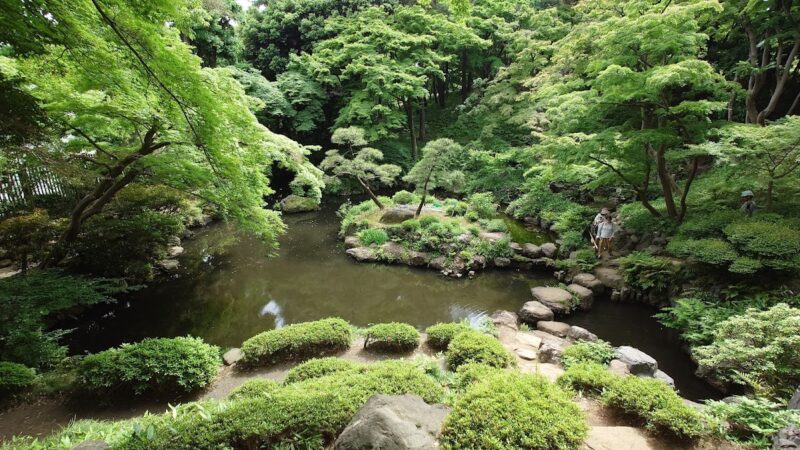
The Japanese gardens, positioned separately in two locations east and west across a pathway, are popular spots offering beautiful scenery year-round. While incorporating traditional Japanese garden styles, the design also harmonizes contemporary elements.
The eastern garden features a pond in the strolling garden style, where visitors can enjoy views of carp swimming while walking. The western garden incorporates a dry garden design, creating a serene space with stone arrangements and sand patterns evoking a Zen atmosphere. The garden displays different faces across the four seasons—fresh greenery in spring, hydrangeas in early summer, autumn foliage, and snowy landscapes in winter—and is popular as a photography spot.
Mori Park Nijiiro Plaza (Universal Play Equipment Plaza)
One of the distinctive facilities at Fuchu no Mori Park is the “Mori Park Nijiiro Plaza,” which adopts universal design. Play equipment is installed with consideration for children using wheelchairs, creating a space where all children, regardless of disability, can play together.
The plaza features ramp-equipped combination playground equipment, wheelchair-accessible swings, and sensory play equipment that stimulates touch and hearing, garnering attention as an inclusive play space. Additionally, sufficient benches and shaded areas are provided for parents supervising children.
Jab-Jab Pond (Water Play Area)
The “Jab-Jab Pond,” open during the summer season, is extremely popular with young children. Designed with shallow water depth, even infants can safely enjoy water play. The opening period is typically mid-July through early September, with many families enjoying it on particularly hot days.
Around the water play area, changing spaces and foot-washing areas are also provided, with hygiene considerations. However, infants not yet toilet-trained must wear swim diapers, so it is recommended to prepare in advance.
Grassy Plaza
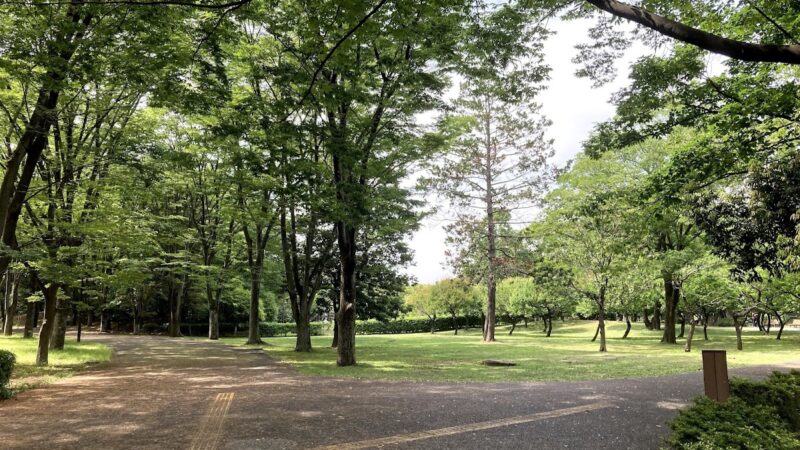
The expansive sloped grassy plaza is an open space where people can freely enjoy activities such as picnics, ball games, and kite flying. On weekends, many families can be seen spreading out leisure sheets and enjoying meals.
To maintain the grass condition, regular rest periods may be designated, but the plaza is generally available year-round. Whether enjoying spring picnics on fresh green grass or autumn walks with fall foliage views, each season offers different ways to enjoy the space.
Comprehensive Sports Facilities
As a “Family Sports Park,” Fuchu no Mori Park is well-equipped with diverse athletic facilities.
Baseball Fields
Two full-featured baseball fields equipped with lighting are available for soft baseball and softball competitions and practice. Night lighting is also installed, allowing for evening use after work. Advance reservations are required, with applications made through Fuchu City’s facility reservation system.
Tennis Courts
Eight artificial grass omnicourts are developed, utilized by players ranging from beginners to advanced levels. Courts are well-maintained, providing comfortable tennis play. These also operate on a reservation-required basis, with hourly usage available.
Soccer/Futsal Fields
The artificial grass soccer field frequently hosts youth soccer practice matches and futsal competitions. The area is sufficiently sized to accommodate 11-a-side soccer. On weekends, local soccer clubs and teams use the field, creating an active atmosphere.
Other Athletic Facilities
Additionally, running courses and stretching areas are developed, serving as venues for jogging and health improvement. Paved walking paths throughout the park are ideal for walking and jogging.
Adjacent Cultural Facilities
Fuchu Municipal Art Museum
Located on the park grounds, the Fuchu Municipal Art Museum is an art museum featuring a collection centered on contemporary and modern art. In addition to permanent exhibitions, diverse special exhibitions are held throughout the year. The museum’s café allows visitors to relax while viewing the park’s greenery, enabling a culturally enriched day combined with park exploration.
Opening hours are 10:00 a.m. to 5:00 p.m. (last admission at 4:30 p.m.), with Mondays as the closed day (or the following day if Monday is a holiday). Admission fees vary by exhibition, with permanent exhibitions at 200 yen for general adults, 100 yen for high school and university students, and 50 yen for elementary and middle school students.
Fuchu no Mori Arts Theater
Adjacent to the park, Fuchu no Mori Arts Theater is a full-scale cultural facility with a grand hall (Vienna Hall) and small hall (Furusato Hall). Diverse genres including classical concerts, theater, musicals, and rakugo are presented throughout the year.
The Vienna Hall is particularly known as a concert hall with excellent acoustic design, hosting performances by renowned domestic and international artists. Combined with park exploration, high-quality arts appreciation is a major attraction of the Fuchu no Mori area.
Annual Events and Seasonal Attractions
Spring (March–May)
The greatest spring attraction at Fuchu no Mori Park is undoubtedly cherry blossoms. The cherry blossom-lined path along the Flower Promenade typically reaches peak bloom from late March through early April. The approximately 300-meter cherry blossom tunnel is magnificent, attracting many flower-viewing visitors.
During the cherry blossom season, flower-viewing events are sometimes held in the park, with food truck vendors and musical performances. Beyond cherries, Cornus florida, azaleas, and moss phlox bloom throughout the park, conveying the arrival of spring.
Summer (June–August)
During the rainy season, hydrangeas in the Japanese garden reach peak bloom. The sight of blue, purple, and pink hydrangeas wet with rain is picturesque and popular for photography.
From mid-July, Jab-Jab Pond opens, filling the park with children’s laughter. On extremely hot days, forest bathing in the Musashino Forest area is recommended. The shade is cool, providing respite from urban heat. During the summer vacation period, events such as nature observation sessions and insect observation activities for children may be held.
Autumn (September–November)
Fuchu no Mori Park is also a noted autumn foliage destination. Particularly in the Musashino Forest area and Japanese gardens, Japanese maples, ginkgos, and zelkovas color beautifully, conveying the deepening of autumn. Peak foliage typically occurs from mid-November through early December.
On the grassy plaza, families can be seen enjoying picnics under clear autumn skies. As the sports season arrives, usage of athletic facilities increases.
Winter (December–February)
The park takes on a quiet, tranquil atmosphere in winter. After snowfall, the snow-covered Japanese gardens display ethereal beauty. In the leafless Musashino Forest, bird observation becomes easier among bare branches, making it an ideal season for birdwatching.
Except during year-end and New Year periods, the park remains available for normal use, with health-conscious visitors enjoying winter walking and jogging.
Functionality as Disaster Evacuation Site
Fuchu no Mori Park serves the important function of a disaster evacuation site. The expansive grounds are designated as a temporary evacuation area for surrounding residents in case of large-scale disasters such as earthquakes, with disaster storage and disaster-prevention restrooms also installed.
In peacetime, the park is used for disaster prevention drills, contributing to regional disaster preparedness. The grassy plaza and parking areas are designed to function as helicopter landing zones and emergency supply collection points in emergencies.
Usage Notes and Etiquette
Please note the following points for comfortable use of Fuchu no Mori Park.
Prohibited Activities
- Use of open flames such as fireworks and barbecues
- Golf practice (including practice swings)
- Entry of bicycles, skateboards, kick scooters, etc. (except designated areas)
- Off-leash pets (leash use is mandatory)
- Plant harvesting and feeding of animals
- Commercial photography (permits required)
Recommended Etiquette
- Always take trash with you (no trash bins are provided in the park)
- Consideration for other users (avoid loud music playing)
- Do not enter restricted areas during grass rest periods
- Smoking only in designated smoking areas
- Keep restrooms and facilities clean
Nearby Tourist Attractions
Several worthwhile sites are scattered around Fuchu no Mori Park.
Okunitama Shrine
Located approximately a 5-minute walk from Fuchu Station, Okunitama Shrine is an ancient shrine with over 1,900 years of history as the headquarters shrine of Musashi Province. The “Kurayami Festival” held in May each year is designated as an Intangible Folk Cultural Property of Tokyo and draws numerous spectators.
Fuchu Municipal Furusato Forest Museum
A museum where visitors can learn about Fuchu’s history and culture, with reconstructed Edo-period buildings and a planetarium on the grounds. Known as a plum blossom viewing spot, spring brings approximately 1,100 plum blossoms of some 60 varieties into bloom.
Tokyo Racecourse
Operated by the Japan Racing Association (JRA), Tokyo Racecourse is one of Fuchu’s representative facilities. On race days, not only horse racing fans but also families can enjoy play equipment and events. It is famous as a racecourse where major races such as the Japan Derby are held.
Suggested Ways to Spend Time at Fuchu no Mori Park
Family Plan
In the morning, let children play at Mori Park Nijiiro Plaza, have a picnic lunch on the grassy plaza at noon. In the afternoon, participate in child-friendly workshops at the Fuchu Municipal Art Museum, and finish with water play at Jab-Jab Pond (summer). Park restrooms include nursing rooms and diaper changing facilities, making it safe for families with young children.
Couple Plan
Take a leisurely stroll through the Flower Promenade while enjoying photography, and appreciate the seasonal scenery in the Japanese garden. After art appreciation at the Fuchu Municipal Art Museum, enjoy tea at the museum café. In the evening, explore the Musashino Forest area for quiet time in nature. An evening course attending a concert or theatrical performance at Fuchu no Mori Arts Theater is also recommended.
Sports Enthusiast Plan
Early morning jogging along the park’s running course, followed by reserved use of tennis courts or soccer fields. In the afternoon, practice stretching or yoga on the grassy plaza to prepare the body. After exercise, enjoy a cooling-off walk through the Musashino Forest area. Regular visits allow experiencing seasonal changes while improving health.
Photography Enthusiast Plan
Photograph the Japanese garden in soft early morning light, and seek seasonal subjects—spring cherry blossoms along the promenade, summer hydrangeas, autumn foliage, winter snow-covered landscapes. Attempt bird photography in the Musashino Forest area. During golden hour, photograph the sunset from the grassy plaza, capturing diverse photographs throughout the day.
Summary
Fuchu no Mori Park, a metropolitan park in Fuchu City, Tokyo, can be described as an ideal model of an urban comprehensive park where lush Musashino nature and comprehensive facilities harmonize. While possessing a history as a former U.S. military base, it incorporates functions for improved regional living environments and disaster evacuation, serving as a hub for sports, culture, and recreation cherished by many.
Within the approximately 17.1-hectare expansive grounds are diverse areas including the Flower Promenade, Musashino Forest, Japanese gardens, Universal play equipment plaza, Jab-Jab Pond, and grassy plaza, with new discoveries on each visit. Athletic facilities such as baseball fields, tennis courts, and soccer fields are well-equipped, fully serving the park’s function as a family sports park.
A major attraction is enjoying both nature and culture simultaneously when visiting adjacent Fuchu Municipal Art Museum and Fuchu no Mori Arts Theater. The park, displaying different faces in each season—spring cherries, summer greenery and water play, autumn foliage, and winter serenity—never becomes tiresome no matter how many times visited.
Accessibility is an attractive feature, being approximately a 10-minute walk from Keio Line Higashi-Fuchu Station, allowing easy visits from the urban center. Free admission and year-round opening mean visitors can drop by whenever inspiration strikes, a reason locals love the park.
Enjoyable in any scenario—with family, as a couple, with friends, or for a solo walk—Fuchu no Mori Park is a precious spot in Tokyo where one can commune with nature and refresh. Why not visit this park, which offers different attractions with each season? It surely will become your favorite place.