Musashino Park, Tokyo | Complete Guide: Access, Highlights, and Seasonal Attractions
Musashino Park, a Metropolitan Park spanning Fuchu City and Koganei City in Tokyo, is a municipal park that retains the rustic charm of Musashino. With woodlands and meadows stretching along the Nogawa River, and tree nurseries that cultivate street trees for Tokyo, it offers a natural-rich environment unavailable in the urban center. This article provides detailed information on Musashino Park’s basic information, seasonal highlights, access methods, and surrounding spots.
Overview and History of Musashino Park
Park’s Origins
Musashino Park is a historic park whose development began around 1949 (Showa 24) after World War II. It was developed as a municipal tree nursery directly managed by Tokyo, with the aim of revitalizing Tokyo’s greenery, which had been devastated by war. Initially, its primary role was as a facility for cultivating street trees and park vegetation, but gradually it became open to the public as a recreation area.
Park’s Characteristics
The most distinctive feature of Musashino Park is its possession of tree nurseries (orchards) comprising approximately 80 species and about 7,000 trees. Trees cultivated here are transplanted to various parks and streets throughout Tokyo, making this a valuable space where visitors can observe the growth process of trees while taking a walk.
Stretching along the Nogawa River, the park features diverse environments including woodlands, meadows, and wetlands, maintaining a rich ecosystem despite being in an urban area. Within the Kanto region, it is rare to find a park with such natural, rustic charm, making it a popular destination.
Basic Information and Access
Location and Hours
Address
2-24-1 Tama-cho, Fuchu City, Tokyo (Musashino Park Service Center)
Located across Koganei City’s Maebara-cho District 2, Higashi-cho District 5, and Fuchu City’s Tama-cho District 2
Opening Hours
Open year-round (24-hour admission available)
※Musashino Park Service Center hours: 8:30 AM–5:30 PM
Closed Days
None (Service Center closed December 29–January 3)
Admission Fee
Free (Some paid facilities available)
Contact
Musashino Park Service Center
TEL: 042-361-6861
Access by Train
Access from Nearest Stations
- From “Tama Station” on the Seibu Tamagawa Line
About 5 minutes on foot (Most convenient access)
- From “Musashisakai Station” on the JR Chuo/Musashino Line
By bus: Get off at “Tama-cho,” then about 3 minutes on foot
By foot: Approximately 20 minutes
- From “Chofu Station” on the Keio Line
By bus: Get off at “Tama-cho,” then about 3 minutes on foot
- From “Musashi-Koganei Station” on the JR Chuo Line
By bus: Get off at “Musashino Park,” immediate access
By foot: Approximately 25 minutes
Access by Car and Parking Information
Access from Major Roads
- About 15 minutes from “Chofu IC” on the Chuo Expressway
- About 10 minutes from “Fuchu Smart IC” on the Chuo Expressway
Parking
Musashino Park has no dedicated parking lot. Public parking meters nearby or public transportation are recommended. With limited parking at nearby parks like Nogawa Park and Musashino no Mori Park, train and bus access is most convenient.
Major Facilities and Areas in the Park
Kujira-yama (Viewpoint Hill)
“Kujira-yama” (Whale Hill), a small elevated area in the meadow, is the park’s symbolic landmark. True to its name, it resembles a whale’s back and is popular with children. From the hilltop, visitors can view the hake (cliff line) and experience the terrain of the Musashino Plateau firsthand. On clear days, distant mountains are visible.
Nursery (Byoho) Area
The nursery, a distinctive feature of Musashino Park, cultivates approximately 80 species and about 7,000 trees. Trees grown here are transplanted to metropolitan street trees and gardens throughout the region, playing a vital role in Tokyo’s greening initiatives.
The nursery area has well-maintained walking paths, allowing observation of different trees’ growth processes by season. Many trees are labeled, making this area especially recommended for plant enthusiasts.
Nogawa River Walking Path
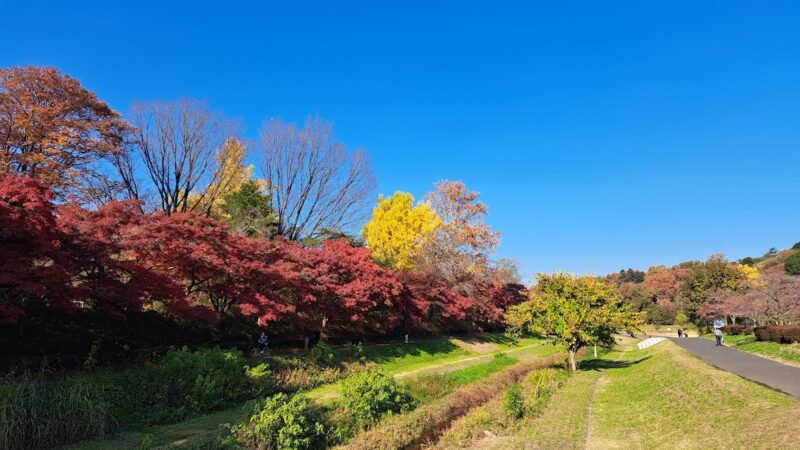
A beautiful walking path runs along the Nogawa River on the park’s southern side. The babbling river makes for pleasant walks away from urban hustle and bustle. About 40 species and 600 cherry trees line the Nogawa, offering spectacular cherry blossom avenues in spring. In autumn, maples turn vibrant red, making the area renowned for fall foliage.
Meadow Area
The expansive meadow is an open space perfect for picnics, ball games, kite flying, and various recreational activities. Weekends see families spreading out picnic blankets and enjoying leisurely time.
Woodland Area
The woodland area retains strong traces of Musashino’s character, with deciduous broadleaf trees like Kunugi, Konara, and Egonoki. Forest floors host wildflowers, and numerous insects and wild birds inhabit the space. Ideal for nature observation and forest bathing, this healing spot makes visitors forget they’re in an urban area.
Barbecue Area
Musashino Park has a reservation-based barbecue area with roofed facilities, allowing BBQ enjoyment regardless of weather. Prior reservation is required, with early booking recommended during peak season.
Usage Information
- Reservation required (by phone or online)
- Paid facility
- Hours: 10:00 AM–4:00 PM (varies by season)
- No equipment rental or food sales; bring your own supplies
Baseball Field and Sports Facilities
The park has a baseball field used by local baseball and softball teams, requiring prior application. The wide meadow allows free play of catch, frisbee, and similar sports.
Seasonal Highlights
Spring: Cherry Blossom Season
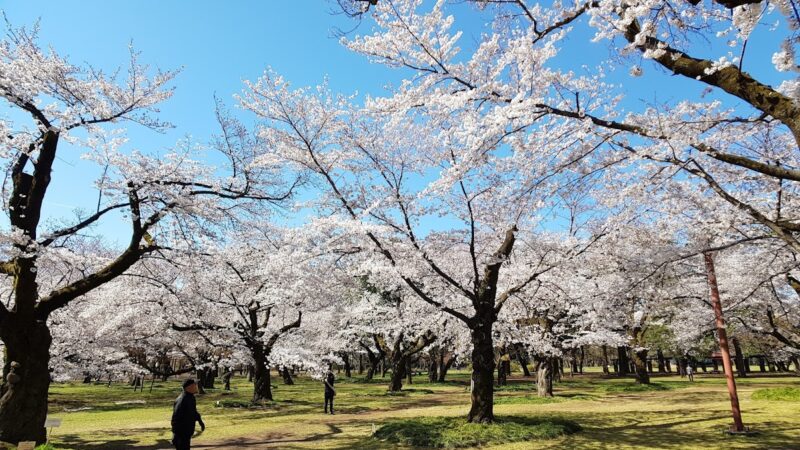
Musashino Park’s spring features approximately 40 species and 600 cherry trees in bloom. With Somei Yoshino, Yamazakura, Satozakura, and other varieties, cherry blossoms can be enjoyed from late March through late April.
The cherry avenue along the Nogawa is spectacular, with blossoms reflected in the river serving as a popular photo spot. Viewing from Kujira-yama offers magnificent park-wide views tinged with pink. Despite many visitors during blossom season, the vast grounds feel uncrowded, allowing relaxed flower viewing.
Summer: Lush Green Retreat
Summer transforms Musashino Park into a cool, verdant space. Woodland shade acts as natural air conditioning, feeling 2-3 degrees cooler than downtown. Enjoy water play in the Nogawa, picnicking in meadows, and barbecues. Early morning bird songs make it ideal for birdwatching, while insect observation of beetles and stag beetles attracts children.
Autumn: Autumn Foliage Beauty
From mid-November through early December, Musashino Park becomes a fall foliage destination. Maples planted along the Nogawa turn brilliant red, while woodland Konara and Kunugi shift yellow to brown. Foliage reflected in the river’s calm surface is breathtaking. The nursery area offers varied tree foliage observation. Walking fallen leaf-carpeted woodland paths produces soothing rustling sounds, fully capturing autumn’s essence.
Winter: Natural Observation in Silence
Winter at Musashino Park sees few visitors, offering solitary natural enjoyment. Bare woodland reveals bird species usually hidden by leaves. Winter birds like Daurian Redstart, Pale Thrush, and Dusky Thrush visit, ideal for birdwatchers. Frost-covered mornings are mystical and photograph-worthy. Clear air makes Kujira-yama views the year’s most pristine.
Recommended Ways to Enjoy the Park
For Families
Musashino Park welcomes families with children. Wide meadows allow ball games, badminton, and kite flying. Kujira-yama serves as an excellent playground for climbing and sliding. River water play and creature observation are popular, with small fish, crayfish, and crabs discoverable in shallows, ideal for nature learning.
Stroller-friendly paved paths exist, though some unpaved sections benefit from larger strollers.
For Couples and Dates
Nogawa riverside paths are popular date routes, especially during spring blossoms and autumn foliage. Picnic dates with blankets are recommended. Nearby parks like Nogawa Park and Fuchu no Mori Park enable park-hopping date plans.
For Seniors and Walking Enthusiasts
Flat, easy walking paths suit seniors and walkers. Nogawa riverside paths particularly encourage leisurely walks with river sounds. The nursery area offers relaxing botanical observation. Numerous benches allow self-paced enjoyment.
For Photography and Nature Observation Enthusiasts
Musashino Park is an excellent photography spot showing seasonal variety: spring blossoms, summer greenery, autumn foliage, and winter frost scenes. Known for birdwatching, woodland and riverside areas host diverse species, with early morning and evening providing optimal observation chances.
Plant photography thrives in the nursery area, capturing rare trees and seasonal flowers.
Nearby Recommended Spots
Neighboring Parks
Nogawa Park
Adjacent metropolitan park continuing across the Nogawa River from Musashino Park, featuring nature observation gardens, barbecue areas, and large lawns. Recommended to visit together.
Fuchu no Mori Park
Major Fuchu municipal park housing museums and art galleries, about 10 minutes’ drive away.
Koganei Park
One of Tokyo’s largest parks, famous for cherry blossoms. Beyond walking distance but accessible by bicycle or car.
Dining Spots
Kissaten ya Maroko
Popular nearby café featuring house-roasted coffee and homemade cake. Perfect post-walk refreshment.
Tama Station Area Restaurants
Nearby Tama Station vicinity offers cafés, restaurants, and Japanese eateries, with many beloved local hidden gems.
Tourist and Recreation Spots
Tokyo Race Course
Fuchu’s Japan Racing Association facility with family areas and amusement spaces on non-race days, about 10 minutes’ drive.
Fuchu City Hometown Museum Park
Comprehensive park with museum, planetarium, and restored historic homes; known for plum blossoms.
Tokyo Strawberry Café
Fuchu-based strawberry dessert specialty store with popular seasonal menus.
Accommodations
Marroad Inn Tokyo
Business hotel near Musashisakai Station with good park access, convenient for extended stays and sightseeing bases.
Fuchu and Chofu Area Hotels
Multiple business and city hotels near Fuchu and Chofu stations offer convenient sightseeing bases.
Event Information
Musashino Park hosts various year-round events.
Nature Observation Sessions
Seasonal plant and bird observation events with expert commentary.
Tree Cultivation Viewing
Special viewing events of nursery tree cultivation operations held irregularly.
Cherry Blossom and Foliage Festivals
Spring and autumn events in collaboration with surrounding merchants and community groups.
Consult Musashino Park Service Center or official websites for event details.
Usage Notes and Manners
Park Usage Rules
- Remove all trash: No park trash bins available.
- No fire use: Fire prohibited outside barbecue areas.
- Dog walking: Leash required; remove waste.
- No bicycles: Cycling prohibited outside designated areas.
- Plant collection prohibited: Plant and insect collection forbidden.
- Drone flight prohibited: Unauthorized drone flight forbidden.
Safe Enjoyment Tips
- Summer heat prevention: Drink water frequently despite abundant shade.
- Insect repellent: Summer mosquitoes necessitate repellent spray.
- Rainy weather caution: Nogawa flooding possible; avoid water areas during/after rain.
- Child supervision: Prevent separation in expansive grounds.
Conclusion: Musashino Park’s Appeal
Musashino Park, spanning Fuchu and Koganei cities, is a valuable metropolitan park retaining Musashino’s natural character. Featuring Nogawa woodlands, meadows, and nurseries with diverse seasonal appeal, the park offers free year-round admission, enabling visits from early morning walks to evening strolls.
Its appeal extends to families, couples, seniors, and photographers across generations. For those seeking natural parks in the Kanto region or wishing Tokyo’s rural character experience, Musashino Park is ideal. Visit and experience Musashino’s natural charm.