Koganei Park, Tokyo: Complete Guide – Attractions and Access Information for a Vast Metropolitan Park
Koganei Park, spanning across four cities—Koganei, Kodaira, Nishi-Tokyo, and Musashino in Tokyo—covers approximately 80 hectares (about 800,000 square meters), making it one of the largest metropolitan parks in Tokyo. With an area 4.8 times larger than Hibiya Park and 1.4 times larger than Ueno Park, this vast grounds feature natural forests reminiscent of Musashino, sprawling grassy lawns, and a “Cherry Blossom Garden” with approximately 1,400 cherry trees, offering opportunities to enjoy nature throughout the four seasons.
This article comprehensively covers everything you need to know to fully enjoy this vast park, from its history and highlights to facility information, seasonal attractions, and detailed access methods.
History and Overview of Koganei Park
Origins in the 2,600th Anniversary of the Imperial Era Commemoration Project
Koganei Park originated from the “Koganei Great Green Space,” planned as part of the 2,600th Anniversary of the Imperial Era Commemoration Project in 1940. After World War II, it was temporarily used as a temporary residence for the Crown Prince. Following land reform that resulted in the loss of approximately 60% of the original plan, it officially opened as a Tokyo Metropolitan Park in 1954.
Park Scale and Characteristics
The official name is “Tokyo Metropolitan Koganei Park,” with an area of approximately 78-80 hectares. It is the largest park among metropolitan parks and is designated as a broad-area park. Located alongside the Tamagawa Canal, it inherits the tradition of the cherry tree-lined embankment of the historic Tamagawa Canal and is known as one of Tokyo’s premier cherry blossom viewing spots.
The park features expansive grasslands, Musashino deciduous forests, a cherry blossom garden, a children’s playground, sports facilities, and the Edo-Tokyo Museum of Architecture, accommodating numerous visitors year-round.
Highlights of Koganei Park
Cherry Blossoms: A Spring Landscape Painted by Approximately 1,400 Trees
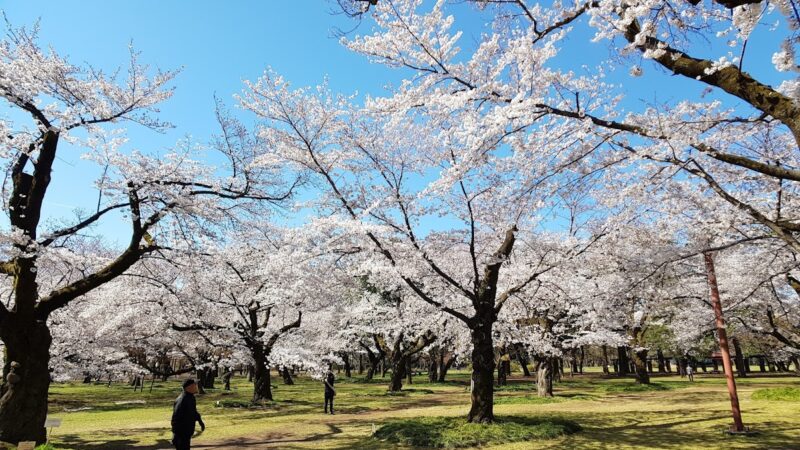
The park’s greatest highlight is undoubtedly the spring cherry blossoms. The grounds are planted with approximately 1,400 to 2,000 cherry trees, featuring diverse varieties including Yamato cherry, Ōshima cherry, Somei Yoshino, and Sato cherry.
The “Cherry Blossom Garden” in particular concentrates approximately 400 cherry trees, creating a spectacular landscape during the blooming season. After the original cherry trees lining the Tamagawa Canal embankment died, the saplings planted when the park opened have matured into large trees. Today, as one of Tokyo’s premier flower-viewing spots, the park draws large crowds each spring.
Edo-Tokyo Museum of Architecture: An Open-Air Museum of Historic Buildings
Adjacent to Koganei Park is the “Edo-Tokyo Museum of Architecture,” operated by the public interest incorporated foundation Tokyo Metropolitan Cultural Foundation. This outdoor museum preserves, restores, and displays historic structures from the Edo period through the early Showa era, exhibiting 30 buildings in their original forms.
Visitors can observe diverse architectural styles including thatched-roof farmhouses, merchant houses, bathhouses, and Western-style buildings, experiencing the transformation from Edo to Tokyo firsthand. Combining park exploration with a museum visit provides a more enriching day.
Expansive Grassy Lawns: Six Open Spaces
Koganei Park features six scattered grassy lawns large enough for adults to play tag comfortably. Each area—Eucalyptus Lawn, Ikoi Lawn, Tsutsuji Hill Lawn, and others—has its own character, offering spaces for picnicking, ball games, badminton, and various other activities.
The grasslands, surrounded by deciduous forests reminiscent of Musashino, provide an openness that makes you forget you’re in the heart of the city, ideal for family outings and group leisure activities.
Children’s Play Areas: Wanpaku Hill and Sled Run
Wanpaku Hill
“Wanpaku Hill,” featuring large play equipment, is a popular spot among children. From equipment suited for upper elementary school students to facilities for younger children, play options cater to various ages. The area is well-equipped with composite structures, rope equipment, and slides for active play.
Sled Run
The artificial turf sled run is extremely popular with children. The thrill of sliding down the slope with a dedicated sled is compelling enough for repeated attempts. The design prioritizes safety, making it suitable even for young children.
Fluffy Dome
The fluffy dome, which bounces like a trampoline, is a perennially popular facility where children’s voices echo. With enough volume to keep families entertained all day, it’s an ideal park for families with children.
SL (C57) Display: A Must-See for Train Enthusiasts
A static display of SL (steam locomotive C57) within the park offers a rare opportunity to view an actual steam locomotive up close, attracting railroad enthusiasts and children. As a vehicle representing the golden age of Japanese railways in the Showa era, it holds significant historical value.
Facilities at Koganei Park
Sports Facilities
Tennis Courts
The park features 16 tennis courts available by reservation. With a substantial number of courts for a metropolitan park, it’s popular among tennis enthusiasts.
Archery Range
A full-scale archery range is available for archery practice and competitions, providing a valuable facility for enjoying this traditional martial art in a quiet environment.
Cycling Facilities
Koganei Park offers bicycle rentals ranging from 12 inches to 27 inches. Various sizes are available—adult bikes, children’s bikes with and without training wheels—to suit different users.
The park includes dedicated cycling courses and practice areas for young children, making it ideal for bicycle practice. Cycling through the vast park allows efficient exploration of attractions.
Dog Run (West Side of Eucalyptus Lawn)
A dog run is available on the west side of Eucalyptus Lawn for dog lovers. The spacious area allows dogs to run freely, providing quality time with your pet. Please confirm usage rules in advance.
Barbecue Area
Barbecuing is permitted in designated areas (advance reservation required), allowing visitors to enjoy outdoor cooking surrounded by nature with family and friends.
Shops and Rest Facilities
Multiple shops and vending machines throughout the park provide beverages and light snacks. Abundant benches and gazebos ensure comfortable rest areas for extended visits.
Seasonal Flower Viewing Information
Spring (March-May)
Cherry Blossoms (Late March-Early April)
The park’s highlight season. Approximately 1,400 cherry trees bloom simultaneously, drawing large crowds. Different varieties—Somei Yoshino, Yamato cherry, Ōshima cherry, and Sato cherry—bloom at different times, extending cherry viewing for extended periods.
Plum Blossoms (Late February-Mid-March)
Preceding the cherry blossoms, delicate red and white plum flowers announce spring’s arrival.
Flowering Dogwood (Late April-Early May)
White and pink flowers add elegance as spring ends.
Magnolia (Late March-Early April)
Pure white flowers bring freshness to spring parks.
Azalea (Late April-Mid-May)
Vivid azaleas bloom throughout Tsutsuji Hill Lawn area.
Halesia Carolina (May)
White flowers bloom in clusters, creating cloud-like beauty befitting the name.
Summer (June-August)
Deciduous forests deepen to lush green, providing cooling shade. Families enjoy picnicking and games on expansive lawns.
Autumn (September-November)
Fragrant Olive (Late September-Early October)
Sweet fragrance drifts throughout the park, signaling autumn’s arrival.
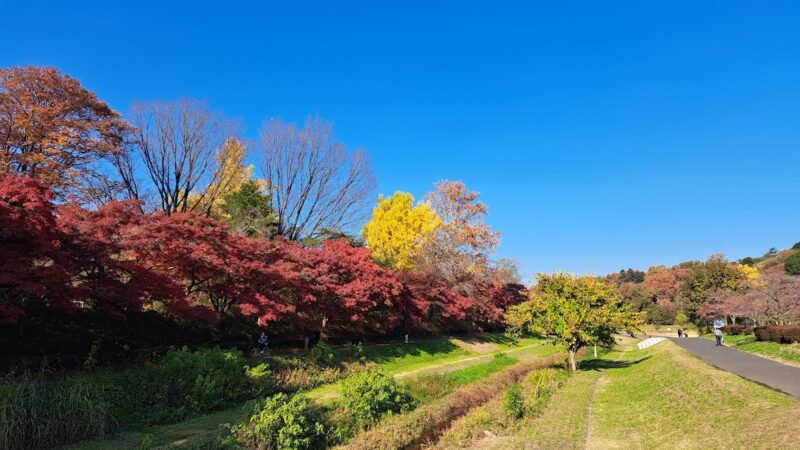
Fall Foliage (Mid-November-Early December)
Leaves of Japanese chestnut, Japanese oak, tupelo, zelkova, Chinese parasol, and Korean elm turn colors, creating autumn landscapes. The colorful foliage of large trees like yellowwood, Japanese horse chestnut, and Japanese chinquapin is particularly impressive.
Winter (December-February)
With deciduous trees bare, winter sunlight filters through branches, creating a quiet, peaceful atmosphere. Clear air offers extended views.
Access: Getting There by Train, Bus, and Car
Train and Bus Access
Since no railway station directly adjoins Koganei Park, access is by bus or on foot from nearby stations.
From JR Chuo Line “Musashikoganei Station”
By Bus (North Exit Platforms 2-3)
- Seibu Bus to “Koganei Park Nishi-guchi” (West Entrance) – 5 minutes on foot
- Kanto Bus to “Edo-Tokyo Museum of Architecture,” “Koganei Park,” or “Sports Center Entrance” – immediately nearby
On Foot
Approximately 25 minutes (approximately 2km)
From Shinjuku Station to Musashikoganei Station via JR Chuo Line rapid takes approximately 25 minutes, offering convenient access.
From JR Chuo Line “Higashi-Koganei Station”
By Bus (North Exit Bus Stop)
- CoCo Bus (Koganei City Community Bus) to “Koganei Park Entrance” – immediately nearby
On Foot
Approximately 20 minutes (approximately 1.6km)
From Seibu Shinjuku Line “Hanakoganei Station”
By Bus (South Exit Bus Stop)
- Seibu Bus to “Koganei Park Nishi-guchi” (West Entrance) – 5 minutes on foot
On Foot
Approximately 20 minutes (approximately 1.5km)
Car Access
Routes from Major Roads
From Chuo Expressway
- Approximately 20 minutes from Chofu IC
From Kan-Etsu Expressway
- Approximately 40 minutes from Nerima IC
Parking Information
Koganei Park has three paid parking facilities.
First Parking Area
- Capacity: Approximately 100 vehicles
- Location: North side of park, near Edo-Tokyo Museum of Architecture
Second Parking Area
- Capacity: Approximately 100 vehicles
- Location: East side of park
Third Parking Area
- Capacity: Approximately 50 vehicles
- Location: South side of park
Parking Rates (as of 2024)
- Standard vehicles: ¥300 for 1 hour, ¥100 for each additional 30 minutes
- Maximum daily rates apply (check official website for details)
Important Notes
- During cherry blossom season (late March-early April) and event dates, expect severe congestion
- If full, use surrounding paid parking or public transportation (recommended)
- Parking facility hours may vary seasonally
Bicycle Access
Multiple bicycle parking areas throughout the park offer free parking. Cycling from nearby residential areas is convenient.
Enjoying Koganei Park: Scene-by-Scene Recommendations
Family Visits
- Morning: Let children play freely at Wanpaku Hill or the sled run
- Midday: Picnic lunch on spacious lawns
- Afternoon: Historical education at Edo-Tokyo Museum of Architecture (admission fee)
- Evening: Bicycle practice on cycling courses
Cherry Blossom Season
- Early morning visits: Avoid crowds and enjoy cherry blossoms peacefully
- Cherry Blossom Garden tour: Focus on the concentrated 400-tree area
- Bring a mat: Relax leisurely on lawns for flower viewing
- Photography: Capture photos of diverse cherry varieties
Couples and Friends
- Strolling dates: Walk deciduous forests and enjoy nature
- Cycling: Rent bicycles and efficiently explore vast grounds
- Barbecuing: Reserve space for outdoor cooking
- Sports: Play tennis or badminton for exercise
Pet Owners
- Dog run use: Allow pets to run freely
- Walking routes: Explore grounds with pets (leash required)
- Picnic together: Enjoy picnics with your pet
Solo Visitors
- Jogging/walking: Exercise through spacious grounds
- Reading: Read quietly on shaded benches
- Photography: Photograph seasonal nature and historic structures
- Sketching: Draw beautiful landscapes
Event Information
Various events occur year-round at Koganei Park.
Regular Events
- Cherry Blossom Festival (Late March-Early April): Celebrations during cherry bloom season
- Flea Markets: Regularly held large-scale markets
- Sports Events: Running races, tennis tournaments, etc.
- Nature Observation Tours: Learn about seasonal plants and wildlife
Edo-Tokyo Museum of Architecture Events
- Traditional Craft Demonstrations: View Edo craftspeople’s techniques
- Seasonal Celebrations: Hinamatsuri, Tanabata, moon-viewing, etc.
- Special Exhibitions: Themed exhibitions
Check the Public Interest Incorporated Foundation Tokyo Metropolitan Park Association’s official website or Koganei Park’s official page for the latest event information.
Usage Information and Basic Details
Hours and Closures
Koganei Park
- Hours: Open year-round (some facilities have time restrictions)
- Closed: Never (some facilities have closure days)
- Admission: Free
Edo-Tokyo Museum of Architecture
- Hours: April-September 9:30-17:30, October-March 9:30-16:30
- Closed: Mondays (if a holiday, the following day), year-end/new year
- Admission: General ¥400, 65+ ¥200, University students ¥320, Middle school and under free
Contact Information
Koganei Park Service Center
- Phone: 042-385-5611
- Address: 1-13-1 Sekino-cho, Koganei, Tokyo
Edo-Tokyo Museum of Architecture
- Phone: 042-388-3300
- Address: 3-7-1 Sakura-cho, Koganei, Tokyo
Park Map
Park maps are available at entrances and the service center. PDF versions can also be downloaded from the Public Interest Incorporated Foundation Tokyo Metropolitan Park Association’s official website. Given the park’s vastness, obtaining a map before exploring is recommended for first-time visitors.
Nearby Tourist Attractions
Tamagawa Canal
The Tamagawa Canal flowing alongside Koganei Park is a historic waterway built during the Edo period. Walking paths are maintained, making it ideal for strolling.
Musashino Nature
Deciduous forests and parks retaining Musashino’s character scatter throughout the area surrounding Koganei Park. Visiting Nogawa Park, Musashino Park, and other green spaces is recommended.
Koganei City Cultural Facilities
Koganei City houses cultural facilities like the Koganei City Cultural Heritage Center where visitors can learn regional history and culture.
Important Notes for Visiting Koganei Park
Items to Bring
- Leisure mat: Convenient for relaxing on lawns
- Sunscreen/hat: Summer sun is intense
- Insect repellent: Necessary seasonally given the abundant nature
- Beverages: Remember hydration in this large park
- Trash bags: Take all trash with you
Etiquette
- Take trash with you: Please help keep the park clean
- No plant collection: Don’t pick flowers or branches
- Pet etiquette: Keep leashes on and take waste with you
- Noise consideration: Be considerate of other visitors
- No fires: Open fires prohibited outside designated areas
Crowded Periods
- Cherry blossom season (late March-early April): Most crowded
- Golden Week: Busy with families
- Weekends/holidays: Busier than weekdays
To avoid crowds, visit on weekdays in the morning or during seasons other than cherry blossom season.
Conclusion: Enjoying Koganei Park Through the Seasons
Koganei Park is a precious metropolitan park where visitors can fully enjoy vast nature despite being in Tokyo. With approximately 80 hectares of grounds offering spring cherry blossoms, summer greenery, autumn foliage, and winter serenity, the park holds four-season charm.
For families, it offers comprehensive play equipment and spacious lawns. For couples, scenic strolling and cycling await. Pet owners have dog runs, and even solo visitors can refresh amidst nature. The integrated Edo-Tokyo Museum of Architecture allows experiencing both nature and history, a major appeal.
Located just 25 minutes from Shinjuku by train and accessible by bus or foot from nearby stations, its convenience explains its popularity. While car access is possible, during cherry blossom season congestion makes public transportation recommended.
Koganei Park’s vast grounds reveal new discoveries with each visit. Visiting across seasons allows enjoying its different faces. Escape urban bustle and spend time embraced by Musashino nature at Koganei Park.
Check the Public Interest Incorporated Foundation Tokyo Metropolitan Park Association’s official website or Koganei Park’s official page for detailed information and current event schedules before visiting.