
Complete Guide to Nagara Railway (Gifu Prefecture) | Routes, Sightseeing Trains, History, and Fares Explained in Detail
The Nagara Railway, which runs north and south through the central Gifu Prefecture, is a local railway that runs along the Nagara River, one of Japan’s three major pristine rivers. Connecting Minota Station to Kitano Station over a total distance of 72.1 km, it serves as an important tourism resource offering scenic views of the clear stream and rural mountain landscapes, as well as a vital transportation lifeline for local residents. This article provides a comprehensive introduction to the charm of the Nagara Railway and practical information for using it.
About the Nagara Railway
Nagara Railway Co., Ltd. is a third-sector railway company headquartered in Seki City, Gifu Prefecture. It is funded by Gifu Prefecture, Gujo City, Seki City, and Mino Kasugai City, and operates by inheriting the former Japanese National Railways Etsumi Minami Line.
Basic Information
- Route Distance: 72.1 km (Minota Station to Kitano Station)
- Number of Stations: 38
- Gauge: 1,067 mm (narrow gauge)
- Electrification: Non-electrified (diesel railcar operation)
- Track Configuration: Single-track entire line
- Headquarters Location: 74-1 Motoshigecho, Seki City, Gifu Prefecture
The Nagara Railway starts at Minota Station, where the JR Takayama Main Line and Ota Line intersect, and runs through the valley of the Mino Mountains, passing through Tomika Town, Seki City, and Mino City before reaching Kitano Station in Gujo City. Running along the Nagara River for approximately 50 km, the greatest appeal is enjoying the scenic beauty of the clear stream through the train windows across all four seasons.
History of the Nagara Railway
Japanese National Railways Etsumi Minami Line Era
The history of the Nagara Railway goes back to the National Railways Etsumi Minami Line.
- 1923 (Taisho 12): Section from Minota to Mino Town (present-day Mino City) opens
- 1934 (Showa 9): Complete line opens to Kitano
- 1980 (Showa 55): Designated as a specific local railway line under the National Railways Reconstruction Act
The Etsumi Minami Line was constructed as part of the “Etsumi Line” concept, intended to connect Minota in Gifu Prefecture with Echizen in Fukui Prefecture. However, the complete line was never realized, and only the section from Minota to Kitano operated as the “Etsumi Minami Line.”
Transition to Third-Sector Operation
With the deteriorating management of the National Railways, the Etsumi Minami Line faced closure, but thanks to the enthusiasm of local residents and support from Gifu Prefecture, its continuation was decided.
- December 11, 1986 (Showa 61): Officially launches as Nagara Railway Co., Ltd. in third-sector format
- 1995 (Heisei 7): New stations installed and vehicles updated
- 2016 (Heisei 28): Sightseeing train “Nagara” begins operation
After the transition to third-sector operation, while pursuing operational efficiency, the company has actively undertaken initiatives for regional revitalization, including the installation of new stations, introduction of new vehicles, and operation of sightseeing trains.
Revitalization Through the “Nagara” Sightseeing Train
Facing continued harsh management conditions due to population decline and increased automobile use, the Nagara Railway introduced the sightseeing train “Nagara” in 2016 as a trump card for turning around the situation. This initiative attracted national attention, successfully attracting railway enthusiasts and tourists, and has become established as a new appeal of the Nagara Railway.
Routes and Stations
The Nagara Railway Etsumi Minami Line connects 38 stations from Minota Station to Kitano Station. The route crosses 10 bridges and passes through 12 tunnels, offering scenery rich in variety.
Introduction to Major Stations
Minota Station (Starting Point)
A transfer station connecting with JR Takayama Main Line and Ota Line, and the gateway to the Nagara Railway. As the central station of Mino Kasugai City, it serves as a key transportation hub in central Gifu Prefecture.
Seki Station
The central station of Seki City, known as the “blade town.” It serves as the gateway to Seki City, with convenient access to Seki City Hall and shopping streets.
Mino City Station
The central station of Mino City, serving as the base for tourism in Mino City, famous for its distinctive “utatsu” townscape. The station building features modern design and includes a tourism information center.
Gujo Hachiman Station
The nearest station to Gujo Hachiman, known for Gujo Hachiman Castle and Gujo Odori dance. The castle town atmosphere remains, with about a 20-minute walk to the town center, and buses are also available. Gujo Hachiman is a particularly popular tourist destination along the Nagara Railway line, attracting many visitors during the summer Gujo Odori season.
Minami Karitoyasu Station
A station in Minami Town, Gujo City, surrounded by the natural landscape of the pristine Nagara River. It serves as a base for outdoor activities such as fishing and camping.
Kitano Station (Terminal Station)
The terminal station located in Shiratori Town, Gujo City. Situated in a mountainous area at approximately 250 meters above sea level, the region is beautiful with winter snow scenes. It serves as the gateway to Shiratori Town, which retains the history of Hakusan faith.
Complete Station List
The complete 38 stations of the Nagara Railway Etsumi Minami Line are as follows:
Minota, Maehira Koen, Kamono, Tomika, Seki Tomioka, Sekiguchi, Hamono Kaikan Mae, Seki, Seki Shiyakusho Mae, Seki Shimoarechi, Matsumori, Mino City, Umeyama, Yunodo Onsen Guchi, Suhara, Haneno, Kio, Yasaka, Minami Kotatsu Onsen, Oya, Fukuno, Minami Karitoyasu, Akatsuka, Fukato, Aioi, Gujo Hachiman, Shizenen Mae, Yamada, Tokunaga, Gujo Yamato, Manba, Kami Manba, Ochu, Oshima, Mino Shiratori, Shiratori Kogen, Kitano
Each station is named to reflect the characteristics of its local area, and examples can be seen where tourism resources are incorporated into station names, such as “Hamono Kaikan Mae (Cutlery Hall Front),” “Yunodo Onsen Guchi (Hot Spring Entrance),” and “Minami Kotatsu Onsen (Minami Fertility Hot Spring).”
Appeal of the “Nagara” Sightseeing Train
Overview of “Nagara”
The “Nagara” sightseeing train began operation in April 2016 on the Nagara Railway. Designed by Eiji Mizooka, it is characterized by a red-toned exterior and an interior that conveys the warmth of wood.
Operating Plans
“Nagara” offers multiple plans that can be selected based on purpose and budget:
Lunch Plan
A full-course meal using ingredients from Gifu Prefecture, enjoyed with views of the Nagara River. Passengers can enjoy approximately a 5-hour round trip from Minota Station to Kitano Station.
Sweets Plan
A plan to enjoy sweets and beverages created by local pastry chefs while leisurely viewing the scenery from the windows. Popular with women’s groups and families.
View Plan
A plan to enjoy the scenery along the Nagara River line aboard the “Nagara” sightseeing train without meals included. It offers an affordable way to experience the atmosphere of the sightseeing train.
Gujo Odori Train (Summer Limited)
During the summer Gujo Odori season, special trains offering the experience of Gujo Odori dancing in the car are also operated.
How to Make Reservations
The “Nagara” sightseeing train operates on a completely reservation-only basis. Reservations can be made through the Nagara Railway’s official website. It is popular, especially on weekends and during the autumn foliage season, requiring early reservations.
Fare and Ticket Information
Regular Fares
Nagara Railway fares are set based on distance. Examples of fares for major sections (adult one-way):
- Minota to Seki: 320 yen
- Minota to Mino City: 540 yen
- Minota to Gujo Hachiman: 1,150 yen
- Minota to Kitano: 1,550 yen
Children’s fares are half the adult fare (rounded up to the nearest 10 yen).
Discounted Tickets
1-Day Free Pass
A ticket allowing unlimited boarding and alighting on the entire Nagara Railway line for one day.
- Adult: 2,700 yen
- Child: 1,350 yen
Perfect for enjoying sightseeing with stops at various points along the line. You can efficiently visit Mino City’s distinctive townscape, Gujo Hachiman Castle, roadside stations, and more.
2-Day Free Pass
Allows unlimited boarding and alighting on the entire Nagara Railway line for two consecutive days.
- Adult: 3,500 yen
- Child: 1,750 yen
Recommended for those who want to thoroughly explore the areas along the line.
Multiple-Ride Tickets
Multiple-ride tickets are also available for those who use the line regularly for commuting or school trips. An 11-ticket booklet costs the price of 10 tickets, offering savings.
IC Card Payment
IC cards (TOICA, Suica, etc.) cannot be used on the Nagara Railway. Tickets must be purchased at station ticket machines or onboard.
Vehicle Introduction
Diesel railcars are operated on the Nagara Railway. Since the line is non-electrified, all vehicles are equipped with diesel engines.
General Vehicles
Nagara 300 Series
The main vehicles introduced after the transition to third-sector operation. Operating in 2-car or single-car formations, they feature a friendly design suited to local railways. The vehicles feature color schemes inspired by the Nagara River and the natural scenery of the surrounding areas.
Nagara 500 Series
Newer vehicles introduced during the Heisei era, equipped with air conditioning and offering a more comfortable riding environment. The design shows consideration for accessibility.
“Nagara” Sightseeing Train Dedicated Vehicles
Modified existing vehicles are used for the “Nagara” sightseeing train.
Nagara Car 1 (Forest Car)
Features an interior with the warmth of wood and is used for lunch plans and similar services. Table seats are arranged to provide a comfortable dining space.
Nagara Car 2 (River Car)
Designed to fully enjoy views of the Nagara River through large windows, used for view plans and sweets plans.
Sights Along the Nagara Railway
Scenic Views from Train Windows
The greatest appeal of the Nagara Railway is the clear waters of the Nagara River and rural mountain scenery visible from the train windows.
Spring (March to May)
Cherry tree rows and fresh greenery are beautiful, with scenic spots along the Nagara River viewable from the train. The cherry blossoms around Seki and Mino cities are particularly impressive.
Summer (June to August)
The contrast between deep green mountains and the clear stream is striking. This is also the season for sweetfish fishing, where you can see people enjoying the sport in the river. Gujo Hachiman hosts “Gujo Odori,” a summer tradition.
Autumn (September to November)
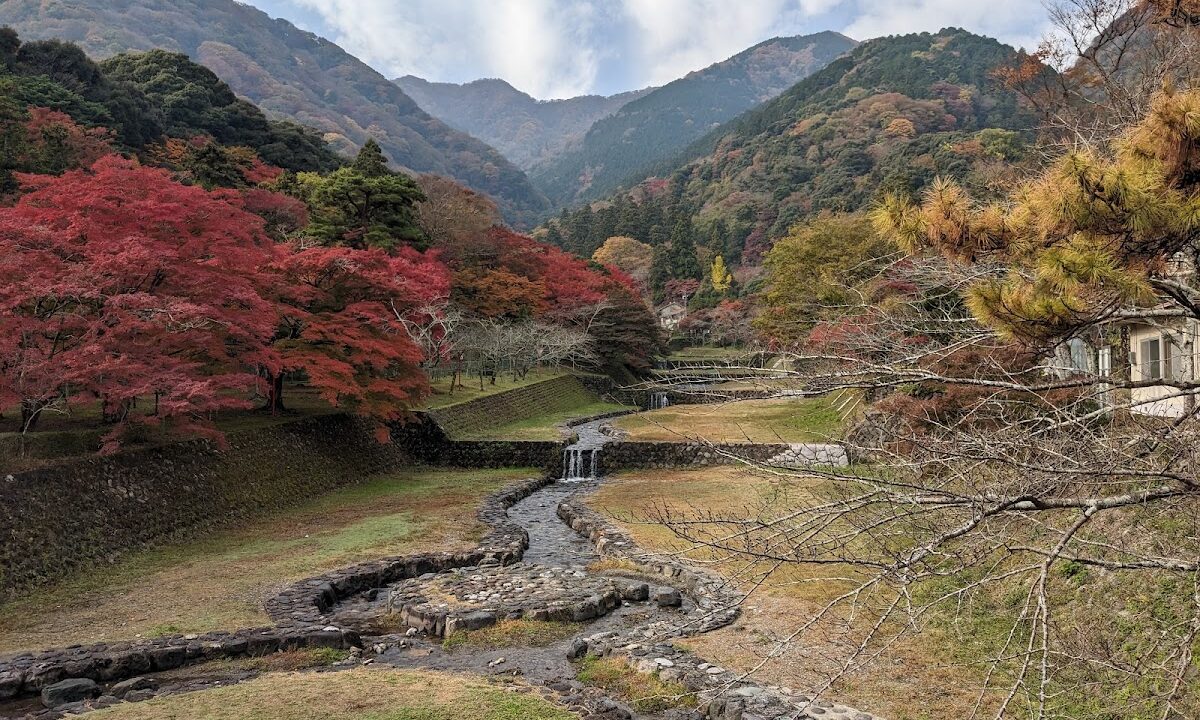
During the autumn foliage season, the mountains turn red and yellow, making the Nagara Railway line a spectacular spot. The best viewing period is from late October to early November.
Winter (December to February)
Snow scenes spread across the northern Shiratori and Kitano areas, offering a serene and beautiful landscape unique to winter. The snow-covered mountains and the Nagara River scenery are exceptional.
Sightseeing Spots Along the Line
Utatsu Townscape (Mino City)
Within walking distance of Mino City Station, this is a preserved traditional townscape from the Edo period designated as an Important Preservation District for Groups of Traditional Buildings. Merchant houses with distinctive “utatsu” (fireproof walls) line the streets, offering an atmosphere as if traveling back in time.
Gujo Hachiman Castle
Accessible by bus or on foot from Gujo Hachiman Station, this mountain castle offers panoramic views of the Gujo Hachiman townscape from its main keep, and sea of clouds may be visible in autumn.
Seki Forging Tradition Transmission Hall (Seki City)
A facility where you can learn the tradition of blade-making in Seki City, the town of cutlery. Located within walking distance of Seki Station, visitors can observe Japanese sword forging demonstrations and view cutlery exhibits.
Roadside Stations and Hot Spring Facilities
Multiple roadside stations and hot spring facilities are scattered along the line, allowing travelers to stop and enjoy local cuisine and hot springs. Some stations even have hot spring names incorporated into their station names, such as Yunodo Onsen Guchi Station and Minami Kotatsu Onsen Station.
How to Access
From Nagoya Area
From Nagoya Station or Gifu Station on the JR Tokaido Main Line, transfer to the JR Takayama Main Line and connect to the Nagara Railway at Minota Station.
- Nagoya Station to Minota Station: Approximately 1 hour via JR express
- Gifu Station to Minota Station: Approximately 30 minutes via JR local train
From Gifu City
Travel from Gifu Station on the JR Takayama Main Line toward Minota Station. Alternatively, you can also access Seki City or Mino City directly using Gifu Bus route buses.
By Automobile
Using the Tokai-Hokuriku Expressway, you can access each station from exits such as Mino IC, Gujo Hachiman IC, and Shiratori IC. Parking is available at major stations.
Shin-Gifu Station Connection Plan
In the past, plans were examined to extend the Nagara Railway to Shin-Gifu Station (now Meitetsu Gifu Station) in the center of Gifu City. This was intended to improve convenience and increase ridership, but the plan has not been realized due to construction costs and profitability concerns.
Improving access from Gifu City remains an issue, and future examination of this remains as a remaining task.
Usage Scenarios for the Nagara Railway
For Tourism
Elegant journeys on the “Nagara” sightseeing train and sightseeing around the line using 1-day free passes are popular. For railway enthusiasts, the atmosphere of the local line, vehicles, and scenic spots along the route are attractive photography locations.
Transportation for Local Residents
For residents along the line, it is an essential means of transportation for daily needs such as commuting, studying, shopping, and visiting medical facilities. It is particularly important for the elderly and students who cannot drive automobiles.
Event Trains
Various event trains are operated seasonally. Unique projects such as the Gujo Odori train, beer train, and cycling train are implemented to promote regional attractions.
Management and Issues of the Nagara Railway
Management Status
The Nagara Railway operates as a third-sector railway with support from Gifu Prefecture and riverside municipalities. Passenger numbers show a declining trend due to population decline and the growth of automobile-dependent society, and management continues to face harsh circumstances.
Finding a Path Through Tourism Promotion
The introduction of the “Nagara” sightseeing train has succeeded in developing tourism demand. With increased media coverage, tourists now visit from across the country. Enhancing its value as a tourism resource will be key to improving management in the future.
Cooperation with the Community
Working with riverside municipalities, tourism associations, and local residents, initiatives for community revitalization are being advanced, including town development projects centered on stations and the organization of railway-utilizing events.
Tips for Enjoying the Nagara Railway
Recommended Usage Methods
- Journey with stops using a 1-day free pass: Get off at stations of interest and enjoy town walks and meals
- Special experience aboard the “Nagara” sightseeing train: Enjoy an elegant train journey on commemorative or special occasions
- Participate in seasonal event trains: Experience limited-time event trains such as the Gujo Odori train
- Tour scenic photography spots: Visit excellent photography locations featuring the Nagara River and trains for railway photography enthusiasts
Useful Items to Bring
- Camera: To capture the scenic views from windows
- Timetable: Essential to check in advance, as train frequency is limited
- Tourism maps: To gather information on sightseeing sites along the line
- Beverages and light snacks: In-car sales are limited
Manners and Etiquette
- Eating and drinking in the car is permitted, but please take trash with you
- During crowded times, please offer your seat to others
- When photographing, be considerate not to inconvenience other passengers
- At unmanned stations, take a numbered ticket when boarding and pay the fare when alighting
Conclusion
The Nagara Railway is a charming local railway where you can experience the rich nature and regional culture of Gifu Prefecture. The 72.1 km line running along the Nagara River, one of Japan’s three most pristine rivers, serves as both a tourism resource for enjoying spectacular scenery across all seasons and a vital transportation lifeline for local residents.
With the arrival of the “Nagara” sightseeing train, it has attracted national attention and proposes a new travel style. Scattered along the line are attractive tourist attractions such as the distinctive townscape of Mino City, the castle town of Gujo Hachiman, and Seki City’s blade-making culture, allowing for journeys with stops along the way.
While facing challenges such as population decline and the growth of automobile-dependent society, the Nagara Railway continues to create new value through tourism promotion and cooperation with the community. When visiting Gifu Prefecture, be sure to board this charming local railway and experience the clear stream and rural mountain landscape, as well as the culture along the line. The leisurely train journey is sure to provide a special time that makes you forget your daily life.
-800x450.jpg)
-800x450.jpg)
-800x450.jpg)