
Complete Guide to Akita Komagatake | Akita Prefecture’s Highest Peak – Mountaineering, Alpine Plants, and Access Information
Akita Komagatake is an active volcano straddling Senboku City in Akita Prefecture and Shizuishi Town in Iwate Prefecture, with an elevation of 1,637m representing Akita Prefecture’s highest peak. Composed of multiple peaks including Onnamedake (female peak) as the highest point, Odake (male peak), Medake (female peak), Yokodake, and Kodake, this composite volcano is located at the southern end of Towada Hachimantai National Park. It is recognized as one of the prominent peaks in the Tohoku region, selected as one of Japan’s 200 Famous Mountains and the 100 Famous Mountains of Tohoku.
The Charm and Characteristics of Akita Komagatake
A Treasure Trove of Alpine Plants Known as the “Mountain of Flowers”
The greatest appeal of Akita Komagatake is its abundant alpine flora, acclaimed as the finest in northern Japan. At the relatively low elevation of around 1,600m, you can enjoy alpine plants that typically bloom on 3,000m peaks in the Japanese Alps, earning it the nicknames “Flower Mountain” and “Flower Paradise.”
The variety extends to several hundred species, designated as a National Natural Monument as the “Akita Komagatake Alpine Plant Zone.” It is also designated as a special alpine plant protection area, with rare plants carefully preserved.
Magnificent Views from the Summit
A 360-degree panorama spreads from the summit. To the east lies Iwate Mountain, to the west Mount Chokai, to the north Hachimantai and Mount Moriyoshi—all major peaks of Tohoku come into view. The deep blue of Lake Tazawa spread below is particularly striking, offering the perfect vantage point to enjoy the beauty of Japan’s deepest lake at 423m from above. On clear days, Mount Iwaki in distant Aomori Prefecture may even be visible.
Geological Value as an Active Volcano
Akita Komagatake is an active volcano that continues to show activity today. This composite volcano features two different craters (eruption centers) on its southwest and northeast sides, with small-scale eruption activity occurring from 1970 to 1971. The rugged terrain characteristic of volcanic formations and landscapes such as Goshiki-numa (Five-Colored Pond), a crater lake, add to its appeal.
Alpine Plants by Season and Optimal Viewing Times
Late June to Early July: Early Summer Flowers
Flowers begin blooming en masse as snow melts. Iwakagami, Miyamakimbai, Chinguruma and other species paint the hiking trail. The sight of white chinguruma flowers blooming in colonies is particularly spectacular. Patches of remaining snow at this time create beautiful contrasts with the flowers.
Mid-July to Early August: Peak Flower Season
The alpine flora reaches its peak, the most vibrant season for Akita Komagatake. Around Amidaike Pond, known as “Moomin Valley,” yellow Nikko Kisuge spreads across the entire area, creating a carpet of flowers—a truly spectacular sight.
Representative flowers visible during this period:
- Nikko Kisuge: Magnificent yellow mass flowering
- Komasakura: Queen of alpine plants, native to the male peak area
- Takanesumire: Endemic to the Tohoku region
- Ezo Azalea: Delicate pink flowers
- Hakusan Chidori: Beautiful purple flower spikes
- Yotsuba Shiogama: Distinctive reddish-purple flowers
Mid-August to September: Arrival of Autumn
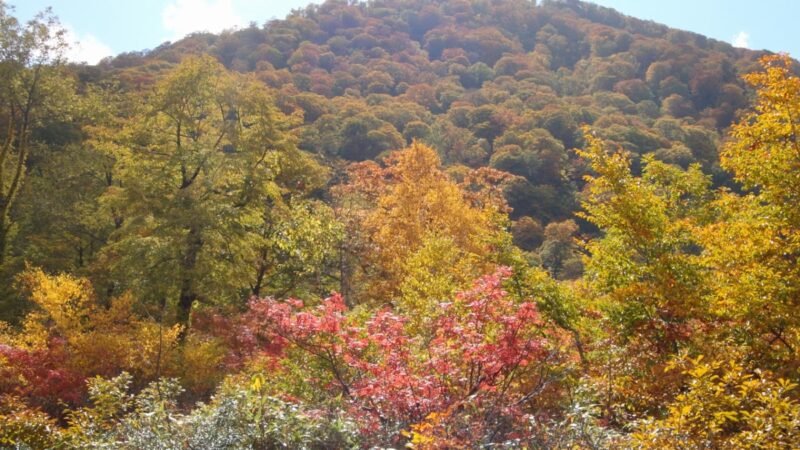
Summer flowers fade and autumn gradually approaches. Ezo Oyama Rindou and other autumn flowers bloom, and autumn grass coloring begins. From late September, the foliage season arrives, with Nanakamadonoki and Dakekanba painting the mountainside in red and gold.
Major Climbing Routes and Model Courses
Hachigome Route (Most Popular Standard Course)
Access: Approximately 30 minutes by car from Tazawa Lake Plateau to the Akita Komagatake Hachigome Trailhead
Course Time: Round trip approximately 4-5 hours
- Hachigome Trailhead (elevation 1,300m) → Amidaike Refuge Hut (approximately 1 hour)
- Amidaike Refuge Hut → Onnamedake Summit (approximately 40 minutes)
- Descent: Onnamedake Summit → Hachigome Trailhead (approximately 2 hours)
Features: Starting from the highest possible trailhead makes day climbing possible even for beginners. The trail from the trailhead to Amidaike Pond features gently graded wooden walkways offering an easy-to-walk route. The “Moomin Valley” area around Amidaike Pond showcases massive Nikko Kisuge colonies from mid-July through early August.
From Amidaike to the Onnamedake summit involves a somewhat steep climb, but the distance is short with magnificent views of Lake Tazawa and Mount Iwate from the summit. The descent route via Odake (elevation 1,623m) is also recommended, passing through a Komasakura colony.
Kokuken Onsen Route (Iwate Prefecture Side)
Access: From Kokuken Onsen Trailhead
Course Time: Round trip approximately 6-7 hours
- Kokuken Onsen Trailhead → Yokodake (approximately 2 hours 30 minutes)
- Yokodake → Onnamedake Summit (approximately 1 hour)
Features: An approach from Iwate Prefecture offering a longer itinerary than the Hachigome route but with more varied climbing experiences. The views from Yokodake are equally splendid, making this route popular with climbers seeking quieter mountain experiences.
Nyutou Mountain Traverse Route (Advanced Climbers)
Course Time: One night/two days or full day for experienced hikers (approximately 8-10 hours)
A serious mountaineering route traversing both Akita Komagatake and Nyutou Mountain. Features long ridge walks with excellent views but requires significant stamina and experience due to distance. Descent into Nyutou Onsen provides the bonus of enjoying hot springs after the climb.
Mountaineering Preparation and Precautions
Clothing and Equipment
The 1,600m alpine zone is more than 10 degrees colder than lowland areas with changeable weather, requiring thorough preparation.
Essential Equipment:
- Mountaineering boots (hiking shoes or above)
- Waterproof rain jacket and pants (water-resistant, breathable material)
- Insulating layer (fleece or down jacket)
- Hat and gloves
- Headlamp (with spare batteries)
- Map, compass, GPS
- Sufficient water (1.5-2 liters)
- Energy and emergency food
- First aid kit
Weather and Climbing Season
Climbing Season: Late June to early October
Snow typically melts around mid-June, with trails opening by late June. From November onward, snow accumulation requires winter mountaineering equipment and technical skills.
Summit weather changes rapidly—clear skies can suddenly turn to fog or thunderstorms. Always check the weather forecast beforehand and exercise good judgment in retreating during bad weather.
Alpine Plant Protection Etiquette
Akita Komagatake is designated as a special alpine plant protection area where plant collection is strictly prohibited. To prevent trampling, observe the following rules:
- Do not leave marked trails
- Always use wooden walkways where provided
- Photograph within the trail
- Always use pole caps on walking sticks
- Carry all trash away
Access and Surrounding Information
Access to Hachigome Trailhead
By Car:
- From “Morioka IC” on the Akita Expressway: approximately 50km, approximately 1 hour
- From “Morioka IC” on the Tohoku Expressway: approximately 60km, approximately 1 hour 20 minutes
- From Tazawa Lake Station: approximately 30km, approximately 40 minutes
Parking: Hachigome Parking Area (free, approximately 200 spaces)
Public Transportation:
During climbing season (late June to early October), bus service operates from JR Tazawa Lake Station to the Hachigome Trailhead. However, service is limited, so checking the schedule beforehand is recommended.
Approach from Tazawa Lake Plateau
The route to Hachigome Trailhead goes via Tazawa Lake Plateau through the Akita Komagatake Line (Prefectural Road 127). This road is open from late June through late October and closed during winter. The road is paved but has many curves and narrow sections requiring careful driving.
Nearby Accommodations
Tazawa Lake Plateau Area:
- Numerous hotels, pensions, and inns available
- Convenient for pre-climb and post-climb stays
Nyutou Onsen Area:
- A famous hot spring destination known for secluded nature
- Ideal for relaxing after climbing
- Seven hot spring inns including Tsuru-no-Yu, Taeno-Yu, and Kuro-Yu
Mountain Huts:
- Amidaike Refuge Hut: Emergency shelter (unmanned, free)
Nearby Attractions
Lake Tazawa
A mystical lake boasting Japan’s greatest depth at 423m. Its brilliant lapis lazuli surface is called “Tazawa Lake Blue,” representing a scenic landmark of Akita. The golden “Tatsuko Statue” on the shore tells the legend of the beautiful maiden “Princess Tatsuko.” A roughly 20km cycling route circles the lake.
Nyutou Onsen Area
A secluded hot spring region at the base of Akita Komagatake. Seven hot spring inns each maintain independent sources with different mineral compositions and atmospheres. Tsuru-no-Yu’s mixed-gender open-air bath is particularly famous for its milky-white waters. Combining mountaineering with hot springs is a popular itinerary.
Tamagawa Onsen
One of Japan’s most strongly acidic hot springs, known as a therapeutic bathing destination. Its heated rock bath is famous, drawing many visitors seeking health benefits.
History and Culture of Akita Komagatake
Origin of the Mountain’s Name
The name “Komagatake” comes from a snow formation on the mountainside during snow melt season that resembles a horse (koma). While multiple Komagatakes exist in the Tohoku region, this one is called “Akita Komagatake” as seen from Akita Prefecture’s side.
Eruption History
Akita Komagatake has multiple recorded eruptions in recorded history. The largest eruption occurred from 1970 to 1971 with small-scale activity near Medake. Volcanic activity continues today with constant monitoring by the Japan Meteorological Agency.
Basic Information
Mountain Name: Akita Komagatake
Elevation: 1,637m (Onnamedake/highest point)
Location: Senboku City, Akita Prefecture; Shizuishi Town, Iwate Prefecture
Mountain Range: Ou Mountain Range
Type: Active volcano (Rank B)
Designations: Japan’s 200 Famous Mountains, 100 Famous Mountains of Tohoku, Mountains of Flowers
National Park: Towada Hachimantai National Park
Natural Monument: Akita Komagatake Alpine Plant Zone (nationally designated)
Climbing Season: Late June to early October
Day Climbing: Possible (Hachigome route)
Difficulty: Beginner to intermediate (depending on route)
Annual Climbing Trends
Climbers concentrate on Akita Komagatake during the alpine flora’s peak from mid-July through early August. Particularly during late July weekends when Nikko Kisuge reaches its peak, parking areas often fill to capacity.
To avoid crowds, early summer from late June to early July or September’s foliage season are recommended. Weekdays see fewer climbers than weekends, allowing for quieter mountain experiences.
Photography Tips
Moomin Valley (Amidaike Area)
A standard composition combines the massive Nikko Kisuge colony with Amidaike Pond and Onnamedake in the background. Early morning light is particularly beautiful with dew-covered flowers glimmering.
Lake Tazawa from Onnamedake Summit
The deep blue of Lake Tazawa spreading below the summit makes an excellent subject. Clear mornings offer the most beautiful coloring, with wide-angle lenses capturing both the lake and surrounding mountains.
Odake Komasakura Colony
Delicate komasakura blooming on volcanic rubble creates a striking contrast against the barren landscape. Macro lens close-ups are popular but stay within the trail to avoid trampling.
Conclusion
Akita Komagatake is a renowned peak boasting Akita Prefecture’s highest elevation, unparalleled alpine flora among Tohoku mountains, and magnificent vistas. The Hachigome route allows rapid summit access in relatively short time, making it popular with climbers from beginners to experienced mountaineers.
Especially during summer’s flower season, the opportunity to enjoy 3,000m alpine plants at merely 1,600m elevation is a precious experience. The Nikko Kisuge carpet in Moomin Valley, komasakura colonies on Odake, and the view of Lake Tazawa from the summit are must-see landscapes.
Post-climb activities are equally abundant, with Lake Tazawa and Nyutou Onsen providing excellent tourist attractions, allowing enjoyable trips combining mountains, hot springs, and lakeside scenery. Respecting alpine plant protection etiquette while visiting Akita’s renowned flower mountain—why not make the trip?