Sanno Pass, Fukushima Prefecture: Complete Guide | Autumn Foliage, History, Access Information
Sanno Pass (Sanno Tōge) is located on the border between Minamiaizu Town, Minamiaizu District, Fukushima Prefecture and Nikko City, Tochigi Prefecture, at an elevation of approximately 900 meters. It is known not only as one of the prefecture’s most popular autumn foliage viewing spots but also as a key point on a historic highway dating back to the Edo period, cherished by many travelers and mountain climbing enthusiasts.
This article provides comprehensive information to help you plan a visit to Sanno Pass, covering its attractions, history, access methods, and nearby tourist spots.
Basic Information and Geographic Characteristics of Sanno Pass
Sanno Pass is located on the border between Fukushima and Tochigi Prefectures, at a crucial point connecting the Kanto region and the Aizu region most directly. The pass crosses a watershed at the boundary between Iwashiro Province (Fukushima Prefecture) and Shimotsuke Province (Tochigi Prefecture), playing an extremely important geographic and historic role.
Today, the “Sanno Tunnel,” which opened in 1980, runs nearly directly below the pass, creating a rare section where three national roads—Route 121, Route 352, and Route 400—overlap. Such sections where three national roads overlap are extremely rare throughout Japan.
The pass stands at an elevation of approximately 900 meters and is surrounded by abundant natural beauty. The Yagan Railway Aizu-Kinugawa Line’s Sanno Tunnel also passes through the west side of the pass, and the pass continues to function as a transportation hub today.
Appeal as One of Fukushima Prefecture’s Premier Autumn Foliage Spots
Sanno Pass is widely known as one of Fukushima Prefecture’s premier autumn foliage viewing destinations. The best viewing season is typically from mid-October through early November, and during this period, the pass attracts numerous tourists from both within and outside the prefecture, creating a bustling atmosphere.
Autumn Foliage Viewing Highlights
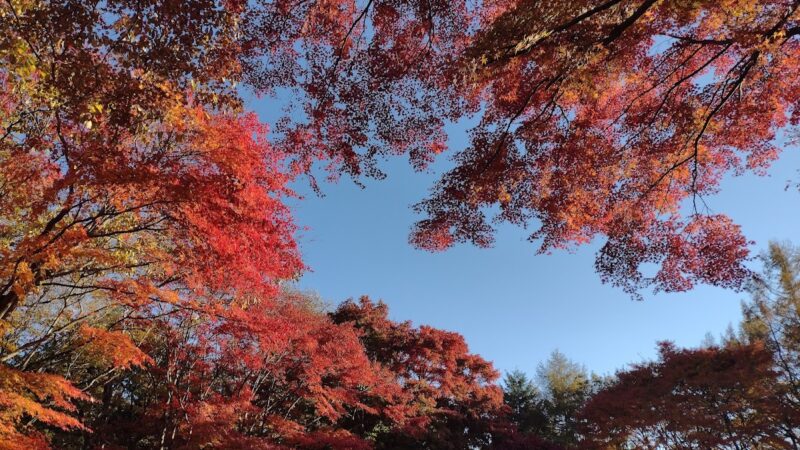
Emerging from the Sanno Tunnel, visitors are greeted with a stunning view of mountainsides painted in the autumn colors of Japanese maples and other deciduous trees. The scenery is particularly impressive when passing from the Fukushima side to the Tochigi side, with the carpet of foliage that unfolds the moment you exit the tunnel captivating all who witness it.
The trees display a beautiful gradient of red, orange, and yellow colors, creating a landscape that resembles a painting rendered by nature itself. On clear days, the contrast with the blue sky is particularly stunning, making it a popular photography spot.
Crowds During Peak Foliage Season
During peak viewing season, especially on weekends and holidays, the area attracts many visitors. Early morning or weekday visits are recommended. The parking area near the Michi-no-Eki “Tajima” station has parking available, but it may fill up during peak periods, so planning ahead is essential.
History of Sanno Pass and the Aizu West Highway
The history of Sanno Pass is ancient. During the Edo period, the Shimotsuke Highway (Aizu West Highway, Nanyama Pass Route) connecting Aizu Wakamatsu in Mutsu Province and Imachi in Shimotsuke Province ran through this area. This highway was used by the Aizu clan lords during their required processions to the shogun’s court, and the area near the pass was bustling with teahouses and the traffic of palanquin bearers and ordinary travelers alike.
Modernization During the Meiji Period
During the Meiji period, Michimatsu Mishima (三島通庸), known as a civil engineering administrator, was among the first to rebuild this mountain pass road into a carriage road. Mishima was a figure who oversaw many road construction projects in Fukushima, Tochigi, Yamagata, and other prefectures, and the modernization of Sanno Pass was one of his achievements.
This reconstruction made crossing the pass easier, further promoting exchange between the Aizu region and the Kanto region. The prototype of present-day Route 121 was shaped by this period of reconstruction.
History of Yokogawa Post Station
At the foot of the southern side of Sanno Pass stood Yokogawa Post Station. This post town served an important role as a rest stop for travelers crossing the pass, with numerous inns and shops lining its streets. Even today, buildings and historic sites retaining traces of those times can be found scattered throughout the area.
The Appeal of National Route 121 Sanno Pass Old Road
Before the current Sanno Tunnel opened, the pass was traversed by an old road that wound along the mountainside. This old road still partially remains and has become popular among abandoned road enthusiasts and history lovers.
Current State of the Old Road
After the tunnel opened, the old Sanno Pass road fell into disuse, and today it has become difficult to traverse due to roadside collapse and vegetation encroachment. However, due to its abandoned road atmosphere and historic value, it attracts those seeking exploration and walking experiences.
The old road retains stone walls and road structures from that era, offering glimpses of civil engineering techniques from the Meiji and early Showa periods. However, there are collapse points and dangerous areas, so proper caution and preparation are necessary when visiting.
Precautions for Old Road Exploration
When exploring the old road, please note the following:
- Prepare appropriate equipment (trekking shoes, gloves, etc.)
- Avoid solo travel; move in groups
- Check weather conditions and avoid rainy or poor weather days
- Do not approach collapse sites
- Always take trash with you
Michi-no-Eki “Tajima” Station and Surrounding Facilities
Near Sanno Pass, located on the Tochigi Prefecture border, there is a Michi-no-Eki (roadside station) called “Tajima.” This station is popular as a rest stop for tourists visiting Sanno Pass and as a place to purchase local specialty products.
Characteristics of Michi-no-Eki “Tajima”
Address: 3242-6 Ogano, Itosawa, Minamiaizu Town, Minamiaizu District, Fukushima Prefecture
Centering on Michi-no-Eki “Tajima,” numerous wild vegetable sales shops line the area. Particularly from spring through early summer, the station bustles with people seeking fresh wild vegetables. The Minamiaizu region is known as a treasure trove of mountain vegetables, with seasonal varieties including zenmai fiddleheads, fatsia shoots, udo, and Japanese bracken being sold throughout the year.
Local agricultural products, processed goods, and souvenirs are also abundantly stocked, making this an excellent place to experience the food culture of the Aizu region.
Nearby Hot Spring Facilities
Several hot spring facilities are located near Sanno Pass where visitors can relieve fatigue from crossing the pass.
Aizu Kogen Onsen Yume-no-Yu is one of the representative hot spring facilities in the Minamiaizu region and offers day-use bathing. From the open-air bath, visitors can enjoy the natural scenery of each season, and particularly during foliage season, one can soak in hot water while enjoying spectacular views.
Access to Sanno Pass
Automobile access is the most convenient way to reach Sanno Pass. While it is possible to use the Yagan Railway Aizu-Kinugawa Line if traveling by public transportation, since the distance from the station to the pass is considerable, renting a car or using a taxi is recommended.
Automobile Access
From the Fukushima side:
- From Aizu Wakamatsu City, head south on Route 121, approximately 1 hour 30 minutes
- From central Minamiaizu Town, head south on Route 121, approximately 20 minutes
From the Tochigi side:
- From Imachi, Nikko City, head north on Route 121, approximately 40 minutes
- From Kinugawa Onsen, head north on Route 121, approximately 30 minutes
Pay attention to curves before and after the Sanno Tunnel. During winter, there is a possibility of snow and freezing, so studless tires and tire chains are necessary.
Parking Information
Michi-no-Eki “Tajima” has free parking with space for approximately 50 regular vehicles. During peak foliage season, congestion is possible, so early arrival is recommended.
For those aiming to explore the old road, park in a safe location and ensure you do not obstruct traffic.
Public Transportation Access
When using the Yagan Railway Aizu-Kinugawa Line, the nearest stations are “Aizu Kogen Ozeguchi Station” or “Aizu Arakkai Station.” Since there is considerable distance from the station to the pass, taxi use is practical.
Tourist Spots Around Sanno Pass
Combining visits to surrounding tourist spots with a visit to Sanno Pass makes for a more enriching trip.
Usagi no Mori Auto Campground
A facility where camping can be enjoyed in the rich nature of the Minamiaizu region. It is ideal for families and groups seeking outdoor experiences, with well-equipped facilities. Close to Sanno Pass, autumn foliage season camping is particularly popular.
Aizu Tajima Gion Festival
A traditional festival held every July in the Tajima district of Minamiaizu Town. Designated as an Important Intangible Folk Cultural Property of Japan, it features luxurious ornate kabuki floats and a bridal procession as highlights. If timing allows during a visit to Sanno Pass, this is an event worth seeing.
Aizu Kogen Tateiwa Summer Festival
A local festival held during summer months featuring fireworks displays and performances of local traditional arts. This event is beloved by locals and tourists as a way to fully enjoy the Aizu Kogen summer.
Himesayuri Festival
An event held during the blooming season of Himesayuri, a delicate flower that adorns the Minamiaizu region in early summer. The sight of pale pink flowers coloring the mountainside captivates all who visit.
Four Seasons of Sanno Pass
Sanno Pass offers beauty to enjoy in each of the four seasons, not just autumn foliage.
Spring at Sanno Pass
With the snowmelt, fresh greenery sprouts and covers the entire mountain in pale green tones. This season is also the time for wild vegetable gathering, with fresh mountain vegetables sold around the Michi-no-Eki “Tajima” area.
Summer at Sanno Pass
Mountains covered in deep green are popular as a retreat for those seeking coolness during summer. With its high elevation, temperatures are lower than in lowland areas, providing a comfortable environment.
Autumn at Sanno Pass (Foliage Season)
As mentioned earlier, the area attracts many tourists as one of the prefecture’s premier foliage viewing spots. The best season is typically from mid-October through early November, with Japanese maples and other deciduous trees painting the mountainsides red and yellow.
Winter at Sanno Pass
The snow-covered pass displays winter’s expression, combining silence with harshness. While snow accumulation makes access to the old road difficult, the beauty of snow-covered scenery is exceptional. Adequate equipment and caution are necessary for winter visits.
Climbing and Hiking Information
The area around Sanno Pass also offers opportunities for climbing and hiking. Climbing record sites such as Yamareko have numerous hiking records posted by mountaineers, allowing you to check route information, required time, and difficulty levels beforehand.
Beginner-Friendly Routes
Short-term hiking courses starting from Michi-no-Eki “Tajima” are suitable for beginners and families. The natural surroundings of the pass area can be enjoyed at leisure, with autumn foliage season being particularly recommended.
Intermediate Routes
More authentic routes including the old road are suited for those with some climbing experience. Since they include abandoned sections, map and compass use and appropriate equipment are necessary.
Sanno Pass as a Photography Spot
Sanno Pass is also an attractive destination for photography enthusiasts. Particularly during foliage season, many photographers visit.
Recommended Photography Points
- Near the Sanno Tunnel exit: The combination of the sense of openness upon exiting the tunnel and autumn foliage is beautiful
- Michi-no-Eki “Tajima” observation platform: A panoramic view overlooking the entire pass from an elevated platform
- Old road stone walls: The contrast between historically-significant structures and natural scenery
Best Times for Photography
The early morning hours when light illuminates the mountainside, and late afternoon when soft light streams in, are particularly recommended. On misty days, it is sometimes possible to capture photos with a mystical atmosphere.
Important Considerations When Visiting Sanno Pass
Please note the following points to safely enjoy Sanno Pass.
Safety Considerations
- The old road has collapse points, so entry requires extreme caution
- During winter, carry studless tires and chains due to snow and ice
- Be alert to wildlife (bears, etc.) and take precautions such as wearing bear bells
- Cell phone signals do not reach some areas, so plan your activities in advance
Etiquette and Rules
- Always take all trash with you
- Confirm plant collection regulations as they may be prohibited in some areas
- Do not trespass on private property
- Park only in designated areas
Conclusion: How to Make the Most of Sanno Pass
Sanno Pass, located on the border between Fukushima and Tochigi Prefectures, is a fascinating destination where history and nature converge. Known as one of Fukushima’s premier autumn foliage viewing spots, it offers multifaceted enjoyment including the history of the Aizu West Highway dating back to the Edo period, its role as a modern transportation hub, and the appeal of the old road as an abandoned route.
During the typical autumn foliage season from mid-October through early November, Japanese maples and other deciduous trees beautifully color the mountainsides, and the spectacular view that unfolds upon exiting the Sanno Tunnel continues to captivate all who visit. By making Michi-no-Eki “Tajima” your base and visiting nearby hot spring facilities, events, and tourist attractions, you can enjoy a more fulfilling trip to Minamiaizu.
As a rare section where three national roads—Route 121, Route 352, and Route 400—overlap, it is also an interesting destination for those interested in transportation history and civil engineering. Please be sure to visit Sanno Pass, where the changing seasons reveal different faces throughout the year.
-800x450.jpg)
-800x450.jpg)