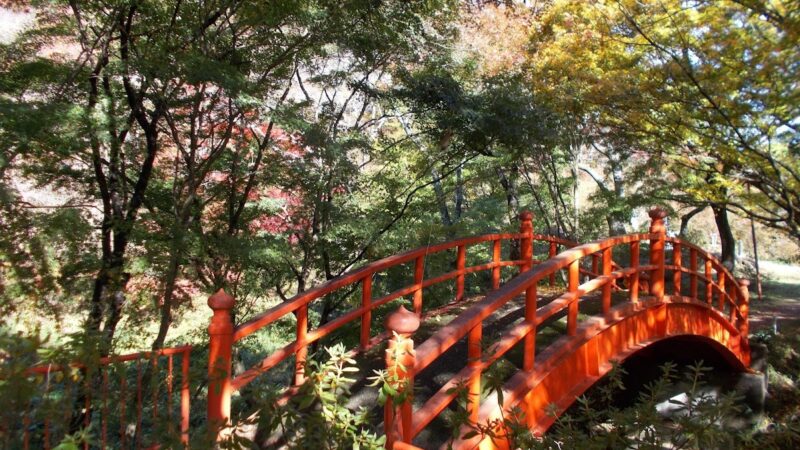
Yamamatsuridake Mountain, Fukushima Prefecture | Exploring the Charms and Four-Season Delights of a Spectacular Spot Called “Fukushima’s Yabakei”
Located at the southernmost tip of Fukushima Prefecture in Yamatsuri Town, Higashi-Shirakawa District, Yamamatsuridake Mountain is one of the prefecture’s most celebrated scenic spots, earning the epithet “Fukushima’s Yabakei” for its overwhelmingly beautiful landscape. Designated as part of the Okuguji Prefectural Natural Park in 1948, this area is renowned for the majestic valley beauty created by the pristine waters of the Kuji River and distinctive rock formations. It displays a different appearance with each passing season. This article will convey all the charm that Yamamatsuridake Mountain has to offer.
Yamamatsuridake Mountain | Overview of Okuguji Prefectural Natural Park
Basic Information and Historical Background
Yamamatsuridake Mountain was designated as the Okuguji Prefectural Natural Park on October 18, 1948, covering an extensive area of 668 hectares. Located at the southernmost point of the Tohoku region, it is characterized by terrain opening along the Kuji River, flanked to the east by the Abukuma Mountains and to the west by the Yami Mountains.
This area has long been known as a scenic spot, and it is said that Saigyo, a poet of the Heian period, visited this location. Within Yamamatsuridake Park stands a poetry monument of Saigyo, inscribed with the poem: “To those with a refined heart, I would show this view—the autumn beauty of Yamamatsuridake in Michinoku.” The poem conveys how deeply Saigyo was moved by the views of this place.
Why It Is Called “Fukushima’s Yabakei”
The reason Yamamatsuridake Mountain is called “Fukushima’s Yabakei” lies in its unique geological formations and landscapes. The valley formed by successive erosion caused by the Kuji River over long years, lined with distinctive rock formations, evokes the majestic beauty of Yabakei, a famous scenic site in Oita Prefecture.
The landscape created by the clear flow of the Kuji River, sheer rock faces, and rich vegetation coming together is truly a work of natural art. In particular, the sight of rocky mountains reflected in the water never fails to captivate visitors.
The Three Superior Views and Eight Scenic Spots
Within Yamamatsuridake Mountain, there exist particularly excellent scenic viewpoints known as the “San-sho Hakkei” (Three Superior Views and Eight Scenic Spots). These are must-see locations when visiting Yamamatsuridake Mountain. As a grand scenic area created by mountains rich in distinctive rock formations and the pristine Kuji River, each viewpoint radiates its own unique charm.
The Charm of Yamamatsuridake Mountain Through the Four Seasons
Spring—Cherry Blossoms and Azaleas in Competition (Late April to Early May)
Spring at Yamamatsuridake Mountain is truly a spectacular flower paradise. From late April to early May, over 100 Somei Yoshino cherry trees bloom all at once, painting the entire mountain pink.
Furthermore, as the cherry blossoms fade, approximately 50,000 wild mountain azaleas begin to flower. This scale of azalea clusters is among the finest in the Tohoku region, and the sight of the mountainside adorned in vivid crimson and pink is magnificent. The flower relay from cherry blossoms to azaleas can be enjoyed for about two weeks, making spring the busiest season at Yamamatsuridake, attracting many tourists.
In spring at Yamamatsuridake, the view of cherry blossoms and azaleas from the “Ayu Suspension Bridge” spanning the Kuji River is particularly recommended. The contrast between the pristine waters viewed from the bridge and the flowers adorning the surroundings creates a beauty that seems like a painting.
New Green Season (Mid-May to June)
Once the azalea season passes, Yamamatsuridake enters the season of fresh green leaves. Young foliage in vibrant green covers the entire mountain, creating a beautiful contrast with the blue of the pristine Kuji River.
During this period, there are relatively few tourists, making it ideal for enjoying quiet nature. While walking the hiking courses, you can listen to the chirping of birds and the babbling of the stream, and fully enjoy the benefits of forest bathing. A stroll through the fresh green will refresh both body and mind.
Summer Coolness (July to August)
Summer at Yamamatsuridake is popular as a retreat for those seeking cool respite. The crisp air created by the pristine waters of the Kuji River and mountains covered in deep green ease the summer heat.
Around Musou Waterfall, you can spend a refreshing time while feeling air rich with negative ions. This is also the season for sweetfish fishing, and many anglers can be seen along the Kuji River. Roadside shops sell fresh grilled sweetfish, which is one of the pleasures of sightseeing at Yamamatsuridake.
Spectacular Autumn Foliage (Late October to Mid-November)
The autumn foliage at Yamamatsuridake is among the finest in Fukushima Prefecture. From late October to mid-November, the entire mountain turns red, yellow, and orange, creating a striking contrast with the pristine Kuji River.
During the foliage season especially, illumination is provided at Yamamatsuridake Park, allowing visitors to enjoy an atmosphere quite different from daytime. The sight of autumn foliage reflected in the water and the silhouettes of distinctive rock formations is truly breathtaking.
While the peak foliage season varies depending on weather, early November is generally considered the most beautifully colored time of year. Since weekends and holidays are expected to be crowded, aiming for weekday mornings or late afternoon hours allows you to enjoy the foliage in relatively peaceful surroundings.
Winter Stillness (December to March)
Winter at Yamamatsuridake, in contrast to other seasons, is enveloped in silence. The snowy landscape created by distinctive rock formations and the frozen Kuji River has the aesthetic of a ink-wash painting.
Since there are few tourists during this season, it is an ideal time to carefully observe the original natural state of Yamamatsuridake. There are winter-specific ways to enjoy the mountain, such as observing winter birds and hiking through the crisp air.
Yamamatsuridake Park Facilities and Access
Main Facilities
Various facilities have been developed at Yamamatsuridake Park to ensure visitors can spend their time comfortably.
The Ayu Suspension Bridge is a suspension bridge spanning the Kuji River and serves as an iconic symbol of Yamamatsuridake. From the bridge, you can take in an unobstructed view of the valley beauty spreading both upstream and downstream. It becomes an ideal photography spot especially during cherry blossom and autumn foliage seasons.
Musou Waterfall is a waterfall within Yamamatsuridake Park where you can feel the power of nature while bathed in negative ions. The walking path to the waterfall is well-maintained, allowing easy access.
Yamamatsuridake Friendship Forest is a nature recreation area utilizing the natural environment, equipped with hiking courses, camping grounds, and bungalows. With views overlooking the pristine Kuji River below, it is ideal for family outdoor activities.
Access Methods
Access by Train
From JR Suigun Line’s “Yamamatsuridake Station,” it is only about a 10-minute walk, providing convenient access by public transportation. Directional signs are posted from the station to Yamamatsuridake Park, so even first-time visitors can arrive without getting lost.
Access by Car
About 40 minutes from the “Shirakawa IC” on the Tohoku Expressway via National Route 289, or about 60 minutes from the “Naka IC” on the Joban Expressway via National Route 118. Yamamatsuridake Park has a parking lot available free of charge. However, during cherry blossom and autumn foliage seasons, congestion is expected, so early arrival is recommended.
Nearby Tourist Attractions
By visiting nearby tourist attractions while at Yamamatsuridake, you can enjoy a more enriching trip.
Fukuroda Waterfall is one of Japan’s three most famous waterfalls, located in Daigo Town, Ibaraki Prefecture, about 30 minutes by car from Yamamatsuridake. With a height of 120 meters and width of 73 meters, this magnificent waterfall is also called “Shiodo Falls” because it cascades in four stages, and in winter it can be seen as a frozen waterfall.
Takigawa Valley is also known as an autumn foliage spot within Fukushima Prefecture and is a popular destination for tourists visiting together with Yamamatsuridake. The contrast between the clear stream and autumn foliage is beautiful, and hiking courses are well-maintained.
Ways to Enjoy Yamamatsuridake Mountain and Recommended Experiences
Hiking and Trekking
Multiple hiking courses suitable for everyone from beginners to advanced trekkers are maintained at Yamamatsuridake Mountain. The most popular course is a loop route that departs from Yamamatsuridake Park, passes through Yamamatsuridake Friendship Forest, and returns, taking approximately 2 to 3 hours.
Along the course, you can see distinctive rock formations up close and enjoy views of the pristine Kuji River. With moderate ups and downs, it is also perfect for relieving lack of exercise. Walking shoes and comfortable clothing are recommended.
Photography Spots
Yamamatsuridake offers numerous outstanding photography locations throughout the four seasons.
The view from Ayu Suspension Bridge is a classic yet indispensable photography point. Photographing upstream from the center of the bridge allows you to capture the flow of the Kuji River and mountains on both banks in a single photograph.
Around Musou Waterfall, you might also try your hand at waterfall photography using long-exposure techniques. Using a tripod to express the flow of water like silk with long-exposure photography creates fantastic works.
The autumn foliage illumination during the foliage season provides an excellent opportunity for night photography. The illuminated foliage reflected in the water and the play of light present an entirely different appearance from daytime.
Cuisine and Local Specialties
In the area around Yamamatsuridake, you can enjoy dishes made with local ingredients and local specialties.
Sweetfish cuisine uses fresh sweetfish raised in the pristine waters of the Kuji River, and grilled salt-seasoned sweetfish and candied preparations are popular. Roadside shops sell charcoal-grilled sweetfish that can be enjoyed on the spot.
Miso dumplings are also beloved local specialties, with sweet and salty miso sauce clinging to the dumplings—perfect for a break during your walk.
Yamatsuri Town soba must not be missed either. Several soba restaurants exist throughout the town, and hand-made soba noodles using locally-grown soba flour are fragrant, delicately textured delicacies. Yamatsuri Town preserves soba culture traditions and conducts new challenges through local revitalization cooperative activities.
About Yamatsuri Town
Town Overview and Characteristics
Yamatsuri Town, located in Higashi-Shirakawa District, Fukushima Prefecture, is a small town with a population of approximately 5,000. Located at the southernmost point of the Tohoku region, it borders Ibaraki and Tochigi prefectures. Approximately 80 percent of the town’s area is covered by forests, making rich natural environment its primary characteristic.
While there are various theories about the origin of the town’s name, the prominent theory is that it was named “Yamatsuri” from an ancient practice of offering arrows during religious ceremonies in this area.
Regional Revitalization Efforts
Yamatsuri Town implements various regional revitalization measures to address challenges such as population decline and aging.
Active recruitment of community revitalization corps members brings young talent to work in diverse fields including sabo culture transmission and digital education advancement. This simultaneously enables the preservation of traditional culture and the creation of new values.
As a member of the Yami Mountains surrounding area resident independence sphere, the town also participates in broad regional revitalization through cooperation with nearby municipalities. The goal is areawide development through mutual use of tourism resources and improved living services.
Hot Springs and Relaxation
Day-use hot spring facilities exist around Yamatsuri Town, allowing visitors to refresh themselves after exploring Yamamatsuridake. Soaking in hot springs while overlooking the pristine Kuji River provides a luxurious time for complete relaxation of body and mind.
Precautions and Etiquette When Visiting
Clothing and Belongings
When visiting Yamamatsuridake Mountain, prepare appropriate clothing and belongings for the season.
Spring and autumn feature large temperature differences between day and night, making layered clothing that can be easily removed and added recommended. Particularly when viewing the autumn foliage illumination at night, ensure adequate warm clothing.
Summer features intense sunshine, so bring a hat, sunscreen, and drinking water for hydration. Insect repellent spray is also helpful.
Winter may bring snow and frozen road surfaces, necessitating non-slip shoes and adequate winter clothing.
When hiking, prepare trekking shoes, a backpack, towels, a first-aid kit, and other essentials.
Nature Conservation and Etiquette
Yamamatsuridake is a place where valuable natural environments are preserved. When visiting, observe the following etiquette.
- Always take trash with you
- Do not collect plants or damage them
- Do not feed wild animals
- Do not enter areas outside designated courses
- Do not shout or make excessive noise
- Smoke only in designated areas
Tips to Avoid Crowds
The cherry blossom and azalea season (late April to early May) and autumn foliage season (late October to mid-November) are expected to be particularly crowded on weekends and holidays.
Points to avoid crowds:
- Consider visiting on weekdays
- Aim for early morning hours (before 8 a.m.) or late afternoon (after 4 p.m.)
- Visit slightly before or after peak season
- Use public transportation (avoiding parking lot congestion)
When planning next year’s visit, use these points as reference to enjoy comfortable sightseeing.
Conclusion | Fully Savoring the Charm of Yamamatsuridake Mountain
Yamamatsuridake Mountain in Yamatsuri Town, Fukushima Prefecture, is a scenic spot worthy of its epithet “Fukushima’s Yabakei,” offering beautiful scenery to enjoy throughout the four seasons. Within the extensive area designated as the Okuguji Prefectural Natural Park, natural beauty overflows where distinctive rock formations and the pristine Kuji River weave together grandeur.
Spring cherry blossoms and 50,000 azaleas, summer’s refreshing clear waters, autumn’s fiery foliage, and winter’s serene snowy landscape—Yamamatsuridake displays an entirely different appearance depending on when you visit. Circuit the viewpoints such as Ayu Suspension Bridge and Musou Waterfall, fully enjoy nature on hiking courses, and savor local sweetfish dishes and soba. Such enriching experiences await.
The excellent accessibility—just a 10-minute walk from Yamamatsuridake Station on the JR Suigun Line—is another attraction. Located at the southernmost point of the Tohoku region with convenient proximity to nearby tourist attractions such as Fukuroda Waterfall in Ibaraki Prefecture makes travel planning simple.
The scenery that moved Saigyo in ancient times provides unchanged inspiration to those of us living today. When visiting Fukushima Prefecture, be sure to experience the grand natural beauty of Yamamatsuridake. The four-season landscapes will surely become cherished memories in your heart.
-800x450.jpg)
-800x450.jpg)