The Great Ginkgo of Yakuoji Yakushido, Fukushima Prefecture | Complete Guide to Best Viewing Time, Illuminations, and Access 2025
The “Great Ginkgo of Yakuoji Yakushido” located in Hanawa Town, Higashishirakawa District, Fukushima Prefecture, is a magnificent ginkgo tree estimated to be over 500 years old. In autumn, it paints the temple grounds in golden hues, making it one of Fukushima Prefecture’s premier autumn foliage viewing spots. At this historic temple, said to be one of Japan’s Three Sacred Medicine Buddhas, countless tourists visit each year. We provide comprehensive information about the charm of this great ginkgo, from the best viewing season to access methods and nearby tourist information.
About the Great Ginkgo of Yakuoji Yakushido
History and Origins
Iooin Yoneyama Yakuoji is an ancient Shingon Buddhist temple said to have been founded during the Northern and Southern Courts period. Its main hall, the Yakushido, was constructed in the early 18th century with a grand architectural style incorporating Zen Buddhist elements, and has long been cherished as the spiritual center of the local community.
The great ginkgo standing in the temple grounds is said to have watched over this place since the temple’s founding, with an estimated age of over 500 years. Located in the middle section of Fukushima Prefecture and near the border with Ibaraki Prefecture, this ginkgo symbolizes the history and culture of Hanawa Town and is deeply treasured by local residents.
Status as One of Japan’s Three Sacred Medicine Buddhas
Yakuoji Yakushido is known as one of “Japan’s Three Sacred Medicine Buddhas.” With the Medicine Buddha as its principal deity, this temple has long attracted many worshippers as a sacred place for healing from illness and prayer for good health. Records remain of feudal lords and powerful daimyo receiving the temple’s faith, attesting to its high status.
Maples are also planted beside the main hall, and the contrast between the ginkgo’s yellow color and the maples’ red creates a stunning scene that never fails to captivate visitors.
Characteristics and Highlights of the Great Ginkgo
A Massive Tree with Overwhelming Presence
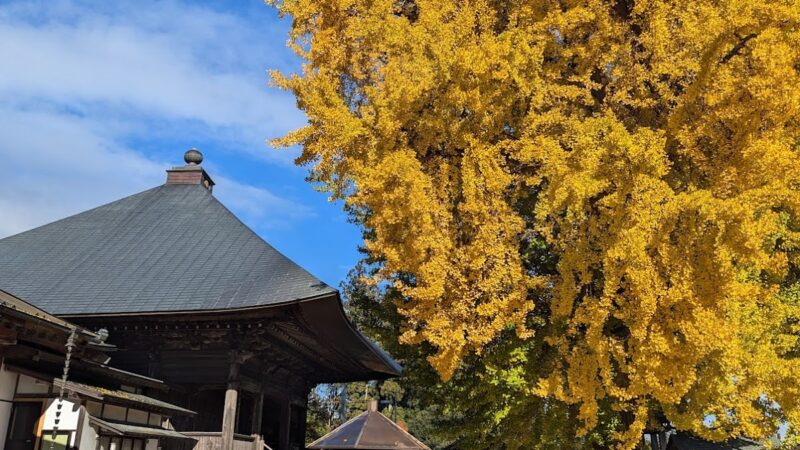
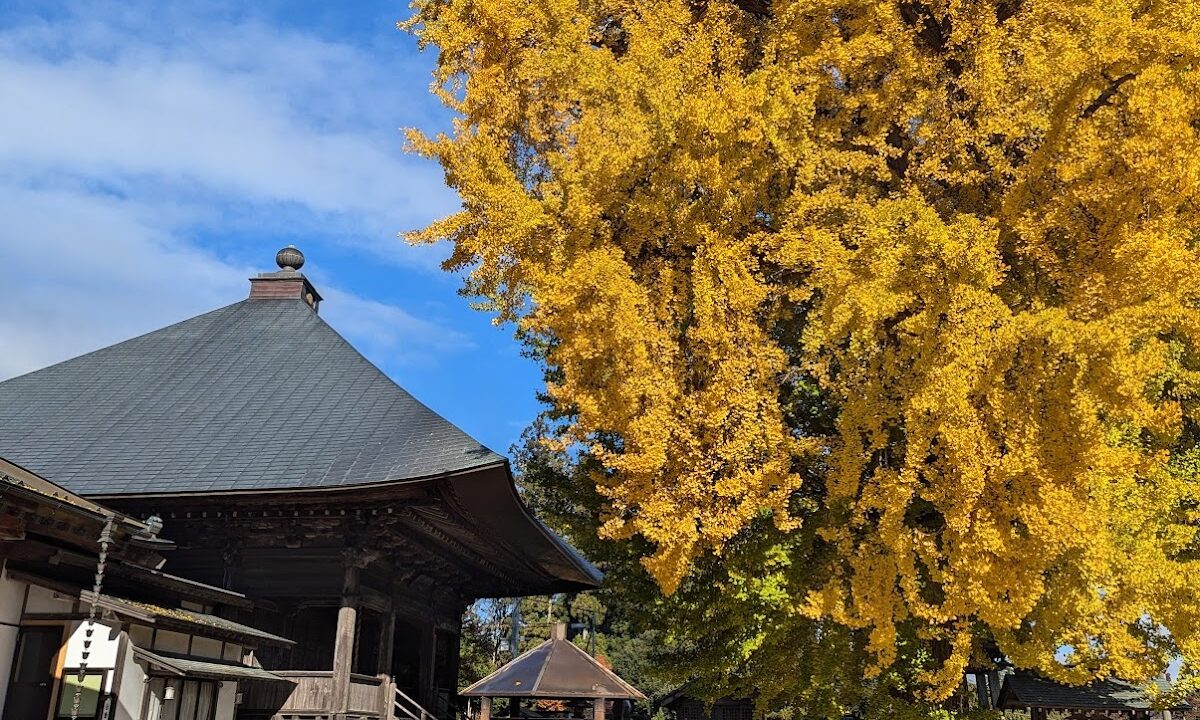
The defining characteristic of the great ginkgo at Yakuoji Yakushido is its enormous form. Built up over more than 500 years, its trunk is thick, its branches stretch toward the sky and spread across a wide area, and in autumn it becomes covered with countless golden leaves.
Positioned at the center of the temple grounds, this great ginkgo harmonizes with the solemn architecture of the Yakushido, allowing visitors to sense the grandeur of nature and the flow of time. On clear days, the yellow color shining against the blue sky becomes even more vivid, making it a popular photography spot.
A Golden Carpet of Fallen Leaves
The period after the peak viewing season, when leaves begin to fall, offers its own special beauty. The ground throughout the temple grounds becomes covered with golden ginkgo leaves, creating a scene as if a luxury carpet had been laid out.
Walking through the grounds treading on fallen leaves, you can feel the deep autumn with all your senses, accompanied by the pleasant crunching sound. This “golden carpet” is popular among photography enthusiasts and social media users, with many people enjoying taking pictures from their preferred angles.
Contrast with Maples
The charm of the great ginkgo is further enhanced by the maples planted beside the main hall. The landscape where you can simultaneously enjoy the vivid yellow of the ginkgo and the deep crimson of the maples is truly an autumn work of art.
The harmony created by these contrasting colors—yellow and red—changes expression depending on the time of day and angle of light, offering new discoveries with each visit. The autumn foliage viewed in the soft morning light is particularly praised for its vivid, clearly-defined colors.
Best Viewing Season and Color Information
Peak Viewing Season Generally Occurs from Early to Mid-November
The great ginkgo at Yakuoji Yakushido typically reaches peak viewing season from early to mid-November. As it colors later than many other spots in Fukushima Prefecture, many visitors come here as the finale of the autumn foliage season.
It begins to color gradually from late October, with approximately 70% of the tree turning yellow by early November. Peak season arrives in mid-November, when you can enjoy the spectacular sight of the entire temple grounds wrapped in golden tones.
Variations Due to Weather Conditions
The degree of color change and the timing of peak viewing vary depending on weather conditions that year. Temperature, sunshine hours, and precipitation from September through October all have an impact, so it’s recommended to check the latest color information before visiting.
In years with strong temperature drops in the early morning and evening, the colors tend to be more vivid, while in warmer years, peak season tends to be delayed. The Hanawa Town Tourist Association and Fukushima Prefecture tourism information websites regularly update the latest information during the season.
Enjoyment During the Leaf Fall Period
From late November through early December, after peak viewing season, leaves continue to fall and the “golden carpet” reaches completion. This period has relatively fewer tourists, allowing you to quietly enjoy the autumn atmosphere.
The sensation of walking on fallen leaves and the sight of leaves dancing in the wind offer a different charm from peak season, making this period particularly recommended for those who wish to enjoy a leisurely stroll.
Illumination Event Information
Fantastic Nighttime Foliage
The great ginkgo at Yakuoji Yakushido features illumination events timed with the peak viewing season. The golden ginkgo that emerges from the darkness creates a completely different, fantastical atmosphere from daytime, captivating all who visit.
The illuminated ginkgo’s leaf color subtly changes with the angle of light, revealing a beautifully three-dimensional form. The Yakushido building is also often illuminated, creating a spectacular sight where history and nature intertwine.
Hosting Period and Time
The specific dates and times of illumination vary by year, but they generally take place during the peak viewing season from early to mid-November. Illumination typically runs from dusk until around 8 p.m., allowing visits after work or evening meals.
It’s recommended to check detailed schedules in advance on the Hanawa Town Office website, Tourist Association website, or their social media accounts. Events may be cancelled in case of bad weather, so confirmation before visiting is important.
Photography Tips
For nighttime illumination photography, using a tripod is recommended. The spacious grounds allow for photography from various angles. Particularly, photographing the great ginkgo with the Yakushido as a backdrop creates impressive photos that harmonize history and nature.
When it’s crowded, don’t forget to be considerate of other worshippers and tourists. Follow proper etiquette while capturing memorable photos.
Access Methods and Transportation Guide
Location and Basic Information
Address: 53 Okubo, Daisuku, Hanawa Town, Higashishirakawa District, Fukushima Prefecture
Viewing Hours: Open 24 hours (accessible during nighttime illumination period)
Admission: Free
Inquiries: Hanawa Town Office TEL 0247-43-3400
Access by Train
Nearest Station: JR Suigun Line “Banjo-Hanawa Station”
The temple is approximately 14 minutes walk from Banjo-Hanawa Station. Head south from the station and follow the directional signs to reach Yakuoji. The route is relatively flat, allowing you to enjoy autumn scenery as you walk.
During autumn foliage season weekends and holidays, shuttle buses may operate from the station. Service information can be confirmed on Hanawa Town’s tourist information website.
Access by Car
From Tohoku Expressway:
- Approximately 40 minutes from Shirakawa IC via National Route 289 and Prefectural Route 27
- Approximately 50 minutes from Nasu IC via National Route 294 and Prefectural Route 27
From Joban Expressway:
- Approximately 60 minutes from Iwaki Central IC via National Route 49 and Prefectural Route 14
Free parking is available at the temple grounds and surrounding areas. While normally parking is sufficient, congestion is expected during peak foliage season and illumination periods, so visiting during earlier time slots is recommended.
Car Navigation Tips
When searching on car navigation systems, setting “Yakuoji Yakushido” or the address “53 Okubo, Daisuku, Hanawa Town, Higashishirakawa District, Fukushima Prefecture” will provide accurate directions. Using the Hanawa Town Office phone number (0247-43-3400) for phone number search will also guide you to the area.
Nearby Tourist Attractions
Nakuragawa Gorge Autumn Foliage
Located approximately 20 minutes by car from Yakuoji Yakushido, Nakuragawa Gorge is one of Fukushima Prefecture’s premier foliage viewing spots. The autumn leaves spreading along the gorge offer a different natural beauty compared to the great ginkgo.
The contrast between the clear stream and autumn foliage is spectacular, and with hiking courses well-maintained, it’s particularly recommended for those wanting to enjoy nature walks. Visiting both Yakuoji Yakushido’s great ginkgo and Nakuragawa Gorge allows you to fully experience Fukushima’s autumn.
Historic Structures in Hanawa Town
Beyond Yakuoji, historic structures and cultural properties are scattered throughout Hanawa Town. The town center retains old merchant houses and warehouses, preserving vestiges of bygone days.
The local historical museum offers opportunities to learn about Hanawa Town’s history and culture, allowing for deeper understanding of the region’s appeal.
Popular Destinations in Southern Fukushima Prefecture
The southern Fukushima area where Yakuoji Yakushido is located features numerous other appealing tourist spots.
Shirakawa City: Shirakawa Komine Castle and Nanko Park are popular destinations combining history and nature. Shirakawa ramen is also famous, offering culinary enjoyment.
Yamatsuri Town: The “Yamatsuri Mottainai Library” and natural scenery along the Kuji River are attractions. Outdoor activities are also popular in this area.
Tanakura Town: Tanakura Castle ruins and Akadachi Park showcase historic sites scattered throughout. Autumn foliage can be enjoyed at various locations.
Precautions and Etiquette for Visiting
Clothing and Belongings
Early mornings and evenings become quite cold in the Fukushima southern region in November. Especially when visiting early morning or after sunset, implement thorough cold-weather preparations.
- Thick outer jackets or coats
- Comfortable walking shoes (temple grounds have gravel paths and slippery fallen leaf areas)
- Camera or smartphone backup batteries
- Rain gear (weather changes frequently this season)
Worship Etiquette
Yakuoji Yakushido currently functions as an active place of worship. When visiting as a tourist, observe the following etiquette:
- Move quietly through the main hall and grounds
- Obtain permission before photographing inside buildings
- Always take trash with you
- Don’t damage fallen leaves or plants
- Show consideration for other worshippers and tourists
Tips for Avoiding Crowds
Peak season, particularly mid-November weekends and holidays, draws many tourists. For leisurely viewing, the following time slots are recommended:
- Weekday mornings (approximately 9 a.m.–11 a.m.)
- Periods before or after peak season (early November or late November)
- Immediately after illumination begins
Fukushima Prefecture Seasonal Features and Regional Events
Autumn Tourism in Fukushima Prefecture
Fukushima Prefecture becomes a popular destination in autumn, with autumn foliage viewable throughout the prefecture. Among these, the great ginkgo at Yakuoji Yakushido stands out as particularly impressive, featured prominently in Fukushima’s tourist information databases.
The official website operated by the Fukushima Prefecture Tourism and Commerce Exchange Association features autumn foliage special pages with detailed information about prefecture-wide foliage spots, searchable by region and time period.
Hanawa Town Event Calendar
Hanawa Town hosts various events throughout the year. In addition to autumn illuminations of the great ginkgo, harvest festivals and cultural events featuring local agricultural products are held.
Checking regional event information timed with your visit allows for more enriching tourism. Verify the latest information on Hanawa Town Office websites and Tourist Association social media.
Attention as a Trending Destination
With the rise of social media, Yakuoji Yakushido’s great ginkgo has garnered attention as an “Instagrammable” spot. Particularly on Instagram and Twitter, numerous photos are posted with hashtags like “#Yakuoji Yakushido” and “#Fukushima Autumn Foliage,” boosting its popularity as a trending destination.
In Fukushima Prefecture autumn foliage spot rankings, it frequently appears in top positions, attracting increasing numbers of tourists from outside the prefecture.
Local Cuisine and Dining Information
Recommended Gourmet Options Near Hanawa Town
When visiting Yakuoji Yakushido, also enjoy local cuisine in Hanawa Town and surrounding areas.
Soba Restaurants: The southern Fukushima region is known as a quality soba-producing area. Hand-made soba restaurants dot the Hanawa area, with particularly delicious fresh soba available during new soba season.
Local Vegetables: Agriculture thrives in Hanawa Town, and direct sales shops offer fresh vegetables and fruits. Particularly in autumn, seasonal flavors like chestnuts and apples are abundant.
Michi-no-Eki Hanawa: A roadside station where Hanawa Town specialties and souvenirs can be purchased. An attached restaurant serves dishes using local ingredients.
Restaurant Operating Hours
As a relatively small town, dining establishment hours require attention. Many shops close around 5-6 p.m., making it important to plan lunch or early dinner strategically.
Lodging Information and Nearby Hot Springs
Accommodations Near Hanawa Town
Hanawa Town has small-scale lodging facilities including guesthouses and business hotels. During foliage season, reservations are difficult to secure, so early booking is recommended.
Surrounding areas of Shirakawa City and Tanakura Town offer more lodging options. Many inns and hotels include hot springs, allowing you to relax after sightseeing.
Nearby Hot Spring Facilities
Yugi Hot Spring: Located approximately 30 minutes by car from Hanawa Town, this hidden gem hot spring offers source flowing hot water in a serene mountain setting.
Yamatsuri Hot Spring: Located along the Kuji River, this hot spring area features day-use bathing facilities, allowing visits during tourism activities.
Photography Spots and Photogenic Compositions
Recommended Photography Points
Full Front View: Composition capturing the entire great ginkgo with the Yakushido in the background. The contrast between the building and giant tree is striking.
Upward Angle: Photographed from directly beneath the great ginkgo looking up at the sky. The contrast between golden leaves and blue sky creates beautiful images.
Fallen Leaf Carpet: Composition using fallen leaves on the ground as the foreground with the great ginkgo as background. The photo effectively conveys autumn atmosphere.
Maple Combination: Framing the maples beside the main hall with the great ginkgo in the same shot showcases the yellow and red color beauty.
Ideal Photography Times
Morning (8 a.m.–10 a.m.): Morning sun illuminates the temple grounds with soft light. Few tourists at this time, allowing calm, focused shooting.
Evening (4 p.m.–sunset): The great ginkgo lit by western sun glows with deeper, richer golden tones. Creates dramatic atmosphere photographs.
Illumination Time: Fantastic nighttime foliage photography becomes possible. Long-exposure photography using a tripod creates striking compositions.
Fukushima Prefecture Autumn Foliage Spot Ranking
The great ginkgo at Yakuoji Yakushido enjoys high popularity among Fukushima Prefecture’s autumn foliage spots. Numerous other attractive foliage viewing spots exist throughout Fukushima, each with distinct characteristics.
Popular Foliage Spots:
- Bandai Azuma Skyline
- Goshikinuma
- Tatsusawa Fudo Falls
- Ryozan
- Kannoji Swamp
Compared with these spots, Yakuoji Yakushido’s great ginkgo offers unique charm through its convenient access, historical background, and the overwhelming presence of a single ancient tree.
Conclusion: Reasons to Visit
The great ginkgo at Yakuoji Yakushido, with its over-500-year history and breathtaking golden beauty, stands as one of Fukushima Prefecture’s premier autumn tourism destinations. Within the grounds of this prestigious temple, said to be one of Japan’s Three Sacred Medicine Buddhas, visitors can enjoy landscapes where nature and history harmoniously coexist.
During peak viewing season from early to mid-November, the temple grounds transform entirely into golden hues, while during leaf fall, the ground becomes covered with a magical yellow carpet. The illumination events offer a mystical atmosphere completely different from daytime viewing.
Access is relatively convenient, approachable by both train and car. Numerous nearby tourist attractions including Nakuragawa Gorge allow you to fully appreciate southern Fukushima’s charm in a single day.
When planning an autumn Fukushima trip, be sure to visit Yakuoji Yakushido’s great ginkgo and fully savor the beauty of this 500-year-old giant tree and the spirit of Japan’s autumn.
Frequently Asked Questions (FAQ)
Q1: When is the best time to view the great ginkgo of Yakuoji Yakushido?
A1: The typical peak viewing season is early to mid-November. The tree begins to color in late October, with mid-November offering golden-toned leaves in their prime. As weather conditions vary yearly, checking the latest color information before visiting is recommended.
Q2: Are illuminations held every year?
A2: Illumination is planned for the peak viewing season, though specific dates and times vary by year. Confirm details in advance by contacting Hanawa Town Office (0247-43-3400) or the Hanawa Town Tourist Association website. Events may be cancelled due to poor weather.
Q3: Are parking facilities available? Is there a fee?
A3: Free parking is available at the temple grounds and surrounding areas. While normally adequate spaces exist, congestion is expected during peak foliage season and illumination periods. Consider visiting early or using public transportation.
Q4: Is an admission fee required?
A4: Temple grounds entry is free. Open 24 hours, you can visit at your preferred time. However, nighttime visits should show consideration for nearby residents.
Q5: Is train access convenient?
A5: Access from JR Suigun Line’s Banjo-Hanawa Station is good at approximately 14 minutes walk. The route to Yakuoji is relatively flat, allowing enjoyment of autumn scenery during the walk. Temporary shuttle buses may operate on autumn foliage season weekends.
Q6: Are dining options available nearby?
A6: Local soba restaurants and eateries exist in Hanawa Town, though many have limited operating hours, requiring attention. Michi-no-Eki Hanawa features a restaurant serving local-ingredient dishes. Extending to Shirakawa City or Tanakura Town offers more dining choices.
Q7: Can I freely photograph the grounds?
A7: Photography is generally allowed in the temple grounds. However, photographing inside the main hall may require permission. When using tripods, be considerate of other worshippers and tourists. Commercial photography requires advance temple confirmation.
Q8: Can wheelchair users visit?
A8: Some areas have gravel paths and steps that may pose wheelchair accessibility challenges. Visits with an assistant are recommended. For detailed accessibility information, contact Hanawa Town Office in advance.
Q9: Can I bring pets?
A9: Pet visits are possible with leashes required. Be considerate of other worshippers and tourists, as the grounds represent a sacred space.
Q10: Are hot springs nearby?
A10: Yugi Hot Spring is approximately 30 minutes by car, with Yamatsuri Hot Spring offering another option. Many facilities offer day-use bathing, allowing relaxation after sightseeing. Verify operating hours and fees with each facility beforehand.
-800x450.jpg)
-800x450.jpg)