
Norikura Skyline (Gifu Prefecture) Complete Guide | Charm and Usage of Japan’s Highest Mountain Road
What is Norikura Skyline?
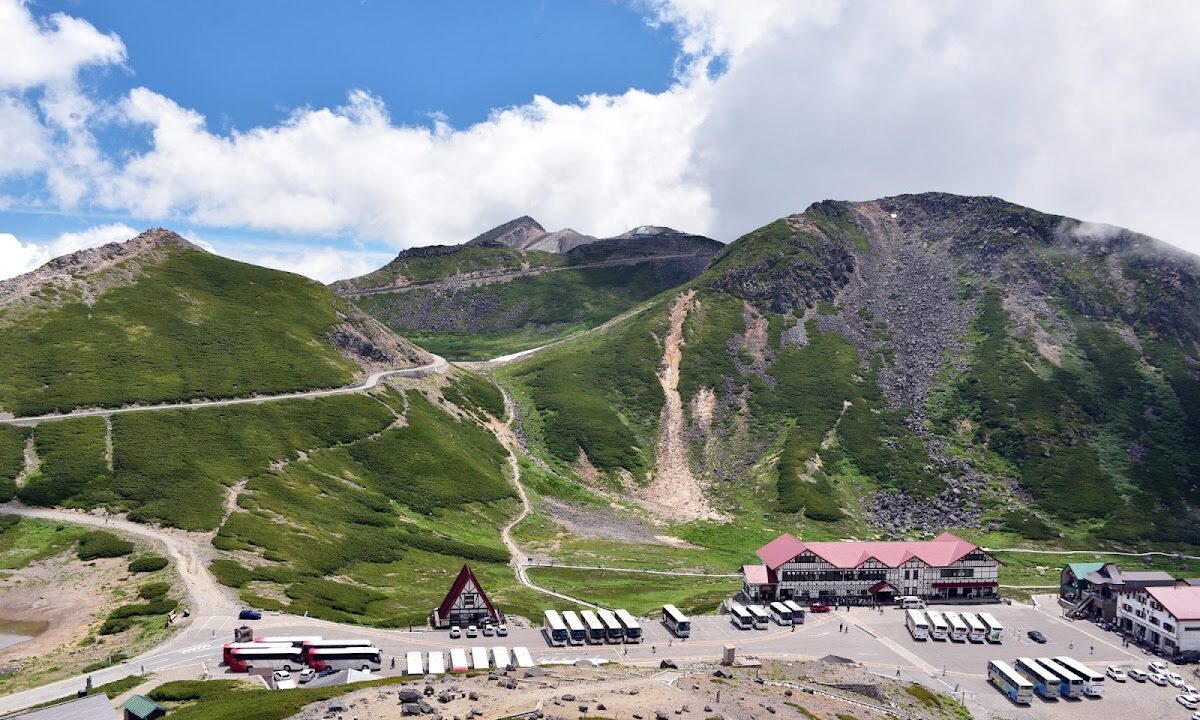
The Norikura Skyline is a 14.4-kilometer mountain tourist road connecting Hirayutoken (elevation 1,684m) in Niukawa-cho, Takayama City, Gifu Prefecture, to Tatamidaira on Mt. Norikura (elevation 2,702m). Developed as part of Gifu Prefectural Route 5 Norikura Park Line, it is known as Japan’s highest-elevation mountain road.
This road passes through a special protection zone within the Chubu Mountain National Park and captivates many tourists as a cloud-level driving route. From the car windows, you can see the magnificent peaks of the Northern Japanese Alps, the spectacular views of the Hotaka Range, and the sea of clouds spreading below—an experience that feels like being invited to another world.
History and Development of Norikura Skyline
The Norikura Skyline was constructed as part of tourism development for Mt. Norikura. Initially, private vehicles could use the road freely, but strict private car regulations have been implemented in recent years to protect the precious natural environment of Mt. Norikura.
In recent years, the road has experienced natural disasters such as the heavy rains of July 2020 and road surface collapse in September 2022. Each time, restoration work has been carried out, and traffic has resumed through measures such as alternating one-way traffic. These experiences have renewed recognition of the importance of maintenance of mountain roads and the difficulty of coexistence with nature.
Basic Information about Norikura Skyline
Opening Period and Operating Hours
The Norikura Skyline is not open year-round. Due to snow accumulation, the road is closed from November 1 to May 14 of the following year. The opening period is typically May 15 to October 31.
During the opening period, traffic hours vary by season, with operations from early morning to evening. Especially during the summer season, many tourists and cyclists visit from early morning, so congestion may occur depending on the time of day.
Details of Private Car Regulations
To protect the precious natural environment of Mt. Norikura, private car regulations are enforced on the Norikura Skyline. General vehicles are not permitted to pass.
Permitted Vehicles:
- Large buses (shuttle buses)
- Microbuses
- Route buses
- Taxis
- Bicycles
- Authorized vehicles (related personnel vehicles, etc.)
If visiting by private car, you must park your vehicle at Hoonoki-hira Parking Area and transfer to a shuttle bus. This parking area is located about 30 minutes from Takayama city center and is a large parking facility capable of accommodating 850 vehicles.
Fare System
The Norikura Skyline itself has no toll, but shuttle bus usage requires a fare.
Shuttle Bus Fare (Hoonoki-hira to Tatamidaira):
- Adults: Round trip approximately 2,500 yen (one way approximately 1,400 yen)
- Children: Round trip approximately 1,250 yen (one way approximately 700 yen)
※Fares may change. Please check the official website for the latest information.
Parking fee:
- Hoonoki-hira Parking Area: approximately 600 yen for regular cars
Access Methods and Base Information
Access to Hoonoki-hira Parking Area
Here is information on how to access Hoonoki-hira Parking Area, the starting point for using Norikura Skyline.
By Car:
- From Takayama city center: approximately 30 minutes via National Route 158
- From Matsumoto direction: approximately 40 minutes via Azusa Pass
- From “Takayama IC” on Chubu Longitudinal Expressway: approximately 40 minutes
By Public Transportation:
- From JR Takayama Station: approximately 60 minutes by Nohi Bus, get off at “Hoonoki-hira”
- Also accessible from Shinhotaka Hot Spring
Shuttle Bus Service Information
Dedicated shuttle buses operate from Hoonoki-hira Parking Area to Tatamidaira. The journey takes approximately 45 to 50 minutes, ascending over 1,000 meters in elevation in one go.
Buses use low-emission vehicles that consider the environment, and you can enjoy spectacular views of the Northern Japanese Alps through large windows. Thanks to the private car regulations, a major advantage is that you can fully enjoy the scenery without being preoccupied with driving.
Attractions of Norikura Skyline
Cloud-Level Scenic Drive Route
The greatest appeal of Norikura Skyline is undoubtedly the drive above the clouds. Starting from Hirayutoken at elevation 1,684m and climbing hairpin curves, the view gradually opens up and a sea of clouds spreads below.
On days blessed with good weather, you can see a panoramic view of famous peaks of the Northern Japanese Alps including the Hotaka Range, Mt. Yarigatake, and Mt. Kasagatake. The majestic scenery overwhelms visitors. The early morning sea of clouds and the mountain peaks tinted crimson at dusk are especially beautiful.
Alpine Plants and Flower Fields at Tatamidaira
The terminal Tatamidaira (elevation 2,702m) is known as a treasure trove of alpine plants. From July to August, colorful alpine plants bloom in profusion, creating a scene like a flower field in the sky.
Main Alpine Plants:
- Hakusan Ichige
- Komaakusa
- Miyama Kinbai
- Chinguruma
- Iwagikyo
- Kuro Yuri
Wooden paths are installed around Tatamidaira, allowing visitors to enjoy walking while observing alpine plants. As it is designated as a special protection zone of the national park, collecting plants is strictly prohibited. Enjoy observation while respecting nature.
Starting Point for Mt. Norikura Climbing
Tatamidaira is also popular as a starting point for climbing Mt. Norikura. From Tatamidaira to Kengamine, the highest peak of Mt. Norikura (elevation 3,026m), a climbing trail is maintained, and the summit can be reached in approximately one and a half to two hours one way.
Mt. Norikura, one of Japan’s 100 Famous Mountains, is known as a relatively accessible 3,000-meter peak as it can be reached by bus, even for beginners. However, due to its high elevation, weather changes are sudden and proper equipment and preparation are necessary.
Tsuru Pond and Nature Walking
Tsuru Pond, a crater lake, is located at Tatamidaira, with hiking trails set up around it. A walking course that circles the pond takes approximately 30 minutes and allows you to enjoy the alpine nature with ease.
Tsuru Pond Parking Area is managed by Gifu Prefecture’s designated administrator and is equipped with restrooms and rest facilities. The view of the Northern Japanese Alps mountains from here is also spectacular.
Popular Hill Climb Course for Cyclists
The Norikura Skyline is one of the few high-altitude roads where bicycle traffic is permitted. As a result, it has become a popular hill climb course attracting cyclists from throughout the country.
Appeal of Hill Climbing
The course with an elevation gain exceeding 1,000 meters and a distance of 14.4 kilometers is a challenging route for cyclists. The average gradient is approximately 7%, with maximum gradients exceeding 12% in some sections.
Every summer, events such as the “Norikura Hill Climb” are held, attracting many cyclists. The sense of accomplishment of climbing to the clouds on your own power through clear early morning air is extraordinary.
Precautions for Cycling
- Due to high elevation, oxygen is thinner than at sea level, and physical exhaustion is intense
- Weather changes rapidly, so carrying windproof clothing and rain gear is essential
- On descent, road surfaces may be wet, requiring caution against excessive speed
- As the road is shared with buses, safety must be given utmost consideration
Seasonal Enjoyment
Spring (Mid-May to June): Snow Corridor and Fresh Greenery
Shortly after opening in mid-May, a snow wall several meters high remains on both sides of the road, popular as a “snow corridor.” This is a season of beautiful contrast between the still-snowy Mt. Norikura and fresh greenery.
During this season, many people enjoy spring skiing and snowboarding using the remaining snow, and it is also known as a holy land for spring skiing.
Summer (July to August): Alpine Plants and Starry Sky
Summer is the most beautiful season for alpine plants. The flower fields around Tatamidaira are covered with flowers of various colors, creating a scene like a paradise in the sky.
Additionally, due to high elevation and clear air, one can observe a starry sky at night. The Milky Way is clearly visible, and shooting stars are frequently observable—an excellent spot for stargazing.
Autumn (September to October): Autumn Foliage Spectacle
From late September to early October, autumn foliage on Mt. Norikura reaches its peak. Due to the elevation difference, coloring begins from the summit and gradually progresses, allowing you to enjoy autumn foliage over an extended period.
The red and yellow colors of Nana Kamatade and Dake Kanba paint the mountainside, and the contrast with the rocky surface of the Northern Japanese Alps is remarkable. The autumn foliage season is particularly crowded, so visiting early in the day is recommended.
Precautions and Preparations for Visiting
Clothing and Equipment
Tatamidaira at elevation 2,702m is extremely high, and the temperature differs greatly from sea level. Even in summer, temperatures are around 10 degrees Celsius, and depending on weather, may drop below 5 degrees.
Essential Equipment:
- Warm clothing (fleece or down jacket)
- Rain gear (rain wear)
- Hat, gloves
- Sunscreen, sunglasses
- Comfortable walking shoes
Due to high elevation, UV radiation is also strong, making sun protection important.
High Altitude Sickness Prevention
At Tatamidaira, which exceeds 2,700m elevation, there is a risk of high altitude sickness. Particularly when moving rapidly from sea level to high altitude, the body cannot acclimatize quickly, potentially causing symptoms such as headache, nausea, and dizziness.
High Altitude Sickness Prevention Points:
- After arrival, move slowly and avoid sudden exercise
- Consume sufficient water
- Consciously practice deep breathing
- Avoid alcohol
- If symptoms develop, do not push yourself and descend to lower altitude
Weather Confirmation
As it is a mountainous area, weather can change suddenly. Always check the weather forecast before visiting, and have the courage to change your plans if bad weather is predicted.
When heavy fog develops, visibility becomes nearly zero, and the spectacular views cannot be enjoyed. Early morning hours with high sunny probability are recommended.
Nearby Tourist Attractions
Hirayutoken Hot Spring
Hirayutoken, near the starting point of Norikura Skyline, is the most historic hot spring in the Okuhida Hot Spring area. It is recommended to relax in a hot spring before or after Norikura sightseeing.
Day-use bathing facilities are well-equipped, allowing you to soothe your tired body after climbing or cycling.
Shinhotaka Ropeway
The Shinhotaka Ropeway, known as Japan’s only two-tiered ropeway, is a tourist attraction worth visiting along with Norikura Skyline. From an observation deck at elevation 2,156m, you can enjoy a 360-degree panoramic view of the Northern Japanese Alps.
Old Town of Takayama
Takayama City, the base for Norikura sightseeing, has preserved the appearance of the Edo period in its old town. You can enjoy Hida beef and Takayama ramen, making it worthwhile to visit along with sightseeing.
Latest Traffic Information and Contact Information
Norikura Skyline may be closed without notice due to natural disasters or weather conditions. Be sure to check the latest traffic information before visiting.
Primary Information Sources:
- Mt. Norikura and Norikura Skyline Official Website
- Gifu Prefectural Road Information Provision System
- Hida Norikura Tourism Association
- Takayama Civil Engineering Office
Contact Information:
- Hida Norikura Tourism Association: 0578-89-2252
- Gifu Prefecture Takayama Civil Engineering Office: 0577-33-1111
- Tsuru Pond Parking Area Management Office (during opening period)
Environmental Protection Initiatives
Private car regulations on Norikura Skyline are important measures not only for congestion relief but also for protecting precious natural environment.
The area around Mt. Norikura, designated as a special protection zone of the Chubu Mountain National Park, possesses a valuable ecosystem with rare alpine plants and animals. By minimizing environmental pollution from exhaust gases and maintaining a quiet natural environment, we can pass this beautiful nature on to future generations.
It is important that each visitor has environmental protection awareness and follows the following rules:
- Never collect plants
- Always take trash with you
- Do not step off wooden paths
- Feeding wild animals is prohibited
- Avoid raising your voice
Photography Spots and Photogenic Scenery
Norikura Skyline has numerous photography spots.
Recommended Photography Points:
- Four Mountains Curve: A spectacular point overlooking the Hotaka Range directly
- Daiyuki Glacier Observation Deck: Panoramic view of Norikura’s snow field and summit
- Tatamidaira Flower Field: Collaboration of alpine plants and Northern Japanese Alps
- Tsuru Pond: Reflection of mountains on water surface
- Kengamine Summit: 360-degree grand panorama
The light in early morning or at dusk is especially beautiful and makes the perfect subject for photography enthusiasts. On days when a sea of clouds develops, photos that seem to be taken in a heavenly world can be captured.
Summary: How to Enjoy Norikura Skyline to the Fullest
Norikura Skyline, as Japan’s highest-elevation mountain road, offers numerous attractions including cloud-level spectacular views, alpine plants, and panoramic views of the Northern Japanese Alps.
Thanks to private car regulations that protect the natural environment, beautiful landscapes and valuable ecosystems are preserved. While shuttle bus access may seem inconvenient at first, a major advantage is that you can enjoy the scenery without being concerned about driving.
When visiting, confirm the opening period (May 15 to October 31) and prepare clothing and equipment suitable for the high elevation. Pay attention to weather changes and check the latest traffic information before departing.
Norikura Skyline presents a different face in each season—the snow corridor of spring, alpine plants of summer, and autumn foliage of autumn. While treasuring nature, enjoy this cloud-level scenic drive to the fullest. The view of the majestic Northern Japanese Alps from Tatamidaira at elevation 2,702m will surely become an unforgettable memory.
Experience Japan’s mountain beauty on Norikura Skyline, a mountain tourist road of which Gifu Prefecture is proud.
-800x450.jpg)
-800x450.jpg)
-800x450.jpg)