Nisshō Pass, Hokkaido Complete Guide: A Scenic Viewpoint at 1,022m Elevation and a Key Transportation Junction Connecting Central and Eastern Hokkaido
What is Nisshō Pass: An Important Pass Supporting Hokkaido’s Transportation
Nisshō Pass (日勝峠) is a mountain pass located at the border between Hidaka Town in Niikappu District and Shimizu Town in Kamikawa District, Hokkaido, at an elevation of 1,022 meters. Located on National Route 274 (commonly known as the Sekisho Jukai Road), it serves as a crucial transportation junction connecting central and eastern Hokkaido, playing an extremely important role in Hokkaido’s logistics and tourism.
The pass’s name comes from its role in connecting the Hidaka and Tokachi regions, hence “Nisshō Pass.” Located in the northern part of the Hidaka Mountain Range and serving as its watershed divide, the pass has distinctive geographical conditions where the Tokachi River system flows on its eastern side and the Sarugani River system flows on its western side, with both ultimately flowing into the Pacific Ocean.
Today, it is used by many drivers as the shortest route connecting Sapporo and Obihiro, and the magnificent view of the Tokachi Plain from the viewpoint is known as one of Hokkaido’s representative scenic spots.
Geographical Features and Elevation of Nisshō Pass
Elevation and Unique Vegetation Environment
Nisshō Pass has an elevation of 1,022 meters, but the environmental conditions are harsher than this figure suggests. From a vegetation perspective, it experiences meteorological conditions comparable to approximately 3,000-meter elevation in Honshu, making it known as a pass with severe driving conditions.
The harshness of this environment results from Hokkaido’s high latitude and the unique meteorological conditions specific to the Hidaka Mountain Range. During winter, the pass is frequently beset by fierce blizzards and strong winds, and road closures due to poor visibility and frozen road surfaces are not uncommon.
Role as a Watershed Divide
Nisshō Pass is located at the watershed divide of the Hidaka Mountain Range, but interestingly, both water systems on either side of the pass ultimately flow into the Pacific Ocean. The eastern side belongs to the Tokachi River system, which nourishes the Tokachi Plain, while the western side belongs to the Sarugani River system, which flows through the Hidaka region, each reaching the Pacific Ocean via different routes.
This geographical characteristic indicates that the Hidaka Mountain Range runs parallel to the Pacific Ocean, and it tells the story of Hokkaido’s landform formation history.
Nisshō Pass Viewpoint: A Scenic Spot Overlooking the Tokachi Plain
Location and Overview of the Viewpoint
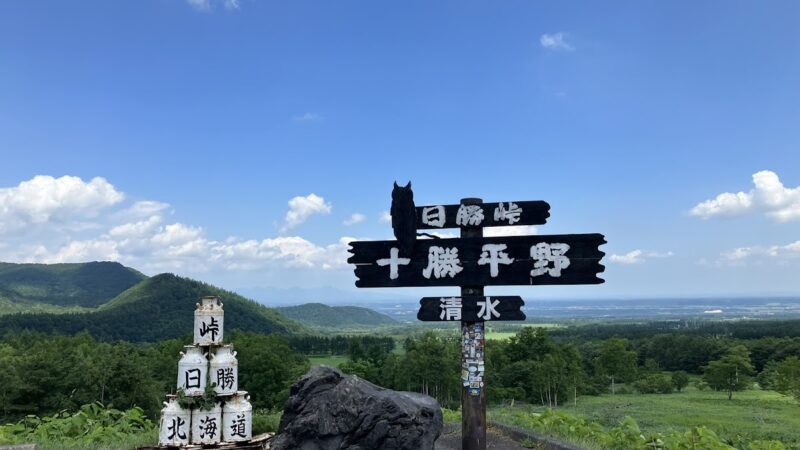
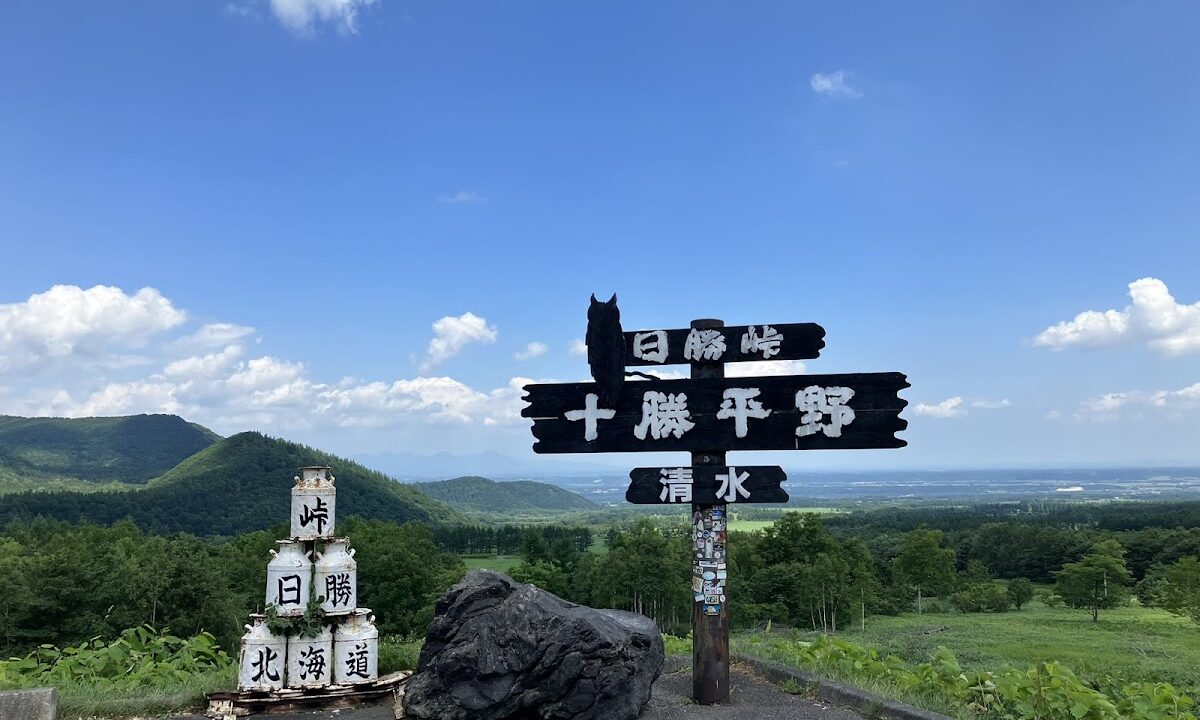
The viewpoint installed near the 5th station of Nisshō Pass, at an elevation of approximately 740-750 meters, is one of Hokkaido’s representative scenic spots. Positioned at a point where National Route 274 forms an S-curve, it offers extremely wide visibility and allows visitors to see the entire Tokachi Plain.
The viewpoint is also called “Nisshō Pass First Viewpoint,” and is open around the clock with no holidays. Parking is also available, making it an ideal rest stop during a drive. However, when coming from the Sapporo direction, it is necessary to turn right to enter the parking area, so caution regarding oncoming traffic is required.
View from the Viewpoint
Standing at the viewpoint, an endless patchwork-like landscape of the Tokachi Plain spreads out before your eyes. The vast Tokachi Plain, which accounts for approximately 10% of Hokkaido’s total area, displays beautiful geometric patterns of crop fields that show different colors depending on the season.
Raising your gaze, you can see the blue-hued Daisetsu Mountain Range and the distant mountain ridges of Akan stretching across the horizon, allowing you to feel the grand scale characteristic of Hokkaido. On clear days, visibility extends to the horizon, allowing you to fully enjoy the expansive landscape unique to Hokkaido.
A sea of clouds sometimes forms in the early morning, creating a fantastic sight where the Tokachi Plain is covered by clouds. This has become a popular photography spot for photography enthusiasts.
History of National Route 274 and Nisshō Pass
Development as a Transportation Route
The main route connecting central Hokkaido and Tokachi was formerly National Route 39, which passes through Karikachi Pass. However, after National Route 274, which connects Hidaka Town at the foot of the western side of Nisshō Pass with Sapporo, was fully opened, the route via Nisshō Pass became the shortest route between Sapporo and Obihiro, developing into a major transportation line.
National Route 274 is also known as the “Sekisho Jukai Road” and is known as a scenic road passing through the Hidaka Mountain Range Erimo Tokachi National Park. Primeval forests spread around the pass, allowing visitors to enjoy a drive while experiencing Hokkaido’s natural environment.
History of Road Development
The road over Nisshō Pass has undergone continuous maintenance to accommodate the severe meteorological conditions and terrain. Various measures for improving safety have been implemented, including the installation of climbing lanes, curve improvements, and measures to ensure visibility.
To ensure winter travel, a full snow-clearing system is in place, and while road closures occur depending on meteorological conditions, efforts continue to maintain access whenever possible.
Changes in Nisshō Pass’s Role with the Extension of Dōtō Expressway
Development of the Expressway Network
In recent years, extensions to the Dōtō Expressway are underway, and plans are progressing to directly connect Sapporo and Obihiro by expressway in the future. When the Dōtō Expressway is fully completed, long-distance trucks and travelers in a hurry will use the expressway, and traffic volume over Nisshō Pass may decrease.
However, National Route 274 via Nisshō Pass will remain an important route for vehicles wanting to avoid expressway tolls and for tourists who want to enjoy the scenery while driving.
Value as a Tourist Route
With the extension of the Dōtō Expressway, Nisshō Pass is transitioning from a major logistics route to a tourist route. Greater attention is being paid to its value as a tourism resource, including the spectacular views from the viewpoint, the surrounding natural environment, and the enjoyment of driving.
Meteorological Conditions at Nisshō Pass and Points for Driving Safety
Severe Winter Meteorological Conditions
Nisshō Pass is one of Hokkaido’s passes with particularly harsh meteorological conditions. Due to its 1,022-meter elevation and the terrain-specific characteristics of the Hidaka Mountain Range, severe blizzards and strong winds frequently occur during winter.
Temperatures are extremely low, making road freezing and black ice likely to develop. Poor visibility often leads to road closures, and when planning to pass through Nisshō Pass during winter, it is necessary to check weather forecasts in advance and make thorough preparations.
How to Check Road Closure Information
Various media, including HBC Hokkaido Broadcasting, deliver real-time footage from road information cameras at Nisshō Pass, allowing travelers to confirm current road surface conditions and visibility. The Hokkaido Development Bureau’s road information website also updates closure and weather information regularly.
When planning winter travel, these information sources should always be checked, and if bad weather is expected, alternative routes and schedule changes should be considered.
Points to Note in Summer
Caution is necessary at Nisshō Pass even during summer. Fog tends to form, causing poor visibility. Also, because of the high elevation, temperatures are lower than at sea level, and weather changes are dramatic, so attention to clothing and equipment is necessary.
The road has sections with continuous sharp curves, so it is important to avoid excessive speed and maintain safe driving.
Access Routes to Nisshō Pass
Access from Obihiro and Tokachi Region
From Obihiro city to Nisshō Pass is approximately 60 km west on National Route 274, about one hour by car. From JR Tokachi-Shimizu Station, it is relatively close at about 15 minutes by car, and the route heads toward the pass from Shimizu town, ascending in elevation.
When approaching from the Tokachi side, you can enjoy the changing scenery as you gradually enter mountainous terrain. When ascending from the Tokachi side, the viewpoint appears on the left.
Access from Sapporo and Central Hokkaido Region
From the Sapporo area, it is approximately 150 km southeast on National Route 274, about two and a half to three hours by car. The route goes through Hidaka Town and gradually ascends in elevation toward the pass.
When coming from the Sapporo area, entry into the viewpoint parking area requires a right turn, so it is necessary to pay careful attention to oncoming traffic. Especially during the tourist season when traffic is heavy, thoroughness in safety confirmation is essential.
Access by Public Transportation
Bus routes that pass through Nisshō Pass are limited, making access by public transportation difficult. Renting a car or participating in a tour is the most practical option.
Renting a car from Obihiro or Sapporo and enjoying a free driving experience is recommended.
Tourist Spots and Points of Interest Around Nisshō Pass
Hidaka Mountain Range Erimo Tokachi National Park
Nisshō Pass is located within the Hidaka Mountain Range Erimo Tokachi National Park, and pristine nature spreads throughout the surrounding area. You can observe primeval forests, alpine plants, wildlife, and other natural features unique to Hokkaido.
As befits an area designated as a national park, conservation of the natural environment is prioritized, allowing visitors to enjoy untouched natural landscapes.
Tourist Spots in Shimizu Town
Shimizu Town, the gateway on the Tokachi side, has facilities where visitors can experience Tokachi’s agriculture and food culture. You can enjoy gourmet food using local ingredients such as Tokachi beef and dairy products.
Tourist Spots in Hidaka Town
In Hidaka Town on the Hidaka side, visitors can enjoy the natural features of the Hidaka Mountain Range and the clear waters of the Sarugani River. There are also facilities where visitors can learn about the unique culture and history of the Hidaka region.
Tips for Enjoying a Drive over Nisshō Pass
Optimal Time to Visit
The optimal time to visit Nisshō Pass is from June to October, during the summer and autumn seasons. Particularly from June to August, the clear-weather rate is high, making it ideal for enjoying the views from the viewpoint.
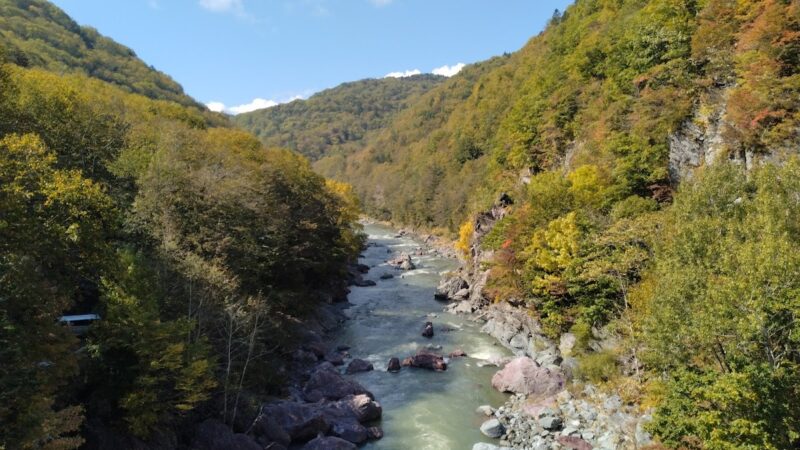
From late September to early October, the surrounding mountains turn to autumn colors, allowing visitors to enjoy the beautiful fall scenery. However, from late October onward, there is a possibility of early snow, so attention to weather information is necessary.
Visiting in the early morning increases the likelihood of encountering a sea of clouds. Particularly in early autumn when temperature differences are large, clouds are likely to form, creating a fantastic landscape.
Nisshō Pass as a Photography Spot
The viewpoint is an ideal location for photography. Using a wide-angle lens, you can capture the vastness of the Tokachi Plain in a single photograph. Using a telephoto lens, you can also zoom in on the distant Daisetsu Mountain Range or the Akan mountain ridges.
The sunrise and sunset periods offer excellent lighting conditions for dramatic photography. However, temperatures drop in the early morning and evening, so do not forget to take precautions against the cold.
As a Rest Stop During Driving
The Nisshō Pass viewpoint is also ideal as a rest stop during long-distance drives between Sapporo and Obihiro. By stopping the car in the parking area and enjoying the scenery from the viewpoint during a rest, you can recover from fatigue and refresh yourself.
However, facilities such as shops and restrooms are limited around the viewpoint, so it is recommended to make preparations in advance.
Safety Driving Points at Nisshō Pass
Response to Curves and Gradients
Nisshō Pass has sections with continuous sharp curves and steep gradients. Especially on downhill sections, speed tends to increase, so it is important to use engine braking and prevent footbrake overheating.
Climbing lanes are installed in some sections, so slower vehicles should use the climbing lane to yield to vehicles behind them.
Prevention of Wildlife Collision Accidents
The area around Nisshō Pass is a habitat for wildlife, and especially in the early morning and evening, animals such as ezo deer may dart onto the road. In sections with wildlife warning signs, reduce speed and pay attention to your surroundings.
If you happen to collide with an animal, it is necessary to stop the car in a safe location and notify the police.
Winter Equipment and Driving Technique
When passing through Nisshō Pass in winter, equipping studless tires is essential. Also, it is wise to carry chains. You should also prepare sufficient fuel, cold-weather clothing, emergency food, and other supplies.
During blizzards with poor visibility, it is important to avoid pushing forward recklessly and instead wait for weather improvement in a safe location.
Structures and Road Facilities at Nisshō Pass
Climbing Lanes and Passing Lanes
Multiple climbing lanes are installed on National Route 274 at Nisshō Pass to improve traffic flow and safety. This allows vehicles with different speeds to pass through safely.
Road Information Provision System
Road information boards are installed around the pass area, providing real-time information about meteorological conditions and traffic regulations. Information cameras are also installed, allowing current conditions to be confirmed from remote locations.
Snow Removal System
Snow removal operates around the clock during winter to ensure passage. However, during fierce blizzards, snow removal cannot keep up, and the road may be closed.
Nisshō Pass and Hokkaido’s Transportation History
Hokkaido Development and Evolution of Transportation Routes
National Route 274, which includes Nisshō Pass, is closely related to Hokkaido’s development history. As development of the Tokachi region progressed, improvement of transportation routes connecting to central Hokkaido became a critical issue, and the route crossing Nisshō Pass was developed.
Initially, crossing the pass was extremely difficult, but with advances in road construction technology, it has become a road that can be traversed throughout the year (weather permitting).
Role as a Major Logistics Artery
The Tokachi region is one of Hokkaido’s leading agricultural areas, and Nisshō Pass has played an important role as a transportation route for agricultural products. Especially during harvest season, many trucks carrying Tokachi agricultural products cross the pass heading toward the central Hokkaido region.
Even as the Dōtō Expressway develops, Nisshō Pass continues to be an important route supporting Hokkaido’s logistics.
Conclusion: The Appeal and Value of Visiting Nisshō Pass
Nisshō Pass possesses the appeal unique to Hokkaido, with its 1,022-meter elevation, harsh meteorological conditions, and above all, the spectacular views from the viewpoint. It combines practical value as a transportation junction connecting central and eastern Hokkaido with appeal as a tourist attraction.
The view of the Tokachi Plain from the viewpoint is a precious experience in which visitors can truly appreciate Hokkaido’s grandeur. The scenery extends to the horizon on clear days, a mystical sea of clouds in the early morning, and beautiful autumn foliage all showcase different faces depending on the season and time of day.
It is also attractive as a driving route, serving as a rest stop during travel between Sapporo and Obihiro and as a place where visitors can experience Hokkaido’s nature.
While there are points to note, such as severe meteorological conditions and the difficulty of winter passage, the pass can be safely visited with appropriate preparation and information gathering. When visiting Hokkaido, be sure to stop at Nisshō Pass and experience its magnificent scenery and Hokkaido’s natural beauty.
As the Dōtō Expressway extends, Nisshō Pass is transitioning from a major logistics route to a tourist route. However, this does not mean the value of Nisshō Pass is diminishing; rather, it means that its value as a tourism resource is receiving greater attention.
Nisshō Pass, where you can feel Hokkaido’s vastness, the harshness and beauty of nature, and the history of development, can be said to be one of the indispensable places for understanding Hokkaido.