
.png)
Rurikou-in (Kyoto Prefecture) Complete Guide: Spectacular Views of Blue and Red Maple Leaves, Detailed Explanation from Reservation Methods for Special Viewing to Must-See Attractions
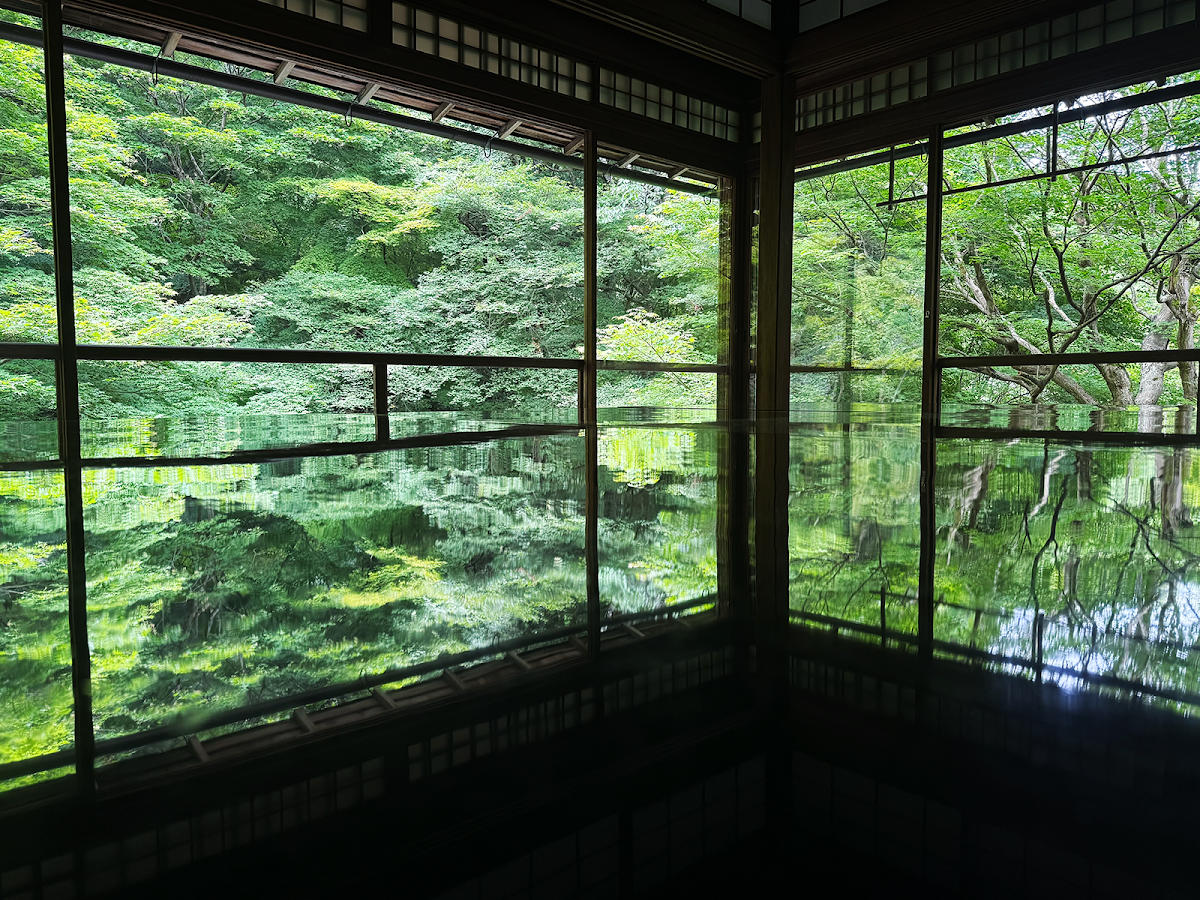
Rurikou-in, located in Yase, Sakyo Ward, Kyoto City, Kyoto Prefecture, is a temple that has gained attention on SNS and in media as a “phantom spectacular view.” In particular, the sight of blue maple leaves and autumn foliage reflected on the desk on the second floor of the study hall continues to fascinate visitors. This article provides detailed explanations of everything you should know before visiting, from the history and highlights of Rurikou-in to how to make reservations for special viewings and access information.
What is Rurikou-in: History and Overview
The Origins of Rurikou-in
Rurikou-in is a temple belonging to Jodo Shinshu Muryojusan Komyoji. Originally, this area was known as “Yase’s kama bath house” from the Heian period and was used by nobility and samurai as a therapeutic site to heal their wounds.
During the Meiji period, it was developed as a villa for a businessman, and from the late Taisho period to the early Showa period, sukiya-style buildings and a Japanese garden were constructed. Afterwards, it was reborn as a temple and became the current Rurikou-in.
The Origin of the Name “Rurikou”
The “Rurikou” in Rurikou-in’s name derives from an alternative name for Yakushi Nyorai, the “Yakushi Rurikou Nyorai” (Medicine Buddha of Lapis Lazuli Light). Ruri refers to a deep blue precious stone and is a word expressing the beauty of the Pure Land. This name symbolizes the beautiful scenery of the temple grounds and deep spirituality.
Highlights of Rurikou-in: Spectacular Views Throughout the Seasons
“Floor Maple” and “Desk Maple” on the Second Floor of the Study Hall
The greatest highlight of Rurikou-in is the scenery of the garden reflected on the black-lacquered desk on the second floor of the study hall. This scene, called “desk maple” or “floor maple,” possesses a beauty like a painting and continues to fascinate many photographers and tourists.
On the polished surface of the desk, the green and autumn foliage outside the windows are vividly reflected, creating a fantastical world with vertical symmetry. This scenery changes its appearance depending on the season, and each visit brings new discoveries.
The Ruri Garden (Ruri no Niwa)
The “Ruri Garden” viewed from the study hall is a Japanese garden covered with more than 100 varieties of maple trees and moss. The sight of maple trees gracefully spreading their branches on a carpet-like moss is truly a beauty that evokes the Pure Land.
The garden is constructed utilizing the slope of the hillside, allowing for enjoyment of three-dimensional scenery with elevation changes. The garden, which constantly changes expression depending on the play of light, never becomes tiresome even if you gaze at it all day long.
The Reclining Dragon Garden (Garyu no Niwa)
From the first floor of the study hall, you can view the “Reclining Dragon Garden.” This garden is a pond landscape garden utilizing the mountain slope and is named after its shape, which resembles a reclining dragon.
The harmonious combination of water flow, stone arrangement, and rich greenery creates a mysterious space where silence and movement coexist. You can enjoy the garden from a different angle than from the second floor of the study hall.
The Mountain Path Garden (Sanroji no Niwa)
The roji garden (tea approach) leading to the tea house “Kitsurukutei” is the “Mountain Path Garden.” This garden, with its beautifully arranged moss and stepping stones, expresses the spirituality of the tea ceremony.
The way moss spreads across the entire surface with stepping stones arranged within it is truly like a “sea of green.” During autumn foliage season, the contrast between the green moss and red maple leaves is spectacular.
Periods for Special Viewing and Reservation Methods
Spring and Autumn Special Viewing
Rurikou-in is not open year-round but is open to the general public only during two special viewing periods each year in spring and autumn.
Spring Special Viewing (Blue Maple Leaves)
- Period: Mid-April to mid-June
- Highlights: Fresh blue maple leaves, fresh green scenery
Autumn Special Viewing (Autumn Foliage)
- Period: Early October to early December
- Highlights: Blazing autumn foliage, red and yellow gradations
Since the exact dates vary each year, it is recommended to check the official website or official SNS for the latest information.
Advance Reservation System
In recent years, Rurikou-in has introduced an advance reservation system to mitigate congestion. Particularly during the autumn foliage season, it is extremely popular, and reservations often fill up immediately after they become available.
Reservation Method
- Access the reservation system from the official website
- Select your desired date and time (time slot restrictions apply)
- Enter necessary information to complete your reservation
- Receive a reservation confirmation email
- Present your reservation confirmation screen or a printed copy on the day
Reservations typically begin approximately one month before the desired viewing date, though this varies by year, so be sure to check official information.
Same-Day Tickets
If you cannot secure an advance reservation, a limited number of same-day tickets may be available. However, the number is limited, and especially on weekends or during peak season, lines can form from early morning.
For guaranteed viewing, it is strongly recommended to make an advance reservation.
Admission Fees and Viewing Hours
Admission Fees
- Adults: 2,000 yen
- Students/Children: 1,000 yen or less (varies by year)
The admission fee includes sutra copying experience and garden viewing. While it may seem expensive, it covers maintenance costs and congestion mitigation measures.
Viewing Hours
- 10:00 AM to 5:00 PM (Reception closes at 4:30 PM)
During special viewing periods, reservations are often made by time slot, and viewing must take place within your designated time. To fully enjoy the gardens, plan to visit with ample time.
Access Methods: Getting to Rurikou-in from Kyoto City
Access by Train
Using the Eizan Electric Railway (Most Recommended)
- From Kyoto City Subway “Kokusaikaikan Station,” walk to the Eizan Electric Railway “Yase Hieizan-guchi Station” (approximately 5 minutes)
- Alternatively, board the Eizan Electric Railway from Demachi Masugata Shotengai Station and get off at “Yase Hieizan-guchi Station”
- Approximately 5-minute walk from the station to Rurikou-in
The views from the Eizan Electric Railway cars are beautiful, making train travel highly recommended. Particularly during autumn foliage season, the observation train “Kirara” also operates.
Using Kyoto Bus
- Board Kyoto Bus lines 17 or 18 from Kyoto Station
- Get off at “Yase Station” bus stop, approximately 7-minute walk
Since buses are susceptible to traffic congestion, plan with ample time.
Access by Car and Parking
Rurikou-in does not have dedicated parking. Additionally, surrounding roads are narrow, and traffic restrictions may be implemented during special viewing periods.
If visiting by car, it is recommended to park in a parking lot in Kyoto City and use public transportation, or use nearby coin parking. However, since the number of spaces is limited, use of public transportation is strongly recommended.
Best Season to Visit and Congestion Status
Spring Blue Maple Leaf Season (April to June)
The spring blue maple leaf season experiences relatively less congestion compared to autumn foliage, often allowing for leisurely viewing. The fresh green of new growth has a refreshing quality that calms the mind.
Recommended Points
- Relatively uncrowded
- Fresh green scenery
- Pleasant early summer weather
- Photography can be done at leisure
Autumn Foliage Season (October to December)
Autumn foliage is the most popular season at Rurikou-in. The sight of maple leaves colored in red, yellow, and orange is spectacular, but congestion is correspondingly intense.
Peak Viewing Period
- Mid to late November is the prime viewing season
- Timing varies by year, so checking the latest information is important
Tips for Avoiding Crowds
- Reserve the earliest time slot on weekdays
- Choose a period slightly before or after peak foliage season
- Rainy days are relatively uncrowded (the gardens have a special charm in the rain)
Photography Tips and Etiquette
Points for Beautifully Photographing Desk Maple
- Maximize Reflection: By including as much of the desk’s reflective surface as possible in your frame, you will create a beautifully symmetrical composition.
- Vary Your Angles: Photographing from angles other than straight ahead creates photos with greater depth.
- Adjust Brightness: When natural light from the window is strong, setting exposure compensation to minus will make colors appear more vivid.
- Choose the Time of Day: Soft morning light is most beautiful, while afternoon light can become too strong.
Photography Etiquette
While Rurikou-in is a popular photography spot, please observe the following etiquette:
- Tripods and selfie sticks are prohibited
- Remember to be considerate of other visitors
- Avoid occupying spaces for extended periods
- Refrain from flash photography
- Maintain a quiet demeanor while viewing
In particular, the area in front of the desk on the second floor of the study is a popular spot, so after taking your photos, please promptly give way to the next visitor.
How to Spend Your Time at Rurikou-in
Sutra Copying Experience
The sutra copying experience is included in the admission fee. The time spent quietly writing with brush in the study hall is a precious experience that calms the mind.
Sutra copying involves copying the Heart Sutra, and beginners receive careful instruction. You can take your completed sutra home or have it enshrined at the temple.
Quietly Gazing at the Garden
The appeal of Rurikou-in lies not only in taking photographs but also in quietly gazing at the gardens. Listen to the changing seasons, the play of light, and the rustling of trees swaying in the breeze as you spend time in stillness.
Sitting on the veranda of the study hall and gazing at the garden without thinking of anything else is an experience that makes you forget the hustle and bustle of daily life.
Nearby Tourist Attractions
Highlights of the Yase Area
Enryakuji Temple on Mount Hiei
From Rurikou-in, you can visit the World Heritage site Enryakuji Temple on Mount Hiei using the Mount Hiei ropeway. As the head temple of the Tendai school of Buddhism, it boasts a history of over 1,200 years.
Yase Maple Leaf Path
This walking trail along the Takano River offers beautiful scenery during autumn foliage season. It is recommended to take a walk here in conjunction with visiting Rurikou-in.
Extending Your Trip from Rurikou-in
Kifune Shrine
Approximately 15 minutes from Rurikou-in by Eizan Electric Railway, Kifune Shrine is an ancient shrine dedicated to the water deity. It is famous for summer riverside dining and winter snowy landscapes.
Kurama-dera
To be visited along with Kifune Shrine is Kurama-dera. This historic temple, where Minamoto no Yoshitsune is said to have trained, is also popular as a power spot.
Precautions and Q&A When Visiting
Clothing and Items to Bring
- Comfortable walking shoes: The temple grounds have stairs and slopes
- Seasonally appropriate clothing: Cool for summer, warm for winter
- Rain gear: Weather can be changeable in this mountainous area
- Camera/Smartphone: Don’t forget to charge
Important Notes While Viewing
- Food and beverages are prohibited
- Smoking is permitted in designated areas only
- Pets are not allowed
- Shoes must be removed indoors
Summary: Spending Time with a Cleansed Heart at Rurikou-in
Rurikou-in is a temple with a particularly special beauty among those in Kyoto. The sight of blue maple leaves and autumn foliage reflected on the desk is an impression that will not be forgotten once seen.
While the special viewing period is limited, this very fact adds to its value and provides visitors with a special experience. By making advance reservations and visiting with ample time, you will be able to more deeply appreciate Rurikou-in’s charm.
The refreshing quality of spring’s blue maple leaves and the splendor of autumn’s foliage are both incomparable in beauty. It is the charm of Rurikou-in that makes you want to visit repeatedly, changing with the seasons.
When visiting Kyoto, by all means spend time with a cleansed heart at Rurikou-in. The quiet time spent forgetting your daily life and facing the beauty of nature will surely remain deeply in your heart.
-800x450.jpg)
-800x450.jpg)
-800x450.png)