
.jpg)
Kamakita Lake (Moroyama Town, Saitama Prefecture) Complete Guide: The Charm of the “Maiden’s Lake” and How to Enjoy It Through the Four Seasons
Kamakita Lake, located in Moroyama Town, Iruma District, Saitama Prefecture, is a quiet artificial lake with a circumference of approximately 2 kilometers. Known by the beautiful nickname “Maiden’s Lake,” it is one of the premier hiking spots in the Kanto region, beloved by numerous tourists and hikers who come to enjoy the natural beauty of spring cherry blossoms, summer fresh greenery, autumn red leaves, and the changing seasons.
This article comprehensively introduces information you should know before visiting Kamakita Lake, including its history and charm, seasonal highlights, access methods, and nearby tourist attractions.
History and Origins of Kamakita Lake
Birth as a Public Works Project During the Great Depression
Kamakita Lake is an agricultural reservoir that began construction in 1929 (Showa 4) and was completed in 1935 (Showa 10). Affected by the Great Depression that occurred in America, it was built as a public works project in Japan that served dual purposes of promoting rural development and creating employment.
At that time, this area was called Yamane Village, and the reservoir was officially called “Yamane Reservoir” and commonly referred to as the “Yamane Storage Pond.” Overcoming financial difficulties and other challenges, this reservoir was completed after six years of effort and has functioned as important infrastructure supporting local agriculture.
Origin of the Nickname “Maiden’s Lake”
Kamakita Lake is fondly known by the elegant nickname “Maiden’s Lake.” It is said that the name comes from the pure and beautiful appearance of the lake that quietly stands among the mountains, resembling a maiden. This nickname has become widely known not only among local residents but also visiting tourists and has become a name symbolizing the charm of Kamakita Lake.
Lake Dimensions and Characteristics
The basic specifications of Kamakita Lake are as follows:
- Circumference: Approximately 2 kilometers
- Maximum Depth: 20 meters
- Storage Capacity: 300,000 cubic meters
- Elevation: Approximately 150 meters
This artificial lake, created by damming the upper reaches of the Otani Wood River, is surrounded by rich forests and provides beautiful scenery throughout the four seasons.
The Charm of Kamakita Lake Through the Seasons
Spring: A Famous Cherry Blossom Spot
In spring, cherry blossoms adorning the lakeshore create a wonderful landscape at Kamakita Lake. The best viewing period is from late March to early April, with Somei Yoshino cherry blossoms at the center, beautifully adorning the area around the lake.
The sight of cherry blossoms reflected on the lake surface is exceptional, and you can enjoy the reflected blossoms while walking along the promenade. Renting a boat and viewing the cherry blossoms from the lake is also recommended, allowing you to savor the beauty of the blossoms from a perspective different from the land.
Spring at Kamakita Lake has relatively little crowding, which is one of its charms, as you can enjoy flower viewing in a quiet environment. Despite its proximity to the city center, you can spend leisurely time away from the hustle and bustle.
Summer: Fresh Greenery and Hiking
In summer, Kamakita Lake is enveloped in vivid fresh greenery. From May to June especially, the greenery is beautiful, making it an ideal time for forest bathing. The trees around the lake turn a deep green, and the green landscape reflected on the lake soothes the heart.
Summer is also the hiking season for the Oku-Musashi Nature Trail, and many hikers visit with Kamakita Lake as their starting point, heading toward Tenran Mountain and the Hanno area. The surrounding area has relatively low elevation, making it an area where even beginners can easily enjoy hiking.
The lakeside is relatively cool even on hot days, and it can be used as a summer retreat. However, insects increase in number during summer, so insect repellent measures are essential.
Autumn: A Spectacular Red Leaf Viewing Spot
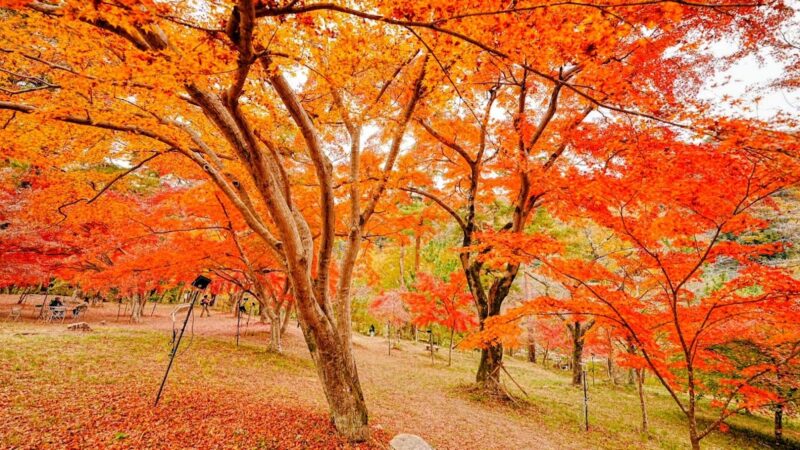
Kamakita Lake shows its most beautiful appearance during the autumn foliage season. The best viewing period is from early to mid-November, with Japanese maples, maples, and zelkova trees turning red and yellow, creating a vivid landscape on the lake surface.
The red leaf viewing spots spread throughout the area around the lake, but the northern area of the lake is particularly dense with trees, offering a colorful landscape. Reflected red leaves on the lake surface are popular as “inverted foliage,” and on calm, windless days, you can especially see a beautiful mirror effect.
Renting a boat to view red leaves from the lake is also exceptional, allowing you to savor the beauty of the foliage from an angle different from the land. Many tourists visit during the foliage season, so visiting on weekdays or early in the morning is recommended.
Winter: Silent Lakeside
Winter at Kamakita Lake is visited by few people, allowing you to spend quiet time. The appearance of the lake seen through the bare branches of trees has a charm different from other seasons. Because the air is clear, you can sometimes see distant mountains.
On cold days, the lake surface may freeze, creating a fantastic landscape. However, in winter, sunset comes early and the road surface may freeze, so safety precautions are necessary.
Activities at Kamakita Lake
Boating
At Kamakita Lake, you can rent a boat from the lakeside boat rental area and enjoy lake touring. As you gently proceed across the lake surface in a hand-rowed boat, you can feel the surrounding nature up close.
The perspective from the boat is completely different from the land, allowing you to enjoy the mountains and forests surrounding the lake in a 360-degree panorama. Especially during cherry blossom and red leaf seasons, the view from the water is exceptional.
Basic Boating Information:
- Operating Period: Year-round (closed on days with poor weather)
- Operating Hours: Around 9:00 to 16:00 (varies by season)
- Fee: Approximately 500 yen for 30 minutes (prices may vary by season)
Herabuna Fishing
Kamakita Lake is also known as a spot for herabuna (crucian carp) fishing. Herabuna live in the lake, and you can see fishing enthusiasts quietly enjoying the sport.
When fishing, it is important to follow etiquette and be considerate of other users and the natural environment. Always take your trash with you, and be careful not to make noise.
Hiking and Trekking
Kamakita Lake is positioned as the northern gateway (starting point) of the Oku-Musashi Nature Trail and is an ideal base for hiking. The approximately 11-kilometer course continues from Kamakita Lake through Tenran Mountain and Takebushi Mountain to downtown Hanno.
Main Hiking Courses:
- Kamakita Lake Circumference Course (approximately 2km, 30 minutes to 1 hour)
- A beginner-friendly course that circles the lake
- Mostly flat terrain, recommended for families
- Kamakita Lake to Tenran Mountain Course (one way approximately 5km, 2 to 3 hours)
- An intermediate-level hiking course
- The view from Tenran Mountain is wonderful
- Kamakita Lake to Hanno Station Course (one way approximately 11km, 4 to 5 hours)
- The complete Oku-Musashi Nature Trail
- For those confident in their fitness level
Strolling and Picnicking
A promenade is maintained along the lakeside, allowing you to enjoy nature while taking a leisurely walk. There are benches and rest areas, so bringing a picnic lunch to enjoy is recommended.
Public restrooms are equipped near the parking area, so families can visit with peace of mind.
Access Information
Access by Car
Visiting by car is most convenient. The following routes are typical:
Using the Kan-etsu Expressway:
- About 20 minutes from Tsurugashima IC (approximately 12km)
- About 15 minutes from Sakado-nishi Smart IC (approximately 10km)
Using the Shukan Road:
- About 20 minutes from Shukan Tsurugashima IC
- About 25 minutes from Sayama Hidaka IC
From the Tokyo area:
- About 1 hour 30 minutes via National Route 16, Prefectural Route 39, and Prefectural Route 186
There are signage along Prefectural Route 186, making it a relatively easy-to-find route. However, as you approach the lake, the road narrows in some areas, so be careful of oncoming traffic.
Parking Information
Kamakita Lake has a free parking lot:
- Capacity: Approximately 40 cars
- Fee: Free
- Hours: 24 hours (though no lighting at night)
During the foliage season and on holidays, the parking lot may become crowded. If the lot is full, consider using nearby temporary parking spaces or rescheduling your visit to a different time.
Access by Public Transportation
When using public transportation, a combination of bus and walking is required:
From JR Hachioji Line and Tobu Ogose Line “Ogose Station”:
- Take a Kawagoe Sightseeing Bus “Kuroyama” or “Kamakita Lake” bus from the west exit of Ogose Station
- Get off at the “Kamakita Lake” bus stop (approximately 15 minutes)
- A short walk from the bus stop
Notes:
- Bus frequency is limited (approximately one bus per hour), so checking the schedule in advance is essential
- On weekends and holidays, bus frequency may be less than on weekdays
- Note the time of the last bus (early evening hours)
Walking Access:
- From Ogose Station on foot: approximately 5km, 1 to 1.5 hours
- Walking while combining it with hiking is another way to enjoy it
Basic Information
Hours and Admission
- Admission Fee: Free
- Viewing Hours: 24 hours (though no lighting at night)
- Boat Operating Hours: Around 9:00 to 16:00 (varies by season and weather)
- Closed Days: None (boats close during bad weather)
Facility Information
- Address: Near 356-7 Shukuya, Moroyama Town, Iruma District, Saitama Prefecture
- Phone: 049-295-2112 (Moroyama Town Industrial Promotion Division)
- Restrooms: Available (near parking area)
- Vending Machines: Available
- Shops: A small shop available (irregular business days and hours)
Precautions When Visiting
- Check the Weather: Weather changes easily in mountainous areas. A raincoat is recommended
- Clothing: For hiking, wear easy-to-walk-in shoes and easy-to-move-in clothing
- Insect Protection: Particularly in summer, insect repellent spray and similar measures are necessary
- Trash: As trash boxes are limited, always take your trash with you
- Winter: Road surfaces may freeze, so studless tires or anti-slip devices are recommended
- Cell Signal: Weak signal areas exist in some locations
Recommended Tourist Attractions in the Area
Shikisai no Oka Park
A park located about 10 minutes by car from Kamakita Lake. Cherry blossoms are beautiful in spring, and spider lilies bloom beautifully in autumn. The late September period for spider lilies is a popular time attracting many tourists. A spacious lawn area is perfect for family picnics.
Shukuya Falls
A waterfall approximately 12 meters high located about a 20-minute walk from Kamakita Lake. A healing spot full of negative ions, it’s a perfect place to stop by during a hiking course. The surrounding area is lush with greenery, and the landscape is beautiful, especially during new foliage and foliage seasons.
Ogose Ume Rin (Ogose Plum Grove)
One of the Kanto’s three famous plum groves, located about 15 minutes by car from Kamakita Lake. From late February to early March, approximately 1,000 plum trees bloom beautifully, and a plum blossom festival is held. Various varieties including white plums, red plums, and weeping plums can be enjoyed.
Moroyama Town Historical and Folk Museum
A museum where you can learn about local history and culture. Materials from when Kamakita Lake was constructed are also displayed, allowing you to develop a deeper understanding of the lake’s history. Free admission, and you can touch the lives and culture of local residents.
Katsuragi Kannon
An ancient temple located about 20 minutes by car from Kamakita Lake. Also known as a famous red leaf viewing spot, many worshippers visit in November. The view from the grounds is wonderful, and you can spend quiet time here.
Nearby Accommodation Information
Hotel Select Inn Saitama Moroyama
A business hotel located about 15 minutes by car from Kamakita Lake. With reasonable prices, clean rooms and complimentary breakfast service are attractions. It’s conveniently located as a base for Kamakita Lake sightseeing.
New Sunpia Saitama Ogose
A comprehensive leisure facility in Ogose Town with accommodation, hot springs, restaurants, and more. About 20 minutes by car from Kamakita Lake with good access, you can relax in a hot spring after sightseeing. Recommended for families and groups.
Nearby Hot Spring Facilities
For those wanting to enjoy day-use hot springs, the following facilities are recommended:
- Ogose Onsen: A day-use hot spring facility in Ogose Town
- Tokigawa Onsen: About 30 minutes by car, a source hot spring facility
- Nago Onsen: Hot spring area in Hanno City, a healing space surrounded by nature
How to Enjoy Kamakita Lake: Model Courses
Half-Day Course (Duration: 3 to 4 hours)
- 9:00 Arrive at Kamakita Lake, park your car
- 9:15 Stroll around the lake (approximately 1 hour circumference)
- 10:30 Boating (30 minutes to 1 hour)
- 11:30 Picnic lunch by the lake
- 12:30 Hike to Shukuya Falls (round trip approximately 1 hour)
- 13:30 Head back
Full-Day Course (Duration: 6 to 8 hours)
- 8:00 Arrive at Kamakita Lake
- 8:15 Stroll and boating around the lake
- 10:00 Hike to Tenran Mountain on the Oku-Musashi Nature Trail (one way approximately 2 to 3 hours)
- 13:00 Lunch around Tenran Mountain
- 14:00 Return to Kamakita Lake from Tenran Mountain (approximately 2 to 3 hours)
- 16:00 Bathe at a hot spring facility near Kamakita Lake
- 17:30 Head back
Special Autumn Foliage Season Course
- Early morning 6:00 Arrive at Kamakita Lake (to avoid crowds)
- 6:15 Photography of red leaves and lake surface illuminated by morning sun
- 7:30 Stroll around the lake
- 9:00 Boat ride to view red leaves from the lake
- 10:30 Move to Shikisai no Oka Park
- 12:00 Lunch in Ogose Town
- 13:30 View red leaves at Katsuragi Kannon
- 15:00 Head back
Photography Spots and Best Shots
Recommended Photography Locations
- Northern Lake Area: Trees are densely packed, especially beautiful during red leaf and fresh foliage seasons
- Near the Boat Rental Area: Can photograph both the lake surface and mountains
- Eastern Lake Promenade: Can photograph morning sun illuminating the lake surface
- From a Boat: 360-degree panoramic view photography possible
Best Timing for Photography
- Morning: 6:00 to 8:00 (sometimes misty and fantastic)
- Evening: 16:00 to 17:00 (evening sun illuminates the lake surface)
- Red Leaf Season: Early to mid-November on sunny days
- Cherry Blossom Season: Early morning from late March to early April
Local Event Information
Various events are held around Kamakita Lake with the changing seasons:
Ogose Ume Rin Plum Blossom Festival
Held from late February to early March annually. Nighttime illumination is also implemented during the festival period, allowing you to enjoy the fantastic appearance of plum blossoms.
Moroyama Town Cherry Blossom Festival
Held in early April, the cherry blossom festival may feature events around Kamakita Lake to enjoy cherry blossoms.
Hiking Events
Hiking events guided by Moroyama Town and Ogose Town authorities are held in spring and autumn. You can walk the Oku-Musashi Nature Trail with a guide, and beginners can participate with peace of mind.
Summary: The Charm of Kamakita Lake
Kamakita Lake, located in Moroyama Town, Saitama Prefecture, is an artificial lake with a circumference of approximately 2 kilometers, fondly known by the nickname “Maiden’s Lake.” Completed as an agricultural reservoir in 1935, this lake is now beloved by many people as a sightseeing spot where you can enjoy the beautiful nature of the four seasons.
Spring cherry blossoms, summer fresh greenery, autumn red leaves, and winter silence each offer different charms, and there are always new discoveries with each visit. The ability to enjoy various activities such as boating, herabuna fishing, and hiking adds to its appeal.
With good access about 1 hour 30 minutes by car from the city center, it can be fully enjoyed on a day trip. Many things to see are nearby, including Shikisai no Oka Park, Shukuya Falls, and Ogose Ume Rin, and you can also take a full day to sightsee leisurely.
Kamakita Lake, surrounded by nature in a quiet environment, is a place where you can forget the hustle and bustle of daily life and refresh yourself. Regardless of whether you’re a family, couple, or solo hiker, it’s a spot everyone can enjoy. Please visit and experience the beautiful scenery of each season.
Frequently Asked Questions (FAQ)
Q1: When is the best time to visit Kamakita Lake?
A1: Kamakita Lake offers beautiful scenery year-round, but the most recommended periods are spring cherry blossom season (late March to early April) and autumn red leaf season (early to mid-November). During the cherry blossom season, the lakeside is adorned with gorgeous colors, and during the red leaf season, the vividly colored trees reflected on the lake create spectacular views. Late May to June, when fresh greenery is beautiful, is also an ideal time for hiking.
Q2: Is there an admission fee for Kamakita Lake?
A2: Admission to Kamakita Lake is free. The parking lot is also available free of charge. However, if you use a boat, an additional fee is required (approximately 500 yen for 30 minutes). No specific fee is required for fishing, but please enjoy it while following proper etiquette.
Q3: Can I visit Kamakita Lake without a car?
A3: Yes, you can visit by public transportation. Take a bus from “Ogose Station” on the JR Hachioji Line or Tobu Ogose Line and get off at “Kamakita Lake” bus stop, which takes about 15 minutes. However, since bus frequency is limited (approximately one per hour), it’s recommended to check the schedule in advance. If walking from Ogose Station takes approximately 5km and 1 to 1.5 hours, but combining it with hiking is another way to enjoy it.
Q4: Are there places to eat near Kamakita Lake?
A4: There are few full-service restaurants immediately around Kamakita Lake, so bringing your own bento box is recommended. There are benches and rest areas by the lake where you can enjoy a picnic. If you move 10 to 15 minutes by car, you’ll find dining options in downtown Ogose or Moroyama towns. A small shop may also operate, but since business hours and days are irregular, it’s safer to prepare drinks and light snacks in advance.
Q5: Can I camp at Kamakita Lake?
A5: Camping and barbecuing are prohibited at Kamakita Lake. Since Kamakita Lake is an agricultural reservoir, it’s necessary to protect the water source. You can enjoy day trips such as strolling, hiking, boating, and fishing. If you want to camp, use a proper campground in the area.
Q6: Can beginners do the hike from Kamakita Lake to Tenran Mountain?
A6: Yes, beginners can attempt it, but some physical fitness is necessary. The course from Kamakita Lake to Tenran Mountain is one-way approximately 5km, taking 2 to 3 hours. The trail is well-maintained, but there are ups and downs, so wear easy-to-walk shoes and easy-to-move clothing. If unsure, starting with a stroll around Kamakita Lake (approximately 2km, 30 minutes to 1 hour) is recommended.
Q7: How crowded is it during red leaf season?
A7: The parking lot may become crowded during the red leaf season, especially on holidays from early to mid-November. Visiting early in the morning (6:00 to 8:00) or on weekdays is recommended. Early morning hours have fewer people and sometimes feature morning mist, creating a fantastic landscape. It’s also recommended to plan with extra time in case the parking lot is full.
Q8: Can I visit with pets?
A8: Yes, you can visit with pets. However, always keep them on a leash and be considerate of other users and wildlife. Always clean up after your pet and protect the surrounding natural environment. If hiking, choose a course considering your pet’s physical ability.
Q9: Can it be enjoyed on rainy days?
A9: Light rain allows for some strolling, but a full rainy day is not recommended. Since it’s in a mountainous area, weather changes easily, and when it rains, the ground becomes slippery. Additionally, boats don’t operate during bad weather. Check the weather forecast and visit on a sunny day.
Q10: Can I visit in winter?
A10: Yes, you can visit in winter. However, road surfaces may freeze, so if driving, studless tires and anti-slip devices are necessary. Also, sunset comes early, so visit early and return while it’s still light. Winter at Kamakita Lake sees few visitors and offers the charm of quiet time.
-800x450.jpg)
-800x450.jpg)
-800x450.jpg)