Former Shiba Detached Palace Garden, Tokyo | Comprehensive Guide to the Charm and Highlights of an Early Edo Period Daimyo Garden
Located at 1-chome, Kaigan, Minato Ward, Tokyo, the Former Shiba Detached Palace Garden (Kyū Shiba Rikyū Onshi Teien) is one of the oldest daimyo gardens remaining in Tokyo, constructed in the early Edo period. Despite its excellent location just a one-minute walk from JR Hamamatsucho Station in the heart of the city, it offers a serene space where history and nature harmonize. Designated as a National Historic Site, this garden, a stroll-through garden with a central pond typical of Edo daimyo gardens, conveys the beauty of each season and its historical value to the present day.
History and Origins of the Former Shiba Detached Palace Garden
The Beginning: Rakujuen Garden in the Edo Period
The history of the Former Shiba Detached Palace Garden dates back to 1678 (Enpo 6). At that time, Tadatomo Okubo, who served as Senior Elder of the Tokugawa shogunate, established his upper residence on this site and created the garden “Rakujuen.” It is considered one of the oldest gardens remaining in Tokyo, comparable to Koishikawa Korakuen, as an early Edo period daimyo garden.
Tadatomo Okubo was the lord of Odawara Domain and was deeply involved in shogunate politics as a daimyo of Sagami Province. The Rakujuen he created gathered the cutting-edge landscape design techniques and aesthetic sensibilities of the time, characterized by stone arrangements and ground divisions modeled after Chinese tales and scenic locations.
Through the Hands of Many Owners
Following the Okubo family, this garden passed through the ownership of various daimyo, including the Kishu Tokugawa family and the Ii family. With each era, modifications were made, and the garden’s completeness was enhanced. Throughout the Edo period, it remained a space embodying the finest of daimyo culture, serving as an estate garden for daimyo who stayed in Edo for the sankin-kotai (alternate attendance) system.
The Era as Shiba Detached Palace
After the Meiji Restoration, in 1875 (Meiji 8), the Imperial Household Ministry purchased this land and garden and reorganized it as the “Shiba Detached Palace.” A detached palace refers to an imperial villa, and it became a facility used by Emperor Meiji and other members of the imperial family. During this period, the garden underwent major renovations, and modern elements were added.
Donation to Tokyo and Public Opening
The garden suffered significant damage from the Great Kanto Earthquake of 1923 (Taisho 12). The following year, in 1924 (Taisho 13), in commemoration of the marriage of Emperor Showa (then Crown Prince), this garden was donated to Tokyo City (present-day Tokyo). The name “Onshi” (imperial gift) signifies that it was bestowed by the Emperor.
Tokyo City undertook repairs and improvements to the garden and opened it to the public in April of that year as the “Former Shiba Detached Palace Imperial Gift Garden.” Since then, for nearly 100 years, it has been a beloved recreational space for residents and tourists alike.
Designation as a National Historic Site
In June 1979 (Showa 54), the Former Shiba Detached Palace Garden was designated as a National Historic Site under the cultural property designation name “Former Shiba Detached Palace Garden.” Its historical and artistic value as a precious cultural property conveying the appearance of an early Edo period daimyo garden was formally recognized.
Characteristics and Landscape Design Style of the Garden
The Stroll-Through Garden with a Central Pond
The Former Shiba Detached Palace Garden exemplifies the “stroll-through garden with a central pond” style, a typical form of Edo period daimyo gardens. A stroll-through garden is a garden design where pathways wind around a central pond, allowing visitors to enjoy various landscapes while walking.
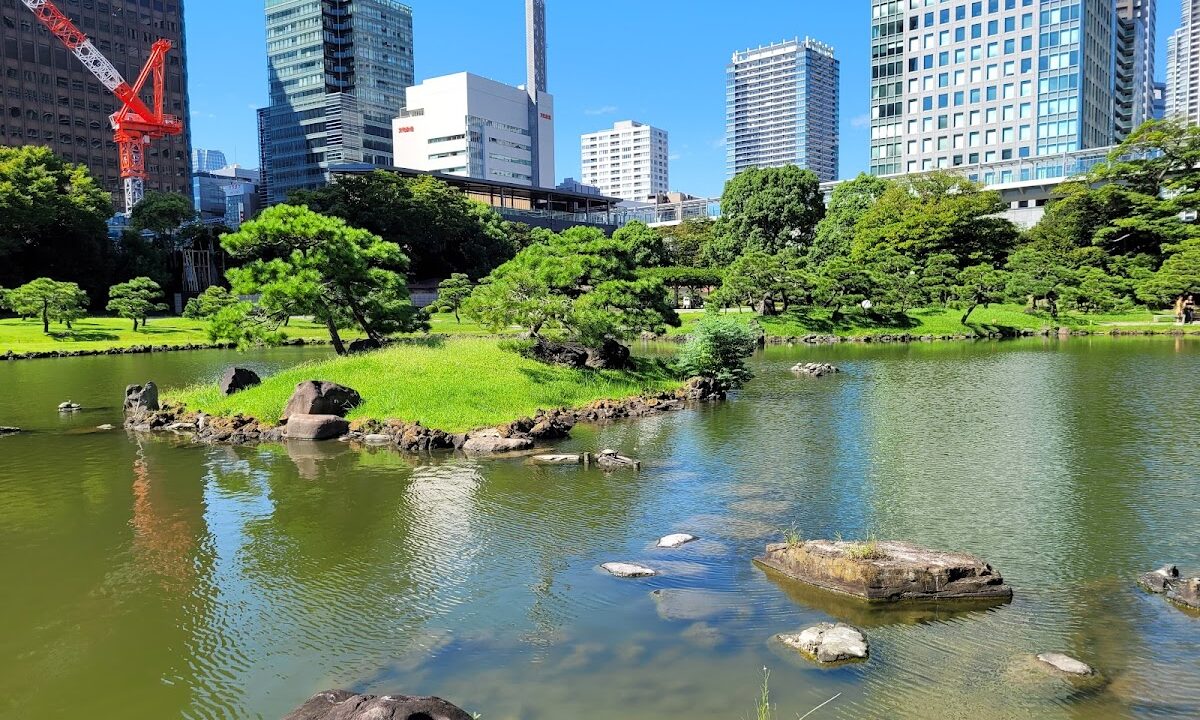
The design features a large central pond (spring) with a composition of artificial hills, islets, bridges, and stone arrangements that create changing scenery with each step forward. This style became the mainstream in daimyo gardens from the mid-Edo period onward and can be said to represent the culmination of Japanese garden aesthetics.
Compact Yet Comprehensive Space Composition
The Former Shiba Detached Palace Garden covers approximately 43,175 square meters (about 4.3 hectares), which is relatively compact for a daimyo garden. However, within this limited space, excellent spatial composition and skillfully arranged stone work create a design that conveys a sense of spaciousness and variety greater than its actual area.
Because the garden can be enjoyed in a short amount of time, it is popular with tourists and business people who want to make effective use of their limited time in the city center. Combined with its location just a one-minute walk from Hamamatsucho Station, many office workers from nearby buildings visit during lunch breaks.
Early Edo Period Aesthetic Style
A characteristic feature of early Edo period garden design is the incorporation of ornamental elements based on Chinese tales and legends. In the Former Shiba Detached Palace Garden, one can see throughout the garden intellectual devices that educated people of the time could understand and appreciate, such as stone arrangements expressing the legendary Chinese immortal paradise of “Mount Penglai.”
Highlights and Main Attractions
Stone Arrangement Representing Mount Penglai
One of the garden’s greatest attractions is the stone arrangement representing “Mount Penglai,” where in Chinese legend immortals seeking eternal life are said to dwell. The large and small stones positioned in the pond symbolize the distant mountains of the legendary paradise floating in the sea, embodying the ideal realm that Edo period daimyo yearned for.
This stone arrangement incorporates precious blue stones brought from Kishu (present-day Wakayama Prefecture) and renowned stones gathered from various regions. The composition—from the arrangement and size to the angle of each stone—is meticulously calculated and demonstrates the high level of landscape design technology of the time.
Islets and Bridges
Multiple islets are positioned within the pond, connected by bridges. Particularly noteworthy are the various styles of bridges visible, including stone bridges constructed from assembled stones and simple wooden bridges. By crossing these bridges while circulating through the garden, one’s perspective changes, allowing for constantly fresh scenery.
Trees such as pines are planted on the islets, and their reflections in the pond create a picturesque beauty. The landscape of the islets, which changes with the season and time of day, never becomes monotonous no matter how many times one visits.
Snow-Viewing Lantern
Multiple stone lanterns are positioned throughout the garden, but the snow-viewing lantern standing by the pond shore is particularly known for its elegant form. Its distinctive shape—with a large roof section and short legs—was designed to appreciate the sight of snow accumulated on it.
The image of the lantern reflected on the water surface is especially beautiful at dusk or after rain and is popular as a photography spot.
Dry Landscape and Stone Arrangement Techniques
While being a pond-and-islet stroll garden, the garden also partially incorporates dry landscape techniques. The dry landscape method, which expresses water flows and seas using stones and sand without water, has the effect of adding variation and depth to limited space.
The stone arrangements visible throughout the garden are not merely stacked stones but represent natural rocky mountains, waterfalls, and coastal landscapes, with meaning and aesthetic consideration embedded in each. By observing these stone arrangements, one can experience the techniques and aesthetic sensibilities of Edo period landscape designers.
The Embankment of West Lake and Chinese Pine
An embankment modeled after the embankment of “West Lake,” a scenic location in Zhejiang Province, China, crosses the pond. Walking on this embankment creates a visual effect as if dividing the pond into two, adding variation to the garden.
Black pines called “Chinese pines” are planted on both sides of the embankment, their powerful branching adding elegance to the garden. In Japanese gardens, pines are important compositional elements, and as evergreens that maintain their green color throughout the year, they symbolize eternity and longevity.
Flowers and Nature Through the Seasons
Spring Colors
In spring, plum blossoms and cherry blossoms color the garden. From late February to early March, plum blossoms begin to bloom, with white and red varieties announcing the arrival of early spring. Subsequently, from late March to early April, cherry blossoms bloom, and the sight of cherry blossoms reflected on the pond’s surface is extraordinarily beautiful.
Additionally, in spring, various wildflowers sprout, transitioning to the season of fresh greenery. Azaleas and satsuki also blossom with vivid colors at various locations in the garden, adding brightness to the spring garden.
Summer Green and Coolness
From early summer through summer, the garden covered in deep green creates a refreshing atmosphere. Waterlilies bloom on the pond, coloring the water surface. Additionally, iris plants are visible, adding atmosphere to the rainy season garden.
The green shade of the trees alleviates the summer heat of the city center, and the breeze crossing the pond’s surface brings a coolness like nature’s air conditioning. The summer garden becomes an oasis that makes one forget the bustle of the city.
Autumn Foliage
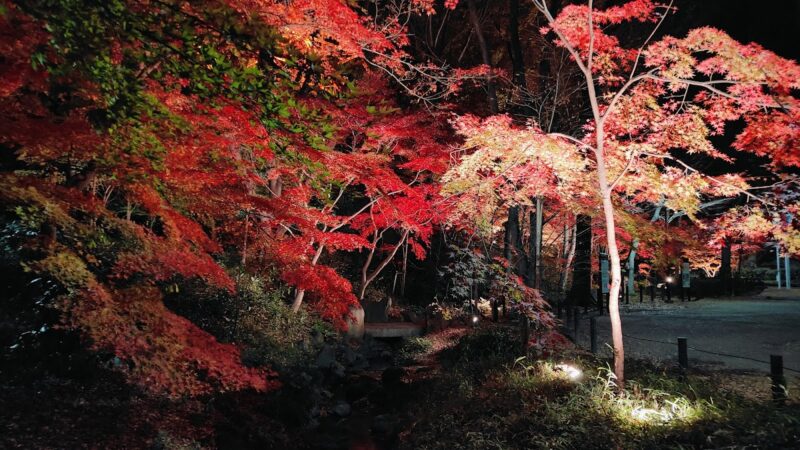
From mid-November to early December, the season of autumn foliage arrives. Maples and lacquer trees turn red and yellow, creating beautiful scenery through contrast with the evergreen pines.
The sight of autumn leaves reflected in the pond is like a painting, and many photography enthusiasts visit. On clear autumn days, the harmony of the blue sky, foliage, and pond water creates a wonderful three-color accord.
Winter Silence
In winter, deciduous trees shed their leaves, making the garden’s skeleton—the stone arrangements and spatial composition—more clearly visible. This season offers an excellent opportunity to understand the garden’s design philosophy and techniques.
If snow falls, one can enjoy the snow landscape as befits the snow-viewing lantern’s name. Additionally, even amid winter’s barrenness, evergreen pines and bamboo maintain their green, imparting vitality to the winter garden. Waterfowl frequently visit the pond, adding movement to the quiet winter landscape.
Facilities and Services in the Garden
Administrative Office and Service Center
There is an administrative office in the garden that responds to inquiries and consultations about the garden. Pamphlets and garden maps are also distributed, allowing first-time visitors to feel secure as they stroll.
Rest Areas
Multiple benches are placed throughout the garden for rest, allowing visitors to sit and enjoy the scenery during their walk. However, locations where food consumption is permitted are limited, so it is recommended to check in advance.
Restroom Facilities
Restrooms are provided in the garden and are kept clean. Barrier-free restrooms are also available, with consideration given to wheelchair users and elderly visitors.
Photography
Photography within the garden is generally permitted (tripod use and commercial photography may require prior permission). The beautiful scenery of each season is an excellent subject for photography enthusiasts. In particular, dramatic photographs can be taken in early morning light or during late afternoon slanting light.
Basic Information and Access
Location
〒105-0022 1-chome, Kaigan, Minato Ward, Tokyo
Operating Hours
9:00 AM to 5:00 PM (admission until 4:30 PM)
*Operating hours may be extended during certain periods. Please check the official website for the latest information during event periods.
Closed Days
Year-end and New Year (December 29 to January 1)
Admission Fee
- General: 150 yen
- Age 65 and over: 70 yen
- Elementary school and younger: Free
- Junior high school students who are residents or students in Tokyo: Free (student ID required)
*For details on group discounts and annual passes, please check the official website or inquire on site.
Payment Methods
Cash is accepted, as well as commuter pass IC cards, credit cards, and electronic money (including UnionPay cards). With cashless payment options available, entry is smooth.
Access
By Train
- 1 minute walk from the north exit of JR Yamanote Line/Keihin-Tohoku Line Hamamatsucho Station
- 3 minutes walk from Toei Oedo Line/Asakusa Line Daimon Station
- 10 minutes walk from Yurikamome Takeshiba Station
Located directly outside the north exit of JR Hamamatsucho Station, access from the city center is excellent. Direct access is available to Hamamatsucho Station from Haneda Airport via Tokyo Monorail, making it convenient for tourists.
By Car
Approximately 5 minutes from the Shiba Park exit of the Metropolitan Expressway Central Ring. However, there is no dedicated parking lot for the garden, so you will need to use nearby coin parking. Public transportation is recommended.
Combining with Nearby Facilities
Nearby Hamamatsucho Station area has tourist attractions such as Zojoji Temple, Tokyo Tower, and Takeshiba Pier. A sightseeing plan combining a visit to the Former Shiba Detached Palace Garden with these facilities is also popular.
In particular, Zojoji Temple is within walking distance and holds high historical value as the family temple of the Tokugawa shoguns and is famous as a photography spot with Tokyo Tower in the background.
Events and Special Openings
Seasonal Events
Throughout the year, the Former Shiba Detached Palace Garden hosts various events. During cherry blossom season in spring and autumn foliage season in fall, extended operating hours and illumination may be offered.
Additionally, guided garden tours, gardening classes, photography classes, and other cultural events are regularly held, allowing for deeper understanding of the garden’s charm.
Special Openings
Opportunities are sometimes provided to view normally inaccessible areas or appreciate the garden from special perspectives. This event information can be found on the Tokyo Metropolitan Parks Association’s official website and the garden’s bulletin boards.
Cultural Heritage Week
During the “Cultural Heritage Week” held every autumn, expert commentary on the garden’s history and value as a cultural property may be provided. This is an excellent opportunity to learn about the value of the garden designated as a National Historic Site.
Notes and Etiquette for Your Visit
Rules for Garden Protection
- Do not touch plants or stone arrangements, or step on them
- Take all trash with you or dispose of it in designated locations
- Pets are prohibited (except guide dogs and assistance dogs)
- Fishing and collection of organisms in the pond are prohibited
- Eating and drinking in areas other than designated locations should be avoided
Consideration for Other Visitors
- Keep conversations quiet and avoid excessive noise to appreciate the garden peacefully
- Yield to others when passing on the garden paths
- When using tripods for photography, please be considerate during busy times
- Commercial photography requires prior permission
Barrier-Free Information
The main garden paths are paved, and wheelchair users can enjoy strolling through the garden. However, some areas have steps and slopes, so visiting with an assistant is recommended. Barrier-free restrooms are available.
If you contact the administrative office in advance, you can receive route guidance designed for wheelchair users.
Cultural Heritage Value of the Former Shiba Detached Palace Garden
Culmination of Edo Period Landscape Design Technology
The Former Shiba Detached Palace Garden is a precious cultural property conveying Edo period early landscape design technology and aesthetic sensibilities to the present day. Its preservation of basic structure and design over more than 340 years is highly valued from a cultural heritage protection perspective.
Preserved Greenery Amid Urbanization
The preservation of this garden amid Tokyo’s rapid urban development could be called miraculous. In modern times surrounded by high-rise buildings, its value as a space where one can experience an Edo period landscape is immeasurable from a historical and cultural standpoint.
Educational Value
The garden also serves as a living teaching material for learning about Japanese traditional culture and landscape design techniques. It is utilized as an educational venue in schools, providing opportunities for children to encounter Japanese history and culture.
Coordination with Nearby Tourist Attractions
Zojoji Temple
Located approximately a 10-minute walk away, Zojoji Temple is a head temple of the Jodo sect and is known as the family temple of the Tokugawa shoguns. Its landscape with Tokyo Tower in the background represents a fusion of tradition and modernity and is a popular Tokyo scenery.
Hama Detached Palace Garden
Also a Tokyo metropolitan garden, the Hama Detached Palace Garden can be accessed approximately a 20-minute walk or by water bus. Also designated as a Special National Historic Site, this Edo period daimyo garden is characterized by its brackish pond drawing in seawater. A popular route is the “garden tour” visiting both gardens.
Tokyo Tower
Located approximately a 15-minute walk away, Tokyo Tower is an observation tower cherished as a symbol of Tokyo. After enjoying the garden, ascending Tokyo Tower allows you to view the cityscape in its entirety and see the garden you just visited from above.
Takeshiba Pier
From Takeshiba Pier, approximately a 10-minute walk away, boats depart for the Izu Islands, and Tokyo Bay cruises are also available. Water buses can connect to Asakusa and Odaiba, making it a convenient hub for Tokyo sightseeing.
Ways to Enjoy by Time of Day
Early Morning (Right After Opening)
Right after opening, the garden is relatively quiet, allowing for peaceful appreciation of the landscape. The soft morning light is ideal for photography, and the scenery reflected on the pond’s water surface can be captured beautifully. Nearby residents often stop by before heading to work, and you can savor the garden’s beauty in the stillness of the urban morning.
Daytime
Daytime sees many tourists and business people. Particularly during lunch breaks, office workers from neighboring buildings come to stroll. This is when sunlight illuminates the entire garden, and the green of plants appears vibrant.
Evening (Before Closing)
The slanting light of evening creates shadows in the garden and produces dramatic scenery. Stone arrangements and trees illuminated by the setting sun display different expressions than they do in the morning or midday. As closing time approaches, fewer people visit, allowing for peaceful enjoyment of the garden.
Year-Round Usage Suggestions
As a Tourist Destination
If visiting as part of Tokyo sightseeing, it is recommended to combine it with other tourist attractions in the Hamamatsucho Station area. Visiting the garden in the morning, followed by tours of Zojoji Temple and Tokyo Tower, is a popular half-day route that allows you to experience both Edo history and modern Tokyo.
For Refreshment During Business
For those working in Hamamatsucho and surrounding office districts, the Former Shiba Detached Palace Garden is an ideal refreshment spot. Even 30 minutes during a lunch break allows sufficient time for a stroll, and contact with nature provides stress relief and mood refreshment.
As a Photography Location
The beautiful scenery of each season offers compelling subjects for photography enthusiasts. Cherry blossoms and autumn foliage seasons, snow landscapes, and other occasions provide excellent photography opportunities. Photography utilizing early morning or evening light is also popular.
As a Dating Spot
The garden’s quiet and calm atmosphere makes it suitable as a dating spot. Away from the urban hustle and bustle, couples can enjoy leisurely conversation while strolling. Seasonal flowers and beautiful scenery create a romantic atmosphere.
As a Family Outing
The reasonable admission fees and free entry for elementary school children and younger are attractive features for families. It provides an opportunity for children to encounter Japanese traditional culture and nature. However, to protect the garden, remember to maintain proper etiquette—children should not run about or shout loudly.
Conclusion: Experiencing the Refinement of Edo in the City Center
The Former Shiba Detached Palace Garden is a precious cultural property that conveys the appearance of an early Edo period daimyo garden while located in central Tokyo. It combines its wonderful location just a one-minute walk from Hamamatsucho Station, affordable admission of 150 yen, and the appeal of a full-fledged Japanese garden designated as a National Historic Site.
With a history spanning more than 340 years, this garden has undergone numerous changes while retaining strong characteristics of early Edo period landscape design techniques and aesthetic sensibilities. As a stroll-through garden with a central pond, it offers changing scenery with each step, and features attractions such as stone arrangements representing Mount Penglai, islets, and a snow-viewing lantern placed throughout.
The landscape created by flowers and foliage of each season, along with evergreen pines, presents different expressions depending on when and what time you visit. It can be enjoyed year-round: spring cherry blossoms, summer green shade, autumn foliage, and winter snow scenes.
Its versatility is also appealing, as it can be used for various purposes including tourism, business breaks for refreshment, photography, dating, and family outings. It is truly a precious oasis in central Tokyo where one can forget urban bustle and experience the landscape loved by Edo period daimyo.
When visiting Tokyo, be sure to stop by the Former Shiba Detached Palace Garden. You will surely be able to experience the beauty and profound depth of Japanese garden design in a space where history and nature harmonize.