Shinjuku Gyoen Tokyo Complete Guide|Enjoying the Four Seasons at an Urban Oasis – Attractions and Highlights
Located in the heart of Tokyo, yet enveloped in a silence and greenery that feels like a different world—that is Shinjuku Gyoen. Surrounded by towering buildings, this national park serves as an urban oasis beloved by many throughout the year, and is a premier garden representing Tokyo where history, nature, and culture are beautifully integrated.
This article conveys the charm of Shinjuku Gyoen in full. From the historical background spanning the Edo period, three distinct garden styles, plants enjoyable throughout the four seasons, access methods, admission fees, and event information—we comprehensively explain information you should know before visiting.
What is Shinjuku Gyoen? A Vast National Park in Central Tokyo
Shinjuku Gyoen (新宿御苑) is a national park spanning the wards of Shinjuku and Shibuya in Tokyo, managed by the Ministry of the Environment. Its area covers approximately 58.3 hectares (about 583,000 square meters), equivalent to roughly 12 Tokyo Domes. Across its extensive grounds spanning approximately 3.5 kilometers in circumference are arranged three distinct garden styles—a Japanese garden, a French formal garden, and an English landscape garden—each boasting its own unique beauty.
Location and Accessibility
The official address of Shinjuku Gyoen is “11 Naitou-machi, Shinjuku Ward, Tokyo.” Despite being located in a prime spot in the city center, it is accessible from multiple stations, a major appeal of its excellent convenience. Positioned within walking distance of Shinjuku Station, yet stepping inside the garden, the urban bustle feels as if it never existed—truly deserving of the title “urban oasis.”
Position as a National Park
Shinjuku Gyoen is one of three national parks managed by the Ministry of the Environment, along with the Imperial Palace East Gardens and Kyoto Imperial Park. Since opening to the public in 1949 (Showa 24) as a national park, it has become a place of respite beloved not only by Tokyo residents but also by domestic and international tourists.
History of Shinjuku Gyoen|From the Edo Period to the Present Day
The history of Shinjuku Gyoen traces back to the Edo period. Understanding the transitions this land has undergone allows deeper comprehension of the cultural value the garden possesses.
Edo Period: The Age of Samurai Residences
During the Edo period, this location was home to a lower villa of the Takato Domain lord, the Naitou clan. The vast grounds were part of an area called “Naitou Shinjuku,” a significant samurai residence in the suburbs of Edo. Said to have been a verdant area even then, it was a place known to the people of Edo.
Meiji Period: Becoming an Imperial Garden
Following the Meiji Restoration, in 1872 (Meiji 5), the land came under government jurisdiction and was utilized as an agricultural experiment station. Subsequently, in 1879 (Meiji 12), it was reorganized as the “Shinjuku Botanical Imperial Garden,” being reborn as a garden of the imperial household.
In 1906 (Meiji 39), it was renamed “Shinjuku Gyoen” and was comprehensively developed as imperial property. During this period, French horticulturist Henri Martinet designed Western-style gardens, establishing the foundation of the three garden styles seen today.
Pre-War Period: Imperial Cherry Blossom Viewing and Chrysanthemum Exhibition
Pre-war Shinjuku Gyoen was an important venue for imperial social functions. Particularly famous were the “Cherry Blossom Viewing” and “Chrysanthemum Exhibition.” The cherry blossom viewing, held in spring, was a splendid event where noted figures from various fields were invited. In autumn, the chrysanthemum exhibition, showcasing imperial traditional chrysanthemum cultivation techniques, enchanted many visitors.
Post-War Period: New Departure as a National Park
During World War II, Shinjuku Gyoen suffered significant damage from air raids. Following the war, in 1949 (Showa 24), under the jurisdiction of the Ministry of Health (now the Ministry of the Environment), it opened to the public as a national park, transforming from an imperial garden into a national treasure.
Even today, the chrysanthemum exhibition, a tradition continuing from before the war, is held annually in autumn, conveying culture connected to the imperial family.
Shinjuku Gyoen’s Three Garden Styles|A Competition of Distinct Beauties
The greatest characteristic of Shinjuku Gyoen is that three distinct garden styles coexist within a single space. Each is designed based on its own aesthetic philosophy, allowing different landscapes to be enjoyed as one progresses.
Japanese Garden: The Pinnacle of Traditional Beauty
Located in the southeastern part of the garden, the Japanese garden is designed as a pond-viewing strolling garden. With a large pond at its center, one can enjoy various perspectives while strolling through the surrounding area.
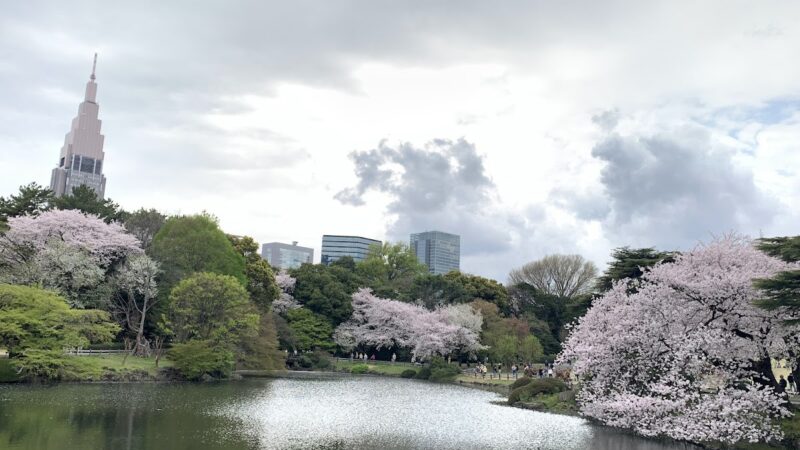
The pond features arched bridges and stone bridges, and the sight of four-season plants reflected on the water surface embodies Japanese traditional aesthetic sense. Particularly during spring cherry blossoms, early summer’s fresh greenery, and autumn’s colored leaves, it becomes a popular spot attracting many photography enthusiasts.
The tea houses “Rakuha-tei” and “Shoten-tei” are also located in the Japanese garden area, allowing close appreciation of traditional Japanese architectural beauty.
French Formal Garden: Geometric Beauty
Spreading near the former main gate (Sendagaya Gate), the French formal garden is characterized by symmetrical geometric design. Linearly arranged plantings, meticulously trimmed hedges, fountains, and other features evoke the dignified atmosphere of European palace gardens.
The tree-lined avenue of approximately 200 plane trees is magnificent, particularly forming a beautiful tunnel during fresh greenery and autumn color seasons. This style was designed by a French horticulturist in the Meiji period and has become a valuable historical legacy of Western-style gardening in Japan.
English Landscape Garden: Open Grassy Space
Spreading through the central part of the garden, the large lawn represents a typical English landscape garden space. The expansive lawn of approximately 10,000 square meters creates a landscape of painterly beauty.
High trees are positioned around the perimeter, and combined with naturally undulating terrain, it is designed to feel natural despite being artificial. This open space is bustling with people spending their own time—picnicking, reading, sketching, and more.
Spring brings cherry blossoms, autumn brings yellow foliage of the tulip tree coloring the lawn, showing a different face each season.
Shinjuku Gyoen’s Four Seasons|Highlights Throughout the Year
One of the great charms of Shinjuku Gyoen is its rich nature changing throughout the four seasons. The seasonal transitions woven by approximately 10,000 trees and diverse flowering plants offer new discoveries with each visit.
Spring: Renowned Cherry Blossom Destination
Shinjuku Gyoen is Tokyo’s representative cherry blossom spot. With approximately 65 varieties and 1,000 cherry trees throughout the garden, one can enjoy cherry blossoms over an extended period from mid-February through late April.
Beginning with early-blooming varieties like Kan-zakura and Kanhi-zakura, followed by Somei-yoshino, double-petaled varieties, and finally late-blooming Kanzan, a phenomenon called “cherry blossom relay” can be observed due to staggered blooming times among varieties. Particularly impressive are the Somei-yoshino trees around the large lawn and the weeping cherry blossoms in the Japanese garden.
Beyond cherry blossoms, spring also features approximately 300 flowering dogwoods, azaleas, and rhododendrons, vividly coloring the garden.
Summer: Seeking Fresh Greenery and Coolness
Early summer in Shinjuku Gyoen is enveloped in verdant green. The shade created by approximately 10,000 trees is a natural air conditioner that makes one forget the city’s summer heat.
In June, approximately 1,000 roses bloom at their finest, with the rose garden captivating visitors with vivid colors and fragrance. In the Japanese garden pond, water lilies display beautiful blossoms, their floating appearance creating a refreshingly cool aesthetic.
The greenhouse displays tropical and subtropical plants year-round, with summer showcasing them in their most vibrant state.
Autumn: Colored Leaves and Chrysanthemum Exhibition
Autumn in Shinjuku Gyoen is known for its beautiful autumn foliage. From mid-November through early December, Japanese maples, ginkgos, plane trees and others turn color, dyeing the garden golden and crimson.
Particularly striking is the foliage around the Japanese garden pond, with the sight of autumn leaves reflected in water enchanting many photographers. The plane tree avenue in the French formal garden also creates an impressive golden leaf tunnel.
Another autumn highlight is the “Chrysanthemum Exhibition,” continuing the imperial household’s traditional practice. Held annually from around November 1st to 15th, this event displays large chrysanthemums and cascading varieties cultivated using traditional techniques, allowing appreciation of the chrysanthemum’s diversity and beauty.
Winter: Beauty of Silence and Early Blossoms
Winter in Shinjuku Gyoen appeals through the serene atmosphere created by leafless trees. The beautiful branch structure becomes visible, and the garden’s skeleton is revealed, offering landscapes different from other seasons.
From late January, early-blooming plums begin to flower, and in February, Kan-zakura and Kanhi-zakura blossoms announce spring’s arrival. Additionally, the greenhouse displays tropical plants year-round, allowing plant appreciation in a warm environment even during cold winters.
Winter is when relatively fewer visitors arrive, making it ideal for those wishing to stroll leisurely through the garden.
Shinjuku Gyoen’s Highlights|Essential Spots Guide
Vast Shinjuku Gyoen contains numerous highlights worth noting. Whether visiting for the first time or as a repeat visitor, here are recommended points.
Great Greenhouse: Treasure Trove of Tropical and Subtropical Plants
The great greenhouse, which reopened after renovation in 2012, is one of Shinjuku Gyoen’s popular spots. Within approximately 2,700 square meters of greenhouse space, approximately 2,700 species of tropical and subtropical plants are displayed.
Brilliantly colored flowers such as orchids and begonias, rare carnivorous plants, and giant palm trees—plants rarely seen in Japan can be enjoyed year-round. Particularly in winter, the warm greenhouse attracts many visitors for plant appreciation.
Former Western-Style Imperial Rest House: Important Cultural Property Historic Structure
Built in 1896 (Meiji 29), the former western-style imperial rest house is designated as a national important cultural property. Used as the imperial household’s rest area, this building well preserves characteristics of Meiji-era Western architecture.
Currently, only external viewing is available, but its elegant appearance serves as an important symbol conveying Shinjuku Gyoen’s history.
Forest of Mother and Child: Natural Observation Area
Located on the garden’s northern side, the “Forest of Mother and Child” is a special area designed for natural observation. This area recreates the Musashino mixed deciduous forest, allowing observation of living creatures such as insects and wild birds.
With small streams and ponds, it is popular among families as a valuable place for children to experience nature. It is a precious spot to experience satoyama (semi-natural landscape) nature while in the city.
Tamamo Pond: Heart of the Japanese Garden
Located at the heart of the Japanese garden, Tamamo Pond is one of Shinjuku Gyoen’s representative landscapes. Surrounded by plantings of cherry blossoms and colored leaves, it creates beautiful scenery throughout the four seasons.
With an arched bridge spanning the pond, the view from the bridge is an excellent photo spot. The sight of sky and trees reflected in the water surface, as well as carp swimming, embodies traditional Japanese garden aesthetics.
Ancient and Specimen Trees
Shinjuku Gyoen is home to numerous giant trees exceeding 100 years old. Particularly famous are giant specimens such as tulip trees, bald cypress, and Himalayan cedar.
These trees, carefully cultivated since the Meiji period, have quietly watched over the garden’s history. The autumn foliage of the tulip tree is particularly spectacular, dyeing the large lawn golden.
Access Methods|How to Reach Shinjuku Gyoen
Shinjuku Gyoen is centrally located and accessible from multiple stations. Choose the best route according to your purposes and departure point.
Access by Train
Access to Shinjuku Gate:
- Approximately 10-minute walk from South Exit of JR, Keio, and Odakyu “Shinjuku Station”
- Approximately 5-minute walk from E5 Exit of Tokyo Metro Marunouchi, Fukutoshin Lines, and Toei Shinjuku Line “Shinjuku-sanchome Station”
Access to Oikido Gate:
- Approximately 5-minute walk from Exit 1 of Tokyo Metro Marunouchi Line “Shinjuku Gyoen-mae Station”
Access to Sendagaya Gate:
- Approximately 5-minute walk from JR Sobu Line “Sendagaya Station”
- Approximately 10-minute walk from Exit 1 of Tokyo Metro Fukutoshin Line “Kitasando Station”
- Approximately 5-minute walk from A5 Exit of Toei Oedo Line “National Stadium Station”
Characteristics of the Three Gates
Shinjuku Gyoen has three entrances, each closest to different gardens and attractions.
- Shinjuku Gate: Most heavily used gate. Closest to the great greenhouse and information center.
- Oikido Gate: Nearest to the Japanese garden, recommended for beginning a quiet stroll.
- Sendagaya Gate: Near the French formal garden, ideal for those wishing to first see the former western-style imperial rest house.
Parking Information
Shinjuku Gyoen has no dedicated parking. Use of public transportation is recommended, but those arriving by car must use nearby coin parking. However, as the area’s parking fees are expensive, train access is advised.
Operating Hours, Admission Fees, and Closed Days
Before visiting Shinjuku Gyoen, confirm operating hours and admission fees.
Operating Hours
- October 1 to March 14: 9:00 AM–4:30 PM (admission until 4:00 PM)
- March 15 to June 30, August 21 to September 30: 9:00 AM–6:00 PM (admission until 5:30 PM)
- July 1 to August 20: 9:00 AM–7:00 PM (admission until 6:30 PM)
As operating hours vary by season, it is recommended to confirm the latest information on the official website before visiting.
Admission Fees
- General: 500 yen
- Age 65 and over: 250 yen (proof of age required)
- Students (high school and above): 250 yen (student ID required)
- Middle school and below: Free
An annual passport is also available at 2,000 yen for general admission and 1,000 yen for high school students and above, allowing unlimited entry. Economical for frequent visitors.
Closed Days
- Every Monday (if Monday is a national holiday, the following weekday)
- Year-end and New Year’s (December 29 to January 3)
※During special opening periods (March 25 to April 24, November 1 to 15), the garden opens on Mondays.
Events at Shinjuku Gyoen|Year-Round Activities
Various events are held at Shinjuku Gyoen throughout the year.
Chrysanthemum Exhibition (Around November 1–15)
The grandest event continuing the imperial household’s tradition. Large chrysanthemums, cascading varieties, and Edo chrysanthemums, sown using traditional techniques, create magnificent flower displays. During this period, it is a special opening period with Monday operations.
Cherry Blossom Viewing Party (Past Event)
This once-famous spring event is no longer held, but general visitors may freely enjoy cherry blossoms.
Guided Tours and Natural Observation Programs
Volunteer-guided garden tours and expert-led natural observation programs are regularly held. Recommended for those wishing deeper knowledge of Shinjuku Gyoen.
Photo Exhibitions and Thematic Displays
The information center regularly hosts photo exhibitions and thematic displays featuring Shinjuku Gyoen’s four seasons and history.
How to Spend Time at Shinjuku Gyoen|Enjoyment Guide
Picnicking and Cherry Blossom Viewing
Shinjuku Gyoen allows picnicking with picnic mats spread on grass. However, alcoholic beverages are prohibited. Additionally, play equipment (balls, frisbees, etc.) is prohibited.
Photography
Beautiful four-season landscapes are ideal subjects for photography enthusiasts. Particularly during cherry blossom and autumn foliage seasons, many photographers visit. However, tripod use may be restricted; confirm beforehand.
Commercial photography and drone use require permission.
Strolling and Walking
The garden’s approximately 3.5-kilometer perimeter makes it ideal for walking. With many paved paths, strolling is easy even with strollers and wheelchairs.
Sketching and Reading
Many enjoy sketching and reading in the quiet environment. Weekdays are particularly uncrowded, allowing leisurely time.
Shinjuku Gyoen Facilities and Services
Restaurants and Cafes
“Café Hanaoki” in the garden offers light meals and beverages. Terrace seating allows dining while viewing the verdant scenery. Additionally, shops sell Shinjuku Gyoen original goods, beverages, and ice cream.
Information Center
Near Shinjuku Gate, the information center distributes garden maps, displays exhibits, and provides rest areas. First-time visitors are advised to gather information here first.
Restrooms and Nursing Rooms
The garden has multiple restrooms with accessible facilities. Nursing rooms are also available, ensuring comfortable visits with small children.
Wi-Fi
Free Wi-Fi is available in certain garden areas.
Important Notes and Rules for Visiting Shinjuku Gyoen
The following rules are established to maintain a comfortable environment.
Prohibited Actions
- Bringing in and consuming alcoholic beverages
- Using play equipment (balls, frisbees, badminton, etc.)
- Accompanying pets (except guide dogs and other assistance animals)
- Riding bicycles, kick scooters, etc.
- Playing musical instruments
- Using open flames
- Harvesting plants
- Unauthorized drone flights
Recommended Actions
- Take all garbage away (no garbage cans are provided)
- Considerate behavior toward other visitors
- Treat plants and living creatures carefully
- No entry into designated restricted areas
Nearby Tourist Attractions to Shinjuku Gyoen
When visiting Shinjuku Gyoen, nearby attractions can also be enjoyed.
Shinjuku Area
- Around Shinjuku Station: Center for shopping, cuisine, and entertainment
- Kabuki-cho: Representative red-light district of Tokyo
- Shinjuku Golden Gai: Retro bar street
Akasaka and Aoyama Area
- Meiji Shrine Outer Gardens: Famous for ginkgo tree avenue
- National Stadium: Main venue of the 2020 Tokyo Olympics
- Aoyama Street: Fashionable shops and cafes
Shibuya Area
- Yoyogi Park: Another urban oasis
- Meiji Shrine: Tokyo’s representative shrine
- Shibuya Scramble Crossing: Globally famous intersection
Summary of Shinjuku Gyoen’s Appeal
Shinjuku Gyoen is a special place where rich nature, history, and culture merge, despite being in central Tokyo. The historical background spanning the Edo period, three distinct garden styles, approximately 10,000 trees and diverse plants that change throughout four seasons, and serene space forgetting urban bustle—all of these make Shinjuku Gyoen a premier national park representing Tokyo.
Spring cherry blossoms, summer fresh greenery, autumn colored leaves and chrysanthemum exhibition, winter serenity. Whichever season you visit, new discoveries and healing can be found in Shinjuku Gyoen’s charm. When visiting Tokyo, be sure to experience the urban oasis at Shinjuku Gyoen.
Managed by the General Incorporated Association National Park Association and overseen by the Ministry of the Environment, Shinjuku Gyoen is a valuable cultural asset and natural heritage. It is important that each visitor follows the rules and passes this beautiful place on to the future.
Shinjuku Gyoen, located at 11 Naitou-machi, Shinjuku Ward, Tokyo, is truly an urban oasis open to all people who wish to enjoy nature in the city.