Ueno Toshogu Park Tokyo Complete Guide | History, Attractions, Access, and Cultural Facilities Explained in Detail
Ueno Toshogu Park is a representative urban park of Japan located in Taito Ward, Tokyo. Commonly known as “Ueno Park,” it encompasses a vast area of approximately 530,000 square meters (approximately 53 hectares), where abundant nature, historic structures, and world-class cultural facilities harmonize. This article provides a thorough explanation of the appeal of Ueno Toshogu Park, from its history to the latest attractions.
About Ueno Toshogu Park
Ueno Toshogu Park was one of the first parks designated in Japan in Meiji 6 (1873). The name “Toshogu” (imperial gift) derives from the fact that it was presented by the Imperial Household Ministry to Tokyo City in Taisho 13 (1924). Currently managed by the Tokyo Metropolitan Government Bureau of Construction, the Ueno Toshogu Park Management Office of the Tokyo Metropolitan Government Bureau of Construction East Park and Greenery Division (Phone: 03-3828-5644) conducts daily management and operations.
The park is directly connected to the west exit (park exit) of Ueno Station, providing convenient access from the urban center. It is composed of the scenic terrain “Ueno no Yama” (Ueno Hill) and the beautiful waterside landscape of “Shinobazu Pond,” creating a distinctive natural environment.
Basic Information
- Location: Taito Ward, Tokyo; Ueno Park and Ikenohata 3-chome
- Area: Approximately 530,000 square meters (approximately 53 hectares)
- Operating Hours: Open year-round (24 hours)
- Admission: Free (some facilities charge admission)
- Administrator: Tokyo Metropolitan Government Bureau of Construction
- Inquiry: Ueno Toshogu Park Management Office 03-3828-5644
History of Ueno Toshogu Park
From the Edo Period to the Early Meiji Era
The history of Ueno Toshogu Park dates back to the early Edo period. In Kanei 2 (1625), Tenkai, a close associate of Tokugawa Ieyasu, founded Kaneiji Temple at this site. Kaneiji Temple flourished as the hereditary temple of the Tokugawa family and possessed extensive temple grounds. During the Edo period, cherry blossom viewing was permitted within the temple grounds, and the site was enjoyed as a recreational destination for commoners. The haiku poet Matsuo Basho also composed poems about the cherry blossoms of Ueno, demonstrating that the area was known as a cherry blossom viewing spot from the Edo period.
During the Boshin War (1868) at the end of the Edo period, most of Kaneiji Temple’s buildings were destroyed in the Ueno War. The Meiji government debated how to address this burnt-out land.
Designation as Japan’s First Park
In Meiji 6 (1873), partly due to the recommendation of Dutch military physician Antonius Bauduin, the Ueno area was designated as Japan’s first “park.” This was a groundbreaking event in introducing the Western park system. Initially, it was called “Ueno Park.”
Renaming to Imperial Gift Park
In Taisho 13 (1924), to commemorate the marriage of the then Crown Prince (later Emperor Showa), parks under the Imperial Household Ministry were presented to Tokyo City. In commemoration of this “imperial gift,” the official name became “Ueno Toshogu Park.” Through this event, the park also acquired the character of a symbolic place connecting the imperial family and the citizens.
From the Post-War Period to the Present
After World War II, Ueno Toshogu Park underwent development as a symbol of recovery. From the 1950s through the 1960s, cultural facilities such as the Tokyo National Museum, National Museum of Nature and Science, and National Museum of Western Art were successively constructed, establishing its position as a center for culture and the arts.
Continued improvement has been made since the Heisei period, and today the park has become a representative Tokyo tourist destination visited by approximately 10 million people annually.
Attractions of Ueno Toshogu Park
Japan’s Premier Cherry Blossom Destination
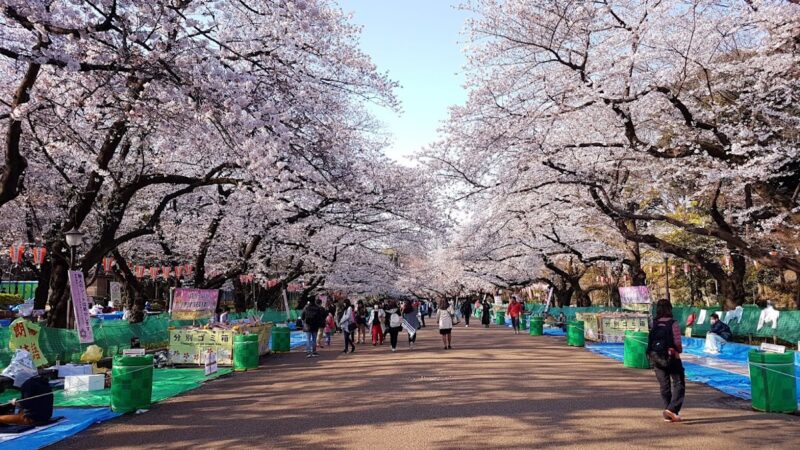
Ueno Toshogu Park is nationally famous as a representative cherry blossom viewing spot in Japan. Approximately 800 cherry trees are planted throughout the park, and the cherry tree avenue along the central garden path is breathtaking.
Cherry Blossom Viewing Season and Varieties
Ueno Park allows visitors to enjoy cherry blossoms for approximately two months, from early-blooming Higan cherry to late-blooming varieties.
- Higan Cherry: Mid-February to early March
- Yoshino Cherry: Late March to early April (peak season)
- Wild Cherry and Double Blossom Cherry: Mid to late April
During the peak Yoshino Cherry season from late March to early April, hundreds of thousands of cherry blossom viewers gather daily. Lanterns are lit in the evening, allowing visitors to enjoy an enchanting night cherry blossom viewing.
History of Cherry Blossom Viewing
The cherry blossom viewing culture of Ueno has continued since the Edo period, becoming established as a spring enjoyment for commoners. After the Meiji era, “Ueno’s cherry blossoms” became a Tokyo spring tradition, serving as the subject of numerous literary works and paintings.
The Four Seasons of Shinobazu Pond
Shinobazu Pond is located on the south side of Ueno Toshogu Park and is a natural pond with a water surface of approximately 110,000 square meters. The pond is divided into three areas: the “Lotus Pond,” “Boat Pond,” and “Cormorant Pond,” each with distinct appeal.
The Splendor of the Lotus Pond
From late July to early August, the lotus flowers at Shinobazu Pond bloom profusely across the water surface. The lotus flowers at dawn are particularly beautiful, attracting many photography enthusiasts. Since lotus flowers open in the morning and close in the afternoon, viewing is recommended in the morning.
Leisure at the Boat Pond
At the Boat Pond, visitors can rent hand-powered boats or swan boats to enjoy water recreation. During cherry blossom season, there is the luxury of viewing cherry blossoms from a boat.
Birdwatching Spot
Despite its location in the urban center, Shinobazu Pond is known as a birdwatching spot where diverse bird species can be observed. Various birds such as ducks, herons, and cormorants can be seen throughout the four seasons.
Historic Temples and Shrines
Historic temples and shrines with significant cultural value are scattered throughout Ueno Toshogu Park.
Kaneiji Temple
Founded as the hereditary temple of the Tokugawa family, Kaneiji Temple lost many buildings during the Boshin War, but the Konponchudo (main hall) and other structures remain today, conveying the weight of history.
Kiyomizu Kannondo
Founded in Kanei 8 (1631), Kiyomizu Kannondo is characterized by its stage-style architecture modeled after Kyoto’s Kiyomizu Temple. It is designated as a National Important Cultural Property, and visitors can appreciate its architectural beauty.
Hanazono Inari Shrine
Said to be the oldest shrine in Ueno Park, Hanazono Inari Shrine attracts devotees as a shrine dedicated to commercial prosperity and favorable relationships. The vermilion torii gates lining the approach are beautiful and popular as a photography spot.
Toshogu Shrine
Toshogu Shrine, dedicated to Tokugawa Ieyasu, is characterized by its opulent and resplendent shrine building coated in gold. The shrine building is designated a National Important Cultural Property, conveying architectural styles of the early Edo period. The “Peony Garden” held from winter to spring is also a notable attraction.
Sculptures and Memorials
Numerous historically important sculptures and memorials are installed throughout the park.
- Saigo Takamori Statue: An iconic symbol of Ueno Park
- Hideyo Noguchi Statue: Honoring the achievements of the medical scientist
- Prince Komatsunomiya Akihito Statue: Japan’s oldest Western-style bronze statue
- Doctor Bauduin Statue: Commemorating the Dutch physician who contributed to the park’s establishment
By visiting these memorials, one can experience Japan’s modern history.
Cultural Facilities within Ueno Toshogu Park
The greatest characteristic of Ueno Toshogu Park is the concentration of world-class cultural facilities within walking distance. The abundance of facilities, impossible to visit in a single day, is also called the “cultural forest.”
Museums
Tokyo National Museum
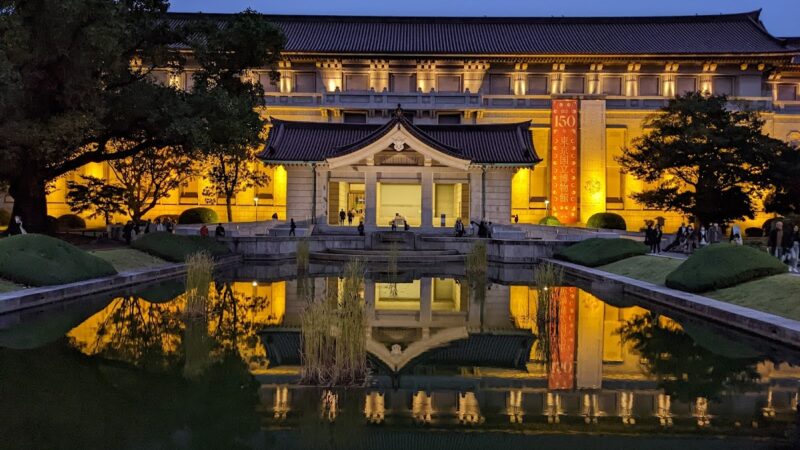
Japan’s oldest museum, the Tokyo National Museum houses approximately 120,000 Japanese and Oriental artworks and archaeological artifacts. It comprises five exhibition buildings: the Main Hall, Oriental Hall, Hesei Hall, Horyu-ji Treasure Hall, and Kuroda Memorial Hall, displaying numerous National Treasures and Important Cultural Properties.
- Opening Hours: 9:30 AM to 5:00 PM (varies by season)
- Closed: Mondays (or the following day if Monday is a holiday), New Year holidays
- Admission: General admission ¥1,000 (permanent exhibition)
National Museum of Nature and Science
Japan’s only national comprehensive science museum houses approximately 4.8 million items related to natural history and the history of science and technology. The two permanent exhibition halls—the Japan Hall and the Earth Hall—offer exhibits ranging from dinosaur fossils to cutting-edge science and technology.
- Opening Hours: 9:00 AM to 5:00 PM (until 8:00 PM on Fridays and Saturdays)
- Closed: Mondays (or the following day if Monday is a holiday), New Year holidays
- Admission: General admission ¥630 (permanent exhibition)
National Museum of Nature and Science Attached Natural Education Garden
While not within the park, this affiliated facility in Shiraganedai, Minato Ward, is an important natural spot in Tokyo.
Art Museums
Tokyo Metropolitan Museum of Art
This public art museum opened in Taisho 15 (1926) and hosts diverse exhibitions throughout the year. The building, designed by architect Kunio Maekawa, is also notable.
- Opening Hours: 9:30 AM to 5:30 PM (varies by exhibition)
- Closed: 1st and 3rd Mondays (or the following day if Monday is a holiday), New Year holidays, maintenance periods
- Admission: Varies by exhibition
National Museum of Western Art
The National Museum of Western Art, registered as a UNESCO World Heritage site as part of “Architectural Works of Le Corbusier,” houses Western artworks from the Middle Ages to the early 20th century. It features permanent exhibitions of masterworks by Monet, Renoir, Rodin, and other masters.
- Opening Hours: 9:30 AM to 5:30 PM (until 8:00 PM on Fridays and Saturdays)
- Closed: Mondays (or the following day if Monday is a holiday), New Year holidays
- Admission: General admission ¥500 (permanent exhibition)
Ueno no Mori Museum
A private art museum operated by the Japan Art Association, it hosts exhibitions across diverse genres.
Zoo
Ueno Zoo
Japan’s oldest zoo, opened in Meiji 15 (1882), houses approximately 3,000 animals of about 350 species. Giant pandas are particularly famous. Divided into the East and West gardens and connected by monorail.
- Opening Hours: 9:30 AM to 5:00 PM
- Closed: Mondays (or the following day if Monday is a holiday), New Year holidays
- Admission: General admission ¥600
Music and Arts Facilities
Tokyo Metropolitan Festival Hall
A concert hall opened in Showa 36 (1961), hosting opera and classical music performances. Known for its excellent acoustics, it features performances by leading domestic and international artists.
Former Tokyo School of Music Gagakudo
Built in Meiji 23 (1890), this is Japan’s oldest wooden Western-style music hall, designated a National Important Cultural Property. Japanese music history legends such as Rentaro Taki and Kosaku Yamada studied here.
Access to Ueno Toshogu Park
Ueno Toshogu Park is conveniently accessible by public transportation, being located in the urban center.
Access by Train
JR Lines
- JR Yamanote, Keihin-Tohoku, Joban, Takasaki, and Utsunomiya Lines “Ueno Station” Park Exit, 2 minutes walk
Tokyo Metro
- Tokyo Metro Ginza and Hibiya Lines “Ueno Station,” 5 minutes walk
- Tokyo Metro Chiyoda Line “Yushima Station,” 5 minutes walk
- Tokyo Metro Chiyoda Line “Nezu Station,” 10 minutes walk
Keisei Line
- Keisei Main Line “Keisei Ueno Station,” 3 minutes walk
Access by Bus
Multiple bus routes including Toei Bus and Taito Ward’s “Megurin” circulation bus stop near Ueno Park.
Access by Car and Parking
There are no general-purpose parking facilities within the park. Paid parking facilities in the surrounding area must be used. However, parking and surrounding roads become congested on weekends, holidays, and during cherry blossom season, so public transportation is strongly recommended.
Major Surrounding Parking Facilities
- Ueno Parking Center (approximately 400 spaces)
- Keisei Ueno Station Parking
- Various coin parking facilities
How to Enjoy Ueno Toshogu Park
Enjoying by Season
Spring (March to May)
Cherry blossom season is when Ueno Park is most vibrant. Visitors can stroll through the cherry tree avenue along the central garden path and experience the luxury of viewing cherry blossoms from a boat on Shinobazu Pond. After the cherry blossoms, azaleas and tree peonies also come into bloom.
Summer (June to August)
From late July to early August, the lotus at Shinobazu Pond is in full bloom. Early morning lotus viewing is an exceptional experience. During summer vacation, cultural facilities host special exhibitions and workshops for children.
Autumn (September to November)
During the fall foliage season, ginkgo and maple trees color the park. Befitting the artistic autumn, museums and art galleries host numerous high-quality exhibitions.
Winter (December to February)
The peony garden at Toshogu Shrine blooms in the winter, with tree peonies flowering within protective snow enclosures. Higan cherries begin blooming in February, allowing visitors to feel the arrival of an early spring.
Suggested Itineraries
Cultural Facility Full Appreciation Course (Full Day)
- 9:00 AM Arrival at JR Ueno Station
- 9:30 AM to 12:00 PM Tokyo National Museum visit
- 12:00 PM to 1:00 PM Lunch in the park
- 1:30 PM to 4:00 PM National Museum of Western Art visit
- 4:00 PM to 5:00 PM Toshogu Shrine and Kiyomizu Kannondo visit
- 5:00 PM to 6:00 PM Shinobazu Pond area stroll
Nature Strolling Course (Half Day)
- 10:00 AM Arrival at JR Ueno Station
- 10:00 AM to 11:00 AM Central garden path cherry tree stroll
- 11:00 AM to 12:00 PM Toshogu Shrine and Hanazono Inari Shrine visit
- 12:00 PM to 1:00 PM Boat experience at Shinobazu Pond
- 1:00 PM to 2:00 PM Lunch around Shinobazu Pond
Zoo and Nature Course (Family-Friendly)
- 9:00 AM Enter Ueno Zoo at opening
- 9:00 AM to 12:00 PM Zoo visit (pandas are best viewed early)
- 12:00 PM to 1:00 PM Lunch within the zoo
- 1:00 PM to 3:00 PM Play in park open spaces
- 3:00 PM to 4:00 PM Birdwatching at Shinobazu Pond
Event Information
Ueno Toshogu Park hosts various events throughout the year.
Regular Events
- Ueno Cherry Blossom Festival (late March to early April)
- Shinobazu Pond Lotus Festival (late July)
- Ueno no Mori Museum Grand Prize Exhibition (once annually)
- Tokyo Spring Music Festival (March to April)
- Ueno no Mori Art Festival (irregular)
Latest event information can be found on the Tokyo Metropolitan Government Bureau of Construction official website and the official websites of cultural facilities.
Tourist Attractions Near Ueno Toshogu Park
Ameya Yokocho (Ame Alley)
A shopping street spanning approximately 500 meters from JR Ueno Station to Okachimachi Station, featuring about 400 shops. All manner of items—food, clothing, and miscellaneous goods—are available, creating an atmosphere of vibrant energy.
Yanaka, Nezu, Sendagi (Yanesen)
A downtown area north of Ueno Park where old-fashioned charm remains. Old houses converted to cafes, galleries, and shops with distinctive character dot the neighborhood, making for enjoyable strolling.
Yushima Tenjin
A shrine dedicated to Sugawara no Michizane, the deity of scholarship, attracting many worshippers during exam season. The plum festival held from February to March is also famous.
Precautions for Using Ueno Toshogu Park
Park Usage Rules
- No Open Flames: Barbecues and fireworks are prohibited
- Take Trash Home: No trash bins are provided in the park
- Dog Walking: Always use a leash and take waste home
- Bicycle Entry: Prohibited in some areas
- Noise: Be considerate of other park users
Special Rules During Cherry Blossom Season
Special rules apply to park use during the cherry blossom blooming period.
- Party Time Restrictions: Evening parties limited to 8:00 PM
- Spot Reservation Restrictions: Advance spot reservations from the previous day prohibited
- Sound Equipment Use Restrictions: Large-volume equipment such as karaoke prohibited
Barrier-Free Information
Ueno Toshogu Park has progressed in barrier-free accessibility.
- Accessible Restrooms: Installed at multiple locations in the park
- Ramps: Equipped on major garden paths
- Wheelchair Rentals: Available at facilities such as Ueno Zoo
- Tactile Paving: Installed on main routes
Cultural facilities also accommodate wheelchair users, with elevators and ramps.
Natural Environment and Improvements at Ueno Toshogu Park
Ecosystem Conservation
Ueno Toshogu Park maintains a rich ecosystem despite its urban location. The Tokyo Metropolitan Government Bureau of Construction is advancing initiatives for biodiversity conservation.
Vegetation Management
Approximately 8,000 trees are managed, including diverse species such as cherry, ginkgo, zelkova, and camphor trees planted throughout. Regular health diagnoses by tree doctors and appropriate pruning maintain tree health.
Bird Protection
Approximately 100 bird species have been confirmed, centered on Shinobazu Pond. The area plays an important role as a waypoint for migratory birds and serves as a popular birdwatching destination.
Disaster Prevention Functions
Ueno Toshogu Park is designated as a broad evacuation site by Tokyo and functions as a disaster prevention hub capable of accommodating approximately 200,000 people.
- Emergency toilet installation
- Emergency water supply facilities
- Disaster prevention storage placement
- Evacuation route security
Ongoing Improvement Projects
The Tokyo Metropolitan Government Bureau of Construction continues improvement projects to enhance Ueno Toshogu Park’s appeal and convenience.
Major Recent Projects
- Garden path pavement repairs
- Restroom renovation and modernization
- LED conversion of lighting equipment
- Multilingual signage
- Wi-Fi hotspot installation
Cultural Value of Ueno Toshogu Park
Center for Culture and the Arts
Since the Meiji era, Ueno Toshogu Park has developed as the center of Japanese culture and the arts. “Ueno Hill” is highly valued nationally and internationally as a place where quality artistic culture can be appreciated.
UNESCO World Heritage Status
The Main Hall of the National Museum of Western Art was registered as a UNESCO World Heritage site in 2016 as part of “Architectural Works of Le Corbusier.” This made Ueno Park a site possessing world cultural heritage.
Function as an Educational Venue
Museums and art galleries within the park actively promote collaboration with school education.
- School group programs
- Teacher training workshops
- Children’s workshops
- University collaborative research
Through these efforts, Ueno Toshogu Park serves the role of a “living classroom.”
Conclusion
Ueno Toshogu Park is a vast urban park of approximately 530,000 square meters located in Taito Ward, Tokyo, and opened as Japan’s first park in Meiji 6 (1873). It is nationally famous as a premier cherry blossom viewing destination, with approximately 800 cherry trees blooming spectacularly in spring, attracting hundreds of thousands of cherry blossom viewers.
The park’s greatest characteristic is the concentration within walking distance of world-class cultural facilities including the Tokyo National Museum, National Museum of Nature and Science, National Museum of Western Art, Tokyo Metropolitan Museum of Art, and Ueno Zoo. These facilities provide opportunities to encounter quality artistic culture and natural science, captivating numerous visitors year-round.
The attractions are endless, including the lotus at Shinobazu Pond, historic temples and shrines, and abundant natural environments. Its exceptional accessibility, being only a 2-minute walk from JR Ueno Station, makes it ideal as a base for Tokyo sightseeing.
Ueno Toshogu Park continues to serve as an urban oasis where nature and culture harmonize, as a recreational space for residents and as a Tokyo representative tourist destination that attracts visitors from throughout Japan and the world. It is a truly unique park where one can simultaneously enjoy seasonal natural beauty and world-class cultural facilities.
Through the Tokyo Metropolitan Government Bureau of Construction’s ongoing management and improvement, Ueno Toshogu Park will continue to evolve and communicate further appeal. Be sure to visit this park that preserves history and tradition while continuously creating new value.