Koshu Kaido Ginkgo Tree-lined Avenue (Hachioji City, Tokyo) Complete Guide | Best Viewing Season, Access, and Surrounding Attractions 2025
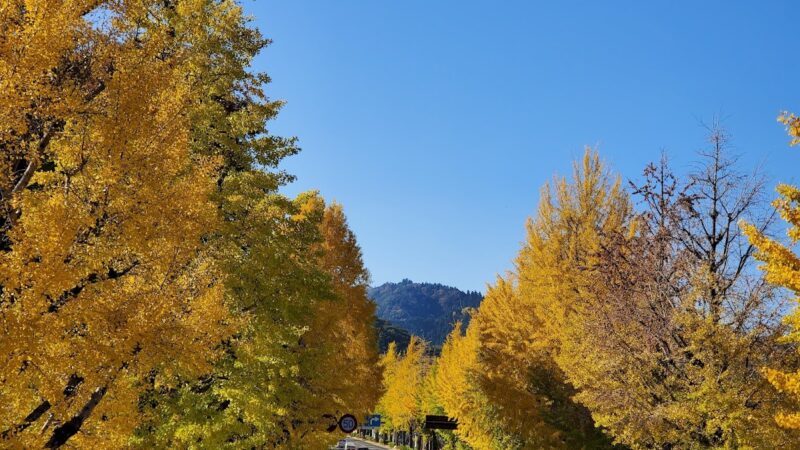
The ginkgo tree-lined avenue along Koshu Kaido running through Hachioji City, Tokyo is one of Tokyo’s premier autumn foliage spots, showcasing a spectacular golden landscape stretching for approximately 4 kilometers when autumn arrives. The golden tunnel created by approximately 770 ginkgo trees continues to captivate many tourists and photography enthusiasts.
This article provides comprehensive information you should know before visiting, including the history of the Koshu Kaido ginkgo tree-lined avenue, best viewing periods, access methods, surrounding tourist attractions, and hot spring facilities.
What is Koshu Kaido Ginkgo Tree-lined Avenue?
Historical Background and Origins
The Koshu Kaido ginkgo tree-lined avenue was planted between 1927 (Showa 2) and 1929 (Showa 4), making it a historic tree-lined road. The trees were planted as commemorative trees by the Imperial Household Ministry (at that time) to commemorate the construction of “Tama Imperial Mausoleum,” the mausoleum of Emperor Taisho.
Accompanying road improvement works at the time, approximately 770 ginkgo trees (though some documents indicate 763 trees) were planted along a section of approximately 4.2 kilometers from the front of Takao Station North Exit to Oiwake Town intersection. More than 90 years have passed since planting, and now these magnificent ginkgo trees, over 80 years old, create beautiful scenery along with the weight of history.
Natural Monument Designation and Japan’s Three Great Tree-lined Avenues
This Koshu Kaido ginkgo tree-lined avenue is designated as a natural monument of Hachioji City and is carefully protected as a valuable natural asset of the region. It is also sometimes counted among “Japan’s Three Great Tree-lined Avenues,” with its value recognized nationwide.
The ginkgo trees planted in the early Showa period have been protected over the years by local residents and administrative efforts, maintaining the current grand landscape. The ginkgo trees lined up on both sides of Koshu Kaido display different appearances with each season—new green in spring, deep green in summer, and golden in autumn.
Best Viewing Season and Ways to Enjoy
Typical Best Viewing Period
The best season for viewing the ginkgo tree-lined avenue’s autumn foliage (yellowing) is typically mid-November through mid-December. While the exact timing varies slightly depending on weather conditions, the trees are said to reach their most beautiful golden color around late November.
The trees begin to turn color from early November, gradually becoming more yellow. At peak viewing season, the entire Koshu Kaido becomes a golden tunnel, and on clear days creates a breathtaking sight with the contrast of blue sky.
Enjoyment by Time of Day
Morning Hours (7:00–9:00)
The ginkgo tree-lined avenue bathed in morning sunlight is enveloped in soft light, creating a fantastical atmosphere. With relatively few people, you can leisurely enjoy a walk or photography.
Daytime (10:00–15:00)
With the sun high in the sky, the golden ginkgos shine most brilliantly. The contrast with blue sky is beautiful and this is an ideal time for photography. However, weekend and peak viewing season crowds can be heavy.
Evening (16:00–Sunset)
Ginkgos lit by the evening sun change to a warm, orange-tinged color. The “golden hour” just before sunset is particularly beautiful, offering a romantic atmosphere.
Hachioji Ginkgo Festival
The “Hachioji Ginkgo Festival” is held around mid-November each year. During this event, local gourmet food stalls, performances, and product exhibitions line the area, drawing many visitors. The festival dates vary yearly, so it’s recommended to check the official website in advance.
Traffic restrictions may be implemented during the event period, making public transportation convenient.
Access Methods and Parking Information
Train Access
Using JR Chuo Line
- Takao Station North Exit: Located at the western end (starting point) of the ginkgo avenue
- Nishi-Hachioji Station: Near the Oiwake Town intersection area (eastern end)
Both stations provide quick access to the Koshu Kaido ginkgo tree-lined avenue. Exiting Takao Station North Exit, you can immediately enjoy the spectacular ginkgo avenue scenery.
Access from central Tokyo is also convenient—about 50 minutes by JR Chuo Line rapid service from Shinjuku Station to Nishi-Hachioji Station in approximately 45 minutes. Since both stations are within walking distance to the avenue, train access is most convenient.
Car Access
Using Chuo Expressway
- About 15 minutes from Hachioji IC
- About 10 minutes from Hachioji West IC
Since the ginkgo tree-lined avenue extends along Koshu Kaido (National Route 20), you can also enjoy the scenery while driving. However, congestion tends to occur on weekends during peak viewing season, so it’s recommended to allow extra time.
Parking Information
There is no dedicated parking lot for the ginkgo avenue, but there are several coin parking lots and commercial facility parking areas nearby.
- Around Takao Station: Multiple coin parking lots at north and south exits
- Around Nishi-Hachioji Station: Coin parking in front of the station
- Along Koshu Kaido: Coin parking scattered throughout
During peak viewing season, parking lots become congested, so public transportation use is strongly recommended. Particularly on days when the “Hachioji Ginkgo Festival” is held, surrounding roads may have traffic restrictions, so caution is necessary.
Photography Spots and Recommended Viewpoints
In Front of Takao Station North Exit
The area just outside Takao Station North Exit is the starting point of the ginkgo avenue and an excellent photography spot. With the station building as a backdrop, you can take photos that capture the essence of “Koshu Kaido ginkgo tree-lined avenue.” Early morning hours have minimal backlighting, making this time ideal for photography.
Around Oiwake Town Intersection
Located at the eastern end of the Koshu Kaido ginkgo tree-lined avenue, the area around Oiwake Town intersection is an excellent viewpoint overlooking the long tree-lined road. The ginkgos standing on both sides of the road create a golden tunnel that can be photographed with a sense of perspective and depth.
Sidewalks Along Koshu Kaido
While the entire 4-kilometer tree-lined avenue can be considered a photography spot, especially where the sidewalk is wider, you can capture fallen ginkgo leaves and the trees together in your frame. The golden carpet of fallen leaves on the sidewalk offers the feeling of autumn’s charm.
Photography Tips
- Aim for clear days: The contrast between golden color and blue sky is most beautiful
- Use backlighting: You can capture fantastical photos where ginkgo leaves glow and are translucent
- Pay attention to fallen leaves: The yellow carpet on the ground is also an excellent subject
- Choose early morning or weekdays: Photography is easier when there are fewer people
Nearby Tourist Attractions
When visiting the Koshu Kaido ginkgo tree-lined avenue, you can also enjoy nearby tourist attractions.
Mount Takao
Distance: One stop from Takao Station on the Keio Line (to Takaosan-guchi Station)
Mount Takao, one of Japan’s premier hiking spots, is the nearest tourist attraction to the Koshu Kaido ginkgo tree-lined avenue. From the 599-meter summit, you can see Mount Fuji on clear days.
Mount Takao is also known as a famous autumn foliage spot with best viewing around mid-to-late November. Cable cars and lifts are available, making it accessible even for beginner hikers. There are plenty of places of historical and cultural interest, including Yakuo-in Temple and legends of tengu.
Takao Monkey Park and Wildflower Garden
Located at the foot of Mount Takao, “Takao Monkey Park and Wildflower Garden” has approximately 70 Japanese macaques. The monkey park allows you to observe the adorable monkeys up close and is popular with families.
The wildflower garden showcases over 300 plant species native to Mount Takao. Different wild flowers bloom with each season, making it an attractive destination for nature enthusiasts.
Takahatafudoson Kongoji Temple
Distance: Approximately 20 minutes by car from the Koshu Kaido ginkgo tree-lined avenue
Takahatafudoson is counted among the three major Fudo shrines of the Kanto region and is a special honzan of the Chizan school of Shingon Buddhism. Many historically important structures remain, including the Fudo Hall and Nio Gate, both designated as important cultural properties.
The grounds have approximately 200 maple trees, with foliage reaching its peak around mid-to-late November. The combination of a five-story pagoda and red foliage is particularly beautiful and popular as a photography spot.
It is also known as the family temple of Hijikata Toshizo, vice commander of the Shinsumi, and is popular with history enthusiasts.
Ryonan Park
Distance: Approximately 15 minutes by car from the Koshu Kaido ginkgo tree-lined avenue
Ryonan Park, adjacent to the Tama Imperial Mausoleum, is a metropolitan park with extensive grounds. The park has well-maintained lawns, play equipment, and walking paths, making it ideal for families to relax.
In autumn, trees throughout the park turn colors, allowing you to enjoy fall foliage viewing in a quiet environment. It offers a different autumn foliage experience compared to Koshu Kaido.
Showa Memorial Park
Distance: Approximately 40 minutes by car from the Koshu Kaido ginkgo tree-lined avenue
Spanning Tachikawa and Akishima cities in Tokyo, Showa Memorial Park is a national park with grounds equivalent to about 40 Tokyo Domes. Approximately 200 ginkgo trees are planted throughout the park, with “Katariai Ginkgo Avenue” and “Kanal” ginkgo avenue being particularly famous.
From early to late November, the ginkgo tree-lined avenue turns golden and offers a different charm than Koshu Kaido. The park also has numerous other facilities such as a Japanese garden, pool, and barbecue garden, providing full-day entertainment.
Nearby Hot Springs and Rest Facilities
After autumn foliage viewing, relaxing at nearby hot spring facilities to ease fatigue is also recommended.
Tamosaki Natural Hot Spring Mori no Irodori
Distance: Approximately 25 minutes by car from the Koshu Kaido ginkgo tree-lined avenue
Tamosaki Natural Hot Spring “Mori no Irodori” is a day-use hot spring facility offering natural hot spring water from 1,500 meters underground. With open-air baths, indoor baths, saunas, and other varied bathing facilities, you can refresh your body tired from autumn foliage viewing.
The facility also includes a dining area and relaxation services, allowing for a leisurely time. The mineral composition is sodium chloride hot spring, known for warming you to your core.
Business Hours: 9:00–24:00 (Last entry 23:00)
Admission: Weekday adults ¥900, weekends/holidays ¥1,100 (subject to seasonal variations)
Takao Mountain Hot Spring Gokurakuyu
Distance: Approximately 3 minutes walk from Takao Station
“Keio Takao Mountain Hot Spring Gokurakuyu” located in front of Takaosan-guchi Station is easy to visit after hiking Mount Takao or strolling the Koshu Kaido ginkgo tree-lined avenue.
The open-air bath overlooks seasonal nature, and the autumn foliage season is particularly special. The facility also has indoor baths, carbonated water baths, and saunas.
Business Hours: 8:00–23:00 (Last entry 22:00)
Admission: Adults ¥1,000 (subject to seasonal variations)
Isonuma Milk Farm
Distance: Approximately 20 minutes by car from the Koshu Kaido ginkgo tree-lined avenue
While not a hot spring, “Isonuma Milk Farm” in Hachioji City is a tourist ranch where you can enjoy freshly squeezed milk, yogurt, and ice cream.
Farm tours and milk-squeezing experiences (by reservation) are available and particularly popular with families. The attached cafe offers fresh milk-based desserts and lunch.
It’s also recommended to stop by between autumn foliage viewing to enjoy the pastoral atmosphere of the ranch.
Comparison of Nearby Autumn Foliage Spots
There are other attractive autumn foliage spots around the Koshu Kaido ginkgo tree-lined avenue. Let’s compare their characteristics.
Koshu Kaido Ginkgo Tree-lined Avenue
- Best Viewing: Mid-November to mid-December
- Features: 4-km golden tunnel, ginkgo-exclusive
- Access: Walking distance from stations
- Crowding Level: Medium to high (especially crowded during festival)
Mount Takao Autumn Foliage
- Best Viewing: Mid-to-late November
- Features: Diverse foliage (maple, Japanese maple, etc.), entire mountain turns color
- Access: Cable car from Takaosan-guchi Station
- Crowding Level: High (especially weekends)
Ryonan Park Autumn Foliage
- Best Viewing: Mid-to-late November
- Features: Quiet environment, spacious lawn
- Access: Best by car
- Crowding Level: Low to medium
Showa Memorial Park Autumn Foliage
- Best Viewing: Early to late November
- Features: Ginkgo avenue and Japanese garden foliage, expansive grounds
- Access: Walking or bus from Tachikawa Station
- Crowding Level: Medium to high
Sample Walking Courses
We introduce sample courses for efficiently enjoying the Koshu Kaido ginkgo tree-lined avenue.
Half-Day Course (Duration: Approximately 3–4 hours)
9:00 Arrive at Takao Station North Exit
↓
9:10 Begin ginkgo avenue stroll (Takao Station toward Oiwake)
↓
10:30 Arrive at Oiwake Town intersection, turn back
↓
11:30 Lunch in Takao Station area
↓
12:30 Bathe at Takao Mountain Hot Spring Gokurakuyu
Full-Day Experience Course (Duration: Approximately 7–8 hours)
9:00 Arrive at Takao Station North Exit
↓
9:10 Stroll ginkgo avenue (round trip)
↓
11:00 Travel to Takaosan-guchi Station
↓
11:30 Mount Takao hiking (using cable car)
↓
14:00 Descend Mount Takao
↓
14:30 Visit Takao Monkey Park and Wildflower Garden
↓
15:30 Bathe at Takao Mountain Hot Spring Gokurakuyu
↓
17:00 Return journey
Driving Course (Duration: Approximately 6–7 hours)
10:00 Drive along Koshu Kaido ginkgo tree-lined avenue
↓
10:30 Stroll through Ryonan Park
↓
12:00 Lunch at Isonuma Milk Farm
↓
14:00 Visit Takahatafudoson Kongoji Temple
↓
15:30 Bathe at Tamosaki Natural Hot Spring Mori no Irodori
↓
17:30 Return journey
Precautions and Etiquette When Visiting
Traffic Safety
Koshu Kaido is a heavily trafficked arterial road. When taking photos or strolling, please note the following:
- Never run into the roadway
- Be aware of surroundings even when taking photos from sidewalks
- Always use crosswalks when crossing
- Extra caution needed when with children
Environmental Protection
- Do not break ginkgo branches or damage trees
- Always take trash with you
- If taking fallen leaves, do so within reasonable limits
- Refrain from smoking outside designated areas
Photography Etiquette
- Be considerate of other tourists
- Avoid prolonged spot-holding
- Drone photography may require advance permission—check beforehand
- Obtain permission in advance for commercial photography
Dealing with Crowds
- Peak viewing season (late November weekends) can be especially crowded
- Early morning or weekday visits are recommended
- Note traffic restrictions on “Hachioji Ginkgo Festival” days
- Public transportation use is recommended
Seasonal Charms
The Koshu Kaido ginkgo tree-lined avenue offers seasonal appeal beyond autumn’s golden foliage.
Spring (March–May)
During the new green season, newly sprouted leaves display a youthful green color, creating a vibrant landscape full of life energy. The fresh green tunnel is ideal for spring walks.
Summer (June–August)
The ginkgos turning deep green create shade from strong sunlight and provide cool shadows. Walking under the green tunnel allows you to escape urban hustle and refresh yourself.
Autumn (September–November)
The most popular season. From mid-to-late November, the golden ginkgos are truly spectacular. The yellow carpet of fallen leaves is also a highlight.
Winter (December–February)
After shedding their leaves, the ginkgo avenue offers the solemn feeling of winter. The beauty of branches against blue sky and fantastical snowy landscapes are attractive.
Community Efforts and Conservation Activities
The Koshu Kaido ginkgo tree-lined avenue is carefully protected through cooperation between Hachioji City and local residents.
Regular pruning, pest control, and tree health assessments are conducted to maintain the health of these ginkgo trees over 80 years old. Additionally, part of the proceeds from the “Hachioji Ginkgo Festival” are used for conservation activities.
Local volunteer groups also conduct cleaning and environmental protection activities, working to pass this valuable natural heritage to future generations.
Visitors can also contribute to protection of this natural asset by following etiquette and being environmentally considerate.
Summary
The Koshu Kaido ginkgo tree-lined avenue in Hachioji City, Tokyo is a premier autumn foliage spot with a spectacular golden tunnel stretching approximately 4 kilometers. Approximately 770 ginkgo trees, planted in the early Showa period to commemorate the construction of the Taisho Emperor’s mausoleum, continue to captivate many people over more than 90 years later.
Peak viewing is from mid-November through mid-December, with late November typically showing the most beautiful golden color. With excellent access—just a short walk from Takao Station or Nishi-Hachioji Station on the JR Chuo Line—you can visit as a day trip from central Tokyo.
The surrounding area has many attractive tourist attractions including Mount Takao, Takahatafudoson Kongoji Temple, and Ryonan Park, along with excellent hot spring facilities, allowing you to enjoy a leisurely full day.
The Koshu Kaido ginkgo tree-lined avenue, a natural monument of Hachioji City and counted among Japan’s three great tree-lined avenues, represents history and nature converging in a golden masterpiece. We encourage you to witness this magnificent scenery in person. When visiting, please enjoy this valuable natural asset with respect and consideration for its preservation.