Rikugien (Tokyo) Complete Guide | History, Highlights, and the Charm of All Four Seasons Explained in Detail
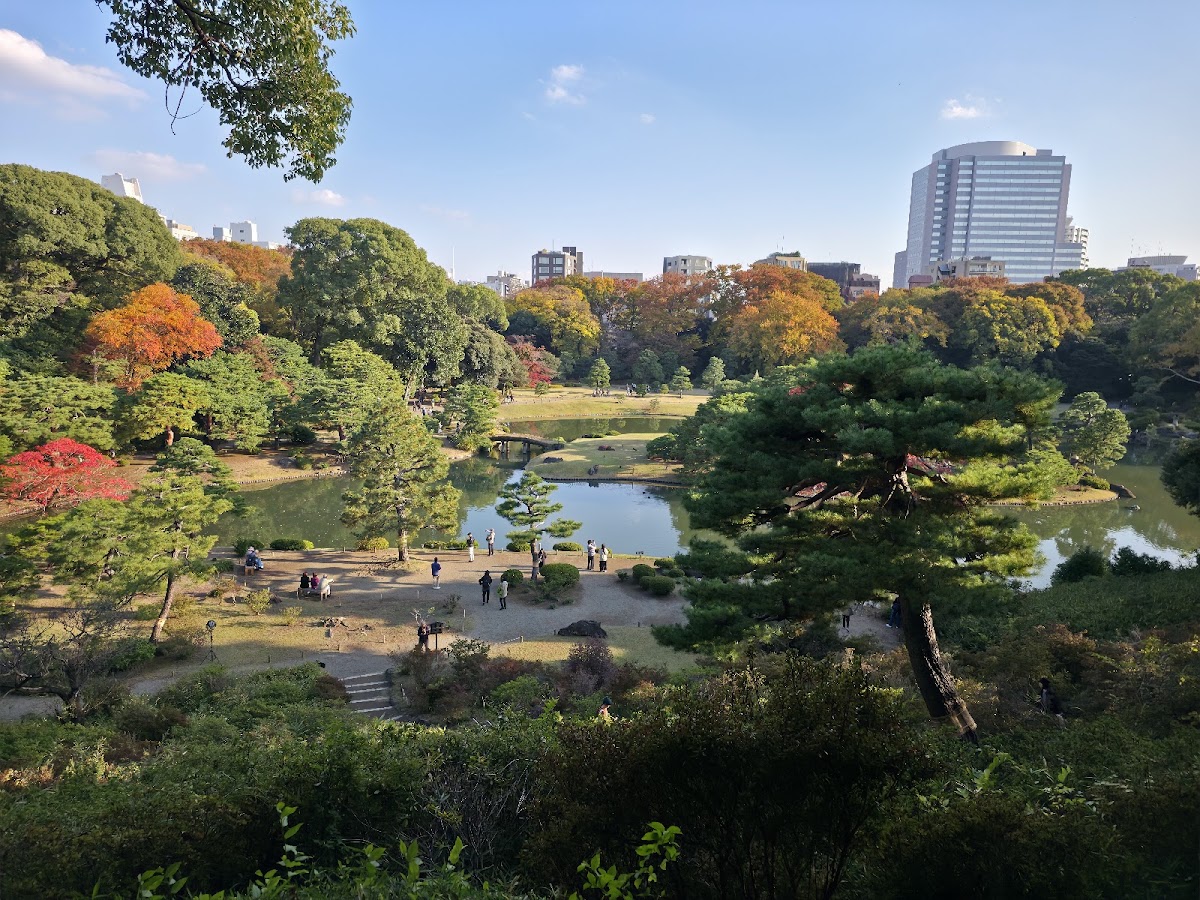
Rikugien (Rikugien Garden) is a strolling landscape garden with artificial hills and a pond that represents the Edo period, located in Hongkomagomu, Bunkyo Ward, Tokyo. Designated as a Special Place of Scenic Beauty by the nation, it is a precious cultural asset that allows visitors to enjoy the natural beauty of all four seasons in the heart of the city, attracting many domestic and international tourists.
This article provides detailed explanations of everything you should know before visiting Rikugien, from its historical background and highlights to the charm of each season, access methods, and nearby tourist attractions.
What is Rikugien | Overview of a Daimyo Garden Representative of Tokyo
Rikugien is a representative daimyo garden of the Edo period, constructed over a seven-year period beginning in 1695 (Genroku 8). The garden covers approximately 88,000 square meters (about 27,000 tsubo), and boasts particularly excellent scenery among the daimyo gardens that remain in Tokyo.
The garden’s name “Rikugien” comes from the “Six Principles” (wind, elegance, laudatory song, allegory, comparison, and auspiciousness) of the “Book of Songs” (Shijing), an ancient Chinese collection of poems. This expresses the Six Types in Japanese poetry (added verse, counted verse, analogical verse, metaphorical verse, plain verse, and celebratory verse), and the garden was designed as a highly cultured literary space.
Value of Special Place of Scenic Beauty Designation
Designated as a Special Place of Scenic Beauty by the nation in 1953 (Showa 28), Rikugien has received the highest cultural property evaluation, which is given only to a limited number of gardens throughout Japan. There are only 36 Special Places of Scenic Beauty in all of Japan as of 2024, and within Tokyo, only Rikugien, Hamarikyū Asahi Garden, and Koishikawa Korakuen receive this honor.
The high degree of completion as a strolling landscape garden with artificial hills and a pond, the historical value of conveying daimyo culture of the Edo period to the present day, and the environmental value as precious green space in the urban center are the reasons for this designation.
History of Rikugien | The Story of a Named Garden Created by Yanagisawa Yoshiyasu
The history of Rikugien begins with Yanagisawa Yoshiyasu (1658-1714), who wielded great power as a side chamberlain to the fifth shogun of the Edo shogunate, Tokugawa Tsunayoshi.
Construction During the Edo Period
In 1695 (Genroku 8), when Tokugawa Tsunayoshi granted the Komagomu area as a detached residence, Yanagisawa Yoshiyasu set about creating an ideal garden that reflected his literary refinement. Yoshiyasu had deep knowledge of Japanese poetry and recreated in the garden the beautiful landscapes of Wakanoura in Kii Province (present-day Wakayama Prefecture) and scenic spots celebrated in the “Collection of Ten Thousand Leaves” (Manyōshū) and the “Collection of Poems Ancient and Modern” (Kokinshū).
Completed after seven years of construction and vast expenses, Rikugien was evaluated as one of the finest gardens in Edo at the time, and historical records indicate that Shogun Tsunayoshi visited frequently to enjoy falconry and flower viewing.
Changes After the Meiji Period
With the advent of the Meiji period, Rikugien became a villa of Iwasaki Yatarō, the founder of the Mitsubishi zaibatsu. The Iwasaki family made efforts to maintain and manage the garden, and in 1938 (Showa 13) it was donated to Tokyo City (present-day Tokyo).
While some parts deteriorated during World War II, following post-war restoration and repairs, the garden was designated as a Special Place of Scenic Beauty in 1953 (Showa 28), and regular public opening began. Currently managed by Tokyo as a metropolitan garden, it welcomes many visitors throughout the year.
Highlights of Rikugien | Must-See Spots and Garden Layout
Rikugien is designed as a strolling garden, allowing visitors to enjoy various landscapes while walking around the grounds. Here are the main spots you should definitely see during your visit.
Nakanoshima Island and Imoyama and Seyama
In the center of the garden is Daisen Pond (Lake), on which Nakanoshima Island floats. Surrounding it are two artificial hills called Imoyama (sister mountain) and Seyama (brother mountain). This is modeled after Imoseyama in Wakanoura of Wakayama Prefecture, celebrated in the “Collection of Poems Ancient and Modern,” and forms the central landscape of Rikugien.
From the garden path circling the pond, visitors can enjoy the island’s changing appearance from different angles, and trees and hills reflecting on the water surface create beautiful scenery.
Fukiage Teahouse and Fujishiro Pass
From Fujishiro Pass, the highest point in the garden, you can overlook the entire landscape garden. The pass is named after “Fujishiro no Matsu” (Fujishiro Pine), a famous place celebrated in poetry.
Near Fujishiro Pass is the Fukiage Teahouse, where you can rest and enjoy the garden’s scenery. Particularly during the autumn foliage season, the vividly colored landscape spreading below is spectacular.
Getsugetsu Bridge and Chidori Bridge
Multiple bridges span the Daisen Pond, each with its own character. Getsugetsu Bridge is a stone bridge spanning the narrowest part of the pond, modeled after the Togetsukyo Bridge in Arashiyama, Kyoto.
The Chidori (Plover) Bridge is a stepping-stone bridge with stones arranged to resemble plovers in flight, positioned just above the water surface, allowing you to experience a sense of unity with the water when crossing.
Weeping Cherry Tree
A large weeping cherry tree near the main gate is an iconic symbol of Rikugien. Approximately 70 years old, it stands about 15 meters tall and spreads about 20 meters wide.
During the spring blooming season, special evening viewing (illumination) is held, allowing visitors to enjoy the fantastical appearance of the night cherry blossoms. During this period, opening hours are extended, and the grounds are crowded with flower-viewing enthusiasts.
Shinsentei Teahouse
A matcha tea house newly built in 2000 (Heisei 12), where you can enjoy authentic matcha and Japanese sweets while viewing the garden. The building is constructed in the traditional sukiya style, creating a space where the atmosphere of the Edo period revives in the modern age.
Tsutsuji Teahouse
The Tsutsuji Teahouse is a historic building said to have been used as a rest area by Tokugawa Tsunayoshi in the Edo period. The current building is a reconstruction, but it transmits the style of Edo-period teahouse architecture to the present day.
Four Seasons at Rikugien | Seasonal Charm and Best Visiting Times
Rikugien has a different character in each season, and you can enjoy different beauty no matter when you visit.
Spring (March–May) | Competition of Cherries and Azaleas
Spring at Rikugien reaches its peak with the weeping cherry blossoms from late March to early April. The large weeping cherry near the main gate creates a waterfall-like flow of flowers when in full bloom, captivating visitors.
From mid-April to early May, azaleas planted throughout the garden bloom in vivid colors. Especially around the Tsutsuji Teahouse, red, pink, and white azaleas bloom abundantly, adding color to the spring garden.
The mild weather during this season makes it an ideal time for strolling.
Summer (June–August) | Deep Green and Seeking Cool
From the rainy season through summer, Rikugien is enveloped in deep green. The transformation of trees from fresh green to deep green creates a serene space that makes you forget you are in the city center.
The green reflected on the water surface of Daisen Pond and the cool breeze passing through the shade provide a respite from Tokyo’s hot summer. Strolling while listening to the sound of cicadas is a precious experience to feel the charm of a Japanese summer.
Summer is also a relatively quiet season with fewer visitors, making it a recommended time for those who wish to enjoy the garden peacefully.
Autumn (September–November) | Renowned for Autumn Foliage
Rikugien is known as one of Tokyo’s finest autumn foliage viewing spots. From mid-November to early December, approximately 560 trees, primarily Japanese maples, turn color, dyeing the garden in red and yellow.
The view of autumn foliage seen from Fujishiro Pass and the autumn leaves reflected on the water surface of Daisen Pond are spectacular. During the autumn foliage season, “Autumn Leaves and Daimyo Garden Illumination” is held, allowing visitors to enjoy fantastical scenery different from daytime viewing.
Autumn is also the most crowded season at Rikugien, but the beauty is worth the crowds. Weekday early mornings and late afternoons are relatively quieter times.
Winter (December–February) | Snow Scenes and Plum Blossoms
Winter at Rikugien is wrapped in serene silence. With bare trees revealing their skeletal structure, the garden’s structural beauty can be fully appreciated.
When snow falls, Rikugien displays an ethereal beauty reminiscent of ink wash paintings. Snow-laden pines and white-covered artificial hills reveal an entirely different character from usual.
From late February to early March, plum blossoms in the garden begin to bloom, announcing the arrival of spring. Strolling while surrounded by the fragrance of plum blossoms is a calm time signaling the end of winter.
Illumination Events at Rikugien | Fantastical Evening Special Viewings
Rikugien holds evening special viewing (illumination) events twice a year.
Spring Weeping Cherry Illumination
Held in conjunction with the weeping cherry blossom bloom from late March to early April. Opening hours are extended until 9 PM, allowing visitors to view the illuminated weeping cherry.
The cherry blossoms appearing in the darkness reveal entirely different fantastical beauty compared to daytime, attracting many photography enthusiasts and tourists. The garden paths are also illuminated, allowing safe evening strolling through the garden.
Autumn Foliage Illumination
Held in conjunction with autumn foliage peak viewing from mid-November to early December. Colored trees illuminated by lights reveal depths of color different from daytime viewing.
The illumination of autumn leaves reflected on the Daisen Pond is particularly beautiful, with the mirror-like water surface creating a fantastical landscape. Warm beverage sales and other considerations are made to allow comfortable viewing even on cold nights.
Notes on Illumination Periods
The illumination periods see more crowding than usual. Particularly on weekends or at peak foliage times, admission restrictions may be imposed. Weekday opening times shortly after opening or near closing tend to be less crowded.
Tripod use is prohibited, and flash photography is discouraged to avoid disturbing other visitors.
Access to Rikugien | How to Get There by Train, Bus, or Car
Rikugien is located at Hongkomagomu, Bunkyo Ward, Tokyo, with excellent access from the city center.
Access by Train
From JR Yamanote Line and Tokyo Metro Marunouchi Line “Komagome Station”
- Approximately 7 minutes walk to the main gate
- Exit from Komagome Station’s south exit and proceed south on Hongo Avenue (toward Hakusan)
- The main gate of Rikugien is located along Hongo Avenue
From Toei Mita Line “Sengoku Station”
- Approximately 10 minutes walk to the Somei Gate
- Exit from Sengoku Station’s A3 exit and proceed north on Shinobazu Avenue
- You will arrive at the Somei Gate of Rikugien (normally open)
Access from Komagome Station is most convenient, with main gate entry being standard.
Access by Bus
The nearest bus stops are “Komagome Station South Exit” or “Rikugien Entrance” stop. The following routes are available:
- Route 58 (Ueno Matsuzakaya Front – Waseda)
- Route 63 (Asakusa Kotobuki-cho – Ikebukuro Station East Exit)
It is approximately 2-3 minutes walk from the bus stop to the main gate.
Access by Car and Parking
Rikugien has no dedicated parking. You must use nearby coin parking lots, though these are limited in number and frequently full, especially during cherry blossom and autumn foliage seasons.
Public transportation is strongly recommended. If you must drive, use parking around Komagome or Sengoku stations and access on foot, which is more reliable.
Basic Information on Rikugien | Hours, Admission, and Facilities
Here is compiled basic information about Rikugien that you should know before your visit.
Hours of Operation
- Normal: 9 AM–5 PM (last admission 4:30 PM)
- During illumination periods: 9 AM–9 PM (last admission 8:30 PM)
Closed Days
- Year-end and New Year holidays (December 29 – January 1)
Admission Fee
- General: 300 yen
- 65 and older: 150 yen (age confirmation required)
- Elementary school children and middle school students living or studying in Tokyo: Free
An annual pass (1,200 yen for general, 600 yen for 65+) is also sold and is economical if you visit four or more times per year.
Group Discount
Group discounts apply for 20 or more people:
- General: 240 yen
- 65 and older: 120 yen
Free Admission Days
Admission is free on the following dates:
- Greenery Day (May 4)
- Tokyo Metropolitan Citizens Day (October 1)
Garden Facilities
- Service Center: Located just inside the main gate, distributes pamphlets and provides information
- Shinsentei Teahouse: Offers matcha and Japanese sweets set (510 yen) (10:00–16:00, closed Tuesdays)
- Fukiage Teahouse: Light food and beverage sales (weekends and holidays only)
- Restrooms: Three locations in the garden (accessible restrooms available)
- Rest Areas: Benches and pavilions in several locations throughout the garden
Accessibility Information
Due to Rikugien being an Edo-period garden, the paths have uneven terrain, and complete barrier-free accessibility is challenging in some areas, though the following accommodations are made:
- Slope at main gate
- Wheelchair rental available (limited quantity, reservations not accepted)
- Accessible restroom provided
- Parts of garden paths are wheelchair-accessible (however, gravel paths and stairs also exist)
For those considering visiting with a wheelchair, pre-consultation with the Service Center (03-3941-2222) is recommended.
Nearby Tourist Attractions to Rikugien | Worth-Visiting Spots
There are numerous tourist attractions near Rikugien worth visiting together with the garden.
Former Furukawa Garden
A metropolitan garden approximately 15 minutes walk from Rikugien. Characterized by a harmonious combination of a Western mansion, Western garden, and Japanese garden, it is particularly crowded during spring rose season. A combined admission ticket for Rikugien and Furukawa Garden (400 yen) is also sold.
Somei Cemetery
Approximately 5 minutes walk from Rikugien’s Somei Gate. A cemetery continuing from the Edo period, also known as a cherry blossom viewing spot. Located in the Somei area, the birthplace of Somei Yoshino (Yoshino cherry), it offers beautiful cherry tree rows in spring.
Komagome Fuji Shrine
Approximately 5 minutes walk from Komagome Station. A shrine that flourished as a center of Fuji worship during the Edo period, featuring a Fuji mound within its grounds. Though small, it is a historically significant shrine gathering local devotion.
Sugamo Jizō Avenue Shopping Street
Approximately 10 minutes by train from Rikugien (from Komagome to Sugamo Station). Known as “Grandma’s Harajuku,” this shopping street is lined with Togenuki Jizō (Koganji Temple) and old-fashioned shops.
Tokyo University Hongo Campus
Approximately 2 km south of Rikugien. The campus of Japan’s representative university features many sites of interest, including historic buildings and a ginkgo tree avenue. Open to the general public and free to explore.
How to Spend Your Time at Rikugien | Recommended Ways to Enjoy
Here are tips for maximizing your enjoyment of Rikugien.
Leisurely Strolling Through the Strolling Garden
Rikugien is designed as a strolling garden, and it takes approximately one hour to walk the entire circuit. Walk slowly and savor the changing views from different angles.
The beauty of Japanese gardens is that the same location reveals entirely different scenery when viewed from different positions.
Taking a Matcha Break
Having authentic matcha and seasonal Japanese sweets at Shinsentei while gazing at the garden is incomparable. Sitting on tatami mats and quietly viewing the garden allows you to experience the refined time that Edo-period daimyo enjoyed.
Enjoying Photography
Rikugien is also popular as a photography spot. Weeping cherries, autumn foliage, and snow scenes offer different subjects by season.
Particularly recommended photography spots include:
- Weeping cherry near the main gate
- Aerial view from Fujishiro Pass
- Togetsukyo Bridge and Daisen Pond
- View from Shinsentei Teahouse
- Water-mirror autumn foliage (autumn leaves reflected in Daisen Pond)
Early Morning Visit Recommended
Early morning immediately after opening has few visitors, allowing you to enjoy the garden peacefully. Especially when crowds are expected on weekends or during foliage season, early morning visits are recommended. Strolling in the crisp morning air refreshes both body and mind.
Participating in Guided Tours
Rikugien regularly offers free guided tours by volunteers (check the official website for dates). You can learn in detail about the garden’s history, highlights, and plants, gaining deeper understanding of Rikugien.
Notes and Etiquette When Visiting Rikugien
To preserve Rikugien as a cultural property and allow all visitors comfortable enjoyment, please observe the following etiquette.
Prohibited Activities
- Bringing pets (except guide dogs and service dogs)
- Riding bicycles, kickboards, and similar devices
- Collecting or damaging plants
- Fishing or capturing organisms in the pond
- Use of fire
- Flying drones
- Commercial photography (permission required)
- Using tripods (especially during illumination periods)
Recommended Etiquette
- Stay on designated paths (for vegetation protection)
- Refrain from loud conversation or noise
- Take all trash with you (no trash bins in the garden)
- Be considerate of other visitors’ photography
- Show consideration during crowded times
- Smoking only in designated areas
Frequently Asked Questions About Rikugien
How long does a visit take?
Taking a leisurely lap takes approximately one hour, or 1.5–2 hours including matcha breaks. Photography enthusiasts may spend even more time.
Can I enjoy it on rainy days?
Rainy Rikugien also has atmosphere, with rain-soaked trees and stones, and water surface ripples offering different beauty from sunny days. However, garden paths become slippery, so take care with your footing.
When should I visit to avoid crowds?
Early morning just after opening (9–10 AM) or before closing (4 PM onward) on weekdays are relatively quiet. Peak cherry blossom and foliage season weekends are extremely crowded; weekday visits are recommended if possible.
Can I bring a bento and eat in the garden?
Eating in the garden is generally allowed, but take all trash with you. However, eating on paths or grassy areas is prohibited; use designated rest areas and benches.
Can I enter with a wheelchair or stroller?
Entry is possible, but as an Edo-period garden, paths have uneven terrain with gravel paths and stairs. Some routes are wheelchair-accessible, but traversing all areas may be difficult. Pre-consultation by phone is recommended.
Conclusion | Experience the Refinement of the Edo Period at Rikugien
Rikugien is a precious cultural property allowing you to enjoy both the daimyo culture of the Edo period and the natural beauty of all four seasons while in Tokyo’s heart. Its high level of completion as a Special Place of Scenic Beauty and strolling garden, the stunning spring cherries and autumn foliage, and the serene space that makes one forget urban bustle continue to fascinate visitors from home and abroad.
Its accessibility—just a 7-minute walk from Komagome Station—is another attraction, making it a must-visit spot during Tokyo tourism. With its changing character each season, Rikugien offers new discoveries with each visit.
Why not spend unhurried time at this historic Japanese garden and experience the harmony of Japanese traditional beauty and nature?