Tengen-dai/Nishi-Azuma Sky Valley Complete Guide | The Appeal and Enjoyment of Yamagata Prefecture’s Spectacular Mountain Drive Route
The “Tengen-dai/Nishi-Azuma Sky Valley” connecting the hot spring resort of Shirafu Onsen in Yonezawa City, Yamagata Prefecture to the northern shore of Lake Gisshoji in Kitashiobara Village, Fukushima Prefecture, is a mountain sightseeing road spanning 17.8 kilometers in total length. This route, which winds through the mountainous terrain with its elevation changes, is known as one of the “Three Great Sky Lines of South Oku-Ou” along with the Zao Echo Line and the Azuma Sky Line, and particularly during the autumn foliage season, many tourists visit it as one of the most spectacular scenic spots in the Tohoku region.
Once a toll road, it was opened to the public free of charge starting July 1, 2003, making it possible for more people to easily enjoy this magnificent natural beauty. This article provides comprehensive information about the Tengen-dai/Nishi-Azuma Sky Valley, including its attractions, highlights, access information, and surrounding tourism spots that you should know before your visit.
About Tengen-dai/Nishi-Azuma Sky Valley
History and Overview
The Nishi-Azuma Sky Valley (Prefectural Road 2) was developed as a mountain sightseeing road connecting Shirafu Onsen on the Yamagata side and Lake Gisshoji on the Fukushima side. This route, which connects Shirafu Takayu to Wasasawa, runs through the magnificent nature of the Azuma mountain range and is an ideal driving course.
The Tengen-dai area is located deep within Shirafu Onsen, where the Tengen-dai Ropeway provides access to a highland plateau at an elevation of 1,350 meters. The ropeway connects from the Yumoto Station at the base of the mountain to the mountain-top station in approximately 6 minutes with an elevation difference of 430 meters, and from the summit station, visitors can further ascend via lift to the trailhead for Nishi-Azuma Mountain.
Geographical Characteristics
The Nishi-Azuma Sky Valley is a mountain road that runs north-south along the western side of the Azuma mountain range, featuring a route with continuous hairpin curves and varied scenery. In particular, on the south side of the Shirafu Pass, there is an area called “Higashihachi-yama Nanakuguri” where sharp curves continue in succession, testing the driving skills of drivers.
The road ascends from Shirafu Onsen at approximately 750 meters in elevation to the highest point at Shirafu Pass (approximately 1,400 meters), then descends to Lake Gisshoji (approximately 800 meters in elevation). Due to this elevation difference, visitors can enjoy different vegetation and landscapes depending on the location, even during the same season.
Highlights of Tengen-dai/Nishi-Azuma Sky Valley
Spectacular Views from Shirafu Pass Observation Deck
The highlight of the Nishi-Azuma Sky Valley is arguably the vista from the Shirafu Pass observation deck. From here, you can see a complete panorama of the beautiful surface of Lake Gisshoji spreading below and the majestic form of Mount Bandai rising beyond.
On days with good weather, Mount Bandai’s mountain silhouette is clearly visible, creating a magnificent landscape through the contrast with the blue water surface of Lake Gisshoji. Especially during the autumn foliage season, the three-layered beauty created by the colored mountains, the lake, and Mount Bandai captivates all who visit.
The observation deck has parking space where you can leisurely enjoy the scenery. It is also a popular photography spot, with many tourists seen holding cameras.
Soryukyo Gorge Red and Black Waterfalls
Along the Nishi-Azuma Sky Valley lies Soryukyo Gorge, which features a viewpoint where you can see two waterfalls—the Red Waterfall and the Black Waterfall—at a glance. The two waterfalls flowing down the gorge create an impressive landscape that seems like twin dragons ascending to heaven.
The Red Waterfall gets its name from the reddish-brown appearance of the rock face, while the Black Waterfall was named for flowing through dark rock areas. During the fresh green season, the contrast between the surrounding greenery and the white of the waterfalls is beautiful, and during the autumn foliage season, the combination of colored trees and waterfalls creates spectacular scenery.
Mogami River Source Forest
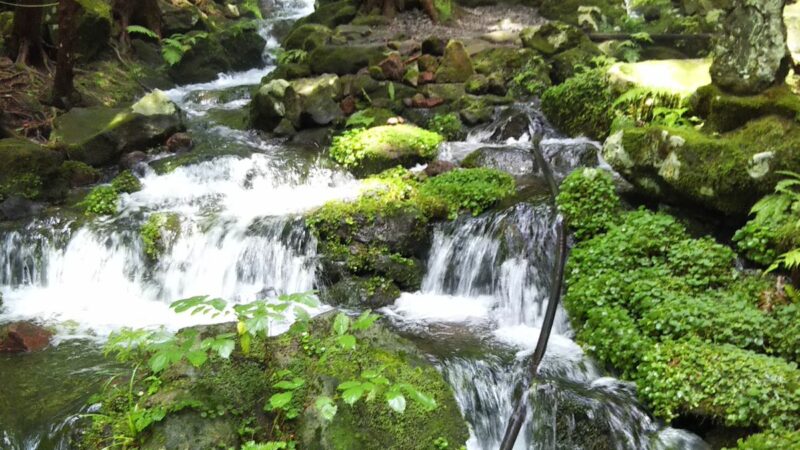
Along the Nishi-Azuma Sky Valley stretches the source area of the Mogami River, known as one of Japan’s three major rapid rivers. This region is covered with primeval forest and has a mystical atmosphere with clear water gushing forth.
The Mogami River source forest is a rich forest area covered with deciduous broadleaf trees such as beech and Mizunara oak, and is home to diverse flora and fauna. Trekking courses are also maintained, allowing visitors to enjoy nature walks.
The Appeal of the Autumn Foliage Season
Peak Viewing Period and Characteristics of the Autumn Foliage
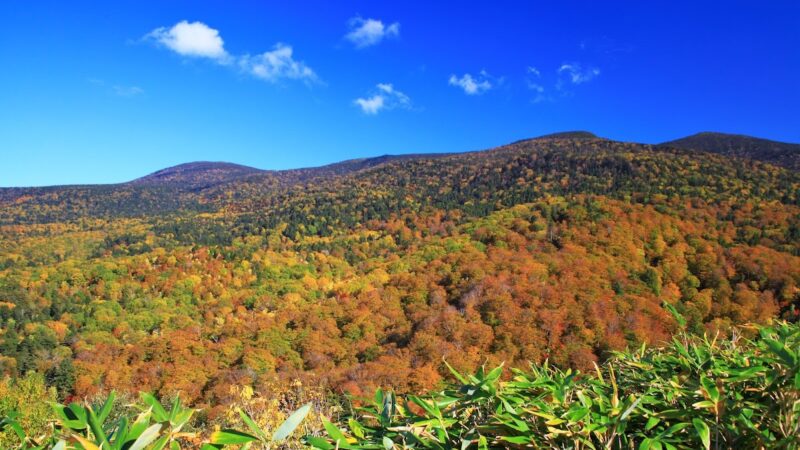
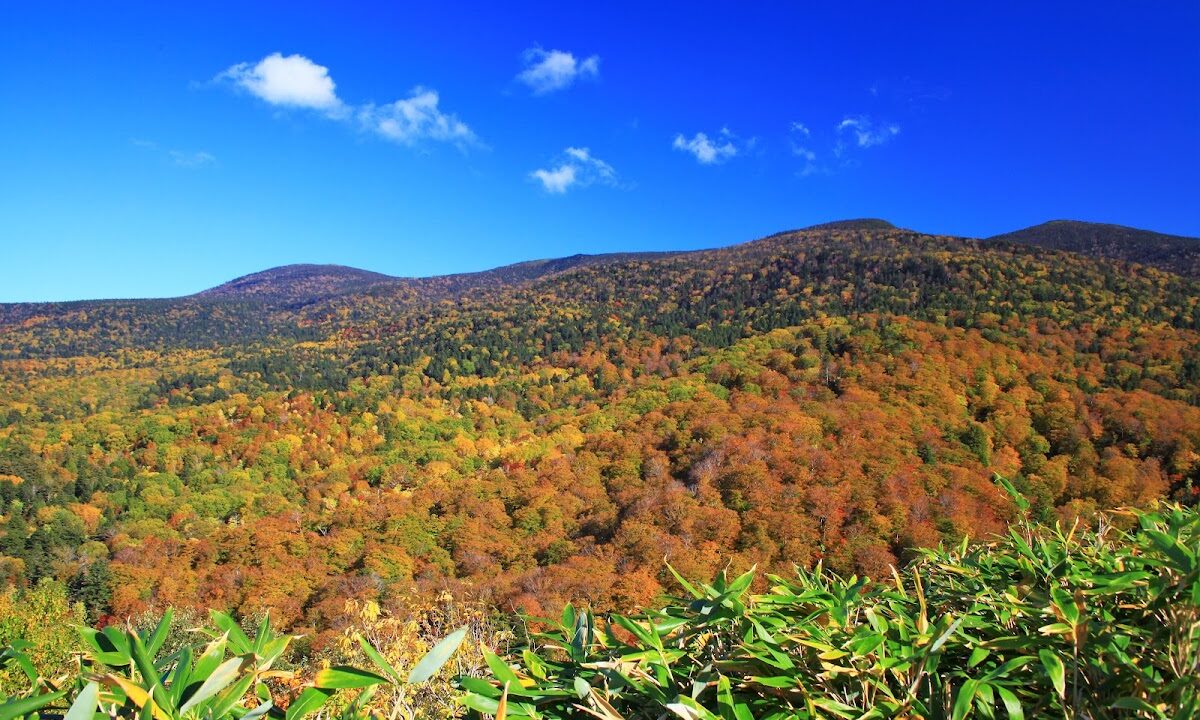
The autumn foliage of Tengen-dai/Nishi-Azuma Sky Valley boasts some of the most beautiful colors in the Tohoku region. The peak viewing period is typically from late September to mid-October, with colors beginning gradually from the higher elevations.
In the Tengen-dai Highland area, the foliage begins to change color from late September, and the entire Nishi-Azuma Sky Valley reaches its peak viewing period in early October. By mid-October, the autumn foliage front descends to the area around Shirafu Onsen, making it possible to enjoy the foliage over an extended period.
Primary Trees That Color in Autumn
The main plants that paint this area with autumn colors are as follows:
- Itaya Maple: Transforms into vibrant yellow to orange, creating a bright impression
- Beech: Glows in golden yellow, brightening the entire forest
- Nanakamado: Red leaves and red fruit color the autumn mountains in deep red
- Yamaurushi: Leaves that turn a striking flame red
- Dake Birch: A high-altitude tree with beautiful contrast between white bark and yellow leaves
The color gradation created by these trees is truly a work of art painted by nature.
Points for Autumn Foliage Driving
Here are some pointers for driving the Nishi-Azuma Sky Valley during the autumn foliage season:
- Early morning visits are recommended: Autumn foliage in morning mist is enchanting, and mornings are relatively less crowded
- Drive safely: With numerous hairpin curves, be careful not to become careless while admiring the scenery
- Stop at multiple viewpoints: As the progress of foliage varies by elevation, park at various locations and enjoy the views
- Weather check is essential: Mountain weather changes rapidly, and fog or rain can reduce visibility
Access and Basic Information
Access by Car
From the Yamagata side (Shirafu Onsen):
- Approximately 30 minutes via Route 121 and Prefectural Road 2 from the Yonezawa Yahata-hara IC on the Tohoku Central Expressway
- Approximately 40 minutes by car from JR Yonezawa Station
From the Fukushima side (Lake Gisshoji):
- Approximately 30 minutes via Route 459 and Prefectural Road 2 from the Inawashiro Bandai-kogen IC on the Banetsukan Expressway
The drive from Shirafu Onsen to Lake Gisshoji typically takes about 40 minutes, but during the autumn foliage season and tourist season, congestion is expected, so it is recommended to plan with extra time.
Access by Public Transportation
To Tengen-dai Highland:
- Approximately 40 minutes by Yamakō Bus “Shirafu Onsen bound” from JR Yonezawa Station, get off at the terminal
- Approximately 6 minutes by Tengen-dai Ropeway from Shirafu Onsen
Nishi-Azuma Sky Valley Drive:
As it is difficult to traverse by public transportation, rental car use is recommended. It is typical to stay at accommodations around Shirafu Onsen or Lake Gisshoji and use them as a base for driving.
Operating Period and Traffic Restrictions
The Nishi-Azuma Sky Valley is a road that is closed during winter:
- Operating period: Typically late April to early November (varies depending on snow conditions)
- Nighttime traffic restrictions: Even during the operating period, the road may be closed from 5:00 PM to 7:00 AM the next morning
- Winter closure: Completely closed from early November to mid-April
It is recommended to check road information from Yamagata and Fukushima prefectures before your visit. In particular, weather may cause traffic restrictions to change shortly after spring opening or before autumn closure.
Parking Information
Tengen-dai Yumoto Station Parking Lot:
- Capacity: Approximately 300 vehicles
- Fee: Free
- Note: Vehicles cannot enter Tengen-dai Highland directly. The ropeway must be used.
Shirafu Pass Observation Deck:
- Capacity: Approximately 20 vehicles
- Fee: Free
Other Viewpoints:
Multiple parking and stopping spaces are available along the road, but please use them with safety in mind.
Fees
- Road toll: Free (opened to the public free of charge since 2003)
- Tengen-dai Ropeway: Adults round-trip 2,600 yen, children round-trip 1,300 yen (fees may change)
How to Enjoy Tengen-dai Highland
Tengen-dai Ropeway
The Tengen-dai Ropeway connects Yumoto Station (elevation 920 meters) at the base of Shirafu Onsen to Tengen-dai Highland Station (elevation 1,350 meters) in approximately 6 minutes. From the gondola, you can enjoy views of the Shirafu Onsen town and the Yonezawa basin spread out below.
During the autumn foliage season, the spectacular views of colored mountains seen from the ropeway are popular, attracting many tourists. During winter, it also operates as a ski resort, making it an attraction to enjoy throughout the four seasons.
Hiking and Trekking
Tengen-dai Highland is known as the trailhead for climbing Nishi-Azuma Mountain (2,035 meters). From Tengen-dai Highland Station, visitors can further ascend via three lifts in succession to reach the entrance to the Nishi-Azuma Mountain climbing trail.
Main Climbing Courses:
- Nishi-Azuma Mountain Round-trip Course: Approximately 4 to 5 hours of hiking, popular with beginners due to its relatively gentle mountain shape
- From Grandeco to Nishi-Azuma Mountain: Approach also possible from the Fukushima side
- Ningyo-ishi Circuit Course: A short trekking course around the Tengen-dai Highland area
It is also a treasure trove of alpine plants, with delicate flowers such as Hinazakura and Chinguruma blooming in early summer.
Winter Skiing and Snowboarding
Tengen-dai Highland Ski Resort is popular for its powder snow and tree ice. The highest point reaches an elevation of 1,820 meters, with high-quality snow and a variety of courses being its main attractions.
Recommended Nearby Tourism Spots
Shirafu Onsen
Located at the Yamagata side entrance to the Nishi-Azuma Sky Valley, Shirafu Onsen is a famous hot spring with a history of over 700 years. It is counted as one of the three great hot springs of Oshu and is characterized by a milky-white sulfur spring.
Recommended Onsen Inns:
- Azumaya Ryokan: A historic traditional inn
- Nakaya Bettei Fudogaku: Known for its source spring-fed open-air bath
- Yutaki no Yado Nishiya: Features an open-air bath where you can view a waterfall
Day bathing is possible at some facilities, making it perfect for soothing the fatigue of driving.
Lake Gisshoji
Located at the Fukushima side terminus, Lake Gisshoji was created by the eruption of Mount Bandai. The reflection of Mount Bandai on the lake surface is beautiful, and boating, fishing, and lakeside walks are available.
- Lake Gisshoji Sightseeing Boat: Sightseeing boats operate for viewing Mount Bandai from the lake
- Wakasagi Fishing: During winter, ice fishing for Wakasagi is popular
- Lakeside Camping: Multiple campgrounds are available to fully enjoy outdoor activities
Yonezawa City Center
Yonezawa City is a historic castle town that flourished under the Uesugi clan. It is also recommended to stop by on your way to and from the Nishi-Azuma Sky Valley.
Main Tourism Spots:
- Uesugi Shrine: A shrine dedicated to Uesugi Kenshin, built in the ruins of Yonezawa Castle’s main keep
- Uesugi Family Mausoleums: The graves of successive feudal lords, designated as a National Historic Site
- Yonezawa Castle Ruins: Currently maintained as Matsugaoka Park
- Former Yonezawa Higher Technical School Main Building: Meiji-era Western-style architecture
Yonezawa Cuisine:
- Yonezawa Beef: One of Japan’s three major Japanese beef brands, with exquisite marbling
- Yonezawa Ramen: Local ramen with a light soy sauce flavor
- Carp Dishes: Yonezawa’s local cuisine, including braised carp and carp soup
Ura-Bandai Area
The Ura-Bandai area around Lake Gisshoji has many tourist spots, including the Goshiki Swamp and Mount Bandai Gold Line.
- Goshiki Swamp Lake Group: A trekking course with mysterious colored swamps scattered throughout
- Mount Bandai Gold Line: A spectacular drive route traversing Mount Bandai
- Moritaka Modern Art Museum: An art museum known for its Dalí collection
Enjoyment by Season
Spring (Late April to June)
Shortly after the spring opening, snow corridors remain in some places, and the contrast between remaining snow and fresh green foliage is beautiful. From late May through June, alpine plants begin to bloom, and Tengen-dai Highland offers delicate flowers.
This period is also an off-season for tourists, making it a hidden gem time to enjoy a quiet mountain drive.
Summer (July to August)
Summer is the ideal season as a summer retreat. Even as the plains experience intense heat, the high elevation Nishi-Azuma Sky Valley remains cool and comfortable. This is the best time for hiking and trekking, with many climbers visiting Nishi-Azuma Mountain.
At Tengen-dai Highland, alpine plants reach their peak blooming period, with flowers such as Hakusan Chionographis and Veratrum album subsp. oxysepalum thriving.
Autumn (September to Early November)
The autumn foliage season is when the Nishi-Azuma Sky Valley is most bustling. Colors begin to change from late September, with the peak period from early to mid-October. Weekends can be crowded, so visiting on weekdays or early mornings is recommended.
Beyond autumn foliage viewing drives, visitors can enjoy autumn scenery from various angles, including aerial walks via the Tengen-dai Ropeway and foliage viewing from hiking trails.
Winter (Mid-November to Mid-April)
The Nishi-Azuma Sky Valley is closed during winter, but Tengen-dai Highland Ski Resort continues to operate. Using Shirafu Onsen as a base to enjoy skiing and hot springs is also recommended.
Soaking in hot springs amid tree ice and snowy landscapes is exceptional and offers unique winter attractions.
Precautions and Advice for Your Visit
Safe Driving Points
- Be careful of curves: With continuous hairpin curves, be cautious about excessive speed
- Consider oncoming traffic: Narrow road sections require attention when passing oncoming vehicles
- Watch for wildlife: Wild animals may venture onto the road
- Prepare for weather changes: Mountain weather changes suddenly
Clothing and Items to Bring
- Warm clothing: Bring something to wear even in summer due to high elevation
- Comfortable walking shoes: Necessary when walking observation decks or nature trails
- Rain gear: Mountain weather is changeable
- Drinks and light snacks: Few shops along the route, so bringing them is recommended
- Camera: A must-have due to numerous scenic spots
Photography Spots
- Shirafu Pass Observation Deck: Spectacular views of Lake Gisshoji and Mount Bandai
- Soryukyo Gorge: Views of the Red and Black Waterfalls
- Higashihachi-yama Nanakuguri: Hairpin curves and mountain scenery
- Inside the Tengen-dai Ropeway: Autumn foliage photography from the air
- Mogami River Source Area: Clear streams and forest landscapes
Recommended Stays
One-day Plan:
- Morning: Yonezawa city sightseeing, Yonezawa beef lunch
- Afternoon: Nishi-Azuma Sky Valley drive, day bathing at Shirafu Onsen
One Night, Two Days Plan:
- Day 1: Yonezawa city sightseeing, Nishi-Azuma Sky Valley drive, stay at Shirafu Onsen
- Day 2: Tengen-dai Ropeway, hiking or trekking, Ura-Bandai sightseeing
Two Nights, Three Days Plan:
- Day 1: Yonezawa city sightseeing, stay at Shirafu Onsen
- Day 2: Nishi-Azuma Sky Valley drive, Lake Gisshoji area sightseeing, stay in Ura-Bandai
- Day 3: Goshiki Swamp trekking, Mount Bandai Gold Line drive
Gourmet Information in the Surrounding Area
Yonezawa Area
Yonezawa Beef Dishes:
- Tokiwa: An established restaurant for Yonezawa beef with exquisite sukiyaki
- Yonezawa Beef DINING Bekoya: Casual Yonezawa beef enjoyment
- Ohki: A famous restaurant for Yonezawa beef steak
Yonezawa Ramen:
- Menya Fujita: A long-established local ramen shop
- Kumabun: Traditional Yonezawa ramen with light soy sauce flavor
Shirafu Onsen Area
Meals at hot spring inns are the main dining option, where you can enjoy wild vegetable dishes and regional cuisine using local ingredients. Many accommodations offer dishes using Yonezawa beef.
Ura-Bandai Area
- Lakeside restaurants in Ura-Bandai: Dining while viewing the lake
- Wakasagi dishes: Tempura and fried Wakasagi using Lake Gisshoji specialties
- Hand-made soba: Soba made with Ura-Bandai’s pure water is popular
Event Information in Surrounding Areas
Yonezawa City Events
Uesugi Festival (Early May):
Yonezawa’s largest event honoring Uesugi Kenshin, featuring reenactments of the Battle of Kawanakajima and warrior processions as highlights.
Yonezawa Beef Festival (September):
A food event where Yonezawa beef can be enjoyed. Many tasting and sales booths are set up.
Yonezawa Uesugi Festival Snow Lantern Festival (February):
A winter tradition with snow lanterns lit around Uesugi Shrine.
Ura-Bandai Area Events
Ura-Bandai Kaminoyama Fire Festival (July):
Fireworks launched over Lake Gisshoji. The reflection of fireworks on the lake surface creates beautiful imagery.
Ura-Bandai Autumn Foliage Festival (October):
An autumn event held to coincide with the autumn foliage season.
Accommodation Information
Inns at Shirafu Onsen
Historic hot spring inns are scattered throughout Shirafu Onsen. The sulfur spring’s milky-white bath is a characteristic feature, and many inns offer source spring-fed baths.
Accommodation Benefits:
- Drive the Nishi-Azuma Sky Valley from early morning
- Enjoy Yonezawa beef and mountain vegetable cuisine at dinner
- Soothe fatigue with hot springs
Accommodations Around Lake Gisshoji
The area around Lake Gisshoji features diverse lodging options including pensions, hotels, and small inns. Some lakeside accommodations offer views of Lake Gisshoji from rooms and open-air baths.
Hotels in Yonezawa City Center
Business and city hotels are available around Yonezawa Station and are convenient as a tourism base. Some hotels offer dinner plans using Yonezawa beef.
Conclusion
Tengen-dai/Nishi-Azuma Sky Valley is a mountain sightseeing road that represents Yamagata Prefecture and is a scenic route where you can enjoy beautiful natural landscapes throughout the four seasons. In particular, the beauty during the autumn foliage season is said to be among the finest in the Tohoku region, captivating many visitors.
Along the 17.8-kilometer route, numerous attractions are scattered, including the views of Lake Gisshoji and Mount Bandai from the Shirafu Pass observation deck, the Red and Black Waterfalls of Soryukyo Gorge, and the rich forest of the Mogami River source. The opening of the former toll road to free public use has made it possible for more people to easily enjoy this wonderful scenery.
Beyond driving, you can enjoy a variety of activities, including aerial walks on the Tengen-dai Ropeway, climbing Nishi-Azuma Mountain, bathing at Shirafu Onsen, and savoring Yonezawa cuisine. Including the surrounding areas, there are many diverse ways to enjoy this region. Day trips are certainly possible, but staying at Shirafu Onsen or in the Ura-Bandai area will allow you to experience the charm of the region at a more leisurely pace.
As the road is closed during winter, plan your visit during the operating period from late April to early November. In particular, from late September through mid-October, during the autumn foliage season, congestion is expected, so visiting early in the morning or on weekdays is recommended.
The varied route with its hairpin curves unique to mountain roads has an irresistible appeal for driving enthusiasts. While exercising safe driving practices, please experience this spectacular route that Yamagata Prefecture is proud of. The exhilaration of driving through majestic nature and the overwhelming scenery spreading before your eyes will surely become an unforgettable memory.