Akashiba Gorge Yamagata Prefecture | Complete Guide to the Spectacular Autumn Foliage Spot Known as “Japan’s Red Cliff”
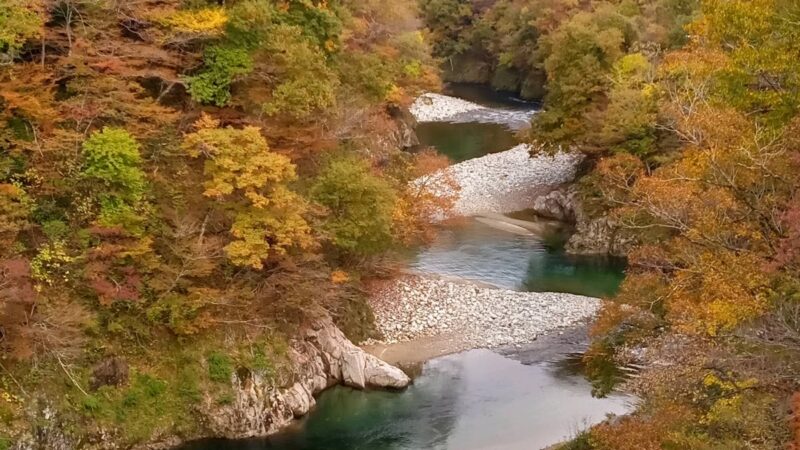
Akashiba Gorge (赤芝峡), located in Oguni Town, Nishi-Okitama District, Yamagata Prefecture, is a scenic spot boasting the most magnificent topography within the Arakawa Gorge, which belongs to the Bandai-Asahi National Park. The spectacular scenery created by white rock surfaces and vibrant autumn foliage is also called “Japan’s Red Cliff,” and as one of Yamagata Prefecture’s representative natural attractions, it captivates many tourists.
About Akashiba Gorge | A Hidden Gem at Yamagata’s Southwestern Edge
Akashiba Gorge is a gorge located in Oguni Town, positioned at Yamagata Prefecture’s southwestern edge along the border with Niigata Prefecture. It spreads near the confluence of the Yokogawa River flowing from the Iide Mountain Range and the Arakawa River flowing from the Asahi Mountain Range, and visitors can enjoy the natural beauty of geological formations that develop along National Route 113.
This gorge, which belongs to the Iide region of the Bandai-Asahi National Park, was formed over many years through erosion by the rapid currents of the Arakawa River. It is characterized by white rock surfaces made of slate, granite, and tuff. Massive boulders crowd both banks of the gorge, and their impressive landscape overwhelms visitors.
The Origin of the Name “Japan’s Red Cliff”
The name Akashiba Gorge has an interesting history. The area is naturally inhabited by deciduous trees such as Yamayamaomiji, Itayakaede, Japanese beech, and staghorn sumac. When autumn arrives and the foliage turns brilliant red across the entire gorge, it evokes images of “Red Cliff,” a scenic area on the Yangtze River in China. According to legend, this resemblance led to the name “Japan’s Red Cliff,” which eventually transformed into the current name, Akashiba Gorge.
The contrast between the white rock surfaces and the blazing autumn foliage is truly a work of art created by nature.
Spectacular Autumn Foliage Filling Both Banks of the Gorge
The greatest appeal of Akashiba Gorge is undoubtedly the magnificent scenery it displays during the autumn foliage season. The colorful foliage covering both banks of the gorge boasts outstanding beauty even within Yamagata Prefecture.
Peak Foliage Season
The peak foliage season at Akashiba Gorge typically occurs from late October to early November. While the timing may vary slightly depending on elevation and temperature changes, visiting during this period allows you to enjoy the most beautiful autumn foliage.
By late October, Yamayamaomiji begins to turn vibrant red, while Itayakaede displays yellow, Japanese beech shows brown, and Yamaurushi exhibits deep crimson—creating a diverse palette of colors adorning the gorge. The contrast with the white rock surfaces becomes especially pronounced during this season, making it an ideal time for photography.
Types of Trees Displaying Autumn Colors
The main foliage trees visible at Akashiba Gorge include:
- Yamayamaomiji: The representative tree displaying the most vivid red color
- Itayakaede: Beautiful gradient from yellow to orange
- Japanese beech: Deciduous tree turning brown to yellowish-brown
- Yamaurushi: Vibrant foliage ranging from deep crimson to scarlet red
The natural brocade created by these trees is truly beautiful like a painting.
The Topography and Natural Environment of Akashiba Gorge
The topography of Akashiba Gorge was formed through the Arakawa River’s erosion activity spanning tens of thousands to hundreds of thousands of years. Towering cliffs tens of meters high rise on both sides of the gorge, and their impressive landscape is praised as some of the finest throughout the nation.
The Secret of the White Rock Surfaces
The white rock surfaces that characterize the gorge are composed mainly of sedimentary rocks and igneous rocks such as slate, granite, and tuff. Over long periods, these rocks have undergone weathering and erosion, resulting in their distinctive whitish color.
As the clear Arakawa River reflects off the rock surfaces, combined with the red and yellow of the autumn foliage, Akashiba Gorge creates a unique three-color contrast. This natural color scheme is a beauty that artificial means could never recreate.
As Part of the Bandai-Asahi National Park
Akashiba Gorge belongs to the Iide region of the Bandai-Asahi National Park, where the rich natural environment is protected. This national park encompasses a vast mountainous area spanning Fukushima, Yamagata, and Niigata prefectures, containing diverse flora and fauna and serving as a precious treasure of nature.
In the surrounding area of the gorge, large mammals such as Japanese serow and Asian black bears, as well as birds of prey such as white-tailed eagles and golden eagles, are also found, making it a valuable site for nature observation.
Access Information | By Car and Public Transportation
Access to Akashiba Gorge is most convenient by car, though public transportation options are also available.
Access by Car
From Yamagata
- Approximately 90 minutes via National Route 113 from “Yamagata-Kaminoyama IC” on the Yamagata Expressway
- Approximately 60 minutes via National Route 113 from Yonezawa City
From Niigata
- Approximately 50 minutes via National Route 459 and National Route 113 from “Tsugawa IC” on the Banetsual Expressway
Since Akashiba Gorge is situated along National Route 113, visitors can enjoy the gorge’s scenery from the roadside. However, during peak foliage season, roads may become congested, so it is recommended to allow extra time for your visit.
Parking Information
Parking facilities for tourists have been developed at Akashiba Gorge. During peak foliage season, many tourists visit, so especially on weekends and holidays, early arrival is advisable. Parking is available free of charge, but there is a limited number of spaces, so caution is necessary.
Access by Public Transportation
By JR
- Approximately 15 minutes by taxi from “Oguni Station” on the JR Yonesakaline
- Approximately 10 minutes by taxi from “Uzen-Numamawara Station” on the JR Yonesakaline
When using public transportation, train frequencies are limited, so it is important to check schedules in advance. You can obtain detailed information by contacting the Oguni Town Tourism Association.
How to Enjoy Akashiba Gorge | Walking Trails and Activities
At Akashiba Gorge, visitors can savor the beauty of the gorge in various ways.
Exploring the Walking Trails
Walking trails have been developed at Akashiba Gorge, allowing visitors to enjoy spectacular scenery while strolling along the gorge. The trails are relatively flat and easy to walk, making them safe for families.
The walking time is approximately 30 minutes to 1 hour for a round trip. There are multiple viewpoints along the way, allowing visitors to enjoy the gorge’s landscape from various angles. Especially during foliage season, the changing scenery with each step is sure to be moving.
Akashiba Gorge Canoe Tours
Recently gaining popularity is the Akashiba Gorge canoe tour. This tour allows visitors to paddle down the clear Arakawa River and enjoy spectacular views that can only be seen from the water.
The experience of paddling a canoe through a gorge covered with granite, surrounded by untouched nature with virtually no artificial objects, is truly an extraordinary adventure. During foliage season, visitors can enjoy up close the contrast of foliage reflected on the water surface and white rock surfaces, experiencing a different kind of emotion from that felt on land.
Canoe tours require advance reservation, and during peak season they often fill up quickly, so early booking is recommended.
Photography Spots
Akashiba Gorge is an excellent photography spot for photography enthusiasts. The recommended shooting points include:
- Scenic viewpoint along National Route 113: A classic photography location with a panoramic view of the entire gorge
- Midpoint of the walking trail: A location where the contrast between white rock surfaces and foliage stands out
- Arakawa waterside: A spot where foliage reflected on the water surface can be photographed
Early morning and late afternoon when oblique light filters in are particularly beautiful times.
Nearby Spots | Tourist Attractions in Oguni Town
When visiting Akashiba Gorge, touring nearby attractions together will make your trip more fulfilling.
Hot Springs in Oguni Town
Oguni Town has multiple hot spring facilities where you can soothe your body tired from gorge exploration. Particularly, day-use hot spring facilities such as “Oguni Town Health Management Center” and “White Forest Exchange Center Rifure” are beloved by local residents.
Trailheads to the Iide Mountain Range
The area around Akashiba Gorge is also known as a trailhead to the Iide Mountain Range. For those wishing to enjoy serious mountaineering, the climbing route to Iideyama from Oguni Town is recommended. However, since the Iide Mountain Range is a serious mountainous area with peaks exceeding 2,000 meters in elevation, adequate preparation and experience are necessary.
Michi-no-Eki “White Forest Oguni”
At the Michi-no-Eki “White Forest Oguni” located in the center of Oguni Town, visitors can purchase local specialties and fresh agricultural products. You can enjoy tastes unique to Oguni Town such as mountain vegetables, Yamagata beef, and local sake.
Precautions When Visiting Akashiba Gorge
To safely enjoy Akashiba Gorge, please note the following points.
Clothing and Equipment
- Comfortable walking shoes: Although the walking trails are maintained, choose shoes with good non-slip properties
- Seasonally appropriate clothing: Since autumn mornings and evenings are quite cold, bring an outer jacket
- Rain gear: Since weather in mountainous areas can change quickly, be sure to prepare rain gear
Safety Precautions
- No entry outside designated trails: To avoid the danger of cliff collapse, do not enter areas outside the designated trails
- Caution regarding wildlife: Since wild animals such as Asian black bears inhabit the area, avoid solo activities and walk while making noise
- Take all trash with you: For environmental conservation, be sure to take all trash with you
Best Season and Crowding Conditions
The best foliage season at Akashiba Gorge is late October through early November, but this is also the most crowded period. Particularly on weekends and holidays, many tourists visit, so visiting on weekdays or early in the morning is recommended.
Additionally, even outside foliage season, there are different attractions in each season—fresh greenery (May through June) and summer clear streams (July through August)—each with their own unique charms.
Information from Oguni Town Tourism Association and Events
The latest information about Akashiba Gorge and event information in the surrounding area can be obtained from the Oguni Town Tourism Association. You can also inquire about foliage viewing conditions, road conditions, and canoe tour reservations.
Oguni Town Tourism Association
- Address: 2-70 Oguni-Osakamachi, Oguni, Nishi-Okitama District, Yamagata Prefecture
- Phone: 0238-62-2416
During the autumn foliage season, various events are held within Oguni Town. Events using local ingredients such as cooking fairs and product exhibitions are available to enjoy alongside Akashiba Gorge sightseeing.
Akashiba Gorge Across the Four Seasons | Charms Beyond Autumn Foliage
Akashiba Gorge is famous as a foliage viewing destination, but it is a scenic spot that displays a different appearance with each season.
Akashiba Gorge in Spring
During the snow-melt season, the Arakawa River’s water volume increases, and you can witness powerful rapids. From late April through May, when fresh green leaves begin to sprout, pale green adorns the gorge.
Akashiba Gorge in Summer
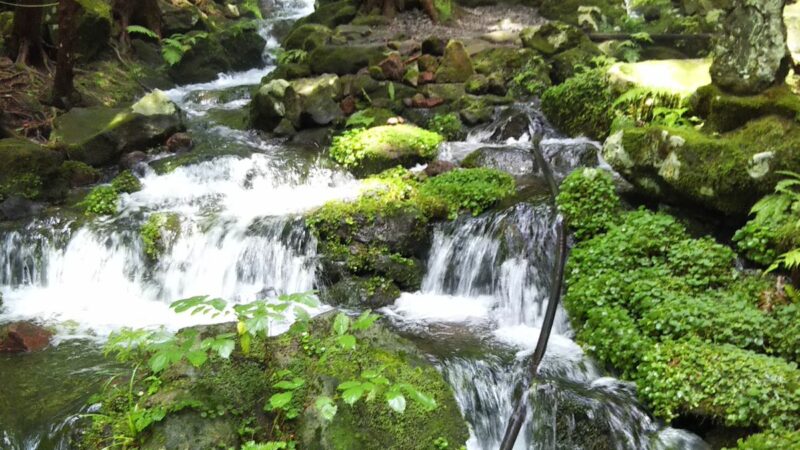
Enveloped in deep green, the gorge becomes a place of refuge for those seeking coolness. The Arakawa’s clear stream has high transparency, and resting by the water’s edge is exceptional. Canoe tours are also popular during summer.
Akashiba Gorge in Winter
While snow makes trail exploration difficult, the snow-covered gorge viewed from National Route 113 possesses a magical beauty. The landscape where white rock surfaces and snow become one has a charm unique to winter.
Comparison with Other Autumn Foliage Spots in Yamagata Prefecture
Yamagata Prefecture has many foliage viewing destinations, but Akashiba Gorge possesses unique charm.
While Zao’s foliage features mountain foliage at high elevations and Omoshirayama’s foliage is characterized by gorge beauty, Akashiba Gorge offers a landscape unparalleled in the contrast between white rock surfaces and foliage. Additionally, it is relatively easy to access and has well-maintained walking trails, making it enjoyable for a wide range of age groups.
Conclusion | Experience Japan’s Red Cliff at Akashiba Gorge
Akashiba Gorge is a natural treasure that Yamagata Prefecture proudly boasts. It is a gorge displaying the most magnificent topography within the Bandai-Asahi National Park, and particularly during autumn foliage season, its beauty ranks among the finest in the nation.
The contrast between white rock surfaces and blazing autumn foliage, the natural geological formations created by the Arakawa’s clear stream, and the grand landscape called “Japan’s Red Cliff” will become unforgettable memories for anyone who visits even once.
Akashiba Gorge offers various ways to enjoy itself—exploring walking trails, experiencing water views through canoe tours, and photography. Centered on the peak season from late October through early November, please visit. The rich nature of Oguni Town and its warm hospitality await you.
Despite its convenient location along National Route 113, Akashiba Gorge retains untouched nature. At this hidden gem in Yamagata’s southwestern corner, fully experience the beauty of Japan’s seasons.