.jpg)
Hirose Lake and Hirose Dam (Yamanashi Prefecture) Complete Guide | Highlights, Access, and Dam Card Information
The Hirose Dam, located in the Mitomi District of Yamanaashi City, Yamanashi Prefecture, is a prefectural dam surrounded by the majestic nature of the Oku-Chichibu Mountains. Together with Hirose Lake, its reservoir, it is enjoyed by many people as a scenic tourist destination that offers beautiful landscapes throughout the seasons, as well as a gateway to the Nishizawa Gorge. This article provides a detailed explanation from the history of Hirose Dam to facility information, highlights, and access methods.
Basic Information about Hirose Dam
Dam Overview and History
Hirose Dam is a central core rockfill dam built on the Usui River, a tributary of the Fuji River system, and is a prefectural dam managed by Yamanashi Prefecture. As the core facility of the Usui River Comprehensive Development Project, construction began in April 1969 (Showa 44) and was completed in March 1975 (Showa 50). It is also a historic dam, being the first dam built among those managed by Yamanashi Prefecture.
The main purposes of construction were to prevent flood damage in the downstream areas and to promote regional development through stable water supply to coastal areas. Nearly 50 years after its completion, it continues to function as an important infrastructure supporting the safety and development of the region.
Dam Specifications and Facility Information
The main specifications of Hirose Dam are as follows:
- Type: Central core rockfill dam
- Dam height: 75.0 meters
- Dam length: 255.0 meters
- Total storage capacity: Approximately 10.4 million cubic meters
- Effective storage capacity: Approximately 9.7 million cubic meters
- Watershed area: Approximately 47.4 square kilometers
- Manager: Yamanashi Prefecture (Hirose Dam Management Division)
A rockfill dam is constructed by stacking rocks and earth, with a clay core wall in the center of the dam body to stop water. At Hirose Dam, the stone stacking can be observed up close from the dam crest, allowing visitors to experience the scale and structure of the dam.
Location and Contact Information
- Address: Hirose, Kawara, Mitomi District, Yamanaashi City, Yamanashi Prefecture
- Management Office: Hirose Dam Management Division
- Phone Number: 0553-39-2829
- Opening Hours: Dam crest is freely accessible during daytime (closed at night)
The management office provides various information about the dam and guidance for facility tours. It is recommended to contact in advance if you wish to visit.
Attractions and Highlights of Hirose Lake
Scenic Spots with Changing Seasons
Hirose Lake changes its appearance with each season, offering beautiful views. From the observation terrace of the park adjacent to the dam, visitors can enjoy a panoramic view of the majestic mountains of the Oku-Chichibu range and Hirose Lake.
Spring greenery: From late April through May, the surrounding mountains burst into leaf all at once, and fresh green is reflected on the lake surface. The contrast with the snow-capped Oku-Chichibu mountains is beautiful.
Deep green summer: From June to August, the landscape is enveloped in dark green, and the emerald-green lake surface is impressive. Due to the high elevation, it remains relatively cool even in midsummer.
Autumn foliage: Mid-October through early November is the best time for autumn colors. Maples, oaks, and beeches turn color, creating vivid shades of red, yellow, and orange surrounding the lake. The foliage season is particularly popular, attracting many tourists.
Winter silence: From December through March, the landscape is covered in snow, creating a serene atmosphere. The frozen lake surface and snow-capped mountains create a fantastical scene.
View from Mt. Tokusa
Mt. Tokusa (Tokusayama, elevation 2,468.8 meters) is a distinctive alpine-shaped mountain rising directly in front of Hirose Lake. From the middle of the mountain, visitors can see not only Hirose Lake but also Mt. Fuji in the distance, enjoying the magnificent landscape of Chichibu-Tamakai National Park.
The view of Mt. Tokusa from the dam crest is impressive, and combined with the vertically elongated reservoir, it creates a dynamic mountain landscape.
Observation of Rockfill Dam Structure
The crest of Hirose Dam can be walked across, providing a rare opportunity to observe the structure of a rockfill dam up close. Visitors can experience the stacking method of rocks used in the dam body and other dam construction techniques, such as the spillway deflection section.
The spillway deflection section is a facility designed to safely direct surplus water downstream during heavy rains, and is characterized by its slide-like structure. It is one of the points where visitors can feel the functional beauty of the dam.
At the center, a water intake tower for power generation is installed, allowing visitors to visually understand the multi-purpose functions of the dam.
What You Can and Cannot Do at Hirose Dam
Enjoyable Activities for Sightseeing and Visits
Strolling along the dam crest: The crest is freely accessible for walking, offering views of the lake and downstream scenery. Walking across the entire 255-meter dam body allows visitors to experience the scale of the dam.
Views from the observation terrace: The observation terrace in the adjacent park is an excellent viewpoint for viewing Hirose Lake and the Oku-Chichibu Mountains. It is also ideal for photography.
Dam card collection: Dam cards are available at the entrance to Hirose Dam and can be collected freely. If you bring dam cards from the other five dams in Yamanashi Prefecture (Shiokawa Dam, Arakawa Dam, Kotogawa Dam, Daimon Dam, and Shinjiro Dam), you can receive a special “Yamanashi 6 Dam Comprehensive Card.” It is a must-have item for dam enthusiasts.
Guided facility tours by staff: By contacting in advance, you can receive a guided tour and detailed explanation from dam management staff. This is a valuable opportunity to learn more about how the dam works and its role.
Free distribution of driftwood: Driftwood that flows into the reservoir is sometimes distributed for free. For information about distribution timing and conditions, please contact the Hirose Dam Management Division directly. It is popular for camping and wood-burning stove use.
Restricted Activities
At Hirose Dam and Hirose Lake, the following activities are prohibited or restricted for safety management and water quality preservation:
- Swimming and water sports on the lake: Swimming, boating, kayaking, fishing, and other activities on the reservoir are generally prohibited.
- Camping and barbecues: Use of open flames on dam grounds and lakeside areas is prohibited.
- Drone flights: Drone flights over the dam facility require permission from the management.
- Nighttime entry: The dam crest is closed to traffic at night.
These restrictions are in place to ensure visitor safety and proper facility management. Follow the rules and enjoy your visit.
Access to Hirose Dam
Access by Car
Hirose Dam is located along National Route 140 (Karasaka Michi), making it convenient to access by car.
From Tokyo:
- Approximately 40 minutes from the “Katsumine IC” on the Chuo Expressway
- Approximately 45 minutes from “Ichinomiya Misaka IC” on the Chuo Expressway
- Head north on National Route 140 toward Chichibu/Karasaka Tunnel, arriving just before Nishizawa Gorge
From Kofu:
- Approximately 50 minutes north from Kofu city center on National Route 140
From Chichibu:
- Approximately 20 minutes after passing through the Karasaka Tunnel
Parking: There is a free parking lot at the dam, with capacity for approximately 20 standard vehicles. It may get crowded during the foliage season and on holidays, so arriving early is recommended.
Access by Public Transportation
Train and bus:
- Get off at “Yamanaashi Station” on the JR Chuo Main Line
- Take the Yamanaashi City Bus heading to “Nishizawa Gorge Entrance” (approximately 60 minutes)
- Get off at “Hirose Dam” bus stop, a short walk away
*Note: City bus service varies depending on the season and day of the week. Particularly in winter, service may be suspended, so check the latest service status with Yamanaashi City Hall or the Yamanaashi City Tourist Association before your visit.
Touring with Nishizawa Gorge
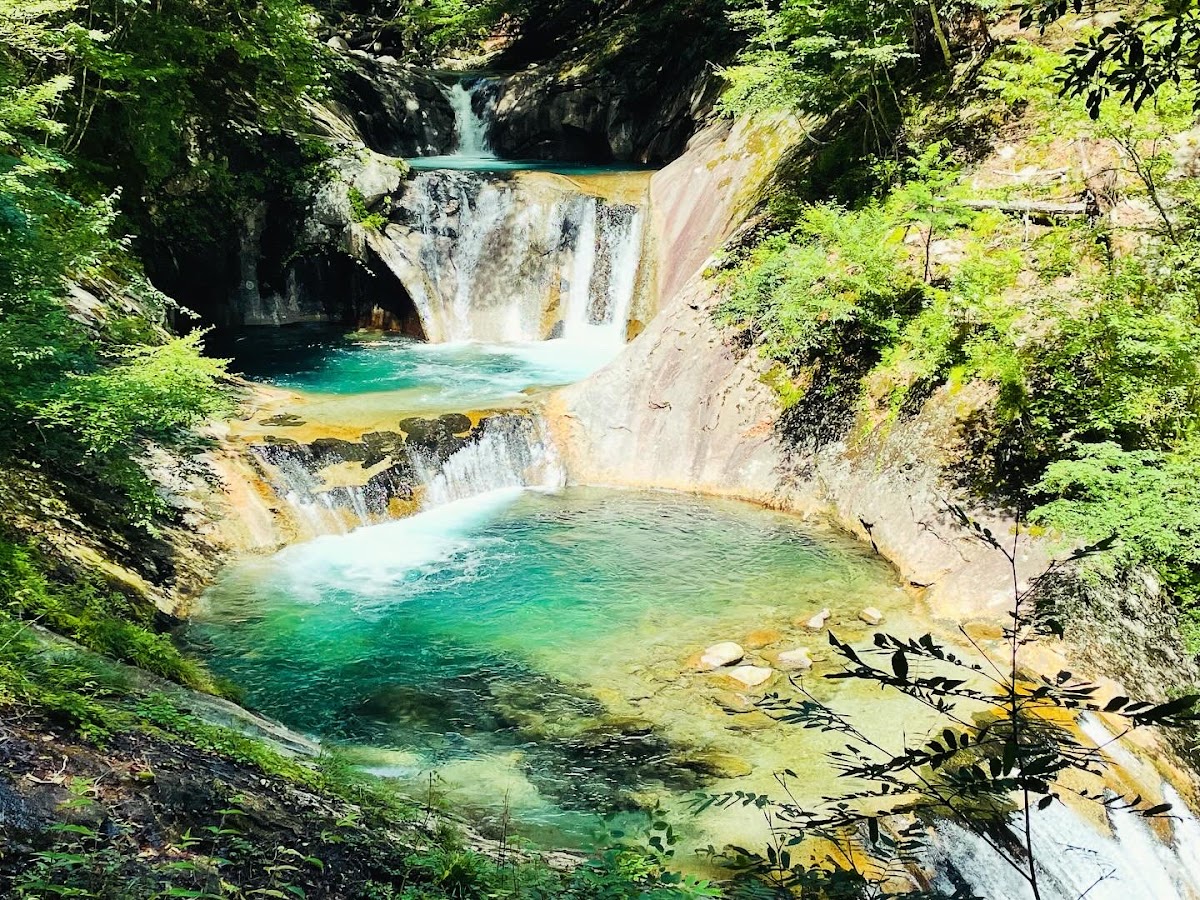
Hirose Dam is positioned at the gateway to Nishizawa Gorge, famous for Nanatsukamafive-tier Falls, which is listed as one of Japan’s 100 waterfalls. From Hirose Dam to the entrance of Nishizawa Gorge is approximately 5 minutes by car or about 30 minutes on foot.
Visiting in combination with a hike in Nishizawa Gorge provides a more fulfilling experience of Yamanashi’s natural beauty. Particularly during the foliage season, visitors can enjoy wonderful autumn colors at both the dam and gorge, making it a popular destination.
Nearby Tourist Attractions and Facilities
Nishizawa Gorge
Located about 2 kilometers upstream from Hirose Dam, Nishizawa Gorge is a famous tourist attraction boasting some of the country’s finest gorge scenery. A well-maintained 10-kilometer walking trail features numerous waterfalls, pools, and primeval forests, including the Nanatsukama Falls. The course takes approximately 3-4 hours and can be enjoyed by both hiking beginners and advanced hikers.
Hot Springs in the Mitomi District
There are several hot spring facilities in the Mitomi District around Hirose Dam. It is recommended to relax in a hot spring after dam viewing and hiking.
Michi no Eki Mitomi
A roadside station located along National Route 140, where you can purchase local produce and special products. It is about 15 minutes by car from Hirose Dam and is convenient as a rest stop.
Current Situation and Latest Information about Hirose Dam
Dam Water Level
The water storage rate and discharge conditions of Hirose Dam are updated regularly on the Yamanashi Prefecture official website. During heavy rains, discharges may occur for flood control, and downstream areas may experience rapid water level rises, so caution is necessary.
Winter Precautions
From late November through early April, National Route 140 may be closed due to snow and icy road surfaces. The area around the Karasaka Tunnel is particularly prone to heavy snow, so studded tires are essential when visiting in winter. City buses are also closed during winter, so check the latest road and traffic information before your visit.
Facility Maintenance Information
Due to regular inspections and maintenance work on the dam, access may be temporarily restricted. Before your visit, it is recommended to check the latest information on the Yamanashi Prefecture official website or by contacting the Hirose Dam Management Division.
The Fun of Collecting Dam Cards
Hirose Dam Card
Dam cards are available at the entrance to Hirose Dam, which visitors can freely obtain. The cards feature a photo and basic information about the dam and are popular collection items among dam enthusiasts.
Yamanashi 6 Dam Comprehensive Card
When you collect all dam cards from the six dams managed by Yamanashi Prefecture (Hirose Dam, Shiokawa Dam, Arakawa Dam, Kotogawa Dam, Daimon Dam, and Shinjiro Dam), you can obtain a special “Yamanashi 6 Dam Comprehensive Card.”
To obtain the comprehensive card, you need to bring all six dam cards and visit the Hirose Dam Management Division. As a souvenir of your journey visiting dams throughout Yamanashi Prefecture, please try collecting them. Each dam has its own unique characteristics and attractions, and through dam touring, you can rediscover Yamanashi’s abundant water resources and nature.
Recommended Seasons to Visit Hirose Dam
Autumn Foliage Season (Mid-October – Early November)
The best time to visit Hirose Dam and Hirose Lake is the autumn foliage season. The mountains around the dam turn red and yellow, and the foliage reflected on the lake surface is breathtakingly beautiful. During this season, Nishizawa Gorge also reaches peak foliage, attracting many tourists to visit both locations.
Spring Greenery Season (May – June)
The spring to early summer season of fresh greenery is also a beautiful time. Freshly sprouted vibrant green is reflected on the lake surface, and visitors can enjoy dam viewing in the refreshing air. Tourist numbers are still relatively few, allowing for a leisurely appreciation of the scenery.
Summer (July – August)
Due to the high elevation, the weather remains relatively cool even in midsummer. It is also recommended as a summer retreat destination. However, during this season, the Nishizawa Gorge hiking area becomes crowded, and parking lots may get congested.
Hirose Dam as a Photography Spot
Recommended Photography Points
Observation terrace: The classic spot to capture a panoramic view of Hirose Lake and the surrounding Oku-Chichibu Mountains. Morning light provides favorable conditions for beautiful photos.
Center of dam crest: You can photograph the landscape on both sides of the dam. A composition including the spillway structure and intake tower is particularly recommended.
Downstream side of dam: To capture the entire dam structure, viewing from below and looking up is most effective. You can photograph the impressive appearance of the rockfill dam.
Lakeside walking trail: Photos of the lake with seasonal flowers or foliage in the foreground can be captured.
Photography Notes
- Unauthorized entry into management areas is prohibited
- Drone use requires prior permission
- When using tripods, be considerate of other visitors and avoid obstructing their passage
- The foliage season is crowded, so enjoy photography with a spirit of consideration
Summary: The Charm of Hirose Dam and Hirose Lake
Hirose Dam and Hirose Lake are beautiful dam and lake attractions that Yamanashi Prefecture can be proud of. Surrounded by the majestic nature of the Oku-Chichibu Mountains, they are enjoyed by many people as scenic tourist destinations offering beautiful landscapes throughout the seasons, as well as a gateway to Nishizawa Gorge.
Hirose Dam has various attractions, including the opportunity to observe the rockfill dam structure up close, spectacular views from the observation terrace, dam card collection, and the rich natural environment of the surrounding area. The beauty during the autumn foliage season is particularly exceptional and well worth a visit.
The ease of access—about 40 minutes by car from Yamanaashi city center and reachable as a day trip from the Tokyo metropolitan area—is also an attractive feature. Combined with a hike in Nishizawa Gorge, you can spend a fulfilling day fully enjoying Yamanashi’s nature.
On your next day off, please visit Hirose Dam and Hirose Lake to experience the landscape created by the functional beauty of the dam and the surrounding nature. Hirose Lake, which shows a different face with each season, is a charming destination with new discoveries every time you visit.
-800x450.jpg)
-800x450.jpg)
-800x450.jpg)