
Complete Guide to Mount Gozaisho | Discover the Charm and Climbing Information of Mie Prefecture’s Signature Scenic Mountain
What is Mount Gozaisho? The Famous Peak of the Suzuka Mountains that Mie Prefecture Boasts
Mount Gozaisho (ございしょだけ) is a 1,212-meter-high mountain located at the border between Komono Town, Mie County, Mie Prefecture and Higashi-Omi City, Shiga Prefecture. As one of the main peaks of the Suzuka Mountains, it is known as a representative mountain sightseeing destination in the Kansai and Chubu regions.
With excellent access—approximately one hour by car from Nagoya and about two hours from Osaka—plus the well-developed Mount Gozaisho Ropeway, Japan’s largest class ropeway, it is beloved by a wide range of visitors from beginner climbers to advanced mountaineers and tourists alike.
From the summit, you can see Ise Bay, the Chita Peninsula, and on clear days even Mount Fuji. Due to its magnificent views, it has been selected as one of “Japan’s Two Hundred Famous Mountains.”
History and Cultural Background of Mount Gozaisho
While there are various theories about the origin of the name “Mount Gozaisho,” the most credible is related to its history as a sacred site of Shugendo mountain asceticism. “Gozaisho” refers to a place where deities and Buddhas are enshrined, and it has long been revered as an object of mountain worship.
During the Edo period, the Yunoyama Hot Spring was opened, and Mount Gozaisho came to be venerated as a sacred mountain rising behind the hot spring resort. When the Mount Gozaisho Ropeway began operations in 1959 (Showa 34), it developed into a tourist destination that general visitors could easily access.
Even today, there is a small shrine dedicated to Omine Daikongen near the summit, where climbers and tourists can be seen offering prayers for safety.
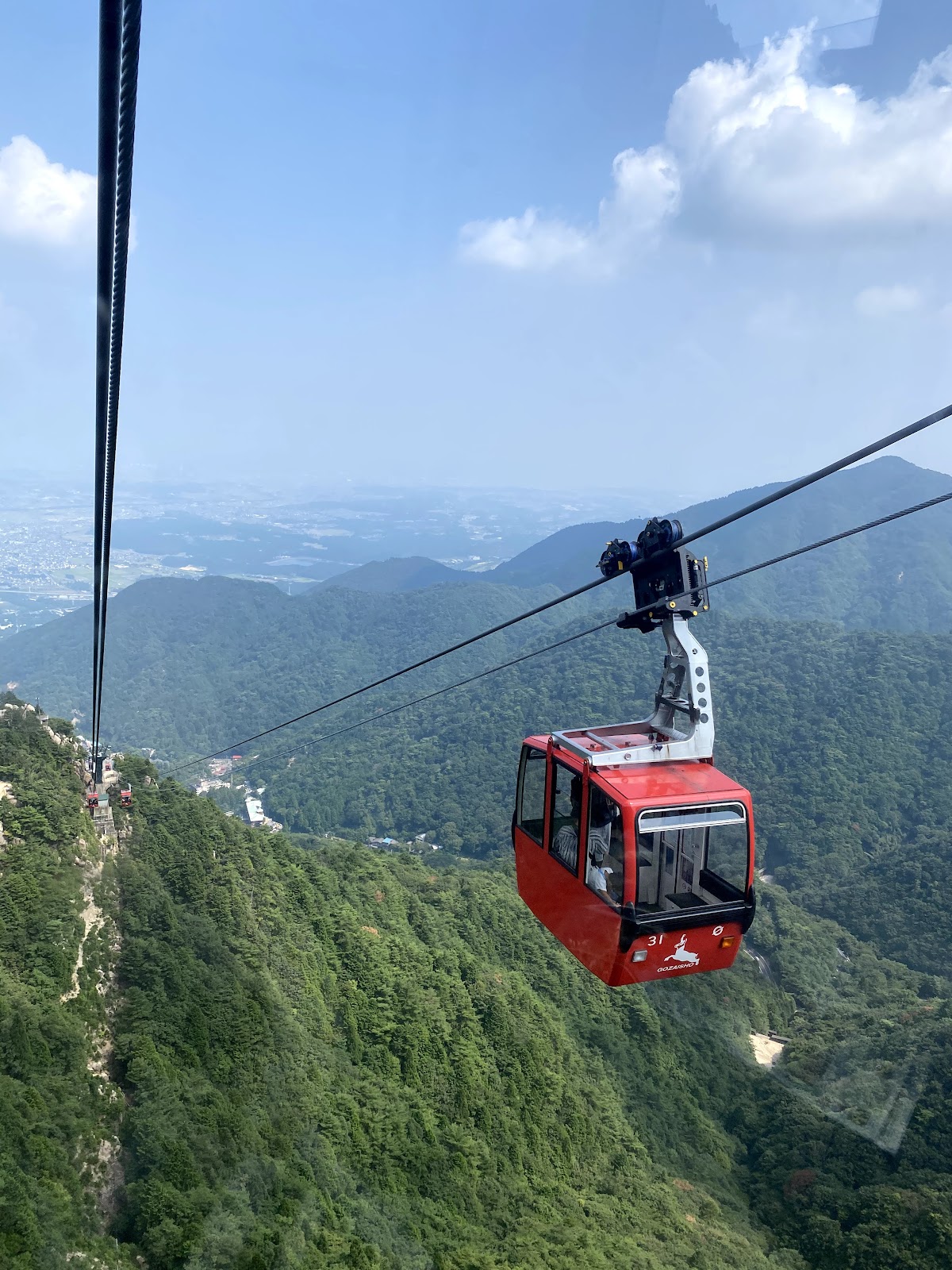
Mount Gozaisho Ropeway | Japan’s Largest Class Aerial Excursion
Basic Information About the Ropeway
The Mount Gozaisho Ropeway is a 2,161-meter-long cable car that connects Yunoyama Hot Spring Station (400m elevation) to the Mountain Park Station (1,180m elevation) in approximately 12 minutes. With an elevation gain of 780 meters, it boasts Japan’s largest-class scale.
Operating Hours and Fees (As of 2024)
- Operating hours: 9:00-17:00 (subject to seasonal changes)
- Operating interval: Every 15 minutes
- Fares: Adults round-trip ¥2,600, Children round-trip ¥1,300 (one-way fares also available)
- Capacity: 46 people per gondola
Spectacular Views and Points of Interest Visible from the Ropeway
From the ropeway car windows, you can get a close-up view of the characteristic rock formations of Mount Gozaisho.
Main Points of Interest
- Jizo Rock: A giant rock approximately 10 meters high that resembles a sitting Jizo statue
- Daikoku Rock: A rock that resembles the figure of Daikoku
- Obbare Rock: A mysterious rock weighing approximately 12 tons that appears about to fall but doesn’t
- Negative-carrying Stone: A strange sight where a large rock appears to be carried on the back of a small rock
Especially during the fall foliage season (mid-October to late November), you can enjoy the brocade-like autumn leaves spread below from the air, attracting many tourists.
Complete Climbing Guide to Mount Gozaisho
Beginner-Friendly: Naka Trail Course
Course Overview
- Trailhead: Near Yunoyama Hot Spring
- Estimated time: Approximately 2 hours 30 minutes up, approximately 2 hours down
- Distance: Approximately 3.5 km
- Difficulty: Beginner to Intermediate
The Naka Trail is the most popular climbing route for Mount Gozaisho. It is a well-maintained trail with few dangerous spots, making it relatively safe even for beginners.
Along the way, you can see distinctive rock formations such as “Obbare Rock” and “Jizo Rock” up close, enjoying a landscape rich in variety. However, with an elevation gain of about 800 meters, physical fitness is necessary.
Advanced: Ichinoya New Trail and Back Route
Ichinoya New Trail
- Estimated time: Approximately 3 hours up
- Difficulty: Advanced
- Features: A serious route with abundant rock faces and continuous chains and ladders
The Ichinoya New Trail is the most challenging and thrilling climbing route on Mount Gozaisho. It involves strong rock climbing elements, and some sections require three-point contact technique.
Back Route (Takehira Pass Route)
- Estimated time: Approximately 3 hours 30 minutes up
- Difficulty: Intermediate to Advanced
- Features: A connoisseur’s route that allows for peaceful mountain walking
Family-Friendly: Ropeway Utilization Plan
For those without climbing experience or families with small children, a plan to ride the ropeway to the summit and explore the Mountain Park area is recommended.
Mountain Park Points of Interest
- Restaurant “Naturre”: Dine while overlooking Ise Bay
- Observation deck: 360-degree panoramic view
- Fuji-viewing Rock: Mount Fuji is visible on clear days
- Mountain trail: An easy hiking course lasting 30 minutes to 1 hour
Mount Gozaisho’s Seasonal Appeal
Spring (March-May): Season of Snowmelt and Fresh Greenery
From March to April, while cherry blossoms begin blooming at the foot of the mountain, the summit area still has snow, where you can enjoy “spring skiing.” By May, fresh greenery is beautiful, and flowers such as Shiro-yashio (five-needle pine azalea) color the mountain.
Summer (June-August): Refuge from Heat and Alpine Plants
In summer, Mount Gozaisho’s summit temperature is 5-10 degrees lower than the lowlands, functioning as a natural air conditioner. It is ideal for a summer retreat combined with Yunoyama Hot Spring.
From July to August, alpine plants such as Iwakagami and Kobano-mitsuba-azalea reach their bloom. Early morning climbs sometimes offer sea of clouds views.
Autumn (September-November): Spectacular Autumn Foliage
Mount Gozaisho’s autumn foliage is known as one of Mie Prefecture’s representative foliage spots.
Foliage Peak Seasons
- Summit area: Mid to late October
- Mid-slope: Late October to early November
- Base of mountain: Early to mid-November
Due to the elevation difference, you can enjoy foliage for approximately one month. Particularly from the ropeway, the sight is spectacular, with the mountainside spread below painted in red and gold.
Winter (December-February): Rime Ice and Winter Mountain Climbing
Winter on Mount Gozaisho is famous for its rime ice (also called ice flowers or shrimp tail formation). Under severe cold with temperatures below minus 10 degrees Celsius, rime ice grows on the windward side, creating a natural work of art.
Mount Gozaisho Ski Resort
- Operating period: Mid-December to late March (depending on snow conditions)
- Courses: Beginner to intermediate
- Features: Direct access by ropeway, western Japan’s largest high-altitude ski resort
Winter mountain climbing requires equipment such as crampons and ice axes, and experience, but the snow-covered rock formations and rime ice offer a spectacular view that cannot be experienced in other seasons.
Preparation and Precautions for Climbing Mount Gozaisho
Clothing and Equipment
Basic Equipment
- Climbing boots (trekking shoes)
- Rain gear (separate upper and lower pieces)
- Backpack (20-30L approximately)
- Hat and gloves
- Map and compass (or GPS app)
- Headlamp
- First aid kit
Additional Equipment by Season
- Spring/Autumn: Warm clothing (fleece or down)
- Summer: Sunscreen, insect repellent
- Winter: Crampons, ice axe, warm clothing, snow goggles
Safety Precautions for Responsible Climbing
- Submit a climbing plan: Can be submitted at the trailhead, Komono Town Hall, or online
- Check weather: Mountain weather changes rapidly, so check meteorological information in advance
- Start early, finish early: Begin descent no later than 2 p.m.
- Bring sufficient water and snacks: Carry adequate amounts
- Avoid solo climbing: Climb with others when possible
Accident Prevention and Emergency Contact Numbers
- Mie Prefectural Police Mountain Rescue Team: 110
- Komono Town Fire Department: 059-394-1190
- Mount Gozaisho Ropeway: 059-392-2261
Combination Plans with Yunoyama Hot Spring
Yunoyama Hot Spring, which spreads at the base of Mount Gozaisho, is a renowned hot spring with 1,300 years of history. It is standard practice to soak away the fatigue of climbing or ropeway sightseeing in the hot spring.
Day-Use Hot Spring Facilities
Aqua Ignis Kataoka Onsen
- Spring quality: Alkaline simple thermal spring
- Features: Modern-design resort complex
- Operating hours: 6:00-24:00
Yunoyama Hot Spring Kibousou
- Historic inn offering day-use bathing
- Outdoor bath with views of Mount Gozaisho
Recommended Accommodations
- Yunoyama Hot Spring Green Hotel: Popular with families
- Kotai: A sophisticated-atmosphere luxury inn
- Saikoyo: Modern facilities with traditional hospitality
Access Information
Access by Car
From Nagoya Area
- About 30 minutes from “Yokkaichi IC” on the Tomei Meihan Expressway (via National Route 477)
- About 10 minutes from “Komono IC” on the Shin-Meishin Expressway
From Osaka Area
- About 40 minutes from “Hachiji IC” on the Meishin Expressway
- About 10 minutes from “Komono IC” on the Shin-Meishin Expressway
Parking Information
- Mount Gozaisho Ropeway parking lot: Approximately 300 spaces, free
- Multiple parking lots in Yunoyama Hot Spring town
Access by Public Transportation
Train and Bus
- Kintetsu Nagoya Line “Kintetsu Yokkaichi Station” → Kintetsu Yunoyama Line “Yunoyama Onsen Station” (approximately 30 minutes)
- “Yunoyama Onsen Station” → Mie Kotsu Bus “Mount Gozaisho Ropeway Front” (approximately 10 minutes)
Time from Nagoya Station: Approximately 1 hour 30 minutes
Sightseeing Spots Around Mount Gozaisho
Points of Interest in Komono Town
Sangakuji Temple
- An ancient Tendai Buddhist temple, the center of Mount Gozaisho’s mountain worship
- Houses important cultural property Buddhist statues
Paramita Museum
- Famous for Mitsuo Ikeda’s ceramic mural “Heart Sutra Series”
- Hosts exhibitions focusing on contemporary art
Komono Town Agricultural Produce Direct Sales Center
- Purchase fresh local vegetables and specialty products
Yokkaichi and Kuwana Area
- Nagashima Spa Land: Japan’s largest amusement park (about 40 minutes by car)
- Nabana no Sato: Famous for illuminations (about 40 minutes by car)
- Yokkaichi Petrochemical Complex Night View: A nightscape spot
Nature and Ecosystem of Mount Gozaisho
Flora and Fauna
Mount Gozaisho is blessed with a rich natural environment, where diverse flora and fauna inhabit.
Flora
- Akayashio and Shiroyashio (Azalea family)
- Deciduous broadleaf trees such as beech and Mizunara oak
- Alpine plants such as Iwakagami and Kobaikeisoaceae
Fauna
- Japanese serow (designated as a Special Natural Monument)
- Japanese deer and wild boar
- Wild pheasants, little cuckoos and other birds
Geology and Formation of Rock Formations
The characteristic rock formations of Mount Gozaisho were formed through weathering and erosion of granite over long periods of time.
Granite is an igneous rock that solidifies when magma cools slowly deep underground, and has properties of being hard and resistant to weathering. However, water and ice enter along joints (cracks in rocks), and through repeated freeze-thaw cycles, rocks gradually separate.
This process created mysterious shapes such as “Obbare Rock” and “Negative-carrying Stone” by leaving behind rocks that maintained their balance.
Trivia for Enjoying Mount Gozaisho
Weather Characteristics of Mount Gozaisho
Since Mount Gozaisho’s elevation is about 1,200 meters, even in summer the summit is 5-10 degrees cooler than the lowlands. Additionally, weather changes rapidly, and fog can suddenly form or rain can start even on clear days.
Temperature Guidelines (Comparison with Lowlands)
- Spring/Autumn: 5-8 degrees cooler than lowlands
- Summer: 8-10 degrees cooler than lowlands
- Winter: 10-15 degrees cooler than lowlands (can drop below freezing)
Best Photography Spots
- Mountain Park Observation Deck: Grand panorama of Ise Bay
- Obbare Rock: Photographable from both ropeway and hiking trail
- Inside the Ropeway Car: Especially spectacular during foliage season
- Fuji-viewing Rock: Mount Fuji visible on clear days
- Chouja Pond: A small pond near the summit, its mirror-like surface reflects the scenery
Event Information
Mount Gozaisho Opening Festival
- Period: Early May
- Content: Sacred ceremony praying for climbing season safety
Mount Gozaisho Foliage Festival
- Period: October-November
- Content: Special events, local products exhibition, etc.
Rime Ice Festival
- Period: January-February
- Content: Events promoting Mount Gozaisho’s winter appeal
Mount Gozaisho Enjoyable for Everyone from Beginners to Veterans
The greatest charm of Mount Gozaisho lies in its diversity. Using the ropeway, even those without climbing experience can enjoy the spectacular views from the summit, while advanced mountaineers can satisfy their desire for serious rock climbing routes.
Mount Gozaisho shows a different face with each season, and there is always something new to discover with repeated visits. There is the pleasure of visiting seasonally with spring greenery, summer cool refuge, autumn foliage, and winter rime ice.
Combined with Yunoyama Hot Spring, you can spend a luxurious day enjoying both climbing and hot springs. With good access from Nagoya and Osaka, it is an ideal destination for a weekend getaway.
Summary: Visit Mount Gozaisho, Mie Prefecture’s Treasure
Mount Gozaisho is a natural treasure that Mie Prefecture boasts. At 1,212 meters high, it offers both serious mountaineering and casual sightseeing throughout the year, beloved by many people.
Japan’s largest-class ropeway, distinctive rock formations, spectacular seasonal views, and the historically significant Yunoyama Hot Spring—all of these are gathered in one place, which is Mount Gozaisho’s charm.
For first-timers, start by taking the ropeway to the summit. Once you have experienced the mountain’s appeal, why not challenge yourself to climbing next time? Visiting in different seasons will introduce you to a completely different face of Mount Gozaisho.
When visiting Mie Prefecture, be sure to add Mount Gozaisho to your itinerary. It will surely become an unforgettable memory.
