Yabakei, Oita Prefecture | Complete Guide to Japan’s New Three Great Scenic Views [Latest 2025 Edition]
Yabakei (耶馬渓), which spreads across Nakatsu City in Oita Prefecture, is a scenic spot boasting some of Japan’s finest gorge beauty with landscapes reminiscent of Chinese landscape paintings. This area, which holds four prestigious titles—Japan’s New Three Great Scenic Views, Japan’s Three Great Wonders, a National Scenic Spot, and Japan Heritage—continues to captivate visitors with its majestic natural beauty created by bizarre rock formations and deep gorges, centered on the upper and middle reaches of the Yamakuni River.
This article provides detailed explanations from a local perspective, covering everything from the history of Yabakei to area-specific attractions, best seasons, and access information.
Yabakei Overview | Japan’s Representative Gorge Beauty
Geographical Location and Scale of Yabakei
Yabakei is a vast scenic area centered on Nakatsu City in the northwestern corner of Oita Prefecture. It is a gorge centered on the Yamakuni River and its tributaries, spanning from Nakatsu City to Kusu Town, covering a total area of tens of square kilometers. To the north lies the Suo-Nada Sea, while to the south lie the mountains designated as the Yaba-Hita-Hikosan Quasi-National Park, a nature-rich area.
Despite being just about 20 minutes by car from Nakatsu City center, stepping into the gorge reveals another world of scenic beauty. The bizarre rock formations created by volcanic activity and years of erosion work together with deep forests and clear streams to create a magnificent landscape.
The Origin of Yabakei’s Name and History
The name “Yabakei” was given by Rai Sanyo (1780-1832), a literatus from the late Edo period. In 1825 (Bunsei 8), when Rai Sanyo visited this area, he was deeply moved by the natural beauty created by bizarre rocks and gorges, and named it “Yabakei” after “Yabatai,” a scenic spot in China.
Rai Sanyo was a best-selling author at the time, and through his travel narratives and Chinese poetry, the name Yabakei became known throughout Japan. For approximately 200 years since then, Yabakei has continued to enchant literary figures and tourists as one of Japan’s representative scenic spots.
The Value Indicated by Four Titles
Yabakei holds the following four titles, making it a rare scenic spot in Japan.
Japan’s New Three Great Scenic Views: In 1915 (Taisho 4), following a public vote conducted by the Osaka Mainichi Shimbun and Tokyo Mainichi Shimbun, it was selected alongside Miho-no-Matsubara in Shizuoka Prefecture and Lake Onuma in Hokkaido.
Japan’s Three Great Wonders: Known alongside Myogi Mountain (Gunma Prefecture) and Kankakei Gorge (Kagawa Prefecture) as representing Japan’s distinctive rock landscapes.
National Scenic Spot: Designated as a National Scenic Spot in 1950 (Showa 25), its value as a cultural property was officially recognized.
Japan Heritage: In 2017 (Heisei 29), it was designated as Japan Heritage under the title “Yabakei Yuransen – Following the Path of a Landscape Scroll Painted on the Earth.”
These titles attest to Yabakei’s natural beauty, landscape value, and historical significance.
Area-Specific Main Scenic Spots | Diverse Scenery Across Five Areas
Yabakei is divided into five major areas, each with distinct charms. The characteristics and attractions of each area are detailed below.
Hon Yabakei (本耶馬渓) | The Heart of Yabakei Tourism
Hon Yabakei is the central hub of Yabakei tourism and the area visited by the most tourists. Located in Hon Yabakei Town, Nakatsu City, it features scenic spots unfolding along the Yamakuni River.
Ao no Domon (Blue Grotto) is a representative tourist spot of Hon Yabakei. This tunnel was hand-excavated by the Buddhist priest Zenkai over approximately 30 years during the middle Edo period, spanning about 342 meters in total length. The legend tells that, troubled by the many lives lost on the steep cliff chains that previously existed, Priest Zenkai began the excavation to ensure safe passage for people. Currently, a portion is open to pedestrians, allowing visitors to walk through the grotto interior.
Rakan-ji Temple is an ancient temple in the mountains of Hon Yabakei, known as one of Japan’s Three Great Groups of Five Hundred Arhats. Approximately 3,700 stone Buddhist statues enshrined in a rock cave create an overwhelming sight. Access by lift is available from the mountain base, and the temple grounds offer panoramic views of the Hon Yabakei gorge.
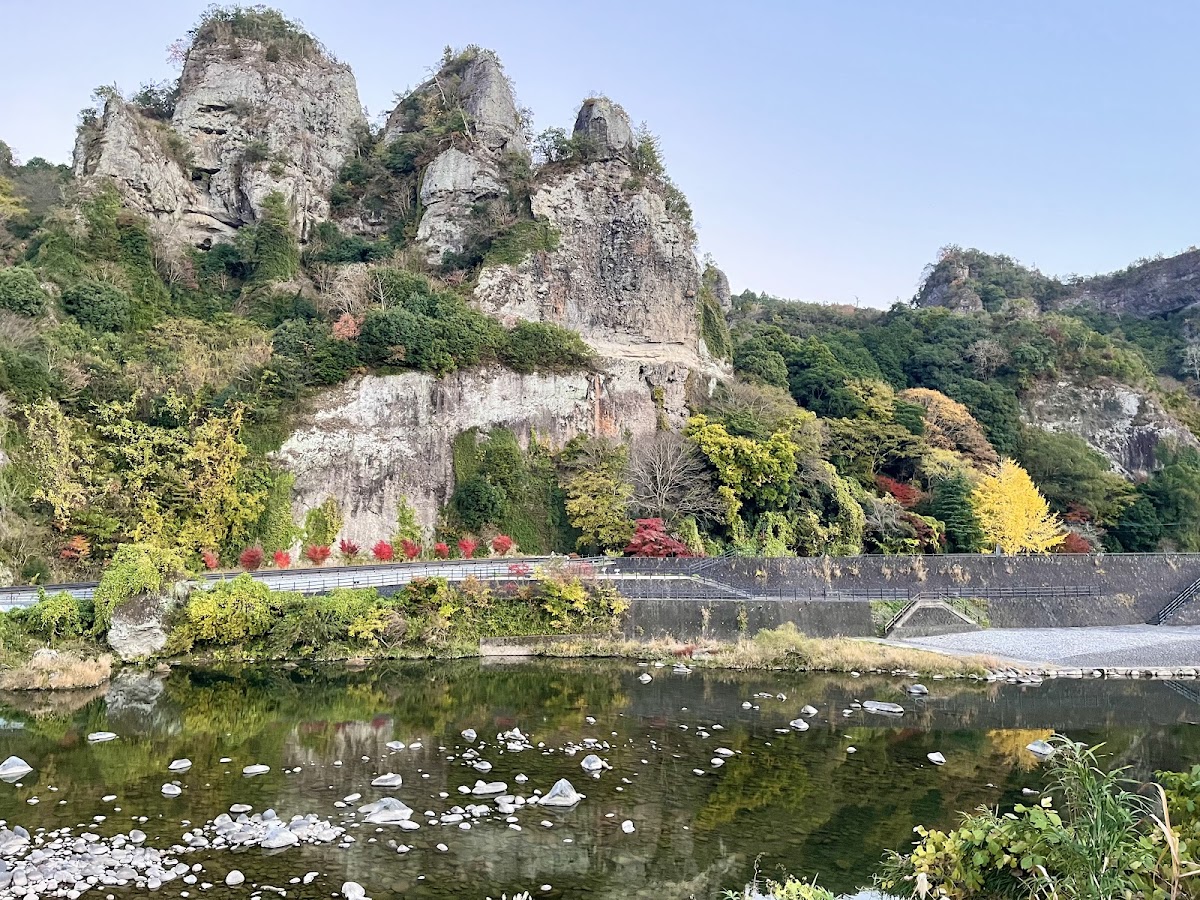
Kyoshu Peak (競秀峰) is a group of bizarre rocks rising on the opposite bank of Ao no Domon, named for eight rock peaks competing with one another. The view from the observation point is considered the finest scenery of Hon Yabakei.
Shin Yabakei (深耶馬渓) | The Eight Vistas in One View
Shin Yabakei is located in Yabakei Town, Nakatsu City, an area where gorge beauty is particularly pronounced.
Hitome Hakkei (One View Eight Vistas) is a representative scenic spot of Shin Yabakei. From a single observation point, eight rock peaks can be seen at once: “Kai-bo Rei,” “Sennin Iwa,” “Sho-en-zan,” “Meoto Iwa,” “Gun-en-zan,” “Eboshi Iwa,” “O-shika-nao-o-rei,” and “Washi-no-su-yama.” Particularly during the autumn foliage season, the contrast between colored leaves and bizarre rocks creates magnificent scenery, attracting many photographers.
Walking trails are maintained around the observation point, allowing visitors to enjoy the gorge beauty from various angles. Parking is also available with good access.
Nenbutsu Bridge is a bridge spanning Shin Yabakei, offering beautiful views of the gorge from the bridge itself. Once a dangerous place, it is said the name came from people chanting Buddhist prayers when crossing.
Oku Yabakei (奥耶馬渓) | Gorge Beauty Wrapped in Silence
Oku Yabakei is located at the deepest point of Yabakei Town, Nakatsu City, an area particularly known for its quiet and pristine natural environment among the five areas.
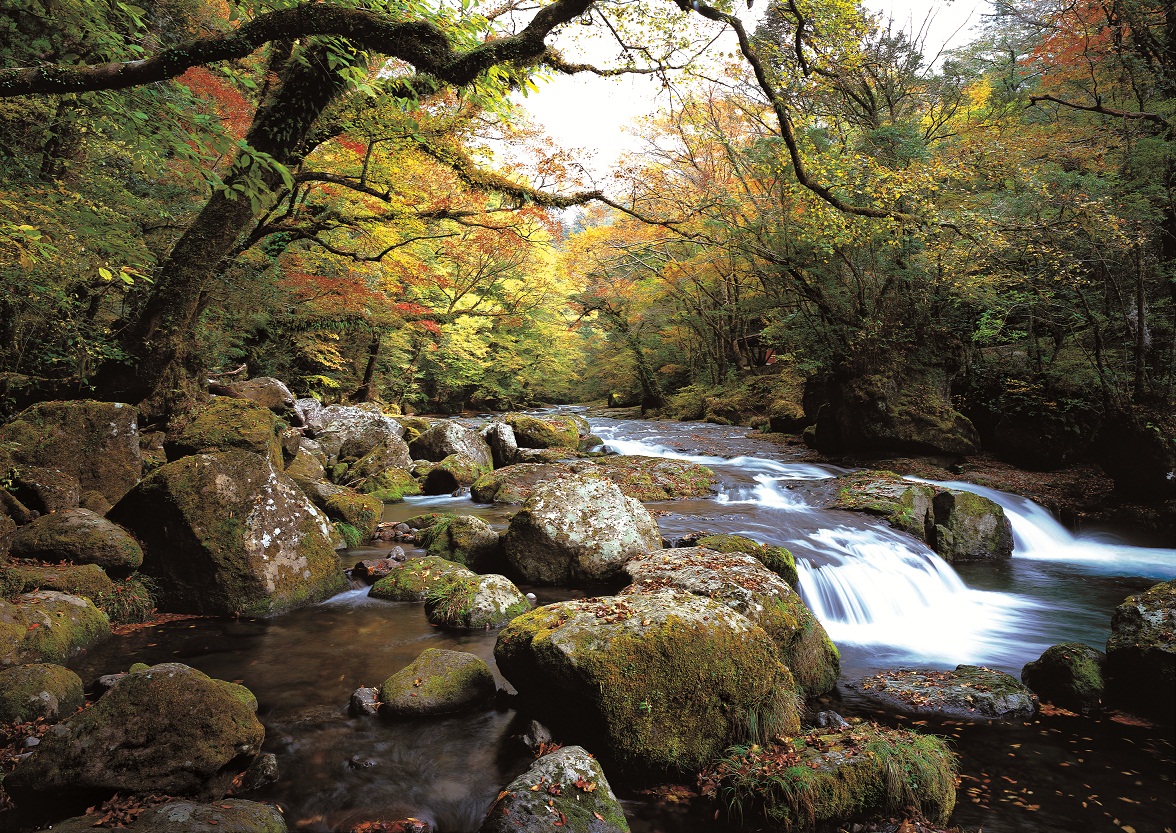
Sarutobi Sentsubo Gorge (猿飛千壺峡) is the representative scenic spot of Oku Yabakei, located on the upper reaches of the Yamakuni River. Through years of erosion, countless potholes (geological formations) have formed in the riverbed, numbering in the thousands. The emerald-green clear stream and bizarre rocks create a mystical landscape that enchants visitors.
Walking trails are maintained, allowing visitors to stroll along the gorge while enjoying natural beauty. The periods of new growth and autumn foliage are particularly beautiful, making it popular with photography enthusiasts.
Malin Gorge (魔林峡) is a more secluded spot located even deeper in Oku Yabakei, its charm lying in the ethereal atmosphere created by primeval forest and mountain stream.
Ura Yabakei (裏耶馬渓) | Hidden Gems
Ura Yabakei is located in Yamakuni Town, Nakatsu City, an area with fewer tourists than other areas where visitors can quietly enjoy nature.
Ifuku Scenery is a representative scenic spot of Ura Yabakei, with bizarre rocks lined along the Yamakuni River creating beautiful landscape. Being underdeveloped as a tourist destination, visitors can fully appreciate unspoiled natural beauty.
Oriyama Scenery is another attraction of Ura Yabakei, where visitors can enjoy gorge beauty from riverside walking trails. It is a hidden gem loved by locals.
Yabakei (耶馬渓) | Central Area Scenic Spot
The area simply called “Yabakei” is located in the central part of Yabakei Town, Nakatsu City.
Ko Rakan is the representative scenic spot of the Yabakei area, with magnificent landscape created by bizarre rock groups and gorges. The view from the observation point is splendid, allowing enjoyment of nature’s seasonal beauty.
Tsuru-ga-hara Scenery is also a Yabakei area attraction, characterized by expansive gorge vistas.
Yabakei’s Sixty-Six Vistas | Handpicked Scenic Points
Yabakei has sixty-six scenic spots designated as “Yabakei’s Sixty-Six Vistas,” selected for their particularly superior landscapes. These were chosen from the Edo to Meiji periods and showcase Yabakei’s diverse attractions.
The sixty-six vistas include famous spots mentioned earlier such as One View Eight Vistas, Kyoshu Peak, and Sarutobi Sentsubo Gorge, as well as hidden gems known only to locals. Visiting all of them would require several days, but taking time to tour them allows one to appreciate the depth of Yabakei.
Major sixty-six vistas include the following spots:
- Ao no Domon vicinity: Kyoshu Peak, Tobi-no-su-yama, Meoto Iwa, and others
- Shin Yabakei vicinity: One View Eight Vistas, Nenbutsu Bridge, Reigyoku, and others
- Oku Yabakei vicinity: Sarutobi Sentsubo Gorge, Malin Gorge, Nishi-tani, and others
- Ura Yabakei vicinity: Ifuku Scenery, Oriyama Scenery, and others
- Hon Yabakei vicinity: Rakan-ji Temple, Ko Rakan, Goryo-momiji, and others
Information boards are installed at each scenic spot, explaining their history and attractions.
Yabakei’s Four Seasons and Autumn Foliage | How to Enjoy the Best Season
Spring Yabakei | Competition of New Green and Mountain Cherry Blossoms
Spring in Yabakei is best viewed from late March through May as fresh leaves begin to sprout. Trees released from winter’s harshness unfold their young leaves all at once, enveloping the entire gorge in pale green.
From early to mid-April, mountain cherry blossoms bloom, creating beautiful scenery through the contrast between strange rocks and cherry blossoms. Particularly around One View Eight Vistas and Kyoshu Peak, the combination of rock peaks and cherry blossoms is spectacular.
Spring is also a time when relatively few tourists visit, allowing one to enjoy nature quietly. With mild temperatures, it is an ideal season for walking and hiking.
Summer Yabakei | Seeking Coolness
Summer Yabakei is covered in deep green gorges creating a refreshing atmosphere. From June through August, while temperatures rise, areas along the gorge have plenty of shade and the sound of clear streams is pleasant, making it ideal for escaping the summer heat of cities.
Particularly around Sarutobi Sentsubo Gorge and Ao no Domon, proximity to water creates a sense of coolness. During summer vacation, many families also visit and enjoy playing in streams.
Summer is also when the foliage is dense and the depth of the gorge stands out more. Early morning and evening walks are recommended.
Autumn Yabakei | Japan’s Premier Autumn Foliage Destination
Autumn is Yabakei’s most beautiful season. From late October through late November, Japanese maples, maples, and ginkgos color the entire gorge red and yellow.
Peak foliage season is typically early to mid-November each year. However, this can vary depending on weather conditions each year, so it is recommended to check the latest information before visiting.
One View Eight Vistas is Yabakei’s premier autumn foliage spot, with the contrast between the eight rock peaks and foliage viewed from the observation point being awe-inspiring. Especially when illuminated by morning or evening sun, the foliage is breathtakingly beautiful.
Kyoshu Peak vicinity is also a famous foliage spot, with the combination of rock peaks and foliage visible from Ao no Domon being splendid.
Rakan-ji Temple grounds are enveloped in autumn leaves, creating a fantastical landscape of stone statues and foliage.
The foliage season attracts many tourists, particularly crowding on weekends. Parking lots can fill up early, making early morning visits recommended. Illumination events are also sometimes held, allowing enjoyment of nighttime foliage.
Winter Yabakei | Solitary Gorge Beauty in Silence
Winter in Yabakei is when the fewest tourists visit, allowing one to monopolize the quiet, secluded gorge beauty. From December through February, while temperatures drop, snow-covered rock peaks and trees covered in rime create fantastical landscapes.
Snowfall is relatively light, but during cold spells, the entire landscape can turn white. The gorge viewed in winter’s crisp air has a different charm than other seasons.
During winter, some facilities may be closed and roads may freeze, so prior information confirmation and cold-weather preparation are necessary.
Access Information | How to Get to Yabakei
Access by Car
Car access is most convenient, allowing efficient touring of various scenic spots.
From Fukuoka area:
- Approximately 20 minutes from “Kusu IC” on the Kyushu Expressway via National Route 387 (toward Oku Yabakei)
- Approximately 20 minutes from “Nakatsu IC” on the Higashi-Kyushu Expressway via National Route 212 (toward Hon Yabakei)
From Oita area:
- Approximately 20 minutes from “Nakatsu IC” on the Higashi-Kyushu Expressway via National Route 212
From Kitakyushu area:
- Approximately 20 minutes from “Nakatsu IC” on the Higashi-Kyushu Expressway via National Route 212
Parking is available at each scenic spot, but the foliage season causes congestion, making early arrival recommended.
Access by Public Transportation
By JR:
- Get off at “Nakatsu Station” on the JR Nippo Main Line
- From Nakatsu Station, use buses or taxis to reach various scenic spots
By Bus:
- From Nakatsu Station, board Taio North Buses such as “Morimi Hot Spring bound” or “Kakizaka bound”
- Get off at bus stops such as “Ao no Domon” or “One View Eight Vistas”
- Bus frequency is limited, so check the schedule in advance
By Taxi:
- Approximately 20-30 minutes from Nakatsu Station to major scenic spots
- Sightseeing taxis are also available, allowing efficient touring of multiple scenic spots
Rental Cars and Rental Bicycles
Rental car companies are available around Nakatsu Station, recommended for those wishing to move freely. Additionally, rental bicycles are available in some areas, allowing leisurely movement while enjoying scenery.
However, as scenic spots are far apart, touring all of them by bicycle requires considerable stamina.
Sample Courses for Yabakei Sightseeing
Half-Day Course (approximately 4 hours)
A standard course for those with limited time.
- Ao no Domon (40 minutes): Just a short walk from parking. Walk through the grotto and view Kyoshu Peak
- Rakan-ji Temple (60 minutes): Ascend the mountain by lift. Enjoy the Five Hundred Arhats and gorge beauty
- One View Eight Vistas (60 minutes): View eight rock peaks from the observation point. Walking trail tour
- Michi-no-Eki Yaba Topia (30 minutes): Shop for souvenirs and rest
Full-Day Course (approximately 8 hours)
A fulfilling course touring Yabakei’s main attractions.
- Sarutobi Sentsubo Gorge (90 minutes): Enjoy gorge beauty in early morning quiet
- One View Eight Vistas (60 minutes): Enjoy Shin Yabakei from observation point and walking trails
- Lunch (60 minutes): Enjoy local cuisine at a local restaurant
- Ao no Domon and Kyoshu Peak (60 minutes): Tour Hon Yabakei’s representative scenic spots
- Rakan-ji Temple (90 minutes): Five Hundred Arhats and grounds tour
- Michi-no-Eki Yaba Topia (30 minutes): Shop for souvenirs
Two-Day Course (Thorough Enjoyment)
A luxurious course savoring Yabakei’s depth.
Day 1:
- Morning: Oku Yabakei (Sarutobi Sentsubo Gorge, Malin Gorge)
- Afternoon: Shin Yabakei (One View Eight Vistas, Nenbutsu Bridge)
- Evening: Stay at a hot spring resort
Day 2:
- Morning: Hon Yabakei (Ao no Domon, Kyoshu Peak, Rakan-ji Temple)
- Afternoon: Ura Yabakei (Ifuku Scenery) and surrounding exploration
- Return journey: Shop for souvenirs at Michi-no-Eki
Tourist Spots Around Yabakei
Nakatsu Castle (Okudaira Family Historical Materials Museum)
Nakatsu Castle in Nakatsu City center was built by Kuroda Kanbei and is now open to the public as the Okudaira Family Historical Materials Museum. The tower offers panoramic views of Nakatsu City and the Suo-Nada Sea, with valuable historical materials on display inside. It is recommended to visit alongside Yabakei sightseeing.
Fukuzawa Yukichi Former Residence and Memorial Museum
Fukuzawa Yukichi, whose portrait appears on the ten-thousand yen note, was born in Nakatsu. His birthplace and memorial museum are preserved, allowing visitors to learn about his life and achievements.
Morimi Hot Spring and Yabakei Hot Spring
Multiple hot springs surround Yabakei, where visitors can heal from sightseeing fatigue. Morimi Hot Spring and Yabakei Hot Spring offer good spring water qualities and are beloved by locals.
Michi-no-Eki Yaba Topia
This roadside station serves as the base for Yabakei sightseeing, with abundant local specialties and souvenirs. The restaurant serves dishes using local ingredients, and tourism information is available.
Yabakei’s Food and Local Products
Local Cuisine
Yabakei Soba: Soba noodles grown with Yabakei’s clear stream water have excellent aroma, enjoyed at many soba restaurants.
Sea Bream Rice: Nakatsu faces the Suo-Nada Sea, with abundant fresh seafood. Sea bream rice is a local signature dish.
Nakatsu Karaage: Nakatsu City is known as the “fried chicken holy land” with many specialized karaage shops throughout the city.
River Fish Dishes: Sweetfish and mountain char caught in the Yamakuni River are unique local flavors.
Souvenirs
Yabakei Specialty Confections: Various Japanese and Western sweets featuring Yabakei motifs are sold at shops.
Yuzu Products: The Yabakei area is a yuzu production region, with yuzu pepper and yuzu jam popular as souvenirs.
Local Alcohol: Oita Prefecture is famous as a shochu production center, with local brewery brands also recommended as souvenirs.
Notes and Etiquette for Yabakei Sightseeing
Clothing and Items to Bring
Yabakei is located in mountainous terrain with slightly cooler temperatures than urban areas. Especially in spring and autumn, mornings and evenings can be cold, so bringing an outer layer is advisable. Comfortable walking shoes are essential, with trekking shoes particularly recommended when walking on trails.
In summer, bring insect repellent spray, a hat, and drinking water. In winter, prepare adequate cold-weather gear.
Natural Conservation and Etiquette
Yabakei is a National Scenic Spot, making natural environmental protection important. Follow this etiquette:
- Always take trash with you
- Do not damage plants or rocks
- Stay on designated trails only
- Do not feed wild animals
- Enjoy nature quietly without loud voices
Photography Etiquette
When photographing beautiful landscapes, be considerate of other tourists. Particularly during the foliage season when it is crowded, avoid long-term spot-holding. Drone use is restricted in some areas, requiring advance confirmation.
Japan Heritage “Yabakei Yuransen” | Understanding Cultural Value
In 2017 (Heisei 29), Yabakei was designated as Japan Heritage under the title “Yabakei Yuransen – Following the Path of a Landscape Scroll Painted on the Earth.” This joint application from Nakatsu City and Kusu Town evaluated Yabakei’s historical and cultural value in addition to its natural beauty.
The Japan Heritage components include not only natural landscapes but also cultural properties such as Ao no Domon, Rakan-ji Temple, stone bridge groups, and ancient roads, which tell the history of people’s coexistence with Yabakei’s nature.
When visiting Yabakei, experiencing not only its scenic beauty but also the history of human-nature interaction allows for deeper appreciation.
The Nakatsu-Kusu Japan Heritage Promotion Council conducts information dissemination and events related to Japan Heritage, with detailed information available on the official site “Yabakei Yuransen.”
Yabakei’s Geology and Formation
Yabakei’s magnificent landscape was formed by volcanic activity continuing from approximately 9 million years ago and subsequent long-term erosion.
Pyroclastic flows ejected by volcanic activity such as Mount Aso and Kuju formed tuff plateaus. Subsequently, erosion by the Yamakuni River and its tributaries proceeded, with softer materials being carved away to create the bizarre rocks and gorges seen today.
The diverse topography visible—vertically cut rock walls, independent rock peaks, and deeply carved gorges—result from differences in rock quality and degree of erosion.
Due to such geological value, Yabakei is also called an “outdoor museum of geology,” with highly evaluated educational value.
Yabakei and Culture and Art
Yabakei has been loved by many literary figures and artists since ancient times, becoming the subject of artistic works.
Since Rai Sanyo’s visit to Yabakei, many literati have visited, leaving Chinese poems and travel narratives. During the Meiji period, Natsume Soseki also visited and recorded his impressions in his works.
Additionally, Yabakei’s landscape is popular as a subject for Japanese painting and photography, with many artists visiting to create works.
Today, photo exhibitions and painting exhibitions featuring Yabakei continue to open, with its beauty continuing to inspire many.
Methods for Obtaining Latest Yabakei Tourism Information
It is recommended to check the latest information before visiting Yabakei.
The General Incorporated Association Nakatsu Yabakei Tourism Association official website regularly updates information on various scenic spots, autumn foliage timing predictions, event information, and access details.
Michi-no-Eki Yaba Topia also serves as a tourism information hub, where up-to-date information can be obtained on-site.
Social media hashtags such as “#Yabakei” and “#One View Eight Vistas” provide real-time information and photos from visitors, useful for knowing current foliage conditions.
Conclusion | Fully Enjoying Yabakei’s Charm
Yabakei, spreading across Nakatsu City in Oita Prefecture, is one of Japan’s premier scenic spots holding four titles: Japan’s New Three Great Scenic Views, Japan’s Three Great Wonders, a National Scenic Spot, and Japan Heritage. The five areas—Hon Yabakei, Shin Yabakei, Oku Yabakei, Ura Yabakei, and Yabakei—each have distinct charms, with countless attractions including One View Eight Vistas, Ao no Domon, Kyoshu Peak, and Sarutobi Sentsubo Gorge.
Particularly during autumn foliage season, it boasts beauty among Japan’s finest, attracting many tourists. However, each season offers different charm—spring’s new growth, summer’s cool, and winter’s quiet.
Its proximity to Nakatsu City center (about 20 minutes by car) is also appealing, allowing day-trip enjoyment, though a 1-2 day visit is recommended for thorough touring.
Yabakei offers not only natural beauty but also historical spots like Ao no Domon and Rakan-ji Temple, local cuisine, and hot springs, captivating all who visit.
When visiting Oita Prefecture, be sure to experience Yabakei’s magnificent natural beauty. The landscape scroll-like scenery will surely leave a deep impression in your heart.