Houman Shrine Kamado Jinja Complete Guide | Power Spot for Matchmaking in Dazaifu, Fukuoka Prefecture [Latest 2025 Edition]
Houman Shrine Kamado Jinja (宝満宮竈門神社), located in Dazaifu City, Fukuoka Prefecture, is a venerable shrine boasting over 1,350 years of history. Known throughout Japan as the shrine of matchmaking deities, it enjoys tremendous support especially from young women and those seeking romantic fulfillment.
This article comprehensively introduces information you should know before visiting Houman Shrine Kamado Jinja, including its history, enshrined deities, divine blessings, access methods, amulets, and goshuin stamp information.
About Houman Shrine Kamado Jinja
Overview and History of the Shrine
Houman Shrine Kamado Jinja is located in Uchiyama, Dazaifu City, Fukuoka Prefecture, at the foot of Mount Houman (829m elevation). According to legend, it was founded in 673 AD (the 2nd year of Emperor Tenmu’s reign) and was established as a guardian shrine against evil spirits in the demonic direction of the Dazaifu government office.
Since ancient times, it has been revered as the subject of mountain worship and is also known as a sacred site of mountain ascetic practice (Shugendo). The entire Mount Houman is considered sacred territory, with the upper shrine at the summit and the lower shrine (the current main hall) at the foot of the mountain.
By the Heian period, it had already earned the deep reverence of the imperial court, and its name appears in numerous historical documents. During the Edo period, it received patronage from the Kuroda clan, lords of Fukuoka, and was visited by many worshippers.
About the Enshrined Deities
The principal deity of Houman Shrine Kamado Jinja is Tamayorihime no Mikoto. Tamayorihime no Mikoto is the mother goddess of Emperor Jinmu and is worshipped as the deity of matchmaking, directional protection, and purification of calamities.
The deities enshrined on the side altar include:
- Emperor Ojin (応神天皇): The 15th Emperor, venerated as Hachiman deity of military valor
- Empress Jingū (神功皇后): Mother of Emperor Ojin, deity of safe childbirth and child-rearing
In particular, Tamayorihime no Mikoto has been worshipped since ancient times as the deity who brings about good relationships, and even today many worshippers visit this power spot for matchmaking blessings.
Divine Blessings of Houman Shrine Kamado Jinja
Matchmaking and Romantic Fulfillment
The most famous divine blessing of Houman Shrine Kamado Jinja is matchmaking. Because Tamayorihime no Mikoto is the deity who brings about good relationships, many worshippers visit seeking romantic fulfillment, marriage, and marital harmony.
Within the shrine grounds, there is a matchmaking spot called “Aikei no Iwa” (the Rock of Affection), with a legend that says if you can walk from stone to stone with your eyes closed, your romance will come true.
Directional Protection and Purification of Calamities
Due to its history of being founded as a guardian shrine against evil spirits in the demonic direction of the Dazaifu government office, it is also famous for the divine blessings of directional protection and purification of calamities. Many worshippers visit to pray for safety in new construction, moving, and travel.
Other Divine Blessings
- Household Safety: Protecting family peace and health
- Traffic Safety: Praying for safe travels and accident prevention
- Safe Childbirth and Conception: Through the divine virtue of Empress Jingū
- Academic Success: Through synergistic effect with nearby Dazaifu Tenmangu Shrine
Points of Interest Within the Shrine Grounds
Main Hall and Worship Hall
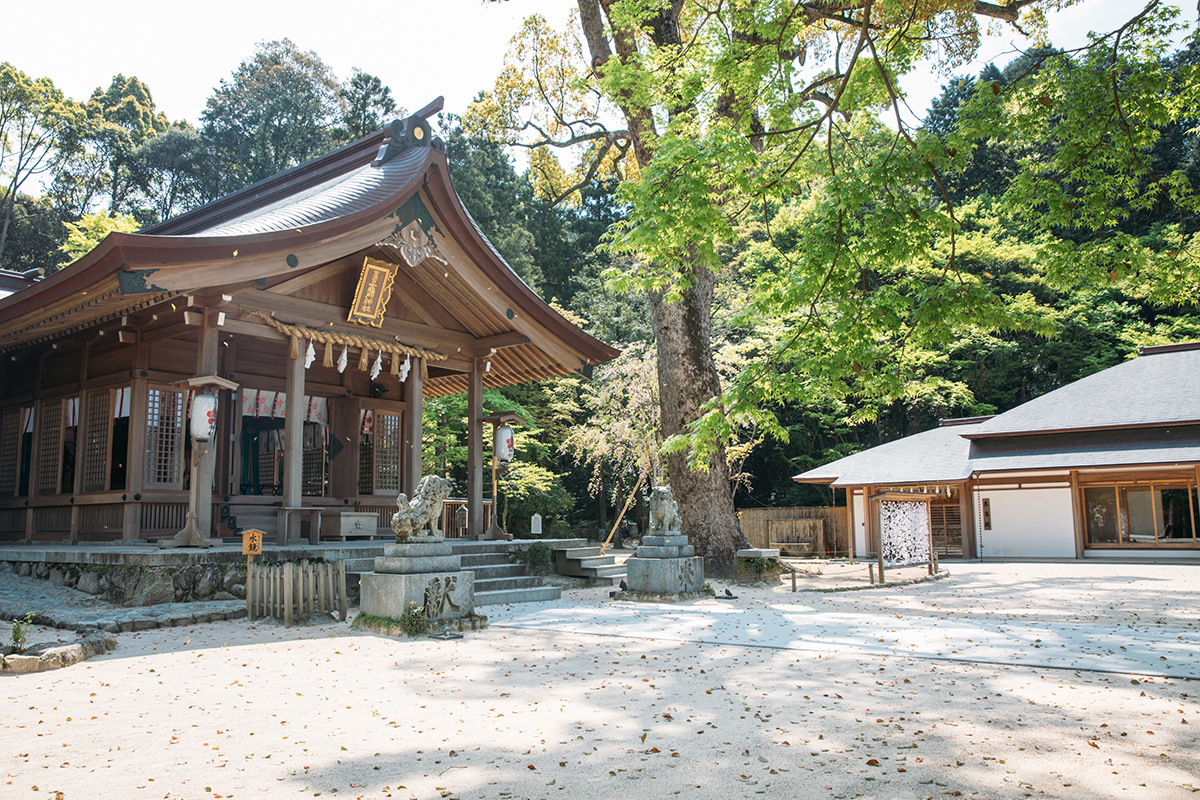
The current shrine building was constructed during the Edo period and is designated as a tangible cultural property of Fukuoka Prefecture. The beautifully lacquered red shrine harmonizes with the natural surroundings of all four seasons and captivates visitors.
Shrine Office and Amulet Sales Counter
The shrine office underwent renovation in 2012 and was designed by world-renowned interior designer Katayama Masamichi of Wonder Wall.
The space filled with the warmth of wood, lined with colorful amulets, has also become popular as an “Instagram-worthy” spot. The bright, glass-walled space overturns the conventional image of traditional shrines with its innovative design.
The Reunion Tree
A large camphor tree within the shrine grounds is called the “Reunion Tree” and is known as a spot where people pray for reunions with those from whom they have parted and for encounters with good partners.
The Threads of Connection
Within the shrine grounds, there is a place to tie “threads of connection” (musubi no ito), where it is said that writing your wish on a thread and tying it there grants the blessing of matchmaking. The sight of countless pink threads tied together is spectacular.
Natural Beauty Through the Four Seasons
Houman Shrine Kamado Jinja is blessed with beautiful natural scenery throughout the four seasons:
- Spring: Cherry blossoms adorn the shrine grounds, making it a famous cherry blossom viewing spot
- Summer: Fresh greenery is beautiful, with a refreshing atmosphere
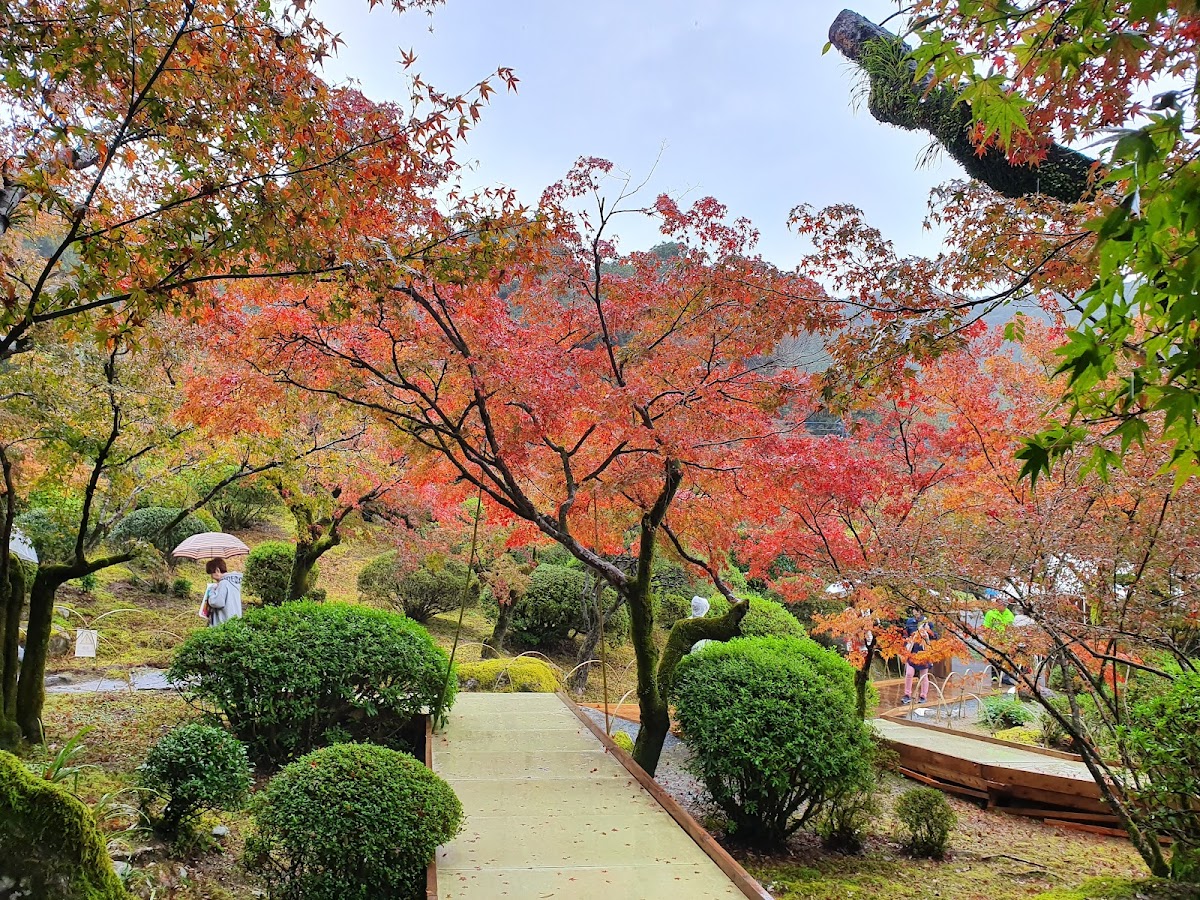
- Autumn: Known as a famous autumn foliage viewing spot, with the best time being mid to late November
- Winter: A snow-covered shrine building creates a fantastical atmosphere
Particularly during the autumn foliage season (mid to late November), many tourists gather, and nighttime illumination is sometimes provided.
Amulets and Talismans
Popular Amulets
Houman Shrine Kamado Jinja amulets are famous for their high-quality design:
Ichigo Amulet
A cute amulet featuring Amaou (strawberry), a specialty product of Fukuoka Prefecture. It is said to have the blessing of romantic fulfillment and is extremely popular with young women.
Musubi no Ito (Threads of Connection)
An amulet made of thread for bringing about good relationships. Wearing it is said to bring blessings of good connections.
Sakura Amulet
A beautiful amulet featuring cherry blossoms. It has the blessing of romantic fulfillment and matchmaking.
Directional Protection Amulet
An amulet for warding off directional calamities. Popular for moving and travel.
Love Amulets
Particularly popular are the “love amulets” (koi-mamori). Available in multiple colors including pink, light blue, and purple, you can choose according to your preference. The design is refined, allowing you to carry them with an accessory-like feel.
Ema Prayer Tablets
The ema prayer tablets at Houman Shrine Kamado Jinja also feature high-quality design, with heart-shaped ema and other designs suitable for matchmaking wishes. The ema rack is always bustling with worshippers writing their wishes.
Goshuin Stamp Information
Types of Goshuin Stamps
Houman Shrine Kamado Jinja provides not only standard goshuin stamps but also seasonal limited edition stamps.
The standard goshuin stamp features the calligraphy “Houman Shrine Kamado Jinja” with an official seal impressed. The calligraphy is beautiful and highly appreciated by goshuin collectors.
Limited Edition Stamps
Seasonal limited edition goshuin stamps are sometimes provided:
- Cherry blossom season limited goshuin
- Autumn foliage season limited goshuin
- Special New Year goshuin
Limited edition stamps may sometimes be issued in limited quantities, so it is recommended to check the official website and social media for information in advance.
Goshuin Notebooks
Original goshuin notebooks are also available, with popular designs featuring the four seasons such as cherry blossoms and autumn foliage.
Prayer Methods and Etiquette
Basic Prayer Etiquette
- Bow once before passing through the torii gate: A courtesy before entering sacred ground
- Purify yourself at the water basin: Cleanse your left hand, right hand, and mouth in that order
- Walk at the edge of the approach: The center is considered the deity’s pathway
- Pray at the worship hall: The standard form is two bows, two claps, and one bow
Coin Offering Etiquette
Coin offerings express gratitude. There is no set amount, but place them quietly in the offering box. Throwing them in is considered disrespectful.
Photography Policy
Photography within the shrine grounds is generally allowed, but photography inside the main hall or during prayers is prohibited. Please be considerate of other worshippers.
Access Information
Address and Basic Information
Address: 〒818-0115 Uchiyama, Dazaifu City, Fukuoka Prefecture 883
Phone: 092-922-4106
Prayer Hours: Shrine grounds open at all times (amulet sales counter approximately 8:30 AM–7:00 PM)
Closed Days: None
Official Website: https://kamadojinja.or.jp/
Access by Train
From Kintetsu Dazaifu Station
- Using Community Bus “Mahoroba”
- Approximately 10 minutes from Dazaifu Station
- Get off at “Uchiyama (Kamado Shrine)” stop
- Fare: 100 yen (as of 2025)
- Operates mainly on weekends and holidays (fewer buses on weekdays, so check in advance)
- On Foot
- Approximately 40 minutes from Dazaifu Station
- Distance: approximately 2.5 km
- Continues uphill, recommended for those with good physical fitness
- By Taxi
- Approximately 5 minutes from Dazaifu Station
- Fare: approximately 1,000 yen
Access by Car
From Fukuoka City
- Fukuoka Urban Expressway → Kyushu Expressway “Dazaifu IC” exit
- Travel time: approximately 30 minutes
From Kitakyushu Area
- Kyushu Expressway “Dazaifu IC” exit
- Travel time: approximately 1 hour
Parking Information
- Kamado Shrine Parking Lot: Approximately 100 spaces (free)
- Busy Season Parking: Very crowded during autumn foliage season and New Year’s period
- Temporary Parking: Temporary parking lots are set up within Dazaifu City during busy seasons
※During the autumn foliage season (mid to late November) and the first three days of the new year, it becomes extremely crowded. Using public transportation is strongly recommended.
Annual Events and Activities
Major Annual Events
January
- New Year Prayers: Bustling with many worshippers during the first three days of the new year
- New Year Festival: The year’s inaugural festival held on January 1st
February
- Setsubun Festival: Bean throwing takes place, praying for purification of calamities
April
- Cherry Blossom Festival: Held when the shrine grounds’ cherry blossoms are in full bloom
November
- Autumn Foliage Illumination: Nighttime illumination is sometimes provided during the foliage season
- Shichigosan: November sees many worshippers for this children’s blessing festival
December
- Year-End Purification Ceremony: Held on December 31st, this ritual purifies the year’s misdeeds and impurities
Special Rituals
Spring and Autumn Grand Festivals
Important festivals held twice yearly, featuring performances of sacred music and dance.
Nearby Tourist Attractions
Dazaifu Tenmangu Shrine
Located approximately 5 minutes by car or 30 minutes on foot from Houman Shrine Kamado Jinja, Dazaifu Tenmangu Shrine is a shrine dedicated to Sugawara no Michizane, the deity of scholarship.
Visiting both “the shrine of matchmaking” and “the shrine of scholarship” together in a “two-shrine pilgrimage” is popular, allowing you to pray for both romantic fulfillment and academic success.
Kyushu National Museum
Adjacent to Dazaifu Tenmangu Shrine, the Kyushu National Museum is a facility where you can learn about Japanese history and culture. Exhibits on Kyushu’s exchange with Asia are particularly extensive.
Dazaifu Government Office Ruins
The ruins of the Dazaifu government office that administered Kyushu during the Nara and Heian periods. Now developed as a large historic park, it is recommended for history walks.
Mount Houman Hiking
For those with good physical fitness, Mount Houman hiking is also recommended. The route from Kamado Shrine to the summit takes approximately 2 hours, and the upper shrine is located at the peak.
The hiking trail is well-maintained but requires proper hiking equipment. The views from the summit are excellent, overlooking Fukuoka City and Hakata Bay.
Recommended Prayer Times
Weekday Mornings
The most relaxing time to pray is on weekday mornings. Particularly right after opening, there are few worshippers and you can pray in a quiet atmosphere.
Early Morning Prayer
The shrine grounds are open 24 hours, so early morning prayer is possible. Prayer in the crisp morning air is exceptional. However, the amulet sales counter opens around 8:30 AM.
Times to Avoid
- Weekends and holidays during daytime: Crowded with tourists
- Autumn foliage season weekends: The most crowded time of year
- First three days of the new year: Extremely crowded with New Year worshippers
Clothing and Belongings for Your Visit
Clothing
There are no strict dress code requirements, but it is advisable to dress with awareness of this being a sacred place.
- Avoid clothing with excessive exposure
- Remove hats before passing through the torii gate
- Wear comfortable shoes (the shrine grounds have stairs and slopes)
Belongings
- Goshuin notebook (if you wish to collect goshuin stamps)
- Coins (for coin offerings and amulet purchases)
- Camera (to photograph the beautiful shrine grounds)
- Beverages (especially in summer)
The Appeal of Houman Shrine Kamado Jinja
Fusion of Tradition and Modernity
With over 1,350 years of history while housing a modern-designed shrine office, Kamado Jinja is a shrine where tradition and modernity blend beautifully.
While cherishing ancient faith, it has been designed to appeal to younger generations, making it beloved by visitors of all ages.
A Shrine Welcoming to Women
Matchmaking blessings, adorable amulets, and the refined design of the shrine office—it is filled with elements that capture women’s hearts.
Group visits by women are common, and it is known as “a shrine welcoming to women.” The amulet sales counter is equipped with chairs and tables, allowing you to leisurely select amulets.
Harmony with Nature
Taking advantage of its location at the foot of Mount Houman, the ability to enjoy nature’s beauty through the four seasons is a major attraction.
Spring cherry blossoms, summer fresh greenery, autumn foliage, and winter snow-covered scenery—the shrine grounds display a different face each season, offering fresh wonder with each visit.
Frequently Asked Questions
How long does a visit take?
For a standard visit, allow 30 minutes to 1 hour. If you leisurely select amulets or explore the shrine grounds, plan for 1 to 2 hours.
Can I receive ritual prayers?
Yes, various ritual prayers are available. We accommodate prayers for matchmaking, directional protection, purification of calamities, household safety, traffic safety, and more. Prior reservation is not required, but advance notice is recommended for large groups.
Can I visit with a pet?
Small dogs and other pets may enter the shrine grounds if placed in a pet carrier or cart. However, be modest around the main hall and show consideration to other worshippers.
Can I visit in a wheelchair?
The path from the parking lot to the main hall has slopes, but it is paved, making wheelchair access possible. Assistance from an accompanying person is recommended.
Can I visit on rainy days?
Visits are possible on rainy days. In fact, the shrine grounds wet with rain have a certain charm, and with fewer people, you can pray in a quiet atmosphere. Be sure to bring an umbrella or rain gear.
Conclusion
Houman Shrine Kamado Jinja is a representative matchmaking power spot in Dazaifu City, Fukuoka Prefecture. Beloved by many worshippers, it is a charming shrine that, while maintaining over 1,350 years of history, also incorporates modern sensibilities.
Whether you wish to pray for romantic fulfillment, directional protection and purification of calamities, to enjoy nature through the four seasons, or if you have an interest in history, there is value in visiting this shrine for various purposes.
Combined with a visit to nearby Dazaifu Tenmangu Shrine, you can enjoy a more fulfilling Dazaifu tour. When visiting Fukuoka, be sure to stop by Houman Shrine Kamado Jinja. You will surely be blessed with wonderful connections.