Kunen’an, Saga Prefecture | Complete Guide to the National Scenic Beauty Spots, General Admission Information, and Surrounding Tourist Attractions
Located in Kaminoseki City, Saga Prefecture, Kunen’an (九年庵) is a villa and garden built by a Meiji-era businessman over the course of 9 years. Designated as a National Scenic Beauty, this special space captivates many tourists by opening to the general public for only a few days each year.
This article comprehensively covers everything you should know before visiting Kunen’an, from its historical background and seasonal highlights to detailed general admission information, access methods, and surrounding tourist attractions.
What is Kunen’an? | The Complete Picture of Saga’s National Scenic Beauty
The History and Origin of Kunen’an
Kunen’an is a villa and garden built by Itami Yataro (伊丹弥太郎), a major Meiji-era entrepreneur from Saga. The name comes from the fact that it took 9 years to construct the garden.
Construction of the villa began in Meiji 25 (1892), and full-scale garden development started in Meiji 33 (1900). Under the guidance of Buddhist priest Hatori (ほとり), a monk of the Pure Land school, Itami Yataro pursued his ideal garden vision.
The Itami family was known as successive Saga entrepreneurs, and Yataro’s father, Itami Bunzaemon (伊丹文右衛門), also greatly contributed to regional economic development. Yataro himself later served as a member of the House of Peers and was active in both political and business circles.
The Value of National Scenic Beauty Designation
Kunen’an was designated as a National Scenic Beauty in Heisei 7 (1995), an honor making it Saga Prefecture’s only nationally designated scenic garden.
The following points were highly evaluated for the designation:
- Architectural Beauty of Sukiya-zukuri Style: A villa incorporating the finest examples of traditional Japanese architecture, featuring reed-thatched roofs and bamboo lattice windows
- Artistic Merit of the Garden: The harmony of moss gardens and Japanese maples spread across approximately 6,800 square meters
- Unity with Nature: Landscape design that perfectly harmonizes with the natural environment of the Seifuri Mountains
- Historical Value: A precious cultural asset conveying Meiji-era landscaping techniques and aesthetic sensibilities to the present day
The Location and Environment of Kunen’an
Kunen’an is located in Niibi-yama, Kaminoseki-cho, Kaminoseki City, Saga Prefecture, positioned on a slightly elevated plateau in a valley at the eastern end of the Saga Plain where the Seifuri Mountains begin.
Originally, a temple called “Fudo-in” with a sub-temple stood on this land, but Itami Yataro purchased it and built his villa adjacent to Niibi-yama Shrine. The serene environment surrounded by forest creates an atmosphere of a secluded retreat away from urban hustle and bustle.
Highlights of Kunen’an | Beauty Throughout the Four Seasons
Autumn Foliage | A Spectacular View among Kyushu’s Finest
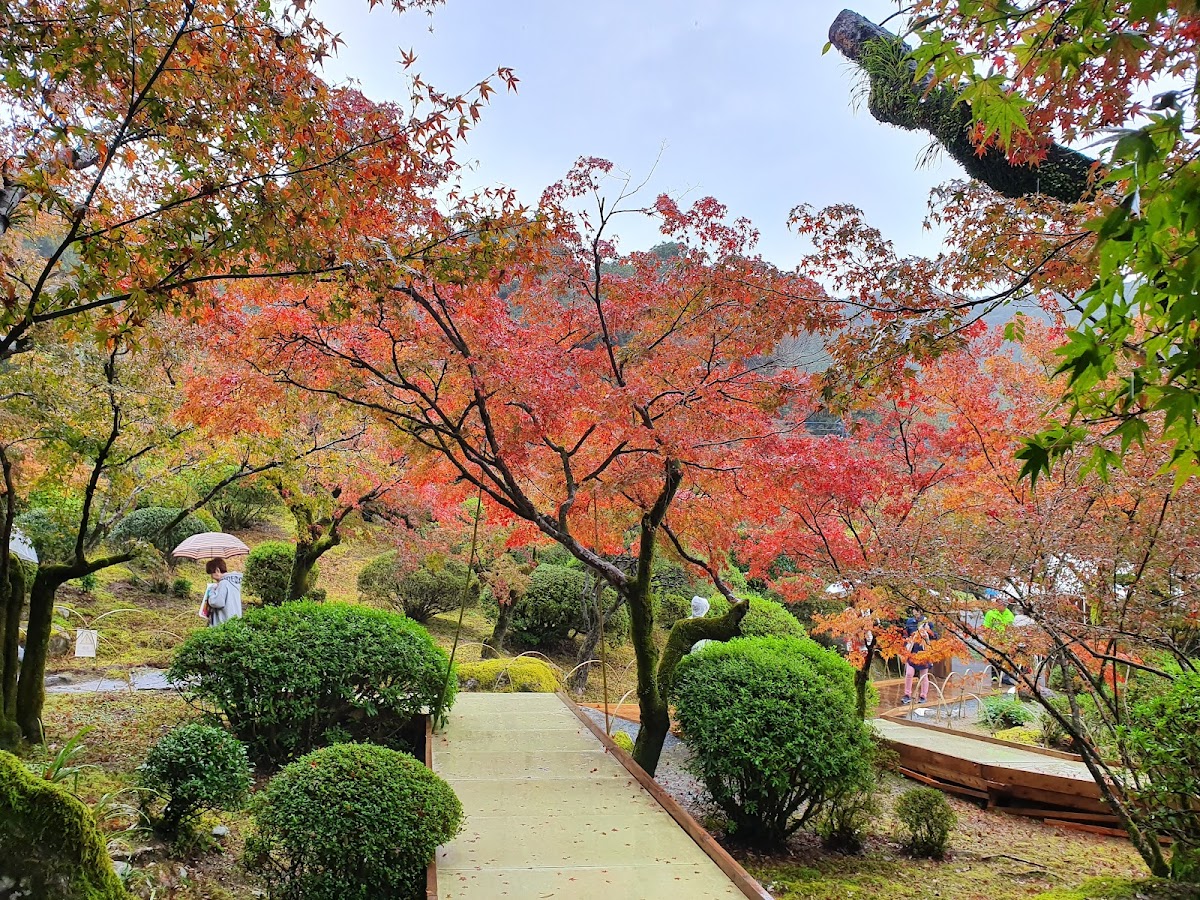
Kunen’an is most famous for its autumn foliage season. Typically from mid to late November, the entire garden transforms into a blaze of red and golden colors.
Characteristics of the Foliage:
- Types of Maple: Primarily Iroha maple with multiple cultivars planted throughout
- Contrast with Moss: A harmonious beauty created by the deep green moss garden and autumn foliage colors
- Light Effects: Dappled sunlight illuminates the foliage, with the scenery changing throughout the day
- Harmony with the Building: Against the backdrop of the sukiya-zukuri structure, you can experience the pinnacle of Japanese garden art
During peak foliage season, autumn general admission is offered for 9 days. During this period, many tourists visit, so early morning visits or weekday attendance is recommended.
Spring Greenery | Fresh and Verdant Young Leaves
In spring, Kunen’an displays a refreshing beauty different from autumn. Typically, spring general admission is held during Golden Week (May 3-5, 3 days) every year.
Spring Highlights:
- Young Maple Foliage: The vibrant gradient of fresh, verdant new leaves is striking
- Lush Moss: The spring rain-moistened moss garden has a velvet-like texture
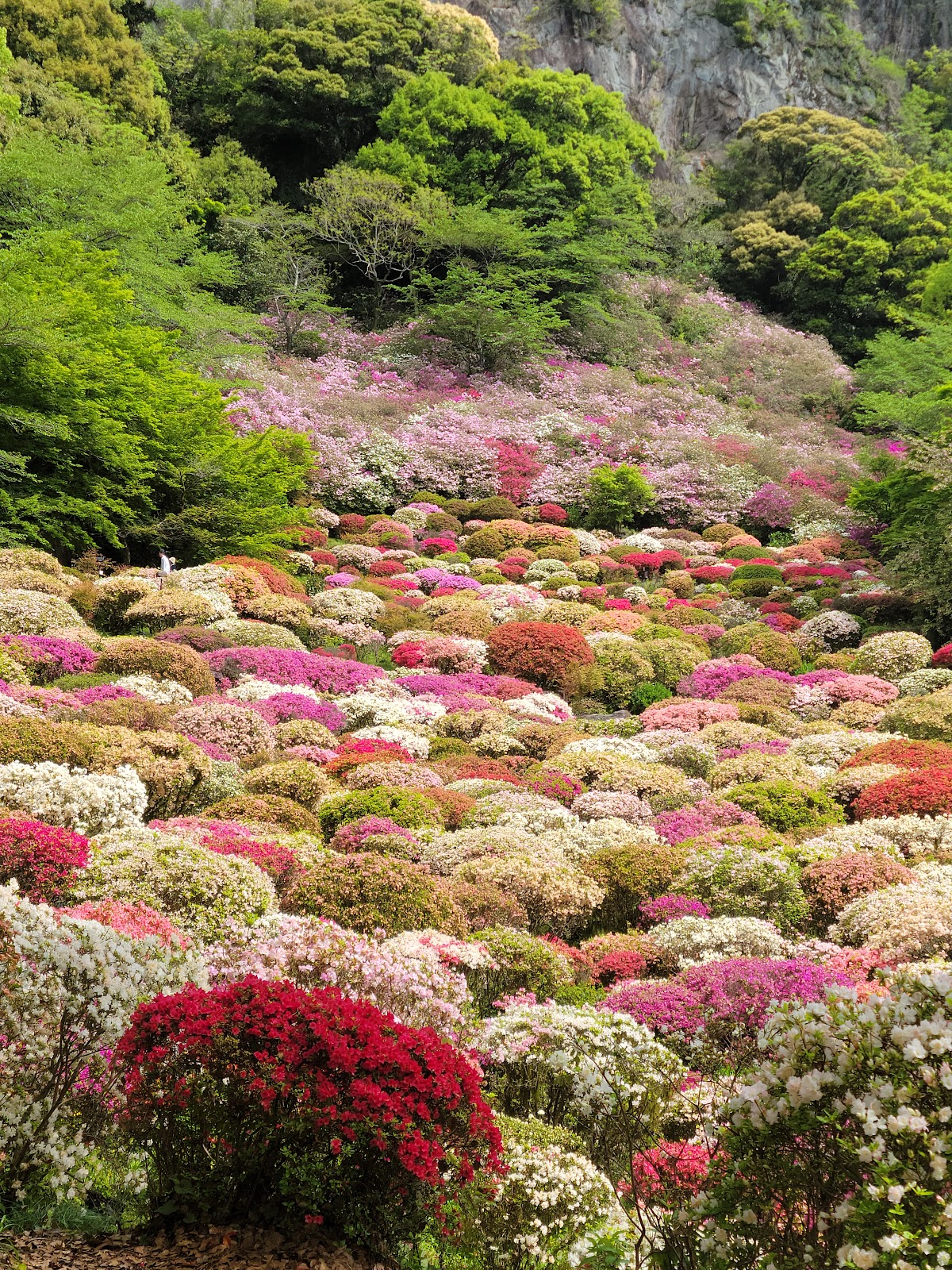
- Azalea Blossoms: Azaleas planted throughout the garden add color to the landscape
- Forest Greenery: The spring vitality where surrounding nature and garden become one
Spring admission is less crowded than autumn, making it an ideal hidden gem period to leisurely enjoy the garden’s beauty.
The Architectural Beauty of Sukiya-zukuri
The villa architecture of Kunen’an is highly regarded as a masterpiece of sukiya-zukuri style.
Architectural Features:
- Reed-thatched Roof: Soft curved beauty created by traditional thatching techniques
- Bamboo Lattice Windows: Delicate design creating beautiful patterns of light and shadow
- Open Sitting Areas: Designed to frame views of the garden
- Material Selection: Harmony of carefully chosen wood and natural materials
While the building’s interior is typically not open to the public, its beauty can be fully appreciated from the exterior and garden.
Artistic Quality of the Moss Garden
The distinctive feature of Kunen’an’s garden is its magnificent moss garden. The entire 6,800 square-meter site is covered with moss as if a green carpet has been laid down.
Charm of the Moss Garden:
- Diverse Moss Species: Multiple types of moss create subtle color variations
- Humidity Management: The natural environment of the Seifuri Mountains provides optimal humidity for moss growth
- Maintenance Expertise: Years of careful upkeep preserve its beauty
- Atmospheric Quality: The soft texture of moss brings a serene atmosphere to the entire garden
General Admission Information for Kunen’an | Essential Knowledge Before Visiting
Spring General Admission (Reiwa 8/2026)
Admission Period: Reiwa 8, May 3 (Sunday/Holiday) – May 5 (Tuesday/Holiday), 3 days
Admission Hours: Usually 8:30-16:00 (reception until 15:30) *Subject to change by year
Admission Fee: Approximately 500 yen for adults (free for junior high school students and below) *Fees may vary
Important Notes:
- Admission may be suspended or changed due to weather conditions
- Capacity restrictions may be implemented during peak times
- Food and smoking are prohibited within the garden
- Pets are not permitted
Autumn General Admission
Admission Period: Typically mid to late November for 9 days (dates set according to foliage peak season)
Admission Hours: 8:30-16:00 (reception until 15:30)
Admission Fee: Approximately 500 yen for adults (free for junior high school students and below)
Autumn admission is longer than spring, with weekends particularly crowded. Weekday mornings are the recommended time for relatively peaceful appreciation.
Reservations and Contact Information
The latest information on Kunen’an’s general admission can be found at:
- Kaminoseki City Tourism Association: Announces latest admission dates on official website
- Saga Prefecture Tourism Site “Asobo-saga”: Listed as event information
- Kaminoseki City Hall: 〒842-8601 Kaminoseki-cho, Kaminoseki City, Saga Prefecture, 3542-1 Tsuru, TEL: 0952-52-1111 (main)
Admission schedules may be subject to change due to weather conditions, so it is recommended to confirm the latest information before visiting.
Access to Kunen’an | By Car and Public Transportation
Access by Car
From Fukuoka Area:
- Approximately 15 minutes from “Higashi-Seifuri IC” on Kyushu Expressway
- Approximately 20 minutes from “Saga-Yamato IC” on Nagasaki Expressway
From Saga City:
- Approximately 30 minutes via National Route 34
Parking Information:
- Temporary parking is provided during general admission periods
- Multiple parking areas around Niibi-yama Shrine
- Traffic restrictions may be implemented during peak times
- Parking: Free or cooperation fee (varies by year)
Access by Public Transportation
By JR:
- Get off at “Kaminoseki Station” on the JR Nagasaki Main Line
- Approximately 10 minutes by taxi, or take Showa Bus to “Niibi-yama Shrine-mae” bus stop and walk 5 minutes
By Bus:
- Approximately 5 minutes walk from “Niibi-yama Shrine-mae” bus stop (Showa Bus)
- Temporary bus service may be provided during general admission periods
From Fukuoka Airport:
- Airport limousine bus to Saga Station takes approximately 1 hour, then transfer to JR or bus
Address and Location Information
Address: Kaminoseki-cho, Kaminoseki City, Saga Prefecture, Niibi-yama
Location: Adjacent to Niibi-yama Shrine, in a quiet mountain valley at the foot of the Seifuri Mountains
Searching “Kunen’an” or “Niibi-yama Shrine” on car navigation systems or smartphone map applications will display the precise location.
What to Do Next | Surrounding Tourist Attractions near Kunen’an
Since Kunen’an’s general admission is limited in duration, it is recommended to visit surrounding tourist attractions before, after, or in combination with your Kunen’an visit.
Niibi-yama Shrine
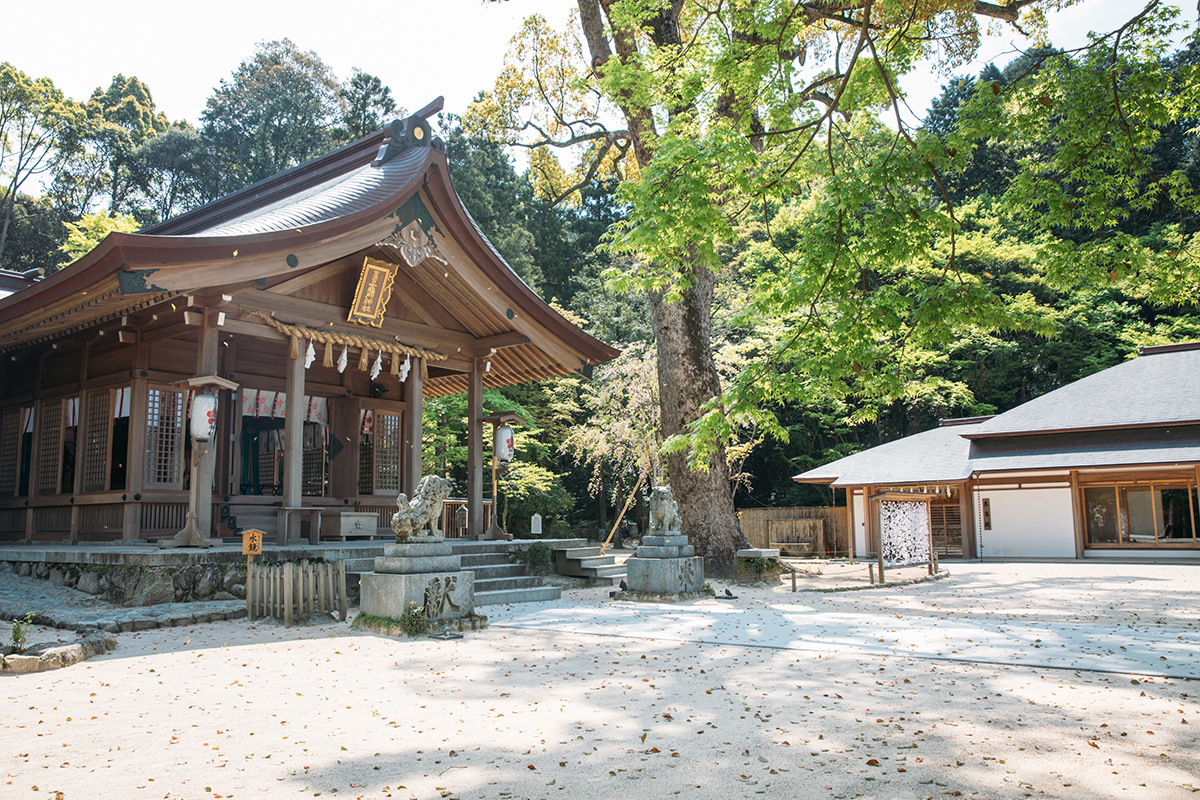
This historic shrine is located immediately adjacent to Kunen’an. The grounds are lined with giant trees hundreds of years old and enveloped in a solemn atmosphere. It is a must-visit spot when visiting Kunen’an.
Highlights:
- Dignified architecture of the main hall
- Giant trees and natural environment of the grounds
- Seasonal festivals and religious ceremonies
Niibi-yama Park
A natural park spreading around Niibi-yama Shrine with flowers in all seasons and established walking trails. Spring offers cherry blossoms, early summer brings hydrangeas, and it can be enjoyed as a set with Kunen’an.
Ito Genpoku Former Residence
The former home of Edo-period Dutch-influenced physician Ito Genpoku, designated as an important cultural property of Kaminoseki City. Particularly recommended for those interested in late Edo medical history.
Location: Within Kaminoseki City (approximately 10 minutes by car from Kunen’an)
Yoshinogari Historical Park
Japan’s largest Yayoi-period moated settlement site, designated as a Special National Historic Site. Located approximately 20 minutes by car from Kunen’an, it is a popular tourist destination where you can experience ancient Japanese life.
Features:
- Reconstructed pit dwellings and elevated storehouses
- Experience programs and events
- Large grounds for exploring
Dining Information around Kunen’an
Ume no Hana Oshitori
A specialty tofu restaurant known as “Ume no Hana,” with Saga branch offering high-quality tofu cuisine and seasonal kaiseki meals. Perfect for lunch after Kunen’an sightseeing.
Dog Cafe & Dog Run Restaurant Soyokaze
A pet-friendly cafe restaurant. Recommended for those traveling with their dogs. Features a spacious dog run.
Mitsuse Chicken Honten
A specialty restaurant serving dishes made with “Mitsuse chicken,” a local specialty of Saga Prefecture. Enjoy fresh local chicken cuisine.
Korean Kitchen Torawa Ku
A restaurant offering authentic Korean cuisine. A popular Korean specialty restaurant, rare in the Kaminoseki area.
Shokuden Koga
A Japanese cuisine restaurant featuring local ingredients. Offers seasonal kaiseki courses and lunch sets.
Best Season to Visit Kunen’an and Tips for Avoiding Crowds
Foliage Season (Mid to Late November)
Advantages:
- Experience some of Kyushu’s finest autumn foliage
- Optimal colors for photography
- Pleasant autumn climate
Disadvantages:
- Most crowded period
- Especially busy on weekends
- Possible parking lot queues
Crowd Avoidance Strategies:
- Choose weekday visits
- Arrive early at opening time
- Target the beginning or end of the admission period
New Greenery Season (Early May)
Advantages:
- Less crowded than foliage season
- Beautiful lush green beauty
- Relatively leisurely appreciation possible
Disadvantages:
- Very short 3-day admission period
- More tourists due to Golden Week period
Recommended Points:
- Can enjoy photography slowly
- Outstanding period for moss beauty
- Easily combinable with surrounding sightseeing
Tips for Photography at Kunen’an | Instagram-worthy Spots
Recommended Photography Points
- Moss Garden with Maple Combination: Classic composition with beautiful contrast between green moss and autumn foliage (or spring greenery)
- Building as Background: Capture the harmony of traditional architecture and garden in one shot
- Bamboo Lattice Windows: Composition highlighting architectural details
- Dappled Sunlight Effects: Soft morning light illuminating the garden
- Moss Close-up: Macro lens expressing the texture of moss
Photography Notes
- Tripod use may be prohibited
- Be considerate of other visitors
- Do not touch plants or enter restricted areas
- Use flash photography minimally
Preservation of Kunen’an and Passing on to the Future
Cultural Property Protection Activities
Kunen’an is protected under strict management as a National Scenic Beauty. Centered on Kaminoseki City and local preservation societies, the following activities are conducted:
- Regular Garden Maintenance: Moss care, tree pruning, and cleaning activities
- Building Maintenance and Repair: Regular maintenance using traditional methods
- Environmental Conservation: Maintaining harmony with surrounding natural environment
- Visitor Management: Limited admission prevents excessive burden
Significance of General Admission
The limited annual admission of only about 12 days is an important measure balancing cultural property preservation and tourism promotion.
Reasons for Limited Admission:
- Garden preservation (preventing moss and plant damage from excessive foot traffic)
- Maintaining rarity (enhancing value as a special experience)
- Economic benefits to the region (concentrated tourist attraction)
- Appropriate management of cultural properties
Community Involvement
Kunen’an serves as an important tourism resource for Kaminoseki City, contributing to regional economy and cultural promotion. During general admission periods, guided tours by local volunteers and special events at surrounding shops are also held.
What to Bring and What to Wear When Visiting Kunen’an | Checklist
Essential Items
- Comfortable Walking Shoes: The garden has uneven terrain, so sneakers or walking shoes are ideal
- Camera/Smartphone: To capture the beautiful scenery
- Hat/Parasol: Sun protection for spring and autumn (use considerately within the garden)
- Drinking Water: Few vending machines nearby, so bringing water is recommended
Convenient Items
- Binoculars: To observe distant foliage and architectural details
- Picnic Blanket: For resting in nearby parks
- Rain Gear: Bring a compact umbrella for uncertain weather periods
- Insect Repellent: Spring through autumn
Clothing Tips
- Layered Clothing: To accommodate temperature differences between morning/evening and daytime
- Easy-to-move Pants Style: Clothing suitable for garden exploration
- Foliage Season: Remember cold weather protection (late November can be quite cold)
- New Greenery Season: A light jacket is convenient to have
Manners and Rules When Visiting Kunen’an
Etiquette Within the Garden
- Enjoy Quietly: Keep conversation to a low level to be considerate of other visitors
- Do Not Touch Plants: Do not touch moss, trees, or flowers
- Stay in Designated Areas: Do not enter inside ropes or fences
- Take Trash with You: Always take trash with you to preserve garden beauty
- No Smoking or Eating: Smoking and eating are strictly prohibited within the garden
Photography Etiquette
- Be mindful of other visitors being photographed
- Do not occupy the same spot for long periods
- Confirm tripod use policy in advance
- Be careful with location tags on social media (to help manage crowds)
Conclusion | Experiencing the Pinnacle of Japanese Garden Art at Kunen’an
Kunen’an in Kaminoseki City, Saga Prefecture, is a nationally designated scenic garden built by Meiji-era businessman Itami Yataro over 9 years. Its designation as a limited-admission site open for only about 12 days annually further elevates its rarity and value.
Kunen’an displays different faces with each season—blazing red and golden colors during autumn foliage season, and fresh green color gradations during spring new greenery season. The landscape created by the 6,800 square-meter moss garden and sukiya-zukuri architecture is truly the pinnacle of Japanese garden art.
When planning your visit, confirm the general admission dates in advance, and consider visiting on weekdays or early mornings to avoid crowds. Additionally, combining your visit with other impressive Kaminoseki tourism sites such as Niibi-yama Shrine and Yoshinogari Historical Park will make your Saga trip even more fulfilling.
At this special space that opens only for a limited time, fully savor the harmony of Japanese traditional beauty and nature. An experience at Kunen’an is sure to become an unforgettable memory.