Complete Guide to Unzen (Nagasaki) | Hot Springs, Sightseeing, History, and Access Explained in Detail
Unzen (うんぜん), located in the center of the Shimabara Peninsula in Nagasaki Prefecture, is a nature-rich tourist destination designated as one of Japan’s first national parks. With diverse attractions including the Unzen hot spring resort, Unzen Hell, and Unzen-dake mountain, this area captivates many tourists throughout the year. This article comprehensively covers information you should know when visiting Unzen, from its history and tourist spots to hot springs, cuisine, and access methods.
What is Unzen? Basic Information and Overview
Unzen is located in Unzen City, Nagasaki Prefecture, a hot spring resort sprawling across a highland area at approximately 700 meters elevation. Formally designated as part of the “Unzen-Amakusa National Park,” it became one of Japan’s first national parks in 1934 (Showa 9).
Geographic Characteristics of Unzen
Unzen is positioned near the center of the Shimabara Peninsula and is a volcanic region centered on Unzen-dake, with Fugen-dake (1,359 meters elevation) as its main peak. The unique terrain formed by this volcanic activity and abundant hot spring resources are Unzen’s greatest characteristics.
Unzen-dake consists of multiple peaks, including Fugen-dake, Kunomi-dake (1,347 meters), and Myoken-dake (1,333 meters). During volcanic activity from 1990 to 1995, Heisei Shinzan (1,483 meters) formed at Fugen-dake and is now the highest peak in the Shimabara Peninsula.
Unzen’s Climate
Due to its high elevation, Unzen remains relatively cool even in summer, making it popular as a summer resort. The annual average temperature is approximately 13 degrees Celsius, about 5-7 degrees lower than in lowland areas. Snow is visible in winter, and you can observe beautiful natural phenomena such as rime and glazed frost.
Spring offers fresh greenery and Miyama-kirishima blooms; summer provides respite from heat; autumn presents vivid foliage; and winter showcases rime and snowy landscapes. Unzen’s charm lies in enjoying different faces whenever you visit throughout the year.
Unzen’s History | From Kirishitan Martyrdom Site to Hot Spring Resort
Unzen’s history dates back to 701 (Taiho 1), when it is said to have been opened by the monk Gyoki. Originally called “Unzen,” it thrived as a training ground for mountain ascetics.
A Site of Kirishitan Martyrdom
A notable aspect of Unzen’s history is that it became a stage for Kirishitan persecution in the early Edo period. From 1627 to 1632, many Kirishitans were tortured and martyred at Unzen Hell. The torture by boiling water and steam became known as “Unzen Hell torture,” and a memorial to martyrs stands there today.
Due to this historical background, Unzen has become part of the world cultural heritage-related sites as a component asset of the “Hidden Christian Sites in the Nagasaki Region and the Goto Islands.”
Development as a Hot Spring Resort
With the onset of the Meiji era, Unzen came to be noticed as a summer retreat for foreigners from Nagasaki, which had a foreign settlement. In the early 1900s, Western-style hotels were constructed, and Unzen developed into an international hot spring resort.
With its designation as a national park in 1934, Unzen established its position as a major tourist destination in Japan and continues to welcome many visitors today.
Unzen Hot Spring Resort | Famous Waters Scented with Sulfur
The Unzen hot spring resort is centered around Unzen Hell, with approximately 30 inns and hotels lined along its streets. Characteristic of its strong sulfur aroma, the spring quality centers on sulfur springs and acidic springs.
Spring Quality and Benefits of Unzen Hot Springs
The primary spring qualities at Unzen are sulfur springs and acidic springs. With a pH value of approximately 2-3, they are strongly acidic and possess high bactericidal properties, reportedly effective for skin diseases, neuralgia, rheumatism, gynecological ailments, and more.
The source spring temperature reaches approximately 90-100 degrees Celsius, with most accommodations adjusting it to a suitable temperature. Different facilities offer varying water colors—milky white or transparent—another characteristic of Unzen hot springs.
How to Enjoy Unzen Hot Springs
The Unzen hot spring resort has many facilities offering day-use bathing. Representative public bathhouses include “Unzen Shin’yu” and “Kojima Hell Onsen-kan,” where you can easily experience Unzen’s waters.
Multiple foot bath spots are installed, allowing casual hot spring experiences during sightseeing walks. Free foot baths around Unzen Hell have become popular with tourists.
Recommended Accommodations at Unzen Hot Springs
Unzen hot spring resort offers various accommodation types, from long-established inns to modern hotels. Many facilities provide source hot spring water, allowing you to enjoy the milky white waters characteristic of sulfur springs.
Luxury inns allow you to relish kaiseki cuisine using local ingredients alongside hot springs, popular with couples and families. There are also reasonably priced minshuku and pensions to choose from according to your budget.
Unzen Hell | Feeling the Earth’s Breath, a Natural Wonder
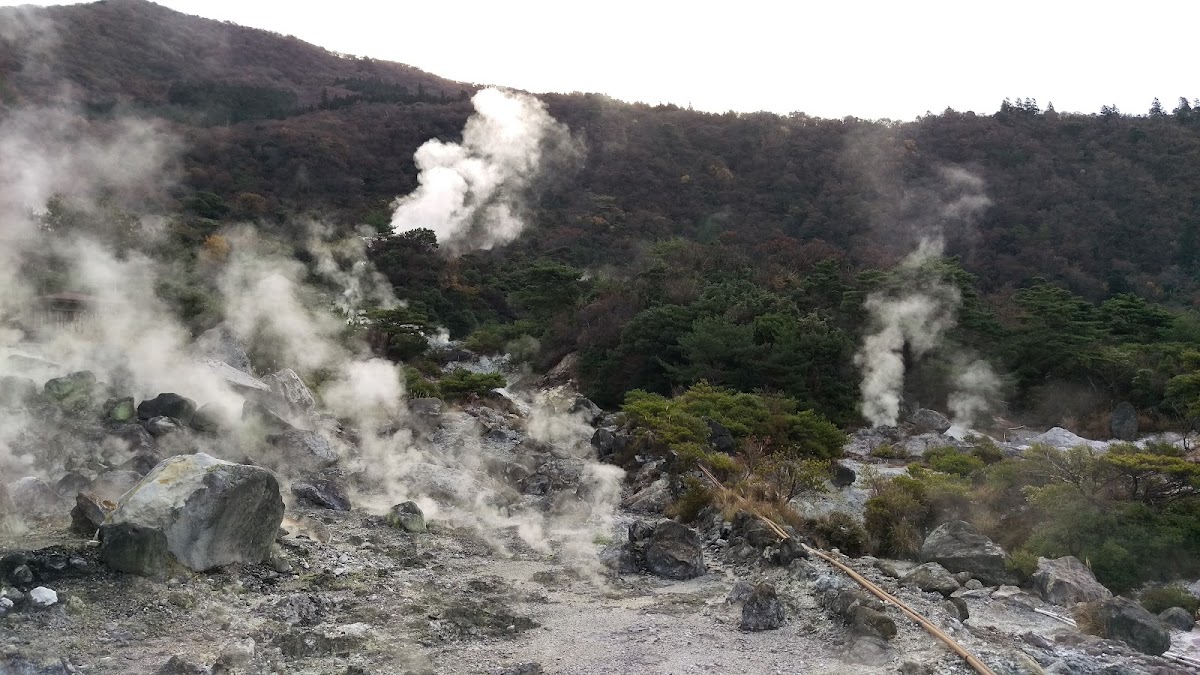
Unzen Hell is arguably the highlight of Unzen sightseeing. The sight of high-temperature hot spring water and steam violently erupting from the ground lives up to the “hell” in its name.
Highlights of Unzen Hell
Unzen Hell features approximately 30 steam vents, each with its own name. Representative ones include:
Daikoukanchi Hell: The largest in scale, characterized by violent steam and roaring sounds. Temperatures reach approximately 120 degrees Celsius with visible sulfur crystals.
Oito Hell: Named after Kirishitan martyr “Oito,” conveying tragic history.
Seishichi Hell: Also named after a martyr, bearing historical significance.
Jashin Hell: Named based on Buddhist concepts of hell.
Mud Volcano: A rare phenomenon where mud churns and boils.
Walking Course around Unzen Hell
Walking trails around Unzen Hell are developed, taking approximately 30 minutes to 1 hour to complete. Wooden decks are installed for safe viewing of the hellish landscape.
The walking path is relatively flat and easy for elderly visitors and families. However, extreme caution is necessary regarding steam and hot water. Follow warning signs and stay on the designated route.
Early morning and evening create fantastical landscapes through the interplay of steam and light. Winter early mornings are particularly beautiful, with striking contrasts between cold air and hot steam, making them ideal for photography.
Onsen Tamago at Unzen Hell
“Onsen tamago” (hot spring eggs) are a specialty of Unzen Hell, utilizing high-temperature steam. Created in approximately 30 minutes using the natural heat, these soft-boiled eggs have a unique flavor popular with tourists.
You can purchase them at shops, and some locations allow you to bring your own eggs to cook, making it an enjoyable activity for children and adults alike.
Unzen-dake | The Appeal of Mountain Climbing and Trekking
Unzen-dake, the general term for the volcanic group with Fugen-dake as the main peak, is also popular as a climbing and trekking destination.
Main Climbing Courses for Unzen-dake
Nita Pass Course: The most popular route, running from Nita Pass through Myoken-dake and Kunomi-dake to Fugen-dake. Requires approximately 4-5 hours round trip; recommended for intermediate climbers.
Ikenoharaen Course: Starting from Ikenoharaen Garden, this course has relatively gentle terrain and is recommended for beginners.
Fukikoshi Course: An advanced steep course for those confident in their physical condition.
Nita Pass and Unzen Ropeway
Nita Pass, at 1,080 meters elevation, serves as the starting point for Unzen-dake climbing. From the observation platform, you can overlook the Shimabara Peninsula, Ariake Sea, and on clear days, even Aso mountain—a spectacular vista.
The Unzen Ropeway operates from Nita Pass, reaching Myoken-dake summit (1,333 meters) in approximately 3 minutes. From the ropeway, enjoy views of Heisei Shinzan and expansive landscapes below.
The Myoken-dake summit has an observation platform offering 360-degree panoramic views. Experience magnificent scenery throughout seasons—spring’s Miyama-kirishima, autumn’s foliage, and winter’s rime.
Heisei Shinzan and Memories of Disaster
Heisei Shinzan, formed during the 1990-1995 volcanic activity of Unzen Fugen-dake, still bears traces of volcanic activity. This eruption caused numerous casualties through pyroclastic flows.
Currently, Heisei Shinzan is off-limits, but surrounding observation platforms allow viewing. Shimabara City’s “Unzen-dake Disaster Memorial Hall (Gamadas Dome)” enables learning about eruption history and disaster prevention.
Unzen’s Four Seasons | Seasonal Charm
Unzen is a destination where seasonal natural beauty can be enjoyed year-round, with each season offering different attractions.
Spring (March-May): Fresh Greenery and Miyama-kirishima
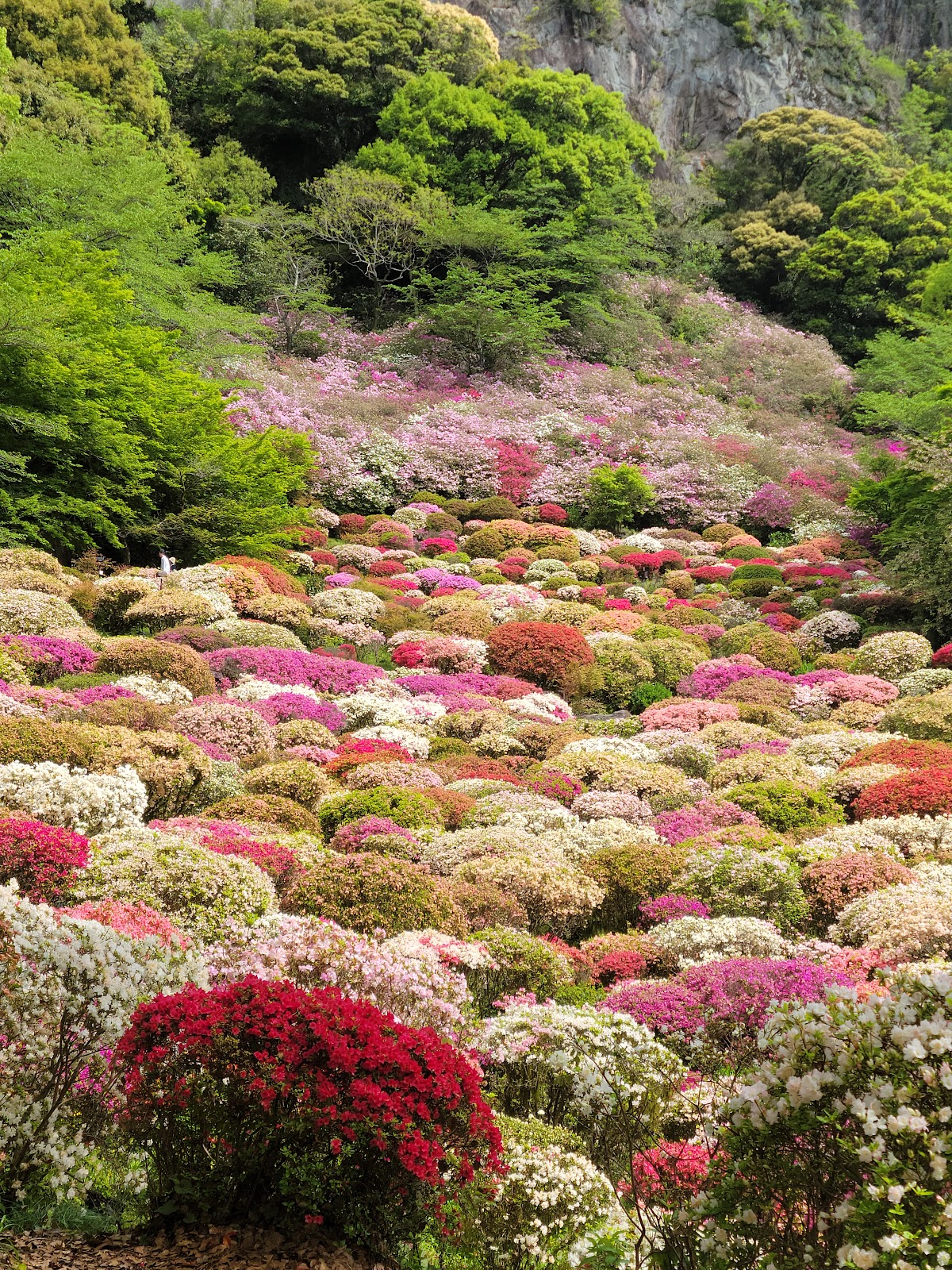
Spring in Unzen showcases beautiful fresh greenery. Particularly from mid to late May, Miyama-kirishima (Unzen azalea) reaches full bloom.
Miyama-kirishima paints the Unzen-dake slopes in brilliant pink, creating a genuine spectacle. Especially beautiful clusters appear around Nita Pass and along hiking trails of Myoken-dake and Kunomi-dake.
During this period, the “Unzen Azalea Festival” is held, drawing many tourists.
Summer (June-August): Unzen as a Summer Resort
This highland area at 700 meters elevation remains cool even in summer, making it popular as a resort destination. Temperatures are 5-7 degrees lower than lowland areas, allowing comfortable stays.
Summer in Unzen offers forest bathing among deep green vegetation and hiking through cool breezes. At night, observe a starry sky, making it also recommended for stargazing.
Autumn (September-November): Famous for Autumn Foliage
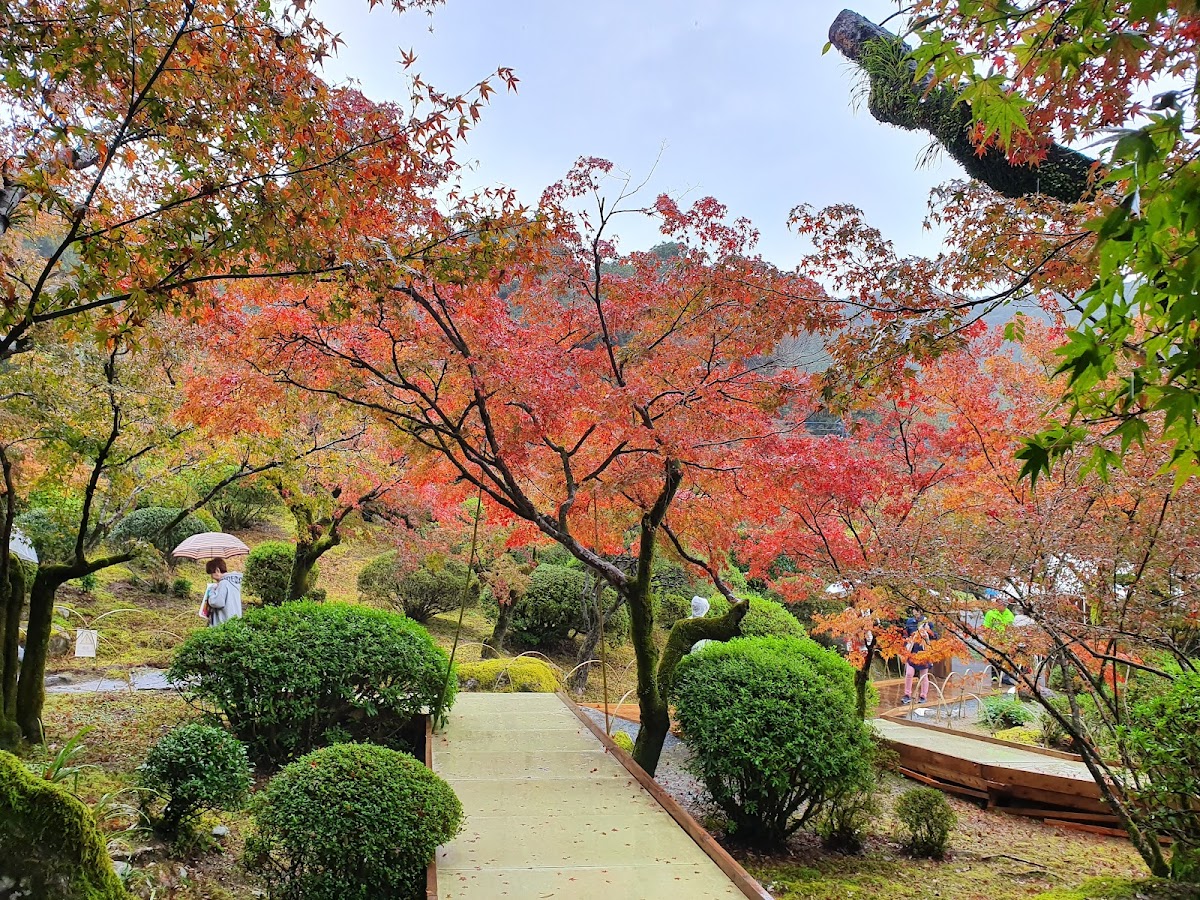
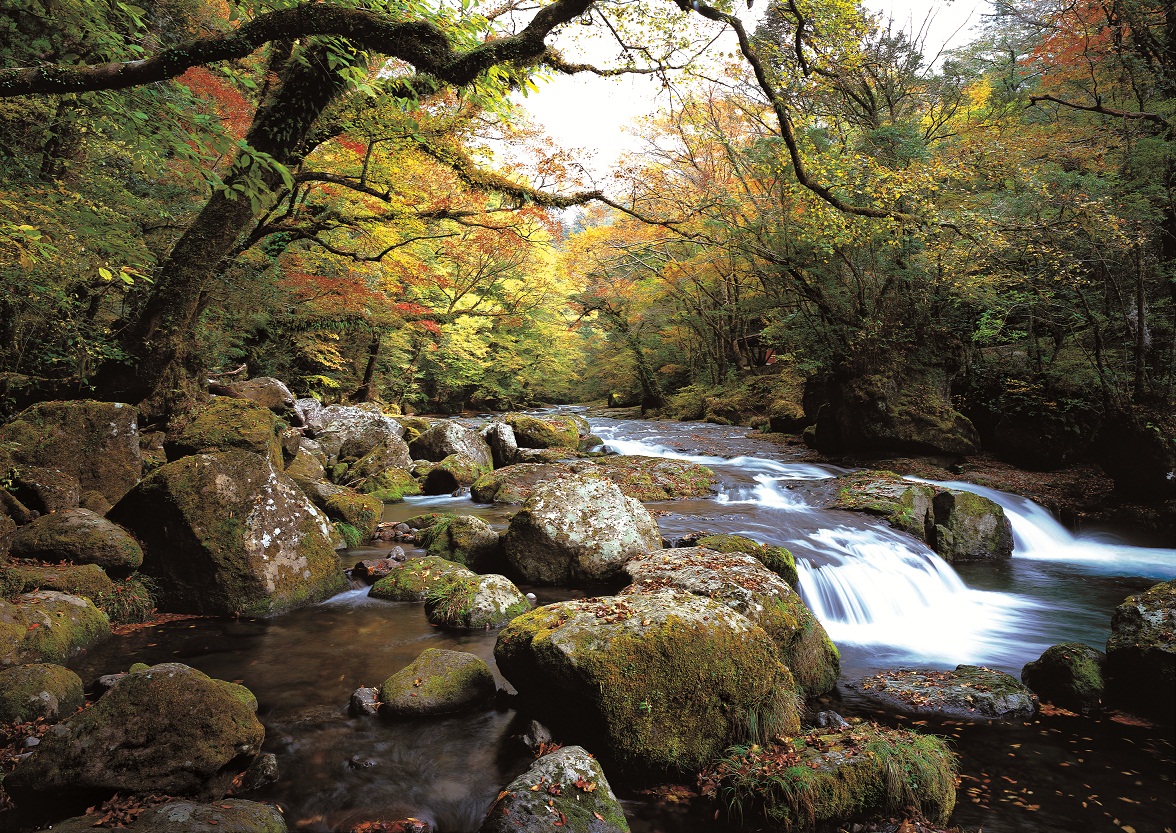
Unzen is known as a renowned autumn foliage destination. From late October through mid-November, maples, Japanese maples, and rowan trees color the mountains in reds and yellows.
Particularly spectacular foliage appears around Nita Pass and Unzen Hell, attracting many visitors. Viewing foliage from the ropeway is exceptional, allowing appreciation of autumn’s spectacular views from the sky.
Winter (December-February): Rime and Snowy Landscapes
Winter in Unzen reveals rime and glazed frost, winter-specific natural phenomena. On sub-zero days, trees freeze white, creating a fantastical silvery world.
Spectacular rime appears especially around Myoken-dake and Kunomi-dake summits. On clear days, the contrast between blue skies and white rime is beautiful, popular among photographers.
On snowy days, Unzen Hell surrounded by snow has special appeal, with impressive contrasts between steam and snow.
Tourist Spots Around Unzen
Beyond Unzen Hot Spring Resort and Unzen Hell, numerous attractions surround the area.
Unzen Vidro Museum
A glass crafts museum in Unzen’s hot spring street displaying glass works from the Edo period to modern times. Learn about the history and techniques of Vidro (glass), a traditional Nagasaki craft.
Glass crafting experiences are available, allowing creation of original works.
Unzen Toy Museum
Displaying approximately 10,000 toys from nostalgic Japanese toys to world toys, this museum is enjoyable for children and adults alike and popular with families.
Hara Castle Ruins (World Heritage Site)
Located approximately 30 minutes by car from Unzen, Hara Castle Ruins are registered as world cultural heritage as component assets of the “Hidden Christian Sites in the Nagasaki Region and Goto Islands.”
This was the site of the Shimabara-Amakusa Rebellion (Shimabara Uprising) from 1637-1638, an historically significant site. Currently developed as a park, it also offers beautiful views overlooking the sea.
Shimabara Castle and Samurai Residences
Shimabara Castle in the city center, built in 1624, now features a restored tenshu (main keep) as a tourist attraction. The castle interior has a museum where you can learn Shimabara’s history.
Preserved samurai residences in the castle town allow glimpsing samurai life during the Edo period. A picturesque landscape unfolds with clear spring water flowing through channels and carp swimming.
Obama Hot Spring
Located at the base of Unzen, facing Tachibana Bay, Obama Hot Spring spreads along the coast. “Japan’s Longest Foot Bath (Hotto Futt 105)” spans 105 meters, allowing relaxation while viewing the sea.
Also known as a sunset viewing spot, the sunset sinking into Tachibana Bay is spectacular.
Unzen Cuisine | Savoring Local Flavors
Unzen and surrounding regions offer Nagasaki-specific cuisine and dishes using local ingredients.
Guuzoni (Elaborate New Year’s Soup)
A local dish of the Shimabara Peninsula, guuzoni is said to have been served by Amakusa Shiro to soldiers during the Shimabara Uprising. This nutritious soup contains over 10 ingredients including mochi, chicken, vegetables, and eggs.
Available at restaurants throughout Shimabara City, some Unzen hot spring inns also serve it.
Shimabara Somen
The Shimabara Peninsula is famous for hand-drawn somen noodles. Made using Unzen-dake springwater, these noodles feature strong elasticity and smooth texture.
Enjoyed chilled in summer and warm as “nyumen” in winter.
Nagasaki Wagyu and Shimabara Beef
Nagasaki Prefecture’s black wagyu beef is known for tender, high-quality meat. Enjoy as steak, sukiyaki, and shabu-shabu at Unzen inns and restaurants.
Seafood
Surrounded by sea on three sides, the Shimabara Peninsula offers abundant fresh seafood. Enjoy seasonal flavors including Ariake Sea nori and Tachibana Bay fish.
Unzen Hell Onsen Tamago
As mentioned previously, soft-boiled eggs created using Unzen Hell steam are a Unzen specialty with a unique flavor subtly featuring sulfur.
Kanzarashi
A traditional Shimabara sweet featuring white dumplings enjoyed in cold syrup. Using Shimabara spring water, this refined sweetness is perfect for rest stops during walks.
Access to Unzen
Unzen is accessible by both public transportation and private vehicle.
Public Transportation Access
From Nagasaki Airport:
- Shimabara Railway bus “Unzen bound” for approximately 1 hour 30 minutes, get off at “Unzen” bus stop
- Cost: approximately 1,500 yen
From JR Isahaya Station:
- Shimabara Railway bus “Unzen bound” for approximately 1 hour 30 minutes, get off at “Unzen” bus stop
- Cost: approximately 1,400 yen
From Shimabara Station:
- Shimabara Railway bus “Unzen bound” for approximately 50 minutes, get off at “Unzen” bus stop
- Cost: approximately 900 yen
Vehicle Access
From Nagasaki City:
- Approximately 1 hour from Isahaya IC via Nagasaki Expressway and National Route 57
- Distance: approximately 60 kilometers
From Fukuoka City:
- Approximately 2 hours 30 minutes via Kyushu Expressway, Torihamachu JCT, Nagasaki Expressway Isahaya IC
- Distance: approximately 150 kilometers
From Kumamoto City:
- By vehicle to Shimabara Port, then approximately 30 minutes by ferry plus approximately 40 minutes by vehicle thereafter
- Alternatively, via Amakusa for approximately 2 hours 30 minutes
Parking Information
Multiple free parking areas exist in Unzen hot spring streets. Parking for tourists is developed around Unzen Hell, convenient for sightseeing.
Parking also exists at Nita Pass, though it becomes congested during azalea and foliage seasons; arriving early is recommended.
Model Courses for Unzen Sightseeing
Suggested model courses for efficient Unzen sightseeing:
Day-Trip Course (5-6 hours)
9:00 Arrive at Unzen, explore Unzen Hell (1 hour)
10:30 Rest in foot bath, enjoy onsen tamago (30 minutes)
11:00 Travel to Nita Pass (approximately 15 minutes by car)
11:30 Unzen Ropeway to Myoken-dake, enjoy views (1 hour)
13:00 Lunch (guuzoni or Shimabara somen) (1 hour)
14:00 Visit Unzen Vidro Museum (1 hour)
15:00 Walk around hot spring street, purchase souvenirs (1 hour)
16:00 Depart Unzen
1-Night-2-Day Course
Day 1:
- Morning: Arrive at Unzen, explore Unzen Hell
- Afternoon: Nita Pass, ropeway, mountain climbing or hiking
- Evening: Walk around hot spring street
- Night: Enjoy hot springs and dinner at inn
Day 2:
- Early morning: Early Unzen Hell exploration (morning mist is fantastical), hot spring bathing
- Morning: Travel to Shimabara City, visit Shimabara Castle and samurai residences
- Afternoon: Foot bath at Obama Hot Spring, or visit Hara Castle Ruins
- Evening: Return journey
Precautions and Advice for Unzen Sightseeing
Clothing and Belongings
Unzen’s high elevation means temperatures are lower than lowland areas. Bring layering clothing even in summer, and prepare well for winter cold.
Climbing and hiking require comfortable clothing and slip-resistant footwear. Carrying rain gear is also advisable.
Cautions at Unzen Hell
Unzen Hell features high-temperature steam and boiling water eruptions. Avoid straying from walking paths; never leave small children unattended.
Pets may accompany you, but watch for hot ground.
Best Season
While Unzen offers appeal throughout seasons, particularly recommended times include:
- Mid to late May: Miyama-kirishima in full bloom
- Late October through mid-November: Autumn foliage at peak
- December-February: Rime visible (especially on clear early mornings)
Weekday or early morning visits help avoid crowds.
Hot Spring Bathing Cautions
Unzen’s strongly acidic sulfur springs may irritate sensitive skin; rinsing with shower after bathing is recommended. Metal accessories may tarnish; remove before bathing.
Accommodation Information Around Unzen
Unzen Hot Spring Street Accommodations
Approximately 30 accommodations ranging from luxury inns to budget minshuku line Unzen’s hot spring street. Many provide source hot spring water enjoying sulfur springs.
Traditional inns offer classic Japanese architecture, gardens, and kaiseki cuisine. Modern hotels feature Western-style rooms and open-air baths with views.
Surrounding Area Accommodations
Beyond Unzen, Shimabara City and Obama Hot Spring offer accommodations. Shimabara City mainly features reasonably priced business hotels, while Obama Hot Spring, a seaside resort, offers seafood and hot springs.
Unzen Souvenirs
Commemorate your Unzen visit with locally distinctive souvenirs.
Hot Spring Buns
Named specialty buns of Unzen hot spring street, these pastries feature subtle sulfur aroma. Multiple shops sell them, allowing taste comparisons.
Hot Spring Crackers
Thin crackers with crispy texture, made using traditional steam-baking methods.
Shimabara Somen
Locally-produced hand-drawn somen is popular as souvenirs. High quality with long shelf life makes excellent gifts.
Kanzarashi Mix
Home kits allow recreating Shimabara’s traditional sweet “kanzarashi” at home.
Unzen Tea
Tea grown in Unzen’s highlands offers rich aroma and refined taste.
Sulfur Soap
Soap infused with Unzen hot spring sulfur components, believed beneficial for skin, particularly popular with women.
Conclusion: Fully Enjoy Unzen’s Appeal
Unzen in Nagasaki Prefecture is a tourist destination offering diverse charm including hot springs, nature, history, and cuisine. From the dramatic Unzen Hell landscape, majestic Unzen-dake nature, beneficial hot springs, to seasonally varying beauty, new discoveries await with each visit.
Day trips allow sufficient enjoyment, but overnight stays allowing leisurely hot spring immersion, local cuisine appreciation, and experiencing Unzen’s morning and evening aspects are also recommended.
Touring the Shimabara Peninsula enables visiting world heritage Hara Castle Ruins, Shimabara Castle, and Obama Hot Spring.
When visiting Nagasaki Prefecture, be sure to visit Unzen. Special time awaits where you can feel the earth’s breath and refresh both body and spirit.