.jpg)
Nasu Mountain Range and Chausugatake (Tochigi Prefecture) Complete Guide | The Charm of Active Volcano Climbing and Four-Season Spectacular Views
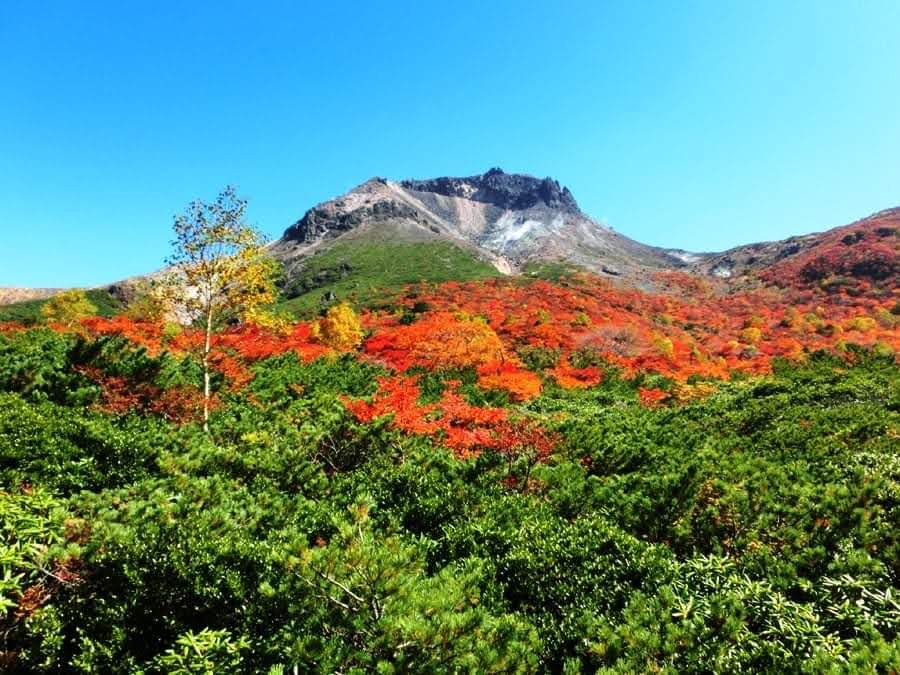
Chausugatake, positioned at the center of the Nasu Mountain Range spreading across northern Tochigi Prefecture, is an active volcano with an elevation of 1,915m that continues to emit white volcanic smoke to this day. As the main peak of Nasugatake, one of Japan’s One Hundred Famous Mountains, and as the only mountain in Tochigi Prefecture where volcanic smoke can be observed, it continues to fascinate many climbers.
Basic Information on the Nasu Mountain Range and Chausugatake
Geographical Location and Mountain Form
Chausugatake is located in Nasu Town, Nasu County, Tochigi Prefecture, and stands at the central part of the Nasu volcanic group that stretches north and south from the Tochigi-Fukushima prefectural border. It is a stratovolcano composed of several lava flows, pyroclastic flows, a cinder cone at the summit, and a lava dome, displaying the typical form of a tholoid (lava dome).
Basic Information
- Elevation: 1,915m (main peak of Nasugatake)
- Location: Nasu Town, Nasu County, Tochigi Prefecture
- Mountain Range: Nasu volcanic group, Nikko National Park
- Volcanic Classification: Active volcano (constantly monitored volcano)
- Latest Eruption: 1963 (Showa 38)
Composition of the Nasu Mountain Range
The Nasu Mountain Range is a collective term for a volcanic group composed of multiple mountains. While “Nasugatake” often refers to Chausugatake, it is technically a collective term for the following mountains:
Nasu Three Mountains
- Chausugatake (1,915m): main peak, active volcano
- Asahidake (1,896m): characterized by sharp rocky peaks
- Sanhonayaridake (1,917m): the highest peak of the Nasu Mountain Range
Nasu Five Mountains
In addition to the above three mountains:
- Minatsukiyama (1,776m): gentle mountain form
- Kurouoyatanidake (1,589m): located at the southern end
The sight of these mountains standing together creates a spectacular landscape when viewed from the Nasu Plateau.
The Charm of an Active Volcano Still Emitting Smoke
Current State of Volcanic Activity
Chausugatake is designated as a constantly monitored volcano by the Japan Meteorological Agency and continues to show active volcanic activity. White volcanic smoke containing sulfur rises from near the summit, and a distinctive sulfur odor permeates the area. Being able to feel the breath of this living volcano up close is one of the greatest charms of climbing Chausugatake.
The last eruption occurred in 1963 (Showa 38), when new vents were formed near the crater. Currently, restricted access zones are set up around the crater area, and volcanic activity can be observed while taking safety precautions.
Volcanic Topography Highlights
The volcanic topography of Chausugatake provides climbers with diverse landscapes.
Mugen Jigoku (Infinite Hell)
A group of fumaroles spread across the mountain slope, with volcanic smoke rising from all directions—a spectacular sight. The contrast between the barren rocky terrain and the volcanic smoke creates a landscape truly befitting the name “hell.”
Crater Surroundings
The crater near the summit is off-limits, but active fumarole activity can be observed from a safe distance. The rugged terrain with stacked volcanic rocks allows visitors to feel the workings of the Earth.
Enjoying Access via the Nasu Ropeway
Overview of the Ropeway
A major feature of Chausugatake climbing is the ability to access from the foot station at approximately 1,684m elevation to the mountain-top station (equivalent to the 8th station) at 1,684m using the Nasu Ropeway. This allows beginners and those without much physical confidence to easily enjoy the atmosphere of high mountain areas.
Nasu Ropeway Details
- Operating Period: Year-round (except during inspection periods)
- Travel Time: Approximately 4 minutes
- Elevation Gain: Approximately 290m
- Capacity: 111 persons (large gondola)
- Operating Interval: 15-20 minute intervals
From the ropeway’s mountain-top station, the summit can be reached in approximately 50 minutes to 1 hour of climbing, making it enjoyable as a half-day course.
Views from the Ropeway
From the gondola, visitors can enjoy a vast panorama of the Nasu Plateau spreading below. On clear days, you can see as far as the Kanto Plain and even Mount Tsukuba in the distance. During the autumn foliage season, colorfully dyed mountainsides spread out below, allowing for a full aerial promenade experience.
Climbing Routes and Route Introductions
Beginner-Friendly: Nasu Ropeway Route
Course Overview
- Time Required: Round trip approximately 2-3 hours (excluding ropeway)
- Difficulty: Beginner
- Physical Demand: ★★☆☆☆
- Technical Difficulty: ★☆☆☆☆
Detailed Route
- Nasu Ropeway mountain-top station (1,684m) start
- Proceed toward the summit on a well-maintained trail
- Rocky terrain increases from around the 9th station
- Chausugatake summit (1,915m) arrival
This route features well-maintained paths and is enjoyable even for families. However, rocky terrain increases beyond the 9th station, so trekking shoes are recommended.
Intermediate: Climbing Route from Touge no Chaya
Course Overview
- Time Required: Round trip approximately 4-5 hours
- Difficulty: Intermediate
- Physical Demand: ★★★☆☆
- Technical Difficulty: ★★☆☆☆
Detailed Route
- Touge no Chaya parking area (1,462m) start
- Proceed on the trail toward Chausugatake
- Route via Nasu Ropeway mountain-top station
- Chausugatake summit (1,915m) arrival
This course allows you to experience the sense of accomplishment of climbing under your own power without using the ropeway. The elevation gain of approximately 450m provides moderate exercise.
Advanced: Nasu Mountain Range Traverse Course
Course Overview
- Time Required: 6-8 hours
- Difficulty: Advanced
- Physical Demand: ★★★★☆
- Technical Difficulty: ★★★☆☆
Detailed Route
- Touge no Chaya parking area start
- Chausugatake summit (1,915m) ascent
- Mineno Chaya ruins emergency shelter
- Asahidake (1,896m): features rocky areas with chains
- Kumamizosone
- Sanhonayaridake (1,917m): the highest peak of the Nasu Mountain Range
- Return via the same route or descend toward Kita Onsen
On this course, you can conquer three peaks with distinct characteristics: the volcanic Chausugatake, the rocky cliff Asahidake, and the verdant Sanhonayaridake. The rocky areas of Asahidake require particularly careful movement.
Spectacular Viewpoint: Ubagahira Route
Course Overview
- Time Required: Round trip approximately 4-5 hours
- Difficulty: Intermediate
- Recommended Season: Foliage season (late September to early October)
Detailed Route
- Touge no Chaya parking area start
- Head toward Mineno Chaya ruins emergency shelter
- Via Ubagahira (famous foliage spot)
- To Chausugatake summit
Ubagahira is known as a famous foliage site, where the autumn leaves of Nanakamaido and Dakekanba create a beautiful landscape in contrast to the rugged mountainside of Chausugatake.
Seasonal Charm and Highlights
Spring (May-June): Alpine Flower Blooming
As snow melts, various alpine plants bloom around Chausugatake.
- Minesakura: Late May to early June
- Iwakagami: Early to mid-June
- Hakusan Shakunage: Mid to late June
The contrast of remaining snow, fresh greenery, and alpine flowers is beautiful. However, mornings and evenings are cold, so cold-weather measures are necessary.
Summer (July-August): Cool Highland Breeze
The summit above 1,900m elevation remains cool and comfortable even in midsummer. While the plains experience intense heat, temperatures near the summit remain pleasant at around 20 degrees Celsius.
Summer Highlights
- Contrast between blue sky and volcanic smoke
- Expansive view of the visible Kanto Plain
- Optimal for traversing Asahidake and Sanhonayaridake
Summer is prone to afternoon thunderstorms, so an early start with morning descent is recommended.
Autumn (September-October): Foliage Spectacular Views
The foliage of the Nasu Mountain Range begins to color in early mid-September at early locations and reaches its peak from late September to early October.
Foliage Changes
- Mid-September: Foliage begins around Sanhonayaridake
- Late September: Ubagahira at peak (maximum bloom)
- Early October: Ropeway vicinity at peak
- Mid-October: Foliage front descends to the Nasu Plateau
Main Foliage Tree Species
- Nanakamaido: vivid red
- Dakekanba: golden yellow
- Minekaeде: orange to red
The view from Ubagahira in particular is called a “brocade carpet,” and the contrast between the rugged volcanic topography of Chausugatake and the brightly colored foliage is spectacular. This period is crowded, so early morning visits are recommended.
Winter (November-April): Snow Mountain Climbing
Chausugatake operates the Nasu Ropeway during winter, making it a popular relatively accessible snow mountain.
Winter Climbing Features
- Beautiful views of tree ice and rime
- Contrast between volcanic smoke and snow
- Severe cold winter season requires fully-equipped mountaineering gear
- Note strong winds (wind speeds often exceed 20m/s)
Winter requires full snow mountain equipment including crampons, ice axes, and cold-weather clothing. Thorough preparation for sudden weather changes is essential.
Climbing Clothing and Equipment
Basic Equipment
Essential Equipment
- Trekking shoes (high-cut recommended)
- Rainwear top and bottom (for wind and cold protection as well)
- Hat (sun protection and insulation)
- Gloves
- Backpack (20-30L)
- Water (1L or more)
- Snacks
- Map and compass (or GPS)
- Headlamp
- First aid kit
Seasonal Clothing
Spring and Autumn
- Base layer (quick-drying)
- Mid layer (fleece, etc.)
- Outer layer (wind and water resistant)
- Long pants (stretchy material)
Summer
- Quick-drying T-shirt
- Long-sleeved shirt (sunburn and insect protection)
- Thin wind jacket
- Long pants or convertible pants
Winter
- Warm base layer
- Mid layer (down or thick fleece)
- Waterproof and windproof outer layer
- Winter mountain pants
- Winter gloves and hat
- Crampons and ice axe
Notes Specific to Active Volcanos
As Chausugatake is an active volcano, the following points require attention.
- Volcanic Gas: Sulfur gas is released, so those with asthma or respiratory conditions should exercise caution
- Volcanic Alert Level: Confirm information from the Japan Meteorological Agency before climbing
- Restricted Areas: Comply with restrictions around the crater
- Sudden Weather Changes: Watch for volcano-specific localized weather changes
Access Methods and Parking Information
Access by Car
From Tokyo
- Approximately 40 minutes from “Nasu IC” on the Tohoku Expressway
- Via Prefectural Road 17 (Nasu Plateau Line)
- To Nasu Ropeway or Touge no Chaya parking area
From Fukushima
- Approximately 50 minutes from “Shirakawa IC” on the Tohoku Expressway
- Via National Route 4 and prefectural roads
Parking Information
Nasu Ropeway Parking Area
- Capacity: Approximately 200 spaces
- Fee: Free
- Elevation: Approximately 1,390m
- Restrooms: Available
Touge no Chaya Parking Area
- Capacity: Approximately 50 spaces
- Fee: Free
- Elevation: Approximately 1,462m
- Restrooms: Available (simple toilet)
During foliage season and weekends, parking often fills up early, so arrival before 6:00 AM is recommended.
Access by Public Transportation
Bus
- Higashi-no Bus “Nasu Ropeway” bound from JR Tohoku Main Line “Kuroiso Station”
- Travel time: Approximately 65 minutes
- Operating Period: Late April to early November (increased service during foliage season)
- Frequency: 2-3 buses per day (varies by season)
As bus frequency is limited, checking the schedule in advance is essential.
Surrounding Hot Springs and Accommodations
Day-Use Hot Springs
There are numerous hot spring facilities nearby to soothe climbing fatigue.
Shika no Yu
- Nasu’s oldest hot spring (over 1,300 years since opening)
- Spring Quality: Acidic sulfur spring
- Feature: Six bathing pools of different temperatures
- Hours: 8:00-18:00
- Fee: ¥500 for adults
Kita Onsen
- Known as a hidden gem, single-building inn
- Spring Quality: Simple hot spring
- Feature: Charming baths such as Tengu no Yu
- Day-use bathing available
Nasu Yumoto Onsen
- Multiple day-use bathing facilities
- Primarily sulfur springs
- Approximately 20 minutes by car from the trailhead
Accommodation Facilities
Mountain Huts
- Mineno Chaya ruins emergency shelter: unmanned, emergency use only
- Sando Shoya Hot Spring: staffed hut (advance booking required)
Accommodations in the Nasu Plateau
- Hotels and inns: numerous options
- Pensions: family-friendly
- Campsites: popular with outdoor enthusiasts
Enjoy Nasu Plateau sightseeing with pre- or post-stay accommodation.
Weather and Climbing Plans
Weather Characteristics
Chausugatake has high elevation and changing weather is common.
Annual Weather Trends
- Spring: Remaining snow, watch for strong winds
- Summer: Afternoon thunderstorms
- Autumn: Relatively stable, crowded during foliage season
- Winter: Strong winds and severe cold
Average Summit Temperatures
- July: 15-18℃ (daytime)
- October: 5-8℃ (daytime)
- January: -10 to -5℃ (daytime)
Weather Checking Points
Always check the latest weather forecast before climbing.
Information to Check
- Weather forecast (mountain weather forecast websites)
- Wind speed forecast (frequent strong winds at summit)
- Thunderstorm warnings
- Volcanic information (volcanic alert level)
- Ropeway operation status
Criteria for Canceling Climbs
- When storm warnings are issued
- When thunderstorm warnings are issued
- When volcanic alert level is raised
- During poor visibility (thick fog, etc.)
Precautions and Safety Measures While Climbing
Precautions Regarding Volcanic Activity
As Chausugatake is an active volcano, the following points require special attention.
Measures Against Volcanic Gas
- Pay attention to wind direction and quickly move through areas with dense gas
- Those with respiratory conditions should consult with a physician
- If feeling unwell, descend immediately
Confirmation of Volcanic Alert Level
- Check the Japan Meteorological Agency website before climbing
- If level 2 or above, cancel the climb
- Follow on-site restriction signs
Altitude Sickness Prevention
As the ropeway causes rapid altitude gain, there is a risk of altitude sickness.
Prevention Methods
- Rest approximately 10 minutes after arriving at the mountain-top station before climbing
- Climb at a slow pace
- Frequent hydration
- Focus on deep breathing
Emergency Response
Emergency Contacts
- Nasu Town Office: 0287-72-6901
- Nasu District Broad Area Fire Department: 119
- Tochigi Police Nasu Shiobara Police Station: 0287-67-0110
Emergency Shelter
- Mineno Chaya ruins emergency shelter: available for emergency use only
- Capacity: Approximately 30 persons
- Amenities: Simple toilet only
Nearby Tourist Attractions
Nasu Plateau
Numerous tourist destinations are available before and after climbing.
Nasu Dobutsu Oukoku (Animal Kingdom)
- Animal interaction experiences
- Popular with families
Nasu Highland Park
- Amusement park
- Features thrilling rides
Sesshoseki (Killing Stone)
- Famous sight in Nasu Onsen
- Odd rocks with sulfur gas vents
Other Highlights within Nikko National Park
Nasu Heisei no Mori (Nasu Heisei Forest)
- Nature trails
- Guided walks available
Numaura Wetland
- High-altitude wetland
- Seasonal flowers are beautiful
Model Courses and Plan Examples
1-Night 2-Day Plan (Beginner-Friendly)
Day 1
- 10:00 Arrive at Nasu Plateau, check into accommodation
- 11:00 Nearby sightseeing including Sesshoseki
- 15:00 Relax at hot spring
- 18:00 Dinner
Day 2
- 6:00 Depart to Touge no Chaya parking area
- 7:00 Ropeway to mountain-top station
- 7:30 Begin climbing
- 8:30 Chausugatake summit arrival
- 9:30 Begin descent
- 11:00 Descent complete
- 12:00 Soak in hot spring
- 14:00 Head home
Day-Trip Plan (Intermediate)
Schedule
- 5:00 Depart Tokyo
- 7:30 Arrive at Touge no Chaya parking area
- 8:00 Begin climbing (Chausugatake to Asahidake)
- 12:00 Asahidake summit
- 13:00 Lunch
- 14:30 Descent complete
- 15:00 Hot spring
- 16:30 Head home
- 19:30 Arrive in Tokyo
2-Night 3-Day Traverse Plan (Advanced)
Day 1
- Stay overnight on Nasu Plateau
Day 2
- Traverse from Touge no Chaya via Chausugatake to Asahidake to Sanhonayaridake
- Stay at Sando Shoya Hot Spring
Day 3
- Descend via Asahidake
- Hot spring and head home
Summary: The Charm of the Nasu Mountain Range and Chausugatake
Chausugatake, located in Nasu Town, Nasu County, Tochigi Prefecture, possesses a unique charm as an active volcano still emitting smoke that cannot be found in other mountains. While the Nasu Ropeway allows beginners to easily aim for the summit, more challenging courses such as the Nasu Mountain Range traverse are also available for advanced climbers.
The ability to enjoy seasonal changes—spring alpine flowers, summer’s cool highland breeze, autumn’s golden foliage, and winter’s harsh yet beautiful snowy landscape—is also a major attraction. Particularly memorable is the contrast between the foliage of Ubagahira and the rugged volcanic topography of Chausugatake.
After climbing, soothe your fatigue in the abundant hot springs of the Nasu Onsen region and enjoy Nasu Plateau sightseeing as well. Despite being within day-trip distance from Tokyo, Chausugatake offers genuine volcanic climbing experiences and is recommended for climbers of all skill levels, from beginners to advanced.
Without neglecting to verify volcanic activity and weather, and with appropriate equipment and planning, safely enjoy the full charm of the Nasu Mountain Range and Chausugatake.
-800x450.jpg)
-800x450.jpg)