Kiyomizu-dera Temple, Kyoto Prefecture Complete Guide: Thorough Explanation of World Heritage History, Highlights, and Access
Most tourists visiting Kyoto make their way to Kiyomizu-dera, the temple that inspired the famous phrase “jumping off the stage of Kiyomizu.” Registered in 1994 as part of the UNESCO World Heritage site “Historic Monuments of Ancient Kyoto,” it has become Kyoto’s representative tourist destination, welcoming millions of pilgrims from around the world annually.
This article provides comprehensive information you should know before visiting, from the historical background of Kiyomizu-dera to its architectural appeal, highlights within the grounds, seasonal scenery, and access methods.
History and Origins of Kiyomizu-dera
The Story of Its Founding
The history of Kiyomizu-dera dates back to 778 (Hoki 9). In the late Nara period, a Buddhist monk named Enchin (initially named Kenshin) followed divine inspiration into Otowa Mountain, where he discovered a water stream gleaming with golden light. He received instruction from the hermit Gyoei, who was meditating there, saying “carve a statue of Kannon from this sacred wood and protect this place.” This is said to be the beginning of Kiyomizu-dera.
High Priest Enchin carved an eleven-faced thousand-armed Kannon statue from the sacred wood left by Gyoei and enshrined it in a humble dwelling built above Otowa Falls. This Kannon statue remains the principal deity enshrined in the main hall today.
Sakanoue no Tamuramaro and the Establishment of Formal Temple Structures
In 798 (Enryaku 17), Sakanoue no Tamuramaro, known as the Shogun who conquered the barbarians, visited this place for deer hunting and encountered High Priest Enchin. Moved by Kannon’s teachings, Tamuramaro, together with his wife, donated his private residence and established Kiyomizu-dera as a formal temple.
It is said that Tamuramaro relocated the old Purple Hall from Nagaoka-kyo to construct the Buddha hall, making Kiyomizu-dera one of Kyoto’s oldest temples, established shortly after the relocation of the Imperial Capital to Heian-kyo in 794. Along with Koryuji and Kurama temples, it is one of the few Kyoto temples with pre-Heian-kyo history.
The Hosso School and Northern Hosso School Head Temple
Kiyomizu-dera developed as a temple of the Hosso school (one of the six schools of Southern Capital Buddhism). It belonged to the Hosso school with Kofukuji as its head temple, but gained independence in 1965 (Showa 40) and currently serves as the head temple of the Northern Hosso school, forming its own sect.
Known as one of Japan’s most renowned Kannon sacred sites alongside Ishiyama-dera (Otsu City, Shiga Prefecture) and Hasedera (Sakurai City, Nara Prefecture), it is designated as the 16th temple on the Western Japan Thirty-Three Kannon Pilgrimage Sites.
History of Repeated Fires and Reconstruction
Throughout its long history, Kiyomizu-dera has suffered from numerous fires. Due to warfare and accidental fires, it has experienced more than ten cycles of destruction and reconstruction since its founding.
Most of the major buildings we see today were reconstructed between 1631 and 1633 (Kan’ei 8-10) following a major fire in 1629 (Kan’ei 6), with donations from Tokugawa Iemitsu. The temple halls and pagodas constructed during this era, representing the pinnacle of building techniques of that time, still stand on the slopes of Otowa Mountain.
Architecture and Cultural Properties of Kiyomizu-dera
The temple grounds of Kiyomizu-dera span approximately 130,000 square meters and contain nearly 30 temple buildings and pagodas. Many of these are designated as National Treasures or Important Cultural Properties, holding extremely important value in Japanese architectural history.
Main Hall (National Treasure): The Stage of Kiyomizu
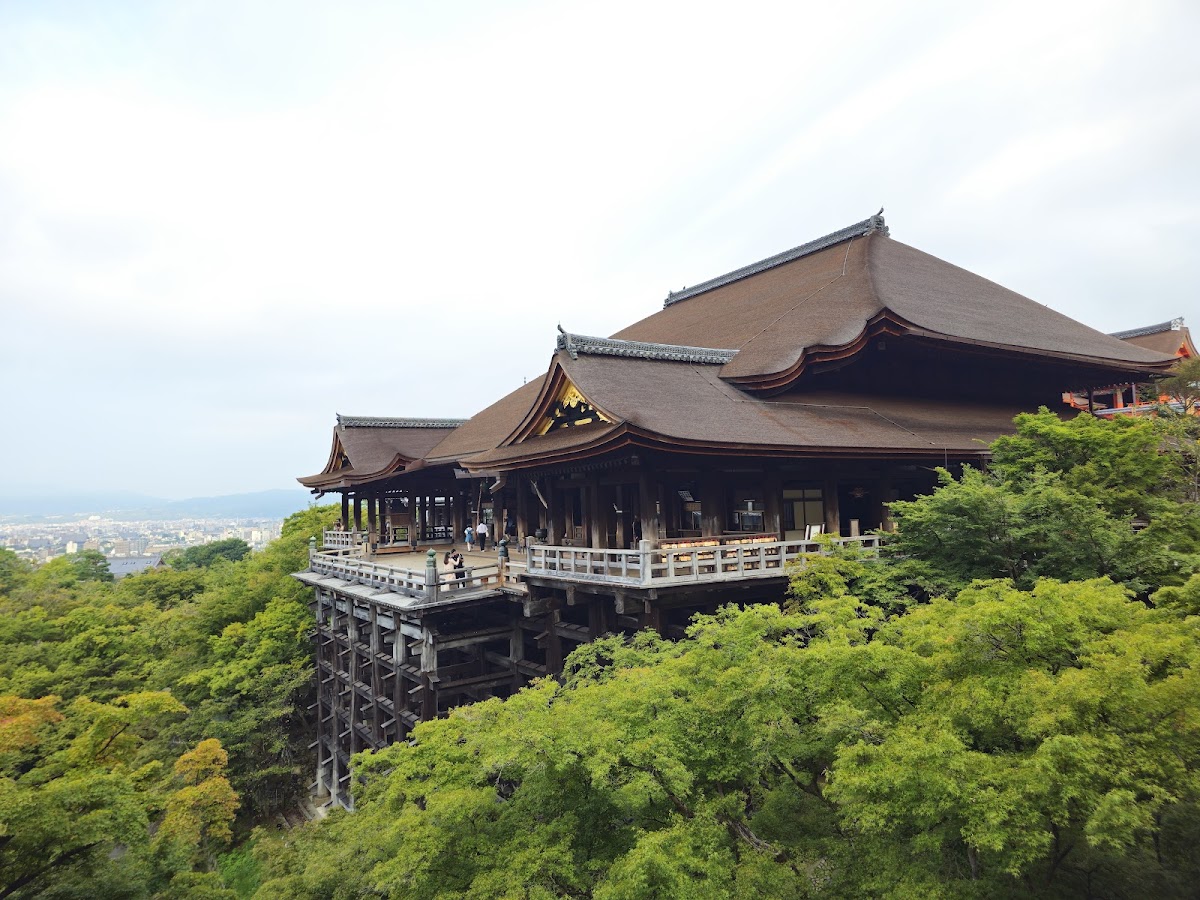
The main hall, which can be called the symbol of Kiyomizu-dera, is a National Treasure designated building with a hip-and-gable roof covered with cypress bark shingles. It features an elegant exterior in the style of residential Shinden architecture, with a length of approximately 36 meters, a width of approximately 30 meters, and a ridge height of 18 meters, boasting a grand scale.
Its most distinctive feature is the “stage” projecting out over the cliff edge. This stage is constructed using the traditional “kaketsukuri” (cantilever) building technique, supported by 139 pillars of Japanese cypress wood approximately 12 meters long (called “nuki wood”), arranged in combination. Remarkably, it is composed entirely of traditional Japanese joinery techniques called “tsugi” and “shiguchi,” without using a single nail.
The stage stands at a maximum height of approximately 13 meters (equivalent to a four-story building) and offers a panoramic view of Kyoto’s cityscape. You can enjoy four seasons of beautiful scenery: cherry blossoms in spring, fresh green foliage in summer, autumn leaves in fall, and snowy landscapes in winter.
Inside the main hall is enshrined the principal deity, an eleven-faced thousand-armed Kannon statue, which is a secret Buddha. While normally closed to public view, this Kannon statue is opened to the public once every 33 years on a special occasion.
Nio Gate (Important Cultural Property)
The main gate of Kiyomizu-dera, the Nio Gate, is an Important Cultural Property reconstructed in 1633 (Kan’ei 10). With its vivid vermillion lacquer coating and an impressive height of approximately 10 meters, it welcomes pilgrims with a stately appearance.
On both sides of the gate are enshrined the golden-colored strength guardian statues (Nio statues) said to be carved by Unkei, serving as protective deities to ward off evil spirits. Above the Nio Gate hangs a wooden plaque inscribed “Kiyomizu-dera,” making it a popular photo spot for numerous tourists.
Three-Story Pagoda (Important Cultural Property)
Upon passing through the Nio Gate, one’s eye is immediately drawn to the beautifully vermillion-lacquered three-story pagoda. Reconstructed in 1632 (Kan’ei 9), this pagoda stands approximately 31 meters tall and boasts one of the largest scales among three-story pagodas in Japan.
Inside the pagoda is enshrined a Dainichi Nyorai statue, and its walls and pillars are painted with richly colored artwork depicting the world of esoteric Buddhism. This striking vermillion pagoda stands out from a distance and has become a photo spot alongside the main hall as a landmark of Kiyomizu-dera.
During cherry blossom and autumn foliage seasons, the surrounding trees and the vermillion pagoda create a harmonious and picturesque beautiful landscape.
Otowa Falls
The waterfall that gave Kiyomizu-dera its name is the “Otowa Falls” within the temple grounds. The clear water flowing from Otowa Mountain splits into three streams as it cascades down, and has been revered since ancient times as “golden water” and “water of eternal life.”
Each of the three water streams is said to grant benefits of “academic success,” “romantic fulfillment,” and “longevity,” with many pilgrims seen drinking the water with a wooden dipper. However, there is a tradition that if one greedily drinks from all three streams, the benefits will be diminished, so it is customary to choose and drink from only one.
The water of Otowa Falls has never dried up over more than 1,200 years and boasts excellent water quality, leading it to be regarded as the source of Kiyomizu-dera’s miraculous power.
Jishu Shrine
Located adjacent to the north of the main hall, Jishu Shrine is nationally famous as a shrine dedicated to matchmaking and romantic relationships. Its founding predates Kiyomizu-dera, and it is said to have been established at this location since before Japan’s founding, making it an ancient shrine. It is registered as part of the world heritage site “Historic Monuments of Ancient Kyoto” together with Kiyomizu-dera as a unified property.
Within the shrine grounds stands the “Love Divination Stones,” where it is said that if you can walk from one stone to the other with your eyes closed, your romantic wishes will come true. Young couples and those seeking romantic fulfillment visit this popular spot. These stones are said to be artifacts from the Jomon period, confirmed through scientific dating to be from ancient times.
Other Important Halls
Inner Sanctuary (Important Cultural Property)
Built with the same cantilever construction as the main hall, it serves as an excellent viewpoint for observing the main hall from the front. If you wish to photograph the entire stage of the main hall, photography from the Inner Sanctuary is recommended.
Amida Hall (Important Cultural Property)
Located on the west side of the main hall, it houses a statue of Amida Buddha. It offers a quiet, serene space for unhurried prayer.
Zuigudo Hall
A hall dedicated to Zuigyu Bosatsu as its principal deity, known for allowing visitors to make a passage through its interior. By walking through a completely dark underground corridor by feel and touching the “Zuigyu Stone” at the center, it is said that one’s wishes will be granted—an unusual experience.
Highlights and How to Enjoy Kiyomizu-dera
Scenic Beauty Throughout the Seasons
One of the major attractions of Kiyomizu-dera is the natural beauty that presents a different appearance with each season.
Spring (Late March to Early April)
Approximately 1,500 cherry trees are planted throughout the grounds, with Somei Yoshino and Yamazakura blossoms blooming in unison. The contrast between the vermillion-lacquered halls and delicate pink blossoms is spectacular. During the spring special viewing period, nighttime illumination is also held, allowing visitors to enjoy enchanting nighttime cherry blossoms.
Summer (June to August)
Fresh green foliage blankets the grounds, creating a vibrant landscape full of life force. The clear water of Otowa Falls feels even more refreshing, offering a moment of cool respite from Kyoto’s hot summer.
Autumn (Mid-November to Early December)
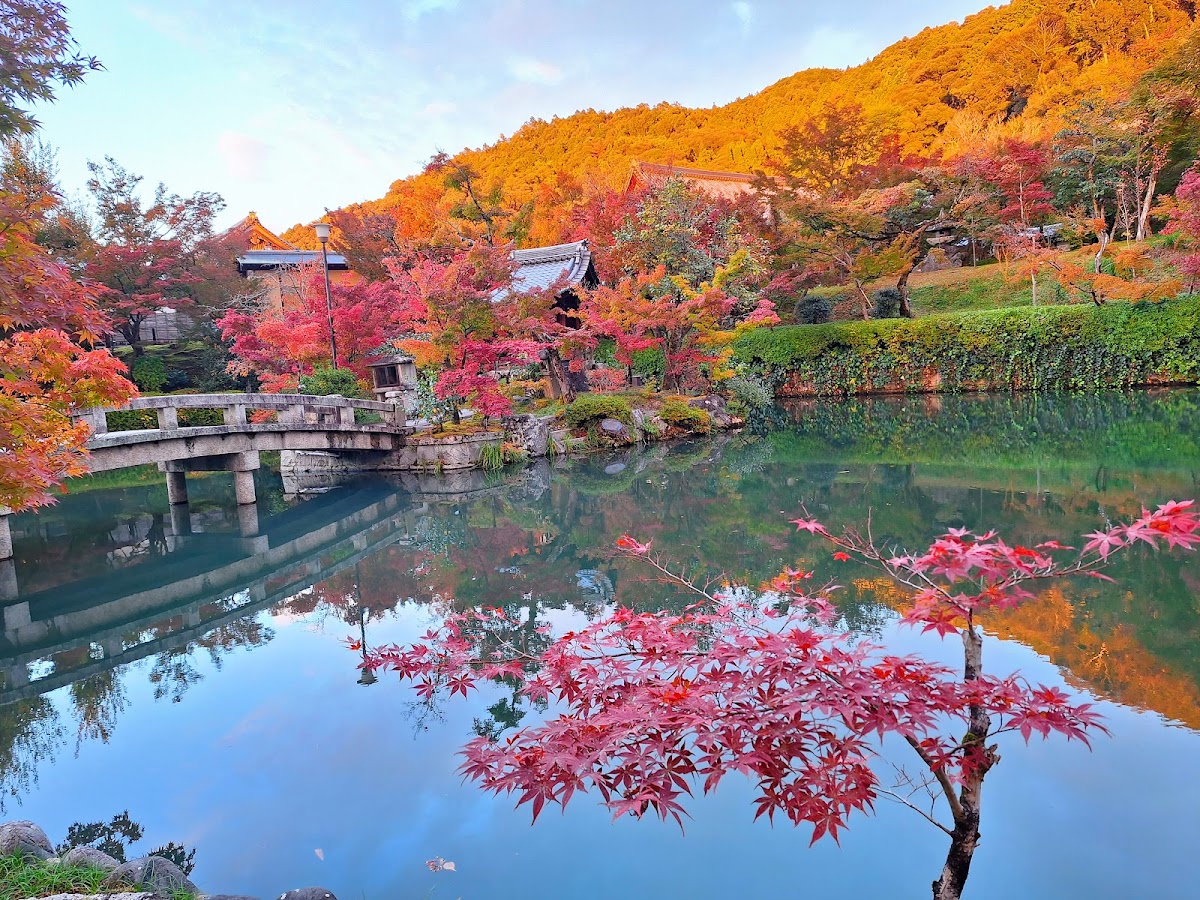
Autumn is considered Kiyomizu-dera’s most beautiful season. Approximately 1,000 Japanese maples and other varieties turn brilliant red, enveloping the entire grounds in a fiery landscape. During the autumn special viewing, nighttime illumination is implemented, where blue laser light illuminates Kyoto’s night sky as the “Kannon Compassionate Light,” allowing visitors to enjoy an enchanting autumn foliage landscape.
Winter (December to February)
Snow-covered Kiyomizu-dera possesses a special beauty that evokes silence and solemnity. On snowy days, fewer pilgrims visit, allowing for a leisurely walk through the grounds.
Special Viewings and Illuminations
Kiyomizu-dera holds three special viewings and illuminations annually in spring, summer, and autumn.
- Spring Special Viewing: Late March to Early April
- Summer Special Viewing: Mid-August
- Autumn Special Viewing: Mid-November to Early December
During nighttime viewing, the entire grounds are illuminated, offering a completely different enchanting atmosphere from daytime. The nighttime view from the main hall stage is breathtakingly beautiful, with the night scenery of Kyoto city merging with the illuminated grounds, creating a spectacular vista.
Prayer Etiquette and Manners
When visiting Kiyomizu-dera, observe the following etiquette and manners.
- Bow at the Nio Gate: Offer a bow before entering the grounds through the Nio Gate.
- Cleanse at the Purification Basin: Wash your hands and rinse your mouth at the purification basin along the approach.
- Prayer at the Main Hall: Pray quietly and sincerely with hands pressed together in the main hall.
- Etiquette at Otowa Falls: Do not drink directly from the wooden dipper; receive water in your hand first and then drink. After use, rinse the dipper and place it upright.
- Photography: Photography is prohibited in certain areas within the halls. Follow posted signs.
- Consideration During Crowded Times: Avoid prolonged photography at popular spots, and maintain consideration for other visitors.
Basic Information
Visiting Hours
- Regular Period: 6:00 AM–6:00 PM
- Summer (July and August): 6:00 AM–6:30 PM
- Special Viewing Period: Nighttime viewing 6:00 PM–9:00 PM (last admission)
※Hours may vary by season; checking official information is recommended.
Admission Fees
- General: ¥400
- Elementary and Junior High School Students: ¥200
- During Special Viewing: Additional charges may apply
Address and Contact Information
- Address: 1-chome Kiyomizu, Higashiyama Ward, Kyoto City, Kyoto Prefecture 605-0862
- Phone: 075-551-1234
- Official Website: https://www.kiyomizudera.or.jp/
Sect and Pilgrimage Sites
- Sect: Northern Hosso School Head Temple
- Pilgrimage Site: 16th Temple on the Western Japan Thirty-Three Kannon Pilgrimage Sites
- Principal Deity: Eleven-faced Thousand-armed Kannon Bodhisattva
Access
There are multiple ways to reach Kiyomizu-dera, with public transportation being most convenient.
By Train and Bus
From Kyoto Station
- By City Bus (Most Common)
- Board city bus lines 100 or 206 from Kyoto Station Bus Terminal platform D1
- Get off at “Gojozaka” or “Kiyomizu-michi” bus stop (approximately 15 minutes)
- Walk from the bus stop to Kiyomizu-dera (approximately 10 minutes, uphill)
- By Keihan Electric Railway
- From Kyoto Station, take the JR Nara Line to “Tofukuji Station” (1 stop, approximately 2 minutes)
- Transfer to Keihan Electric Railway at Tofukuji Station, get off at “Kiyomizu-Gojo Station” (approximately 5 minutes)
- Walk from Kiyomizu-Gojo Station to Kiyomizu-dera (approximately 25 minutes)
From Kawaramachi/Gion Area
- Keihan “Gion-Shijo Station” about 25 minutes walk away
- Hankyu “Kawaramachi Station” about 30 minutes walk away
- City bus line 207 “Kiyomizu-michi” stop, about 10 minutes walk
By Taxi
- From Kyoto Station approximately 15 minutes, fare approximately ¥1,500–¥2,000
- Convenient for busy times or if carrying luggage
By Private Vehicle
Kiyomizu-dera has a parking area for visitors, but spaces are limited and become very crowded during tourist season.
- Parking: Approximately 60 regular vehicle spaces on temple grounds
- Parking Fee: ¥1,000 per visit (may vary by season)
- Operating Hours: Approximately 8:30 AM–4:30 PM
Private parking lots are also available in the surrounding area, but they often become full during peak tourist seasons and weekends, making public transportation highly recommended.
On Foot (From Nearby Tourist Attractions)
- From Yasaka Shrine: Approximately 20 minutes walk
- From Kodaiji Temple: Approximately 15 minutes walk
- Via Sannenzaka and Ninenzaka: Approximately 15 minutes through charming stone-paved streets
The area surrounding Kiyomizu-dera features Sannenzaka (Three-Year Slope) and Ninenzaka (Two-Year Slope), scenic stone-paved streets that epitomize Kyoto’s atmosphere. With many souvenir shops and restaurants, it is recommended to enjoy the stroll there.
Nearby Tourist Attractions
When visiting Kiyomizu-dera, combining visits to nearby attractions allows you to fully appreciate the appeal of the Higashiyama area.
Sannenzaka (Three-Year Slope) and Ninenzaka (Two-Year Slope)
These stone-paved slopes served as approach paths to Kiyomizu-dera and remain charming areas lined with traditional Kyoto townhouses. Traditional craft shops, Japanese miscellaneous goods stores, and cafes line the streets, making for enjoyable shopping and strolling. The area is designated as an Important Traditional Building Conservation District.
Kodaiji Temple
Founded by Kitanosho (also known as Nene), the principal wife of Toyotomi Hideyoshi, to honor his memory. It features beautiful gardens and tea rooms, with illumination events held in spring and autumn. It is approximately 15 minutes walk from Kiyomizu-dera.
Yasaka Shrine
Known affectionately as “Gion-san,” it is Kyoto’s representative shrine, famous for the Gion Festival in July. The path from Kiyomizu-dera to Yasaka Shrine is a standard route for Kyoto sightseeing.
Gion and Hanami-koji Street
Kyoto’s representative geisha district where traditional townhouses line the famous Hanami-koji Street, where you may encounter geisha or maiko if fortunate.
Kenninji Temple
Kyoto’s oldest Zen temple, famous for Sotatsu Tawaraya’s “Folding Screens of Wind and Thunder Deity” (reproduction) and “Cloud and Dragon Painting” in sliding doors. Its beautiful gardens are also notable.
Points to Consider When Visiting Kiyomizu-dera
Recommended Visiting Times
- Early Morning (Just After Opening): Few tourists, allowing for quiet prayer. Praying in the fresh morning air is exceptional.
- Weekdays: Crowding is reduced compared to weekends and holidays.
- Late Afternoon: The grounds lit by western sunlight are beautiful, and it is relatively uncrowded before closing.
Periods to Avoid
- Peak Cherry Blossom and Autumn Foliage Weekends: Extremely crowded, making unhurried prayer difficult.
- School Excursion Season (May, October–November): Even weekdays are crowded with student groups.
- Year-End and New Year Period: Particularly crowded during New Year visits.
Clothing and Items to Bring
- Comfortable Walking Shoes: The grounds have many slopes and stairs, making sneakers or other comfortable walking shoes recommended.
- Seasonal Clothing: Strong summer sun and cold winters require seasonal preparation.
- Beverages: Water replenishment is necessary, especially in summer.
- Camera: Essential given the numerous scenic spots.
Estimated Time Required
- Temple Grounds Only: 1 to 1.5 hours
- Including Surrounding Area: 2 to 3 hours
- Entire Higashiyama Area: Half day to full day
Conclusion
Kiyomizu-dera is a World Heritage site representing Kyoto, with over 1,200 years of history, where masterful architectural beauty, historical significance, and harmony with nature converge in a special place. The main hall’s cantilever architecture, known as the “Stage of Kiyomizu,” is a masterpiece embodying the pinnacle of Japanese traditional craftsmanship, and the Kyoto landscape visible from there continues to captivate all who visit.
Kiyomizu-dera presents a different character each season: cherry blossoms in spring, lush green foliage in summer, autumn leaves in fall, and snowy landscapes in winter. With many attractions—the clear water of Otowa Falls, the beauty of the three-story pagoda, and the matchmaking blessings of Jishu Shrine—there is always something new to discover and experience, no matter how many times you visit.
Easily accessible from Kyoto Station, with scenic traditional streets like Sannenzaka and Ninenzaka nearby, it serves as an ideal hub for sightseeing in the Higashiyama area. Why not experience the special encounter with Japanese traditional beauty and spirituality at Kiyomizu-dera, where history and culture merge with nature?
When paying a visit, consider visiting early in the morning or on weekdays to avoid crowds, dress in comfortable clothing, and take time to slowly explore the grounds, fully savoring the appeal of Kiyomizu-dera, which has been cherished for over 1,200 years.