Complete Guide to Ohara Sanzen-in | History, Highlights, and Access Information for This Monzeki Temple in Kyoto Prefecture
Nestled in the village of Ohara in the northeast of Kyoto city center, Sanzen-in is known as one of the five Tendai sect monzeki temples. Its moss-covered gardens, national treasure Buddhist statues, and natural beauty throughout the seasons continue to enchant visitors. This article provides detailed information about Sanzen-in’s history, highlights, and access methods—everything you should know before your visit.
What is Sanzen-in | Status as One of the Five Tendai Sect Monzeki Temples
Sanzen-in (三千院) is a Tendai sect temple located in Ohara Raigu-in-cho, Sakyo-ku, Kyoto. Its mountain name is Gyozan, its principal image is Yakushi Rurikoh Nyorai, and it is also called Sanzen-in Monzeki.
Along with Shoren-in and Myoho-in, it is counted as one of the three monzeki temples of the Tendai sect Sanmon school, and is known as a prestigious temple where imperial family members have traditionally served as priests. The area of Ohara, removed from the bustle of Kyoto city center, was traditionally cherished as a place of seclusion for nobility and Buddhist practitioners, and the environment of tranquility and nature is preserved to this day.
Historical Significance as a Monzeki Temple
A monzeki temple refers to a temple where children of the imperial family or Sekkan regents served as priests. From the late Heian period onward, imperial family members entered Sanzen-in, and their noble lineage elevated the temple’s status. For this reason, the temple grounds feature buildings such as the Shinden and guest halls that convey a sense of prestige.
History of Sanzen-in | 1,200 Years of Lineage from Saicho
The origins of Sanzen-in trace back to the eighth century. When Saicho (Dengyo Daishi), the founder of the Tendai sect, established a hermitage on Mount Hiei, he founded a hall in the Nanano Valley of the Eastern Pagoda, which is said to be the beginning.
Transition from the Heian Period to the Edo Period
Initially called “Enyu-bo,” it was located within Mount Hiei. Subsequently, from the Heian through Kamakura periods, it became known as the “Nashimoto Monzeki” and repeatedly relocated to various locations in Kyoto. After the Onin War, the temple moved around various places in the city, being located at the Konoe Imperial Residence, north of Nijo Castle, and east of the Imperial Palace. In 1871 (Meiji 4), it moved to its current location in Ohara and was renamed “Sanzen-in,” continuing to the present day. Throughout this long history, the temple has maintained deep connections with the imperial family and nobility while functioning as an important center of the Tendai sect.
Highlights of Sanzen-in | National Treasures and Beautiful Gardens
The temple grounds feature historically valuable buildings and Buddhist statues, as well as gardens that reveal different aspects through the four seasons.
Ojogokuraku-in and the National Treasure Amida Triad
The most important building in the temple grounds is Ojogokuraku-in (Important Cultural Property). Within the inner sanctuary of this building, representative of the Fujiwara period, stands the Amida Triad designated as a National Treasure.
The greatest feature of this Amida Triad is that both attendant bodhisattvas (Kannon and Seishi) take the unusual posture of “Yamato-sitting.” Rather than formal sitting, the posture with one knee raised expresses the coming to welcome from the Land of Bliss paradise and speaks to the depth of Pure Land faith during the Heian period. The ceiling inside the hall features a boat-bottom ceiling depicting scenes of the Land of Bliss, expressing the world of the welcoming image in three dimensions.
Yusei-en | Garden of Moss-Covered Cedar Forest
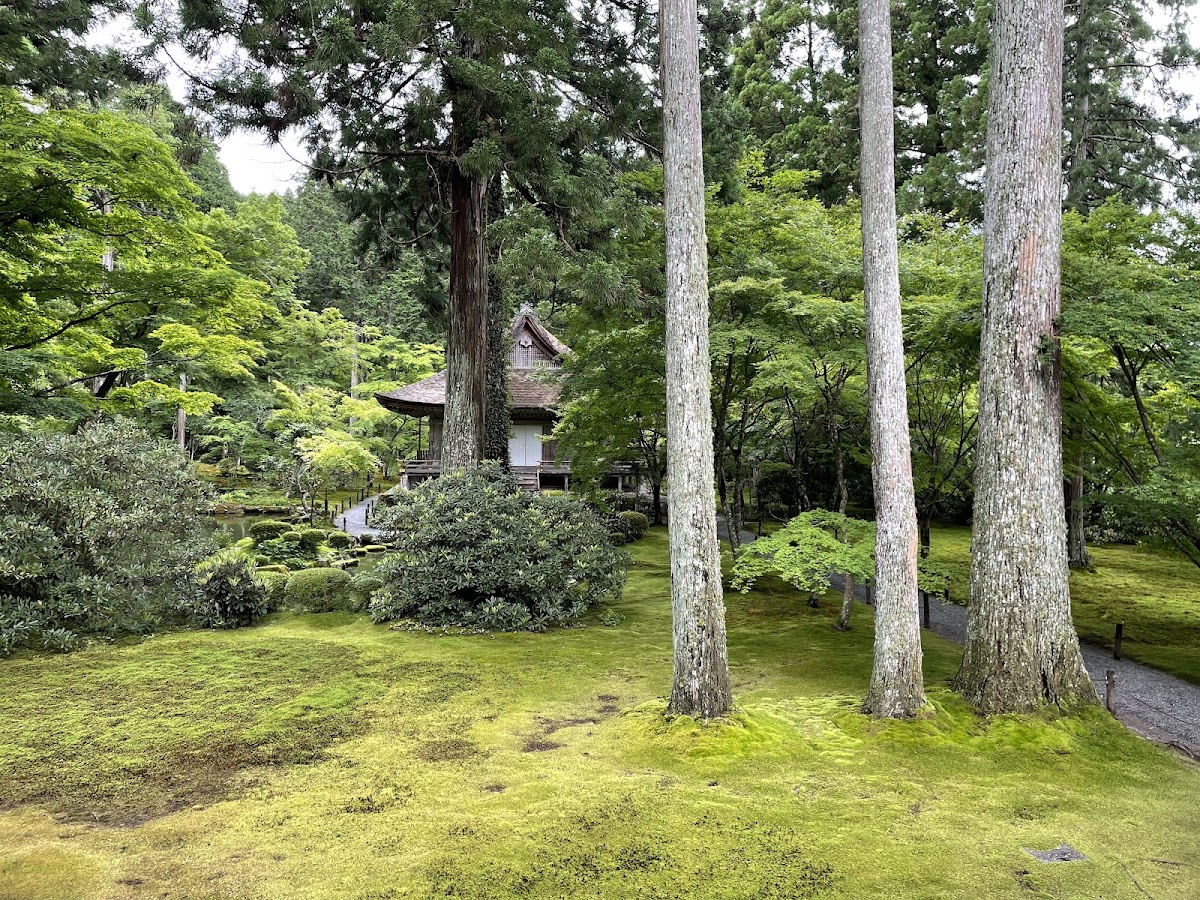
Spreading before the Shinden, Yusei-en (有清園) is the representative garden of Sanzen-in. Between cedar groves, moss covers the ground densely, with Ojogokuraku-in floating above this green carpet of moss.
This stroll-style garden skillfully utilizes the natural terrain, and scattered among the moss are “Warabe Jizo” (child-like Jizo statues) created by stone sculptor Takashi Sugimura. These small Jizo statues warm the hearts of visitors and have become a popular photography spot.
The variety of moss species is abundant, with various types harmonizing with Sugi moss as the center, and their appearance when wet from rain or morning dew is particularly beautiful, creating a landscape that moss enthusiasts find irresistible.
Shuuheki-en | Viewing-Style Garden before the Guest Hall
Spreading before the guest hall, Shuuheki-en (聚碧園) is a viewing-style garden where the beauty of trimmed vegetation stands out. In contrast to Yusei-en, carefully maintained ornamental trees and a pond harmonize, designed to be viewed from the cushions along the guest hall’s veranda.
Spring brings mountain cherries, early summer brings azaleas and hydrangeas, and autumn brings crimson leaves to the garden, and the beauty of the framed garden viewed from the sitting room is exceptional.
Architectural Beauty of the Shinden and Guest Halls
The Shinden and guest halls are central buildings of Sanzen-in, with interiors featuring Kano school wall paintings and coffered ceilings reflecting the prestigious design befitting a monzeki temple.
The guest hall houses the principal image of Yakushi Rurikoh Nyorai, which is normally kept secret and not publicly displayed, though it is opened on special occasions. The experience of touring the buildings while viewing the garden from different angles in each room is a unique way to enjoy Sanzen-in.
Konjiki Fudo-do and Enyu-gura
In the depths of the temple grounds stands the Konjiki Fudo-do, enshrining the Golden Fudo Myoo said to be created by Chisho Daishi. Additionally, Enyu-gura (the treasure hall) displays precious Buddhist statues, paintings and calligraphy, and crafts handed down at Sanzen-in, allowing for deeper understanding of the temple’s history.
Sanzen-in Through the Four Seasons | Seasons Worth Visiting
Sanzen-in reveals different faces throughout the year, and each visit brings new discoveries.
Spring | Cherry Blossoms and Rhododendrons in Competition
From late March through early April, mountain cherries bloom brilliantly throughout the grounds. From late April through mid-May, rhododendrons reach their peak, creating a beautiful contrast between the green of the moss and the flower colors. Spring in Ohara is a relatively quiet season with fewer tourists, making it a hidden gem for peaceful viewing.
Early Summer | Season of Fresh Greenery and Hydrangeas
During the period of fresh greenery from May through June, the moss green becomes more vibrant, and the young leaves of the cedars envelop the grounds. From mid-June through early July, approximately 1,000 hydrangea plants bloom, with the moisture of the rainy season further enhancing the beauty of the hydrangeas and moss.
Autumn | Renowned as a Maple Leaf Viewing Spot
From mid to late November, Sanzen-in becomes one of Kyoto’s premier sites for viewing autumn foliage. Maples and Japanese maples dye the grounds in reds and yellows, creating a spectacular contrast with the moss green. The autumn leaves of Yusei-en in particular are breathtaking, and photographs of the autumn foliage with Ojogokuraku-in in the background captivate many people.
Crowding is expected during the autumn foliage season, but by visiting early in the morning or on weekdays, viewing can be relatively leisurely.
Winter | Snow Landscape’s Silence
From December through February, Ohara sometimes receives snow. Snow-covered Sanzen-in is wrapped in fantastical beauty, with snow accumulating on the moss and snow-covered cedars creating a watercolor-like aesthetic. Viewing Sanzen-in in the winter silence is a soul-cleansing experience.
Access to Sanzen-in | How to Reach Ohara, Sakyo-ku, Kyoto
Sanzen-in is located in Ohara, approximately 12km northeast of Kyoto city center. Access by public transportation is convenient.
Access via Kyoto Bus
From Kyoto Station
- Board Kyoto Bus Route 17 “bound for Ohara” from the C3 bus platform at Kyoto Station front bus terminal
- Travel time: Approximately 60 minutes
- Get off at “Ohara” bus stop, then walk approximately 10 minutes
From Kokusai Kaikan Station
- Exit Kokusai Kaikan Station on the Karasuma Line subway
- Board Kyoto Bus Route 19 “bound for Ohara/Koizuishi” from the station front
- Travel time: Approximately 20 minutes
- Get off at “Ohara” bus stop, then walk approximately 10 minutes
The route via Kokusai Kaikan Station is recommended, as it offers shorter travel time than the direct route from Kyoto Station and experiences less crowding.
From Ohara Bus Stop to Sanzen-in
From Ohara bus stop to Sanzen-in is a gentle uphill walk along the approach path of approximately 10-15 minutes. Along the approach are souvenir shops and dining establishments, allowing you to enjoy the atmosphere of Ohara as you walk.
Access by Private Vehicle and Parking
Sanzen-in has no dedicated parking lot. Several private paid parking lots operate in the surrounding area, with rates of approximately 500-1,000 yen per day. During peak seasons such as autumn foliage, parking lots often become full, making public transportation recommended.
Viewing Information | Fees, Hours, and Precautions
Viewing Hours
- March-December 7: 9:00-17:00 (admission ends at 16:30)
- December 8-February: 9:00-16:30 (admission ends at 16:00)
Admission Fees
- General admission: ¥700
- Middle school and high school students: ¥400
- Elementary school students: ¥150
Location and Contact Information
- Address: 540 Ohara Raigu-in-cho, Sakyo-ku, Kyoto
- Phone: 075-744-2531
Precautions During Viewing
- Photography is permitted throughout the grounds, but photography is prohibited inside Ojogokuraku-in
- Entry into the gardens is prohibited to protect the moss
- During rainy weather, the ground becomes slippery, so walking shoes are recommended
- Pets are not allowed
Tourist Attractions Around Sanzen-in
The Ohara area features other fascinating temples and attractions beyond Sanzen-in.
Jakkoin
Known as the temple where Kenreimon-in, daughter of Taira no Kiyomori, spent her final years, this temple is located approximately 20 minutes’ walk from Sanzen-in. It holds high historical value as a site connected to “The Tale of the Heike” and its quiet grounds soothe the spirit.
Hosen-in
Famous for its framed garden, the beauty of the garden viewed from the guest hall is exceptional. Matcha tea and Japanese sweets are also served, allowing for a relaxed time.
Jitsuko-in
Known for its rare continuous-blooming cherry trees, it is celebrated for the ability to simultaneously enjoy autumn foliage and cherry blossoms. Though small in scale, it has a charming garden.
Strolling Through the Ohara Village
The village of Ohara features rice paddies and rural scenery that belie being within Kyoto city. Along the approach are shops selling pickles and tea houses where you can enjoy local specialties such as shiba-zuke pickles and akashiso (red perilla) juice.
Model Course for Sanzen-in Viewing
We introduce an efficient sightseeing course centered on Sanzen-in in the Ohara area.
Half-Day Course (approximately 3-4 hours)
- Travel from Kyoto Station or Kokusai Kaikan Station to Ohara by Kyoto Bus (60 minutes or 20 minutes)
- Upon arrival at Ohara bus stop, stroll along the approach path to Sanzen-in (15 minutes)
- View Sanzen-in (60-90 minutes)
- Lunch and souvenir shopping along the approach (60 minutes)
- View Hosen-in or Jitsuko-in (30 minutes)
- Return journey from Ohara bus stop
Full Day Course (approximately 6-7 hours)
In addition to the half-day course above, extend to Jakkoin and leisurely stroll through the Ohara village. You can visit multiple temples while enjoying nature throughout the seasons.
Recommended Tips for Visiting Sanzen-in
Benefits of Early Morning Visits
Sanzen-in is most quiet and serene immediately after opening, allowing you to monopolize the beautiful scenery with morning dew still on the moss. Especially during the autumn foliage season when crowds are expected, early morning visits are recommended.
Charm of Rainy Days
On rainy days, the moss green at Sanzen-in becomes even more vibrant, with a distinctly moist aesthetic. Viewing Sanzen-in while hearing the sound of rain offers a different charm compared to clear weather.
Expected Time Required
For leisurely viewing of the grounds, plan for 60-90 minutes. Including time for photography and meditation in the gardens, securing approximately 2 hours allows for comfortable enjoyment.
Conclusion | The Charm of Sanzen-in in Kyoto’s Ohara
Sanzen-in is a prestigious Tendai sect monzeki temple with over 1,200 years of history, and yet is a special place that soothes the hearts of visitors through its moss-covered gardens and natural beauty throughout the seasons.
The grounds contain many highlights including the National Treasure Amida Triad, the beautiful Yusei-en and Shuuheki-en gardens, and encounters with Warabe Jizo statues. By traveling just a short distance from the bustle of Kyoto city, you can experience another world wrapped in tranquility and nature—Sanzen-in’s greatest charm.
Whether you visit for spring cherry blossoms, early summer hydrangeas, autumn foliage, or winter snow, Sanzen-in reveals a different face in each season. When visiting Kyoto, be sure to extend your journey to Ohara and touch the serene beauty of this monzeki temple.
Access via Kyoto Bus and subway is relatively easy, and you can also enjoy other fascinating temples in the surrounding area and the scenery of the Ohara village. Visit with ample time to spare and fully savor the harmony of history and nature that Sanzen-in offers in its unhurried flow of time.